
Intercompany accounting and best practices

Intercompany accounting is essential for organizations with multiple entities. That applies to large corporations with subsidiaries and divisions as well as smaller companies like franchise owners with multiple locations. Because intercompany transactions occur whenever related entities exchange goods, services, or other financial transactions, the ability to track and eliminate these internal transactions is crucial. Common examples include intercompany sales, loans between entities, cost allocations, and transfers of assets or intellectual property. Effective processes help organizations produce accurate consolidated financial statements, and provide a clear view of overall financial health.
When organizations operate within the same parent company, they may allocate shared expenses, transfer fixed assets, manage debt financing, or process other financial interactions that must be recorded properly. These activities can be settled through cash, intercompany invoices, or intercompany journal entries, all of which must align with generally accepted accounting principles (GAAP) and other regulatory expectations. In this blog, we’ll break down the types of intercompany transactions—upstream, downstream, and lateral. We’ll also outline best practices that help organizations reconcile transactions accurately and maintain compliance.
Understanding intercompany accounting
Intercompany accounting tracks and records financial activities between business entities under common ownership. Unlike transactions with independent third parties, these transactions occur between related companies or even between units of the same legal entity. Properly separating and documenting these interactions ensures reliable financial reporting, supports compliance, and prevents double counting during consolidation.
Challenges can be disparate accounting systems, manual reconciliation processes, currency fluctuations, or timing differences. All of these increase the risk of financial misstatements. Without consistent controls, companies may struggle to record transactions uniformly, maintain accurate account balances, or generate consolidated financial reports that reflect the organization’s true financial position.
Featured Video:
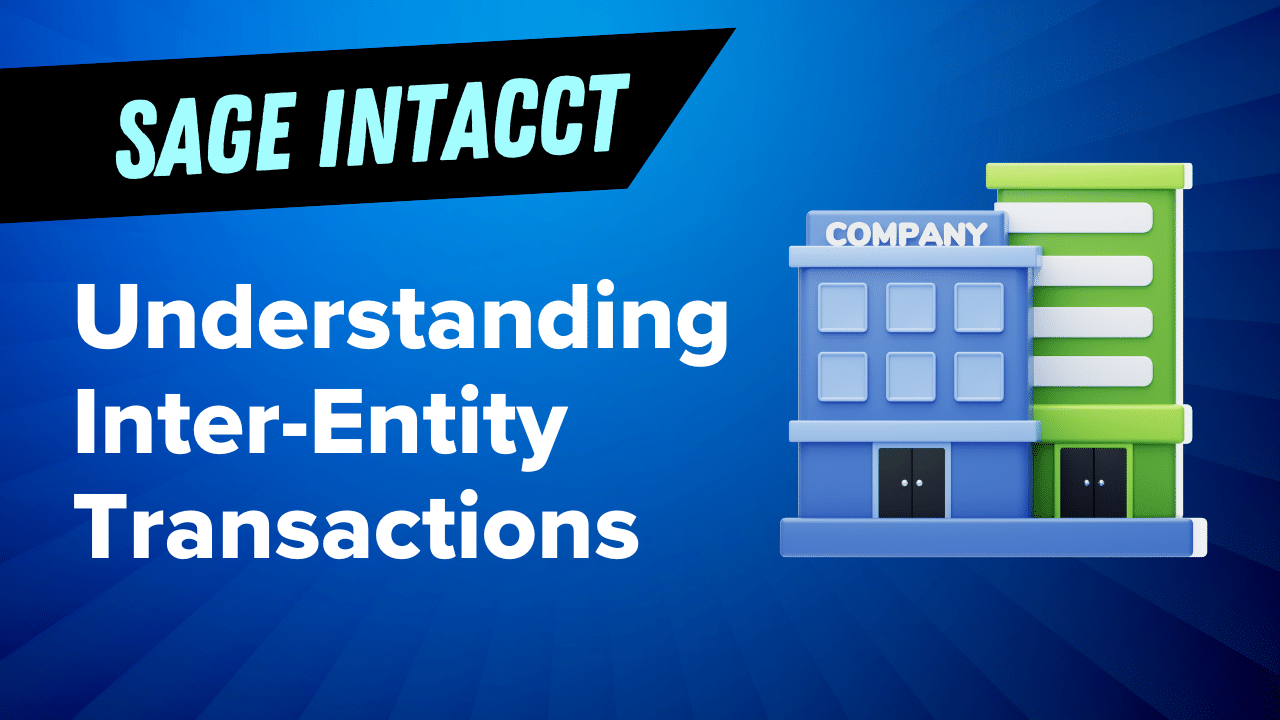
Master inter-entity transactions with Sage Intacct
Unlock practical insights, best practices, and tips for managing intercompany transactions accurately. Explore our resources and see how Sage Intacct can simplify multi-entity accounting.
Types of intercompany transactions
Downstream transactions
A downstream transaction occurs when the parent company sells or transfers assets to a purchasing subsidiary. Any resulting intercompany profit or loss must be eliminated during financial consolidation so the consolidated results reflect economic reality.
Upstream transactions
In upstream transactions, a selling subsidiary provides goods or services to the parent. Eliminating the gain is essential to ensure the consolidated statements accurately represent the performance of the overall group.
Lateral transactions
Lateral (or horizontal) transactions occur between two subsidiaries of the same company. Because these activities take place within the same parent, any associated profit is removed during consolidation.
Intercompany accounting and the close
Intercompany accounting plays a critical role in the financial close. During close, organizations must eliminate intercompany balances, reconcile intercompany accounts receivable and payable, and ensure that all related entities follow consistent accounting methods. This prevents double counting of revenue or expenses and maintains compliance with GAAP and other regulatory compliance standards.
Key steps typically include:
- Eliminating intercompany transactions during consolidation
- Adjusting for reconciliation differences
- Ensuring systems use consistent processes and metadata
- Validating compliance with accounting and reporting requirements
Accurate elimination ensures consolidated statements reflect the organization as a single economic unit.


Whitepaper:
Next generation financial consolidations
Discover how next-generation cloud financial management can transform your consolidations. Learn how to reduce manual effort, improve accuracy, and gain real-time, trusted insights into your organization’s financial performance. See how modern solutions streamline financial consolidation for better decision-making.
Best practices for intercompany accounting
Standardize processes
Define consistent policies for managing intercompany transactions, including documentation requirements for cost allocations, asset transfers, and other financial exchanges. This reduces inconsistencies and makes the accounting process more manageable.
Use modern technology
Cloud-based accounting software such as Sage Intacct automates much of the intercompany workflow, improving data management and reducing errors. Automation can:
- Auto-post intercompany journal entries
- Streamline intercompany invoice processing
- Centralize shared and entity-specific accounts
- Reduce risks tied to disparate accounting systems
A unified system also helps companies accurately assess profits, avoid misstatements, and strengthen visibility across all legal entities.

Centralize oversight
A central accounting team can more effectively monitor intercompany accounts receivable, resolve discrepancies, and maintain consistency across related companies.
Establish clear intercompany agreements
Formal agreements help define pricing, responsibilities, tax requirements, and financial data expectations. They also support tax compliance and reduce the risk of tax penalties.
Train and communicate
Finance teams must understand why intercompany accounting is important, especially in global or complex organizational structures.
Use consistent currency methodologies
International organizations should apply a uniform approach to currency translation to maintain accuracy.
Maintain strong documentation
Complete documentation for all internal transactions is essential for audits and supports efficient reconciliation.
Conclusion and next steps
Strong intercompany accounting practices are essential for organizations with multiple entities, complex financial interactions, or global operations. As businesses grow, managing financial consolidation, reconciliation, and compliance becomes increasingly challenging. Implementing the best practices outlined above helps ensure your organization produces accurate financial and compliant consolidated results that stakeholders can trust.
Managing intercompany accounting doesn’t have to be overwhelming. Rand Group has extensive experience helping organizations modernize their intercompany processes, automate reconciliations, and strengthen compliance frameworks. Whether you need help eliminating intercompany balances, improving financial accuracy, or upgrading your accounting software, our team provides strategic guidance and hands-on support.
Contact Rand Group today to learn how we can help you streamline intercompany accounting and optimize your financial operations.


Subscribe to our Insights
