Dynamics 365
 Power Platform
 Dynamics
 Cloud & Productivity
Microsoft Dynamics 365 Finance & Operations
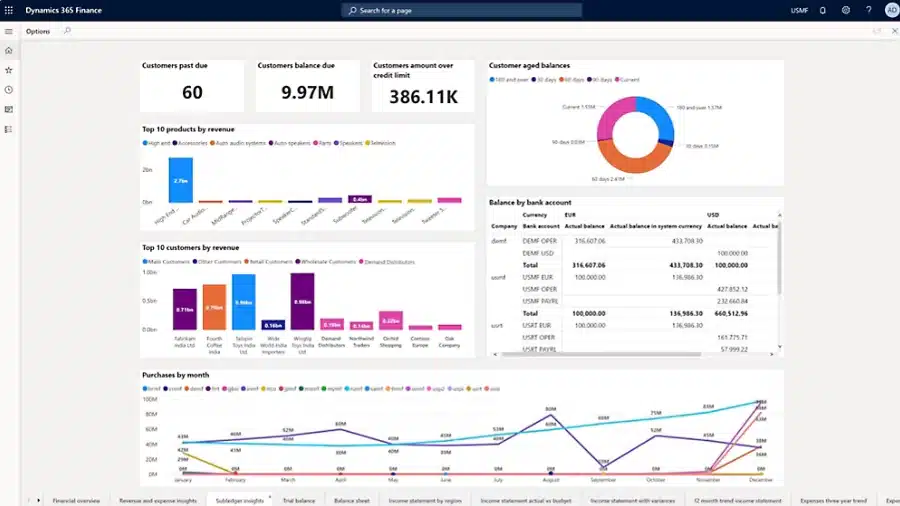
Dynamics 365 Finance & Operations (D365 F&O), also known as Dynamics 365 Finance & Supply Chain Management (D365 F&SCM), is a cloud-based ERP solution from Microsoft, designed for medium to large businesses with complex financial and operational needs. It unifies essential business processes—including financial management, supply chain, procurement, inventory, and manufacturing—into a single, AI-powered platform. Comprised of two powerful applications, Dynamics 365 Finance and Dynamics 365 Supply Chain Management, D365 F&O enables organizations to automate workflows, improve decision-making, and scale efficiently.

What does D365 Finance and Operations do?

Smarter financial management
Dynamics 365 F&O provides AI-driven insights to improve financial forecasting and cash flow management. Businesses can predict customer payments, automate budget proposals, and consolidate financial data across multiple entities and currencies for seamless operations.


Optimized supply chain planning
With advanced AI and machine learning, D365 F&O enhances demand forecasting, automates material requirements planning (MRP), and enables real-time inventory optimization. These capabilities ensure accurate demand prediction, reduce stockouts, and improve overall supply chain efficiency.


Proactive asset management & maintenance
Dynamics 365 F&O enables predictive and preventative maintenance with AI-driven insights, reducing unplanned downtime and optimizing resource allocation. Businesses can proactively manage equipment lifecycles, schedule repairs efficiently, and ensure peak performance with sensor data intelligence.


Agile manufacturing and shop floor management
Leverage IoT and real-time production insights to optimize manufacturing processes. Dynamics 365 F&O supports discrete, process, and lean manufacturing strategies, helping businesses improve quality control, reduce downtime, and integrate external manufacturing execution systems for better visibility.


Advanced warehouse and fulfillment operations
Enhance warehouse efficiency with automated workflows, robotics integration, and real-time insights. Mobile app-guided picking, Power BI analytics, and AI-powered inventory allocation ensure timely and accurate order fulfillment while minimizing process inefficiencies.


AI-driven productivity with Copilot
Copilot in Dynamics 365 Finance & Operations boosts efficiency by automating administrative tasks, summarizing financial records, and identifying supply chain risks. It proactively flags potential disruptions, predicts order delays, and assists in drafting supplier communications, ensuring a resilient and responsive business operation.

Microsoft Dynamics 365 Finance and Supply Chain Management
Dynamics 365 Finance & Operations is divided into two powerful applications: Dynamics 365 Finance and Dynamics 365 Supply Chain Management. D365 Finance offers advanced financial management capabilities powered by AI and automation. On the other hand, D365 SCM focuses on optimizing supply chain operations, from procurement and production to warehouse and transportation management.
The table below outlines the key modules included in each application:
How is Dynamics 365 Finance and Operations licensed and priced?
Microsoft offers two versions of each Dynamics 365 Finance & Operations application: Dynamics 365 Finance and Finance Premium, as well as Dynamics 365 Supply Chain Management and SCM Premium. With base and attach licensing, businesses can purchase one application at full price and add the second for just $30 per user/month, optimizing costs while accessing a full ERP suite.

White Paper
Get the complete D365 Finance & Operations licensing and pricing guide
Looking for a deeper understanding of Dynamics 365 Finance and Operations? Download our Dynamics 365 Finance & Operations Licensing and Pricing Guide for a comprehensive breakdown of all the details. This guide goes in-depth, comparing the different versions, types of users, and much more, to help you make the best decision for your business.
D365 Finance & Operations implementation
Rand Group offers 3 implementation options to fit your business’s complexity and budget. While Digital Transformation is the recommended approach, businesses with extensive in-house expertise can opt for Rapid Activation for a faster, more cost-effective deployment. Implementation costs range from $250,000 to over $1 million, depending on your organization’s needs.

Digital Transformation
Proven methodology for successful D365 F&O deployment
Rand Group’s Digital Transformation implementation is a comprehensive, structured approach designed for organizations with complex business processes and integration needs. This method ensures a seamless transition to Dynamics 365 Finance & Operations, following industry best practices to deliver a tailored solution. Spanning 8 to 24 months, this approach includes in-depth planning, system integration, data migration, and user training to maximize adoption and long-term success.
- Audit of existing ERP system and user experience
- Clear list of deliverables to ensure no surprises
- Integration of Dynamics 365 F&O with your existing technology stack
- System testing and data migration
- End-user training to ensure system adoption
Rand Group’s implementation methodology






Hybrid
A collaborative approach for businesses with strong internal resources
Rand Group’s Hybrid Implementation approach combines the expertise of our consultants with the active participation of your internal team. This model is ideal for organizations that have extensive experience with Dynamics 365 F&O and are ready to take on significant responsibilities in the implementation process. We configure the initial legal entity, train your team on system features, and provide guidance on future configurations, while your team takes the lead on training, testing, and deployment.
- Rand Group configures one legal entity and trains your team for future configurations
- Training on system features and functions for your internal team; your internal team provides training to locations and users.
- Rand Group builds a testing document; your team leads the testing and first-line support
- Rand Group creates the deployment plan; your team leads and executes deployment steps
Rand Group’s Hybrid implementation methodology

Rapid Activation
Streamlined deployment for businesses with in-house expertise
Rand Group’s Rapid Activation approach is designed for organizations with in-house Dynamics 365 F&O expertise looking for a fast, structured deployment. This methodology focuses on minimizing customizations and integrations, allowing businesses to go live within 6 to 18 months. While this approach requires significant internal resources, it provides a cost-effective, streamlined implementation following industry best practices.
- Ready-to-go package
- Fixed fee
- Rapid user adoption
- Industry led best practices
- Core business functions
- Low maintenance
Rand Group’s Rapid Activation methodology




Case Study

Streamline operations with Dynamics 365 Finance & Operations
Conquest Completion Services, LLC, an oilfield services company, needed to streamline its financial and operational systems to improve efficiency and data accessibility. Struggling with QuickBooks, Excel, and paper documents, Conquest faced delays and inefficiencies across their processes, including slow invoicing and cumbersome financial reporting. After engaging Rand Group, they implemented Dynamics 365 Finance and Operations alongside Dynamics 365 Field Service. The result was a transformed, integrated system that reduced staff, improved cash flow, enhanced inventory management, and provided real-time data for faster, informed decision-making.
Discover our full range of Finance & Operations services
Rand Group is your trusted partner for all things Microsoft Dynamics 365 Finance & Operations. We provide a full range of services, from implementation and integration to training, support, and AI enablement, tailored to help you get the most from your ERP system.

Implementation

Integrations

Custom Development

Data Migration



See Dynamics 365 Finance & Operations in Action
Not sure if Dynamics 365 Finance & Operations is the right solution for your business? See how it works in real time with a personalized Dynamics 365 F&O demo. Discover how this powerful ERP solution can streamline your financial and operational processes, improve data visibility, and drive efficiency across your organization. Schedule a demo today to explore its capabilities and see how it can meet your unique business needs.
Maximize your investment with ongoing Dynamics 365 Finance & Operations support
If you’re already using Dynamics 365 Finance & Operations, Rand Group is here to help you get the most out of your investment. Our expert support ensures smooth operations and drives success across your business.
- User training
- Troubleshooting and issue resolution
- Business process automation
- New feature enablement
- System customizations
- Integrations
- Reporting and analytics
- System documentation and audit assistance


Why partner with Rand Group?
Decades of experience
With years of experience supporting Microsoft Dynamics 365 ERPs like D365 F&O across diverse industries, Rand Group brings the expertise to mitigate risks and tackle your business challenges head-on. Our deep understanding ensures that your needs are met with tailored solutions.
Long-term partnership and support
Rand Group is dedicated to fostering long-lasting relationships with our clients. We provide ongoing support and services to help your business grow and adapt with Dynamics 365 F&O, proven by our impressive 90% client retention rate.
Top North American Microsoft partner
Rand Group is recognized as a leading Microsoft partner in North America and was honored as the 2025 Microsoft Americas Channel Emerging Partner of the Year. This recognition highlights our expertise in delivering innovative Microsoft cloud and Dynamics 365 solutions that help organizations modernize operations and drive growth.
Expertise from CPAs and industry professionals
Our team includes certified public accountants (CPAs) and industry professionals who bring in-depth knowledge to the table. They ensure that your Dynamics 365 F&O implementation follows best practices and aligns with your business’s unique challenges.
Frequently Asked Questions (FAQs)
What is Dynamics 365 Finance & Operations?
Dynamics 365 Finance & Operations (D365 F&O) is a cloud-based enterprise resource planning (ERP) system from Microsoft designed for medium to large organizations with complex financial and operational processes. It connects core business functions such as financial management, supply chain management, procurement, inventory, manufacturing, and distribution in one unified platform. The solution includes two applications—Dynamics 365 Finance and Dynamics 365 Supply Chain Management—which can be used individually or together to manage enterprise operations at scale.
To learn more, read our blog on What is Dynamics 365 Finance & Operations?
What does Dynamics 365 Finance & Operations do?
Dynamics 365 Finance & Operations helps organizations manage and automate complex financial and supply chain processes in a single cloud ERP platform. It centralizes core operations such as financial management, budgeting, procurement, manufacturing, inventory, and warehouse management to improve efficiency and visibility across the business. With built-in analytics, AI capabilities, and real-time reporting, the system helps organizations forecast demand, control costs, optimize supply chains, and make faster data-driven decisions.
To learn more, explore Dynamics 365 Finance & Operations capabilities.
What modules are included in Dynamics 365 Finance & Operations?
Dynamics 365 Finance & Operations includes modules across two core applications: Dynamics 365 Finance and Dynamics 365 Supply Chain Management. Finance modules focus on financial management and accounting, including general ledger, accounts payable, accounts receivable, budgeting, fixed assets, cost accounting, cash and bank management, and project accounting. Supply Chain Management modules support operational processes such as inventory management, procurement and sourcing, master planning, production control, warehouse management, transportation management, and asset management.
To learn more, read our blog on Dynamics 365 Finance & Operations modules.
What is the difference between standard and premium Dynamics 365 Finance & Operations licenses?
Dynamics 365 Finance & Operations applications are available in standard and Premium editions. The standard licenses, Dynamics 365 Finance and Dynamics 365 Supply Chain Management (SCM), include core ERP capabilities such as financial management, procurement, manufacturing, inventory, and automation. D365 Finance Premium and D365 SCM Premium include everything in the standard licenses plus advanced capabilities like enhanced planning, demand forecasting, and deeper analytics designed for more complex enterprise operations.
To learn more, read our blog on Dynamics 365 Finance Premium.
How much does Dynamics 365 Finance & Operations cost?
Dynamics 365 Finance & Operations pricing is based on a per-user, per-month subscription model. Full user licenses for Dynamics 365 Finance or Dynamics 365 Supply Chain Management typically start at $210 per user per month, while Premium editions cost about $300 per user per month and include advanced planning, forecasting, and analytics capabilities.
To learn more, read our blog on Dynamics 365 Finance & Operations pricing.
How is Dynamics 365 Finance & Operations implemented?
Dynamics 365 Finance & Operations is typically implemented through a structured, phased process that includes planning, system configuration, testing, deployment, and user adoption. Implementation begins with defining business requirements and solution design, followed by configuring the system, migrating data, integrating with other applications, and validating the solution through testing before go-live. The platform is most commonly deployed in the cloud as a SaaS solution, though some organizations may choose hybrid or specialized deployment models depending on compliance or infrastructure needs.
Organizations can choose different implementation approaches based on complexity and timeline. A full digital transformation involves deeper customization and process redesign, while a rapid implementation focuses on core functionality for faster deployment. Some companies adopt a hybrid approach, implementing essential capabilities first and expanding the system over time.
To learn more, read our Dynamics 365 Finance & Operations implementation guide or our Dynamics 365 Finance & Operations rapid implementation blog.
Can Dynamics 365 Finance & Operations integrate with other systems?
Yes. Dynamics 365 Finance & Operations is designed to integrate with a wide range of systems, including CRM platforms, banking systems, e-commerce solutions, analytics tools, and industry applications. It integrates natively with Microsoft technologies such as Dynamics 365 apps, Microsoft 365, Power BI, Power Platform, and Azure, while also supporting connections to third-party and legacy systems. These integrations allow financial, operational, and customer data to move automatically between systems, improving accuracy, visibility, and process efficiency across the organization.
For more information or to learn more, read our Dynamics 365 Finance & Operations integration guide.
What reporting tools are available in Dynamics 365 Finance & Operations?
Dynamics 365 Finance & Operations includes several built-in reporting tools for different business needs. These include operational reports and workspaces for real-time visibility, financial reporting for statements like profit and loss and balance sheet, Power BI for dashboards and analytics, Excel integration for ad hoc analysis, and SSRS for formatted documents such as invoices and purchase orders. This gives finance and operations teams flexible reporting options for daily activity, management reporting, and compliance.
For more information or to learn more, read our blog on Dynamics 365 Finance & Operations reporting.
Does Dynamics 365 Finance & Operations include AI capabilities?
Yes. Dynamics 365 Finance & Operations includes built-in AI capabilities through Microsoft Copilot and AI agents that help automate tasks, surface insights, and improve decision-making across finance and supply chain operations. Examples include customer and collections summaries, demand plan analysis, purchase order change review, workload insights, account reconciliation, and supplier communications. These capabilities help reduce manual work, improve accuracy, and support faster, more proactive operations.
For more information or to learn more, read our blog on Copilot in Dynamics 365 Finance & Operations or our blog on AI agents in Dynamics 365 Finance & Operations.
How does Dynamics 365 Finance & Operations handle security and segregation of duties?
Dynamics 365 Finance & Operations uses role-based security and segregation of duties controls to limit access and separate high-risk responsibilities. It helps prevent a single user from creating, approving, and completing the same transaction by using roles, duties, privileges, workflow approvals, and conflict detection rules. This improves internal controls, reduces fraud risk, and supports audit readiness across finance and operations.
To learn more, read our blog on Dynamics 365 Finance & Operations security and segregation of duties.
How often is Dynamics 365 Finance & Operations updated?
Dynamics 365 Finance & Operations follows a continuous release schedule with two major release waves each year, plus quarterly service updates and ongoing quality updates. Release Wave 1 runs from April through September, and Release Wave 2 runs from October through March, bringing new features and enhancements across finance and supply chain. In between, Microsoft delivers service updates for performance, compliance, and platform health, while smaller quality updates are applied regularly to maintain stability and security.
To learn more, read our blog on the Dynamics 365 Finance & Operations release schedule.
What is the difference between Dynamics 365 Finance & Operations and Business Central?
Dynamics 365 Finance & Operations and Dynamics 365 Business Central are both Microsoft ERP systems but serve different business sizes and complexity levels. Dynamics 365 Finance & Operations is designed for medium to large enterprises with complex financial structures, global operations, and advanced supply chain or manufacturing needs. Dynamics 365 Business Central is built for small to mid-sized businesses that need core ERP capabilities with simpler configuration, lower cost, and faster implementation.
To learn more, read our blog on Dynamics 365 Finance & Operations vs Business Central.
Related Insights

Dynamics 365 Finance & Supply Chain Management fall 2026 update: What’s new
The Dynamics 365 Finance & Supply Chain Management fall 2026 update introduces enhancements to financial management, production planning, manufacturing, and supplier collaboration. Explore the key features in version 10.0.49, including new capabilities, generally available enhancements, and preview features organizations should know about.

What is Dynamics 365 Finance? Features, pricing, AI, and more
Microsoft Dynamics 365 Finance is a cloud ERP application for organizations with complex financial management needs. Learn about its capabilities, AI and agents, benefits, pricing, licensing, integrations, and implementation considerations.

What is Microsoft Dynamics 365 Supply Chain Management? Features, pricing, and benefits
Microsoft Dynamics 365 Supply Chain Management connects inventory, procurement, manufacturing, warehousing, planning, and logistics. Learn about its features, AI capabilities, pricing, implementation, and ideal use cases.