Dynamics 365
 Power Platform
 Dynamics
 Cloud & Productivity
Dynamics 365 Finance and Operations rapid implementation: Accelerate your ERP deployment

Implementing an enterprise ERP system is one of the most significant operational decisions an organization can make. Dynamics 365 Finance and Operations is built to support complex financial structures, global supply chains, regulatory compliance, and large transaction volumes. Because of this depth and flexibility, implementation planning must be disciplined and strategic.
A Dynamics 365 Finance and Operations rapid implementation provides a structured alternative to large-scale transformation projects. By focusing on core functionality, limiting customization at go-live, and following a defined methodology, organizations can reduce risk and move forward with greater clarity. Rand Group’s Rapid Activation approach is designed to help qualified organizations deploy enterprise ERP in a controlled, efficient, and scalable way.
- What is Dynamics 365 Finance & Operations?
- What is a Dynamics 365 Finance and Operations rapid implementation?
- Traditional vs rapid implementation
- Benefits of a Dynamics 365 Finance and Operations rapid implementation
- What are the steps in a rapid Dynamics 365 Finance and Operations implementation?
- How long does a Dynamics 365 Finance and Operations rapid implementation take?
- How much does a Dynamics 365 Finance and Operations rapid implementation cost?
- Is Dynamics 365 Finance and Operations rapid implementation right for your organization?
- Why partner with Rand Group for your Dynamics 365 Finance and Operations rapid implementation?
- Frequently asked questions
What is Dynamics 365 Finance & Operations?
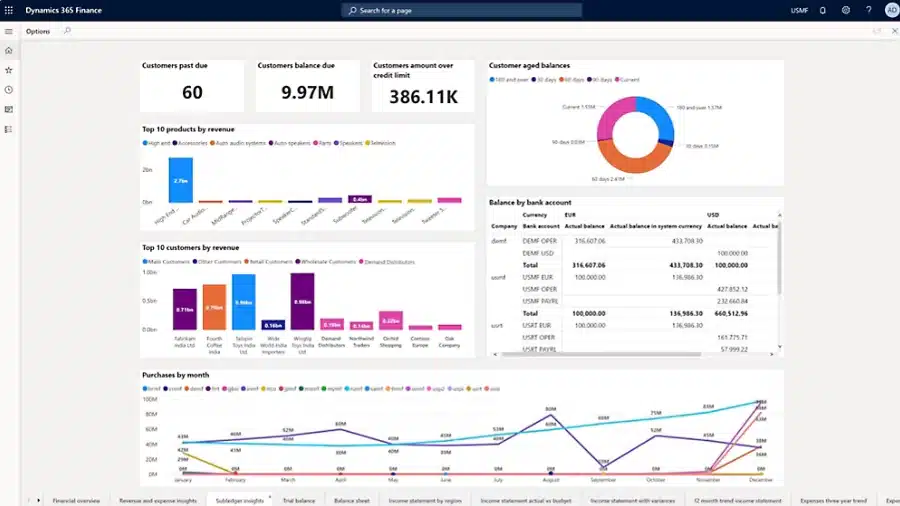
Dynamics 365 Finance and Operations (D365 F&O) is Microsoft’s enterprise resource planning (ERP) platform for mid-sized and large organizations. It is part of the broader Dynamics 365 suite of business applications and is designed to manage complex financial and operational processes in a single, unified system. Dynamics 365 Finance and Operations consists of two core applications: Dynamics 365 Finance and Dynamics 365 Supply Chain Management. These applications can be deployed individually or together, depending on your organization’s needs.
Dynamics 365 Finance focuses on advanced financial management. It supports general ledger, accounts payable and receivable, budgeting, financial planning, regulatory compliance, and multi-entity accounting. Dynamics 365 Supply Chain Management handles operational processes such as procurement, inventory management, manufacturing, warehouse management, asset management, and global logistics. Together, these applications provide real-time visibility across finance and operations, helping leadership teams make informed decisions based on accurate data.
Dynamics 365 Finance and Operations is built for organizations with higher complexity than lighter ERP systems can handle. It supports multiple legal entities, global operations, advanced manufacturing environments, and industry-specific requirements. While solutions like Business Central serve small to mid-sized businesses with simpler structures, Dynamics 365 Finance and Operations is designed for enterprise-scale growth, regulatory demands, and large transaction volumes. Its depth and flexibility make it powerful, but they also make implementation planning critical.
What is a Dynamics 365 Finance and Operations rapid implementation?
A Dynamics 365 Finance and Operations rapid implementation is a structured deployment approach designed to accelerate ERP go-live by focusing on core functionality and minimizing customization. Instead of redesigning every business process or rebuilding legacy custom code, this model prioritizes standard system capabilities, pre-configured best practices, and controlled scope. The goal is to reduce complexity, lower risk, and move organizations to a stable production environment faster than a traditional implementation.
Rand Group’s Rapid Activation methodology for Dynamics 365 Finance and Operations is built for organizations with strong internal ERP resources and clear executive alignment. This approach limits custom development and non-essential integrations at go-live, allowing businesses to deploy core financial and operational processes efficiently. While it requires active client participation and internal ownership, it delivers a cost-effective, streamlined ERP implementation based on industry best practices and structured execution.
Key characteristics of a Dynamics 365 Finance and Operations rapid implementation include:
- Ready-to-go package
- Fixed fee
- Rapid user adoption
- Industry led best practices
- Core business functions
- Low maintenance

Ready to accelerate your D365 F&O implementation?
Ready to move forward with a structured, faster path to enterprise ERP? Connect with Rand Group to evaluate whether our Rapid Activation approach is the right fit for your organization.
Traditional vs rapid implementation
Understanding what a Dynamics 365 Finance and Operations rapid implementation involves is easier when compared directly to a traditional ERP deployment model. While both approaches deploy the same enterprise platform, the structure, scope, and risk profile are significantly different.
A traditional Dynamics 365 Finance and Operations implementation is often part of a broader digital transformation initiative. It typically includes deep process redesign, extensive customizations, and multiple integrations across departments and legacy systems. These projects aim to reengineer how the business operates, not just replace existing software. As a result, traditional implementations are comprehensive but can require significant time, budget, and organizational change management.
A Dynamics 365 Finance and Operations rapid implementation takes a different approach. Instead of redesigning every workflow, it focuses on deploying core business processes using standard system capabilities. Customizations and integrations are limited at go-live, reducing complexity and accelerating deployment. The rapid model is structured, scope-controlled, and built around industry best practices to lower risk and shorten timelines.
The table below highlights the key differences between a traditional implementation and a rapid implementation of Dynamics 365 Finance and Operations.
Benefits of a Dynamics 365 Finance and Operations rapid implementation
A Dynamics 365 Finance and Operations rapid implementation delivers value by reducing complexity and accelerating deployment. Instead of extending timelines with heavy customization and broad transformation initiatives, this approach focuses on core functionality and controlled scope. For organizations that are operationally ready, a rapid implementation provides a practical path to enterprise ERP without unnecessary delays.
By minimizing risk and emphasizing best practices, a rapid implementation also improves long-term system stability. Organizations gain a modern ERP foundation while maintaining clearer budget control and stronger alignment between business and technology teams.
- Faster time to value: A rapid implementation shortens the path to go-live by focusing on essential financial and operational processes. This allows organizations to begin realizing operational efficiencies and reporting improvements sooner.
- Lower customization risk: Limiting custom development reduces technical debt and upgrade complexity. Organizations avoid over-engineering the system and stay aligned with Microsoft’s product roadmap.
- Fixed-scope clarity: A defined scope minimizes change orders and scope expansion during the project. This improves predictability for both timeline and budget.
- Aligned to industry best practices: Rapid implementations are built around standardized process frameworks. This encourages operational discipline and reduces reliance on legacy workflows that may no longer be efficient.
- Cost savings: Reduced customization, shorter timelines, and controlled scope lower overall implementation costs. Organizations also benefit from lower long-term maintenance and upgrade expenses.
What are the steps in a rapid Dynamics 365 Finance and Operations implementation?
Rand Group’s Dynamics 365 Finance and Operations rapid implementation follows a structured, phase-based approach designed to control scope, reduce risk, and accelerate time to value. Each step builds logically on the previous one, ensuring the system is properly configured, users are prepared, and the organization is ready for a stable go-live.

Pre-configuration
Rand Group provisions Dynamics 365 Finance and Operations and establishes the cloud-based environment. An initial process walkthrough with key stakeholders confirms scope, aligns expectations, and sets a strong operational and technical foundation.

Configuration
During configuration, the system is aligned to your business using pre-configured roles, process areas, and standard workflows. The focus remains on core functionality, limiting customization while ensuring teams understand how Dynamics 365 Finance and Operations supports daily operations.

Train & test
Structured training sessions help users gain proficiency and build system ownership. Formal testing validates process accuracy, data integrity, and system performance before production deployment.

Production cutover
In the final phase, legacy data is migrated and the system is prepared for go-live. Rand Group provides guided cutover support to ensure a smooth transition and stable early adoption.
How long does a Dynamics 365 Finance and Operations rapid implementation take?
A Dynamics 365 Finance and Operations rapid implementation typically takes between 6 and 18 months, depending on organizational complexity, internal resource availability, and the number of modules deployed. Because the scope is controlled and customization is limited, the timeline is more predictable than a traditional ERP deployment.
By comparison, a traditional Dynamics 365 Finance and Operations implementation usually ranges from 12 to 24 months, and in highly customized or global environments, it can easily exceed 18 months. Traditional projects often expand due to deep process redesign, complex integrations, and extensive custom development. A rapid implementation reduces this risk by following a structured methodology focused on core business processes and disciplined scope management.
Pre-configuration
Configuration
Train & test
Production cutover
How much does a Dynamics 365 Finance and Operations rapid implementation cost?
A Dynamics 365 Finance and Operations rapid implementation typically starts at $250,000, depending on scope, complexity, and internal readiness. The final investment varies based on the number of users, modules deployed, integrations required, and data migration needs. Because the rapid model limits customization and follows a fixed-scope methodology, costs are more controlled and predictable than in large-scale transformation projects.
By comparison, a traditional Dynamics 365 Finance and Operations implementation can exceed $1 million, particularly for multi-entity organizations with complex integrations and heavy customization. Broader scope, extended timelines, and process redesign efforts significantly increase total project cost. Rapid implementations reduce these drivers by focusing on core functionality and structured execution.
Several factors influence the total cost of a Dynamics 365 Finance and Operations implementation:
- Number of licensed users
- Deployment of Finance only vs. Finance and Supply Chain Management
- Number of legal entities or global operations
- Data migration complexity and historical data volume
- Required third-party integrations at go-live
- Industry-specific configurations or compliance requirements
- Custom reporting or advanced analytics needs
- Internal resource availability and project ownership
It is possible to find cheaper D365 F&O implementation options; however, these often lead to failed or subpar implementations. Fixing a failed implementation can end up costing twice as much as doing it correctly the first time. That’s why it’s essential to invest in a well-executed implementation from the start to avoid costly errors down the road.
Is Dynamics 365 Finance and Operations rapid implementation right for your organization?
A Dynamics 365 Finance and Operations rapid implementation is not the right fit for every organization. This approach is best suited for companies that want enterprise ERP capabilities but are willing to adopt standard processes and maintain disciplined project scope. Because the model limits customization and relies on structured execution, success depends heavily on internal alignment, leadership support, and operational readiness.
A rapid implementation is typically best for organizations that:
- Have a strong internal ERP or IT team that can actively participate in the project
- Are willing to adopt standard Dynamics 365 Finance and Operations functionality
- Can limit customizations and defer non-essential integrations until after go-live
- Have clear executive sponsorship and decision-making authority
- Need faster time to value without a full-scale business transformation
- Operate with defined processes that do not require significant redesign
In contrast, a traditional Dynamics 365 Finance and Operations implementation may be better suited for organizations that:
- Require extensive process reengineering across departments
- Have highly customized legacy systems that must be replicated
- Need complex global integrations implemented at go-live
- Operate in heavily regulated industries requiring major compliance redesign
- Are undergoing a large-scale digital transformation beyond ERP replacement
Choosing the right implementation strategy is a strategic decision. Aligning scope, internal capabilities, and long-term business goals will determine whether a rapid or traditional approach delivers the best outcome.

Not sure which implementation approach is right for you?
Every organization’s ERP journey is different. A short discovery conversation can help determine whether a D365 F&O rapid implementation or a traditional deployment better aligns with your goals, timeline, and internal resources.
Why partner with Rand Group for your Dynamics 365 Finance and Operations rapid implementation?
Choosing the right implementation partner is critical to the success of a Dynamics 365 Finance and Operations rapid implementation. Enterprise ERP deployments require more than technical configuration. They demand structured methodology, industry understanding, executive alignment, and disciplined project management. Rand Group brings over 20 years of experience delivering ERP solutions for mid-sized and enterprise organizations across North America.
Our team has successfully guided thousands of clients through complex ERP initiatives, maintaining a 90% client retention rate by focusing on long-term partnerships rather than one-time projects. As a Microsoft Partner of the Year 2025 recipient, Rand Group combines deep product knowledge with practical business insight. We understand how to deploy Dynamics 365 Finance and Operations in a way that balances speed, stability, and strategic growth.
When you partner with Rand Group for your Dynamics 365 Finance and Operations rapid implementation, you benefit from:
- Experience with enterprise ERP deployments: Proven expertise implementing Dynamics 365 Finance and Operations in complex, multi-entity environments.
- Structured Rapid Activation methodology: A defined, phase-based approach that controls scope and accelerates time to value.
- Industry expertise: Specialized knowledge across manufacturing, distribution, energy, professional services, and other regulated industries.
- Clear scope and predictable execution: Transparent planning, defined deliverables, and disciplined project governance.
- Long-term support model: Ongoing optimization, user support, and strategic guidance beyond go-live.
Frequently asked questions
What is a Dynamics 365 Finance & Operations rapid implementation?
A D365 F&O rapid implementation is a structured deployment approach that focuses on core functionality while minimizing customization and integrations. It is designed to accelerate ERP go-live by using standard system capabilities and best-practice configurations. This approach reduces risk, controls scope, and shortens implementation timelines compared to traditional ERP projects.
What is included in a Dynamics 365 Finance and Operations rapid implementation?
A rapid implementation typically includes environment provisioning, core system configuration, user training, testing, and production cutover. It focuses on deploying essential financial and operational processes using pre-configured roles and standard workflows. Customizations and complex integrations are limited at go-live to maintain timeline and budget control.
How long does a Dynamics 365 Finance and Operations rapid implementation take?
A rapid implementation typically takes between 6 and 18 months. The exact timeline depends on organizational complexity, internal resource availability, and module selection. Because the scope is structured and customization is limited, the timeline is generally more predictable than a traditional implementation.
What is the difference between rapid and traditional F&O implementation?
The main difference between rapid and traditional Dynamics 365 Finance and Operations implementation is scope and customization. Traditional implementations often involve extensive process redesign, heavy customization, and multiple integrations, resulting in longer timelines and higher costs. Rapid implementations focus on core functionality, controlled scope, and best-practice configuration to reduce risk and accelerate deployment.
How much does Dynamics 365 Finance and Operations implementation cost?
A Dynamics 365 Finance and Operations rapid implementation typically starts around $250,000, depending on scope and complexity. Traditional implementations can exceed $1 million due to extended timelines, customization, and integration requirements. Final cost depends on user count, modules deployed, legal entities, data migration complexity, and integration needs.
What modules are typically included in a rapid implementation?
Most rapid implementations include core financial management and essential supply chain functionality. Common modules include general ledger, accounts payable and receivable, inventory management, procurement, and basic reporting. Advanced modules can be added in later phases.
Next steps
A Dynamics 365 Finance and Operations rapid implementation can provide a faster, more controlled path to enterprise ERP when the right structure and internal alignment are in place. By focusing on core functionality, disciplined scope management, and best-practice configuration, organizations can reduce risk while accelerating time to value.
If your organization is evaluating Dynamics 365 Finance and Operations and wants to determine whether a rapid implementation is the right approach, contact Rand Group today. Our team can help assess your scope, timeline, and internal readiness to define a clear and structured path forward.