Sage Intacct pricing guide

When researching Sage Intacct, it’s important to understand how pricing works and what factors affect total cost. In this guide, we outline how Sage Intacct pricing is structured and explain the variations between subscription options. We also highlight additional expenses you’ll want to consider in your evaluation to understand the total cost of ownership.
What is Sage Intacct?
Sage Intacct is a leading cloud-native financial management solution built for organizations that need strong accounting, reporting, and scalability. Trusted by industries such as healthcare, nonprofit, and professional services, Sage Intacct centralizes core functions. These include general ledger, accounts payable/receivable, order management, and cash flow. Designed in the cloud from the ground up, it delivers real-time insights, multi-entity consolidation, and AI-driven automation.
To learn more about Sage Intacct, including its capabilities, benefits, and more, read our blog: What is Sage Intacct?
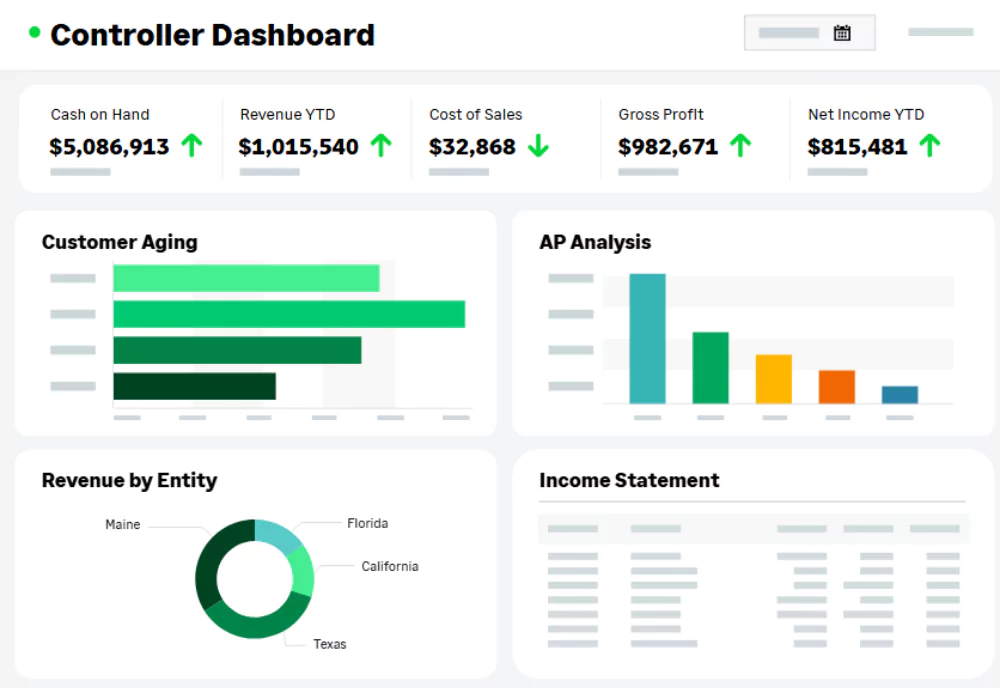

See Sage Intacct in action
Take the next step in your evaluation journey. Schedule a personalized demo today and see the platform in action, tailored to your business needs.
How is Sage Intacct licensed?
Sage Intacct’s licensing model is designed to scale with your organization, offering flexibility based on user types, modules, and business entities. Understanding how these components work together helps businesses estimate costs more accurately and select the right mix of licenses for their needs.
User licenses
User licenses are an important factor in determining Sage Intacct costs, with different types of licenses available, including business users and employee users. Businesses should carefully plan their user license requirements to ensure they have the necessary access and functionality without incurring unnecessary expenses.
Business user: These accounts provide full access across all modules and functions. Administrators can still set permissions to limit visibility or control sensitive actions.
Employee user 10-pack: A bundle of limited-access licenses designed for team members who only need specific functions. These users can view dashboards and perform tasks like submitting or approving expense reports, entering timesheets, or creating purchase requisitions.
Core Financials
Sage Intacct’s Core Financials provides the foundation for managing a company’s accounting and finance operations. It is required, and includes the essential modules businesses need. These include handling day-to-day transactions, maintaining accurate records, and generating real-time insights into performance. These tools are designed to automate manual tasks, improve accuracy, and give finance teams more time to focus on strategy rather than administration. Core Financials includes these key modules and capabilities:
-
General Ledger: The central hub of the system, giving you flexibility to manage, track, and consolidate financial data across entities, departments, and locations.
-
Accounts Payable: Automates vendor invoice processing and payment cycles, reducing manual effort while maintaining tighter control over cash outflows.
-
Accounts Receivable: Streamlines billing, collections, and customer payment tracking to accelerate cash flow and reduce days sales outstanding (DSO).
-
Cash Management: Provides real-time visibility into cash positions, enabling more effective liquidity management and forecasting.
-
Order Management – Manages the entire quote-to-cash process to improve order accuracy, efficiency, and customer satisfaction.
-
Purchasing – Optimizes the procure-to-pay cycle with tools to control spend, enforce approval workflows, and simplify purchasing operations.
-
Dashboards & Reporting – Offers customizable dashboards and powerful reporting tools to deliver insights into key financial metrics and overall business health.
Business entities
Sage Intacct makes it easy to manage financials for multiple entities, locations, and currencies. As part of Core Financials, your first legal business entity (a distinct legal company with its own tax identification number) is included. Each additional entity requires a separate license, incurring additional costs. However, the annual subscription cost is minimal compared to the functionality it provides for multi-entity businesses. Also, special pricing is available for organizations with large numbers of entities, or entities with limited transaction volumes.
Advanced modules
Sage Intacct offers a range of advanced modules to support specific business needs, including inventory management, project accounting, and global consolidations. These modules can add significant value to the core financial management module, providing advanced features and functionality to support business growth and complexity. However, they also incur additional costs. Depending on the functionality you choose, these can increase your yearly subscription cost by $3000 to $10,000 or more. Common Sage Intacct advanced modules and their uses:
- Fixed Assets: Automates asset management, including depreciation, ensuring accurate tracking and reporting
- Inventory Management: Tracks and manages stock across locations, improving cash flow and reducing errors
- Project Accounting: Tracks project costs, time, budgets, and profitability to ensure financial control
- Revenue Recognition: Manages complex revenue streams like subscriptions, licenses, and services with precision
- Spend Management: Controls company spending by streamlining purchasing processes and maintaining budgets
- Time and Expense Management: Automates employee time and expense tracking, reducing administrative tasks
- SaaS Intelligence: Provides real-time SaaS metrics and reporting for performance analysis in the software-as-a-service industry
- Allocations: Automates cost and revenue allocations for deeper insights into organizational performance
- Multi-Entity and Global Consolidations: Simplifies financial management for multiple entities and currencies, offering unified visibility
How does Sage Intacct pricing work?
Sage Intacct pricing starts with the Core Financials bundle and varies depending on company size and complexity. You can add other modules for more advanced capabilities, which will increase your subscription cost. At the bare minimum, Sage Intacct starts at $9,000 annually for a basic package including a single business user and entity with the Core Financial capabilities. However in general, smaller organizations with limited needs usually spend around $20,000 annually. On the other hand, larger businesses or those with advanced requirements may see yearly costs exceed $75,000.

The ultimate Sage Intacct implementation guide
Avoid costly mistakes and delays when implementing Sage Intacct. This guide provides tips to simplify your implementation, reduce risks, and maximize ROI. Get the insights you need for a smooth implementation.
Implementation costs
Implementation is typically delivered by a certified Sage Partner. Services include configuration, data migration, integrations, training, and go-live assistance. The cost to implement Sage Intacct ranges from $35,000 to $150,000, depending on project complexity and organizational needs. Smaller companies with basic requirements fall near $35,000, while larger businesses with multi-entity structures and complex workflows approach $150,000. This one-time cost includes setup, configuration, data migration, training, and initial support.
While upfront costs may seem high, a well-executed implementation ensures efficiency, reduces long-term expenses, and maximizes ROI. While cheaper implementations are available, these partners often rely on offshore teams unfamiliar with U.S. accounting standards, tax rules, and regulations. Plus communication challenges like time zone differences, can lead to delays, misalignment, or overlooked details. A well-executed, tailored implementation ensures the system supports your business needs, avoids costly rework, and delivers long-term value. Factors Influencing implementation costs:
- Company size: Larger organizations with complex needs incur higher costs
- Customization needs: Advanced configurations and specialized workflows increase expenses
- Integration complexity: Custom integrations or connections with Sage Intacct Marketplace partners add to the cost
- Data migration scope: The volume and complexity of data migration impact pricing
- Training requirements: Extensive training for teams raises implementation costs
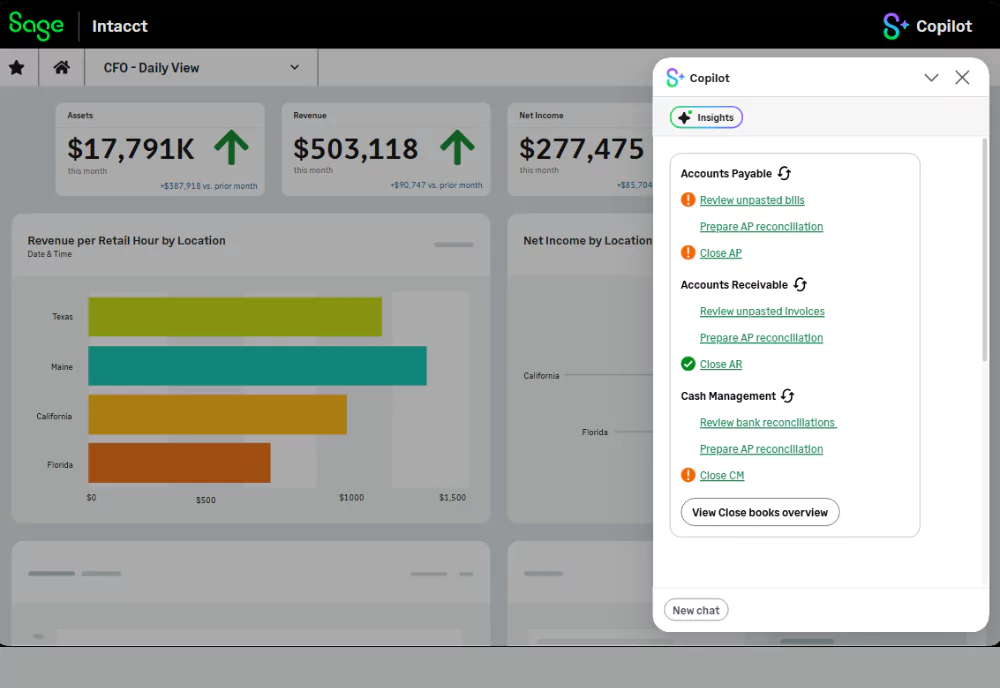
Sage Intacct total cost of ownership (TCO)
Sage Intacct’s subscription model covers maintenance, storage, security, and backups. Additional costs include implementation, support and training, and integrations. Other factors to consider are annual price increases and additional modules required in the future. Although it’s important to consider that while adding modules increases costs, they also extend value.
Understanding the total cost of ownership (TCO) for Sage Intacct is essential for budgeting and long-term planning. While the subscription model simplifies costs by bundling software, maintenance, and hosting, there are additional factors to consider that can impact your overall investment.
Key factors impacting TCO
As a cloud-based ERP, its TCO is typically lower than on-premises systems. With Sage managing updates and system reliability, internal IT teams face fewer burdens. Unlike traditional on-premises systems, which requires manual upgrades, Sage Intacct provides automatic updates without disrupting operations, ensuring access to the latest features at no extra cost. Here’s a closer look at TCO benefits.
- Subscription model: Consolidates software, maintenance, and hosting into a single, predictable fee. This eliminates the need for large upfront investments in software licenses or infrastructure, making it easier to budget and manage costs. The subscription model also includes ongoing system maintenance and security. This ensures your ERP remains reliable and up-to-date without additional expenses.
- No hardware expenses: Cloud-native Sage Intacct eliminates the need for on-premises servers, storage, and other hardware. The hosting provider handles all infrastructure requirements, including data storage, backups, and disaster recovery. This not only reduces capital expenditures but also frees up internal IT resources to focus on strategic initiatives rather than hardware maintenance.
- Lower IT costs: With Sage Intacct, updates, patches, and system maintenance are managed by Sage. This significantly reduces the burden on your IT team. Traditional on-premises systems require manual upgrades and ongoing IT support. On the other hand, Sage Intacct’s cloud model ensures your system is always running the latest version without additional effort or cost. This allows your IT team to focus on higher-value tasks rather than routine system upkeep.
- Scalability: Sage Intacct is designed to grow with your business. As your needs evolve, you can adjust your subscription. Add users, entities, or advanced modules without costly system overhauls. This scalability ensures your ERP system always supports business goals. Whether expanding into new markets, adding subsidiaries, or increasing transactions, Intacct adapts seamlessly.
- Automatic updates: Sage Intacct provides automatic updates that deliver new features, enhancements, and security improvements with minimal disruption to your operations. Unlike traditional ERP systems that require downtime for manual upgrades, Sage Intacct’s updates are seamless and occur in the background. This ensures your team always has access to the latest tools and capabilities without interrupting workflows or incurring additional costs.
With these TCO advantages, Sage Intacct helps businesses reduce operational costs, improve efficiency, and maintain a modern, scalable ERP system. The combination of predictable pricing, reduced IT overhead, and automatic updates makes Sage Intacct a cost-effective solution for organizations looking to streamline financial management and support long-term growth.
How to purchase Sage Intacct
Sage Intacct is available through Sage Partners like Rand Group. These certified partners guide you through the purchase process, helping tailor the system to fit your unique requirements. They offer services such as licensing guidance, system configuration, implementation support, training, and ongoing consulting. With their expertise, your organization can maximize the value of Sage Intacct from day one.
Licensing tips and best practices
When planning your Sage Intacct implementation, taking a strategic approach to licensing can help you optimize costs and ensure your system meets your business needs. Here are some key tips and best practices to consider:
- Assign users carefully: Avoid over-purchasing full licenses by carefully evaluating the roles and responsibilities of your team. For example, employees who only need access for tasks like expense entry or approvals can use limited-access licenses instead of full business user licenses. This ensures you’re only paying for the access your team truly needs.
- Budget for expansion: If you anticipate needing advanced modules in the future, such as Project Accounting or Revenue Recognition, include these potential costs in your budget. Planning for expansion ensures your system can grow with your business without unexpected financial strain.
- Consider multi-entity licensing early: Your organization may operate across multiple subsidiaries or legal entities. In that case, consider multi-entity licensing from the start. This approach streamlines financial management and consolidations. As a result, it saves time and effort while your business scales.
- Choose the right partner: Working with a Sage Intacct partner who has deep industry knowledge can make a significant difference in your implementation experience. A knowledgeable partner can tailor the system to your specific needs, provide expert guidance, and help you avoid costly mistakes during setup.
By following these licensing tips, you can ensure that your Sage Intacct system is both cost-effective and fully aligned with your business requirements, setting the stage for long-term success.
Sage Intacct pricing FAQs
How is Sage Intacct licensed?
Sage Intacct uses a subscription-based licensing model tailored to user roles: business, employee, or role-based.
How much does Sage Intacct cost?
Smaller organizations can expect to pay around $20,000 annually depending on their needs. On the other hand costs can exceed $75,000 for larger businesses, especially those with advanced needs.
What should I budget for implementation?
125% to 200% of year-one subscription cost. Contributing factors include: company size, customization requirements, integration complexity, data migration scope, training requirements.
How do I purchase Sage Intacct?
Sage Intacct is sold through authorized Sage Partners. These partners tailor pricing, manage setup, and provide ongoing support.

Get Sage Intacct today
Ready to move forward with Sage Intacct? At Rand Group, we guide you through selecting the right licensing, configuring your subscription, and customizing the platform for your needs. Begin with a scalable solution designed to support your business and provide lasting value.
Next steps
Knowing how Sage Intacct is priced and the factors that influence total cost is key to making a smart investment. License types, subscription terms, implementation services, and TCO all impact your budget and overall success. Strategic planning and working with the right partner can ensure a smooth, cost-effective deployment.
At Rand Group, we specialize in helping small and mid-sized businesses with Sage Intacct implementation, support and training, and optimization. Whether you’re exploring options or ready to proceed, our experts are here to guide you every step of the way.
Subscribe to our Insights
Related Blogs

Best ERP software for family offices
Managing a family office involves far more complexity than traditional financial operations. From multi-entity accounting and consolidated reporting to investment tracking and multi-generational wealth oversight, family offices must manage diverse assets, entities,...

Sage 100 year-end processing best practices for distribution modules
Closing the fiscal year in Sage 100 doesn’t have to be complicated. With the right approach, your team can complete year-end processing efficiently while keeping your distribution modules fully aligned with the General Ledger (GL). Sage 100 is designed to streamline...

Sage 100 year‑end processing payroll guide
Year‑end processing in the Sage 100 payroll module is a strategic step that ensures your payroll system is accurate, compliant, and ready for the year ahead. Beyond simply closing Q4, it aligns balances, resets key accruals, updates deductions, and sets the foundation...