Is Sage Intacct an ERP? Understanding its role in modern business software

When financial reporting takes days instead of hours, and spreadsheets start replacing your accounting system, it’s usually a sign your business has outgrown QuickBooks or another entry-level application. If you’ve hit that wall, you’ve likely started researching ERP solutions and come across Sage Intacct.
But that raises an important question: Is Sage Intacct an ERP? The short answer is yes. Sage Intacct is a cloud ERP, but with a modern, finance-first approach that sets it apart from traditional systems. Rather than functioning as a one-size-fits-all platform, it serves as a powerful financial hub that connects with the rest of your business tools.
In this blog, we’ll explain what Sage Intacct is, how it compares to traditional ERP systems, and when it makes sense for your organization.
What is Sage Intacct?
Sage Intacct is a cloud-based financial management platform designed to help small to mid-sized businesses modernize their accounting processes and gain real-time financial insights. Unlike legacy systems that require on-premise infrastructure, Sage Intacct is built in the cloud, offering accessibility, scalability, and continuous updates without the need for manual upgrades.
Often referred to as Sage Intacct ERP, the platform is purpose-built to streamline core financial operations such as general ledger, accounts payable and receivable, and reporting. Its primary goal is to automate manual accounting tasks and provide leadership teams with accurate, real-time data to support better decision-making.
Sage Intacct is especially well-suited for organizations that have outgrown basic accounting tools but are not ready for the complexity of a traditional, all-in-one ERP system.

Life after QuickBooks
Is QuickBooks holding your business back? As your organization grows, you may need more robust reporting, automation, and scalability than entry-level accounting software can provide. This guide explores the key signs it’s time to move on, and how to transition to a more powerful, business-class financial management solution like Sage Intacct.
Is Sage Intacct an ERP?
So, is Sage Intacct an ERP? Yes, Sage Intacct is a cloud ERP system, specifically designed to serve as the financial core of your business operations.
Many organizations assume they need a full-suite ERP, but most outgrow their financial systems long before operational complexity demands it. That’s where Sage Intacct’s finance-first approach becomes a strategic advantage.
However, it’s important to understand the nuance. Sage Intacct is not a traditional, monolithic ERP that attempts to manage every function, such as manufacturing, supply chain, and HR, within a single system. Instead, it follows a best-in-class ERP approach, where it excels in financial management and integrates with other specialized tools to handle additional business processes.
For many organizations, this modern ERP approach provides greater flexibility, faster implementation, and better overall user experience.
What type of ERP is Sage Intacct?
When evaluating solutions, many buyers ask: What type of ERP is Sage Intacct?
Sage Intacct falls into the category of a financial management ERP or cloud ERP, with a strong emphasis on accounting, automation, and reporting.
Its best-in-class architecture means it focuses deeply on financial capabilities while integrating with other systems for broader functionality. For example, businesses can connect Sage Intacct with CRM platforms like Salesforce, payroll systems, expense management tools, and industry-specific applications.
Additionally, Sage Intacct offers a robust marketplace of add-on solutions, allowing organizations to extend functionality without sacrificing performance or usability. This ecosystem approach enables companies to tailor their ERP environment to their specific needs. Compared to legacy ERP platforms, which can be rigid and costly to customize, Sage Intacct provides a more flexible and scalable foundation for growth.
Sage Intacct ERP key features
What truly qualifies Sage Intacct as an ERP system are its comprehensive financial capabilities and what those capabilities enable your team to do. These core functions form the foundation of a more efficient, insight-driven finance operation:
- General ledger: Gain deeper visibility into your business with a multi-dimensional ledger that lets you track performance across departments, locations, and projects, without complex workarounds
- Accounts payable & receivable: Accelerate billing and collections while reducing errors, with streamlined processes that keep cash moving and teams aligned
- Cash management: Make faster, more confident decisions with real-time insight into cash flow, balances, and banking activity
- Multi-entity & global consolidations: Close multi-entity books in minutes instead of days, with automated consolidations across currencies, entities, and locations
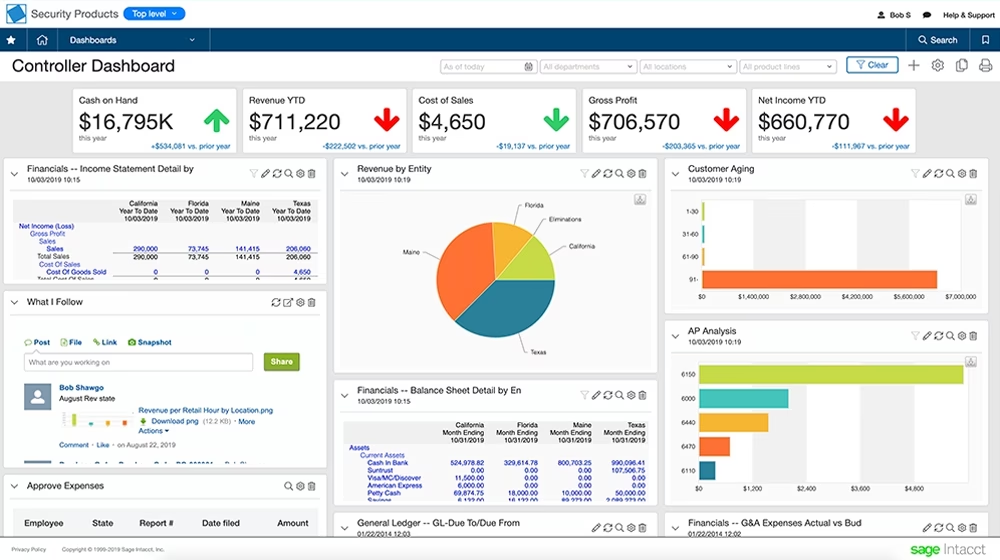
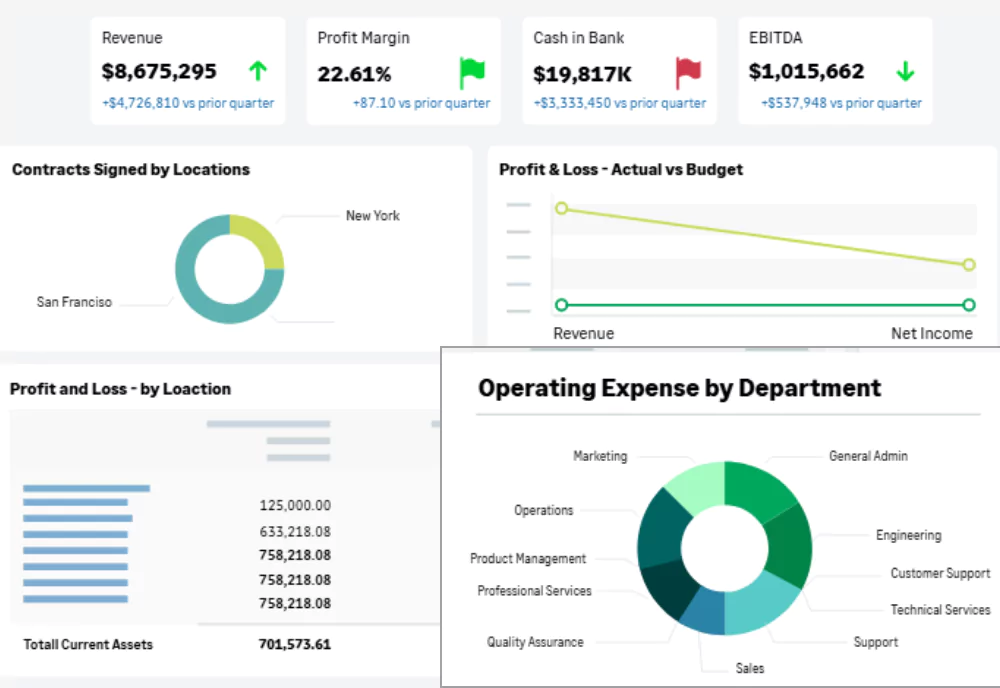
- Real-time reporting & dashboards: Equip leadership with up-to-date financial insights through customizable dashboards and reports—no waiting on month-end
- Automation & workflows: Eliminate manual tasks and reduce risk with automated approvals, allocations, and recurring processes that keep operations running smoothly
Together, these capabilities allow organizations to move beyond basic accounting and operate with a more strategic, data-driven approach to finance.
Sage Intacct vs other ERP Systems
When comparing Sage Intacct vs other ERP systems, the differences largely come down to architecture, flexibility, and approach.
- Cloud vs on-premise – Some ERP systems are deployed on-premise, requiring significant IT resources and maintenance. Sage Intacct, as a cloud ERP, eliminates these challenges with a fully hosted solution that is accessible anytime, anywhere.
- Best-in-class vs all-in-one – Many ERP systems attempt to provide every function within a single platform, which can lead to complexity. Sage Intacct takes a best-in-class approach, focusing on finance while integrating seamlessly with other systems.
- Flexibility vs rigidity – Some ERP systems, especially legacy ERP plaftorms, can be difficult to customize and adapt as business needs evolve. Sage Intacct’s modern architecture and open APIs allow for greater flexibility and easier integrations with tools like Salesforce and other business-critical applications.
- Scalability – As businesses grow, their systems must grow with them. Sage Intacct’s cloud-native design makes it easy to scale without major system overhauls.
Who should use Sage Intacct?
Sage Intacct is an excellent fit for organizations that need more advanced financial capabilities but want to avoid the complexity of a traditional ERP.
Ideal users include:
• Growing small to mid-sized businesses (SMBs) looking to scale operations
• Multi-entity organizations that require consolidated financial reporting
• Service-based companies, including professional services and SaaS organizations
• Nonprofits that need strong financial visibility and compliance
Sage Intacct is particularly valuable for industries where financial complexity outweighs operational complexity. For example, SaaS and subscription-based businesses benefit from its revenue recognition and contract management capabilities. Professional services firms can leverage project-based accounting and real-time profitability insights. Nonprofits gain strong grant tracking, fund accounting, and compliance reporting, helping ensure transparency and accountability.
For many growing organizations, the challenge isn’t operational complexity, it’s gaining the financial visibility and reporting needed to scale effectively. In those cases, Sage Intacct’s finance-first approach can be a better fit than a more complex, all-in-one ERP.
For organizations that have outgrown entry-level accounting systems like QuickBooks, but are not yet ready for a full-scale operational ERP, Sage Intacct is a strong fit. It provides the right balance of sophistication, usability, and flexibility to support continued growth.
When Sage Intacct might not be a fit
While Sage Intacct is a powerful solution, it’s important to take a balanced view. Organizations with highly complex operational requirements, such as advanced manufacturing, inventory management, or deep supply chain functionality, may require a more comprehensive ERP system.
In these cases, platforms like Oracle NetSuite or Microsoft Dynamics 365 may be better suited to handle end-to-end operational processes. Alternatively, for businesses that need enhanced operational functionality but prefer on-premise deployment, Sage 100 can be a strong fit. Sage 100 offers deeper inventory and operational functionality within a familiar environment in the Sage ecosystem.
That said, many businesses find that Sage Intacct meets their needs. This is especially true when the platform is combined with the right integrations and add-on solutions. Determining whether Sage Intacct, or another ERP solution, is the right fit ultimately requires a structured evaluation of your business requirements, long-term goals, and operational complexity.

Take the guesswork out of ERP selection
Selecting the wrong software can lead to costly setbacks and frustration. Rand Group helps you avoid that risk by guiding you through a proven evaluation process, so you can choose the right ERP with confidence. From requirements gathering to solution comparison, we partner with you every step of the way. Talk to one of our ERP experts and find the right solution for your business.
Driving Sage Intacct success with Rand Group
Choosing the right ERP is only part of the journey, successful ERP implementation is what ultimately drives business value. As an experienced Sage Intacct partner, we help organizations evaluate, implement, and optimize Sage Intacct to align with their unique business goals.
Our approach goes beyond technical deployment. We act as a strategic advisor, ensuring your system is configured to deliver meaningful outcomes.
Our services include:
- Sage Intacct implementation tailored to your business processes
- System integrations to connect your financial data with CRM, payroll, and other tools
- Ongoing optimization and support to ensure long-term success
With the right partner, organizations can achieve faster financial close cycles, gain improved visibility into performance, and implement scalable systems that support future growth.
Sage Intacct ERP FAQs
Is Sage Intacct a full ERP system?
Yes, Sage Intacct is a cloud ERP system. However, it is primarily focused on financial management rather than providing a full suite of operational capabilities like manufacturing or advanced supply chain.
Is Sage Intacct a cloud ERP?
Yes, Sage Intacct is a fully cloud-native ERP solution. It is designed for remote access, scalability, and automatic updates without the need for on-premise infrastructure.
How is Sage Intacct different from traditional ERP systems?
Sage Intacct uses a best-in-class approach. It focuses on delivering strong financial capabilities while integrating with other systems for operations, rather than offering a single all-in-one ERP platform.
Can Sage Intacct replace my current ERP?
Sage Intacct can replace your current system if your primary need is advanced financial management and scalability. However, businesses with complex operational requirements may need a more comprehensive ERP solution.
What types of businesses benefit most from Sage Intacct?
Sage Intacct is best suited for growing small to mid-sized businesses, multi-entity organizations, and service-based companies that need strong financial visibility and reporting. It is particularly well-suited for industries such as SaaS, professional services, and nonprofits, where financial complexity, compliance, and real-time insights are critical.
How long does a Sage Intacct implementation take?
Most Sage Intacct implementations take 3 to 6 months, depending on the size of your organization, number of entities, and complexity of integrations. Simpler deployments can be completed more quickly, while more complex environments may take longer.
How is Sage Intacct priced and licensed?
Sage Intacct uses a subscription-based licensing model that is tailored to each organization’s needs. Pricing is typically based on a combination of factors, including the number of users, selected modules, and the complexity of your business structure (such as multi-entity requirements).
Because Sage Intacct follows a modular approach, organizations can start with core financial functionality and add capabilities, such as revenue recognition, project accounting, or industry-specific modules, as needed. Implementation costs are separate and vary based on the scope of the project, integrations, and level of customization required.
Next steps
Sage Intacct is a modern, cloud-based ERP designed with a finance-first approach. It delivers powerful financial management capabilities while avoiding the complexity of traditional, all-in-one systems.
For organizations seeking flexibility, real-time insights, and scalable financial management, Sage Intacct offers a compelling solution. If you’re evaluating whether Sage Intacct is the right fit for your organization, the next step is to speak with an expert. Contact our Sage experts today to explore how Sage Intacct can support your growth and transform your financial operations.