Guide to Sage 100 modules

Choosing the right ERP system is about more than just software—it’s about finding a solution that grows with your business. Sage 100 modules are designed for small to medium-sized companies that need reliable tools to manage financials, inventory, purchasing, sales, and more. With its modular structure, you can start with the essentials and expand into advanced capabilities like manufacturing, distribution, and customer relationship management as your operations evolve. This guide breaks down the Sage 100 modules, from core financials to advanced add-ons, so you can understand what’s included and how they support your business.
What is Sage 100?
Sage 100 is an Enterprise Resource Planning (ERP) system designed to help small and mid-sized businesses manage their day-to-day operations in one integrated platform. It combines core financial tools with modules for inventory, purchasing, sales, and even advanced features like manufacturing and distribution. Because it’s modular, companies can tailor Sage 100 to fit their current needs and then scale as they grow, making it a flexible choice for businesses looking for both immediate value and long-term support. With decades of development, Sage 100 is valued for its depth of functionality and adaptability across industries that require both financial management and operational oversight.

Ready to see Sage 100 in action?
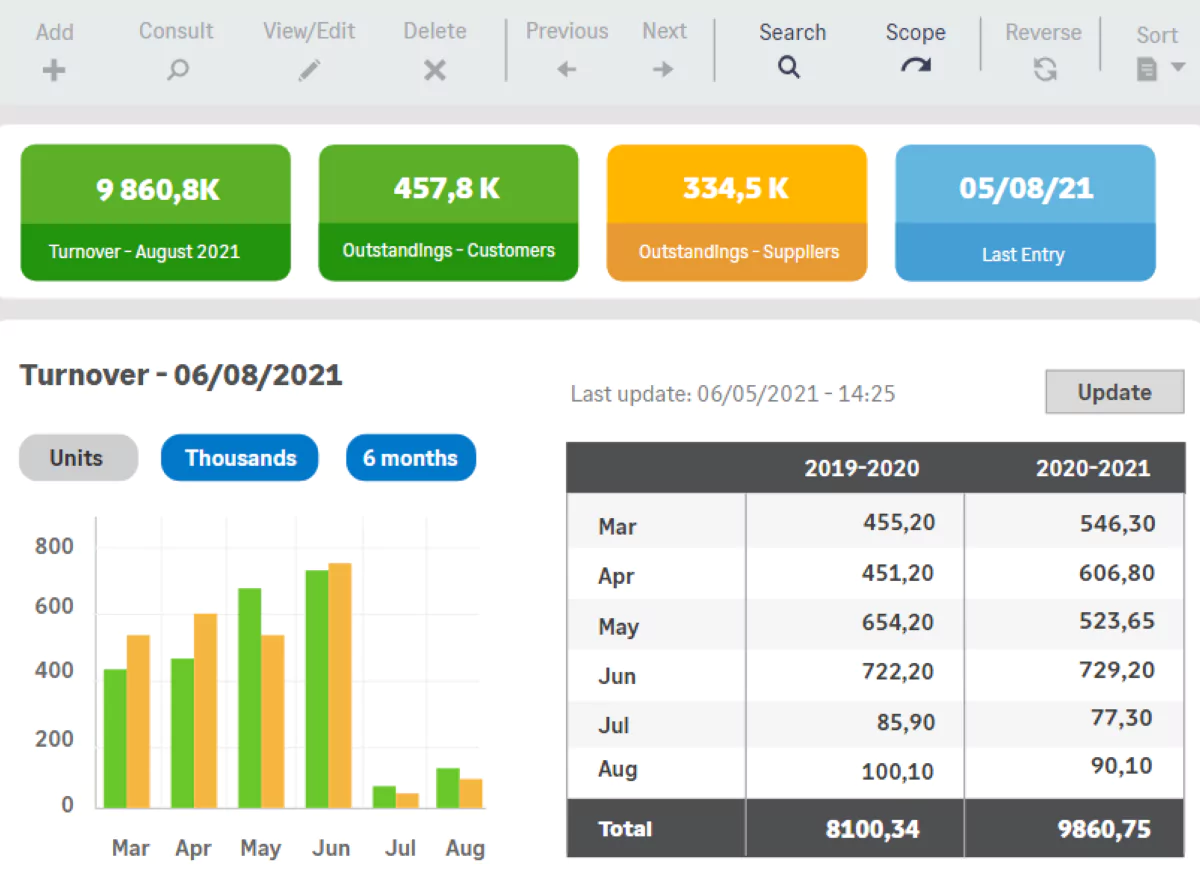
Schedule a Sage 100 demo to see the software in action and get a personalized walkthrough of how its modules can streamline your workflows, address your unique challenges, and support your long-term business goals.
What modules are included in Sage 100?
Sage 100 comes with essential ERP modules including General Ledger, Accounts Payable, Accounts Receivable, Bank Reconciliation, and Credit Card Processing. It also includes Sage Intelligence and Crystal Reports for reporting and insights. For more advanced needs, additional modules including manufacturing and distribution are available. This flexibility means the system can scale as your business grows and operations become more complex.
To learn about the differences between the three editions, read about Sage 100 capabilities.
Core Financials
General Ledger
The General Ledger module organizes your accounting structure, fiscal calendar, and reporting framework in one location. You can build unlimited budgets, manage multiple periods, and access detailed financial data for analysis and compliance. With robust reporting options, Sage 100 makes it easier to monitor performance, compare results to budgets, and support financial decision-making.

Accounts Payable
Accounts Payable centralizes vendor management to reduce administrative costs and simplify invoice entry. You can store multiple vendor addresses, retain years of history, and manage payments through ACH, checks, or electronic disbursements. Integrated tax calculations, purchase order links, and flexible invoice options streamline payables while improving vendor relationships and oversight.

Accounts Receivable
Accounts Receivable increases cash flow and enhances customer relationships by automating billing, invoicing, and collections. Users maintain control over receivables, credit checks, and customer statements. Built-in automation for recurring invoices, tax calculations, and commission tracking reduces errors, accelerates payments, and provides clear visibility into outstanding balances across all accounts.
Bank Reconciliation and automated Bank Feeds
The Bank Reconciliation module speeds up month-end close by automatically detecting discrepancies between books and bank statements. You can adjust entries, track multiple accounts, and project future cash flow. With automated bank feeds, reconciliations are even faster. Real-time updates and matching tools simplify verification and improve overall financial accuracy.

Paperless Office
Paperless Office helps businesses cut down on paper by storing documents digitally. It makes invoices, statements, and reports easy to save, access, and share. With secure electronic storage, businesses reduce clutter, lower costs, and improve efficiency while keeping important information organized and accessible anytime.
Credit Card Processing (and E-invoicing)
Sage 100 provides secure credit card processing and modern E-invoicing. Businesses can collect payments electronically, send invoices with click-to-pay links, and give customers online access to statements and payment options. This improves cash flow, reduces manual errors, and offers customers convenient, flexible ways to complete transactions securely.
Visual Integrator
Visual Integrator helps businesses move data smoothly between Sage 100 and other systems. It reduces manual entry, saves time, and improves accuracy. With easy mapping and scheduling options, it gives users more control and makes connecting different applications simpler and more efficient.
Custom Office
Custom Office lets businesses tailor Sage 100 to match their unique needs. It allows users to add custom fields, create personalized screens, and adjust workflows. These flexible options make it easier to capture the right information and improve day-to-day efficiency without relying on complex coding.
Sage CRM
Sage CRM provides businesses with tools to manage customer relationships, track sales opportunities, and streamline marketing efforts. It enables data to flow smoothly between accounting, sales, and customer service. Once activated, it ensures a unified view of customer interactions, improves sales tracking, and enhances overall business efficiency while maintaining accurate, real-time financial and operational data.

Reporting and analytics
- Sage Intelligence Reporting: Enables businesses to create custom financial and operational reports using the familiar Excel interface. It automates report generation, schedules dashboards, and integrates with Sage 100 modules to ensure accurate, real-time data. This improves decision-making, enhances data visibility, and streamlines reporting across financials, inventory, and sales operations.
- Crystal Reports: Delivers highly formatted, professional reports that pull data from multiple Sage 100 modules. You can include charts, graphs, and custom layouts to provide actionable insights. Reports are shareable in various formats, helping teams analyze financials, inventory, and operational performance while supporting both routine and executive-level reporting.
- Business Insights Explorer: Provides interactive drill-down access to Sage 100 data, allowing users to analyze transactions from summary to detail. Prebuilt dashboards and templates offer instant visibility into sales, inventory, and financial performance. By enhancing data exploration and accuracy, it enables better operational decisions and faster responses to changing business conditions.


Get the ultimate Sage 100 implementation guide
Don’t let costly mistakes or project delays disrupt your Sage 100 implementation. Learn proven strategies to simplify deployment, reduce risks, and maximize ROI. Get the expert insights you need to ensure a smooth and successful implementation from day one.
Advanced modules
Purchase Order
The Purchase Order module automates procurement by managing vendor information, purchase requests, and order tracking. Businesses can measure vendor performance on accuracy, delivery, and quality. Integrated with Accounts Payable and Inventory, it ensures proper cost allocation, accurate receiving, and timely replenishment, reducing costs while maintaining smooth supplier relationships and compliance.
Sales Order
The Sales Order module simplifies order entry, fulfillment, and invoicing. Track backorders, manage credit limits, and verify product availability in real time. Automated workflows reduce manual errors, while integration with Inventory, Accounts Receivable, and Purchasing ensures every order is processed efficiently, improving cash flow and customer satisfaction.
Inventory Management
Inventory Management provides visibility into stock levels, movements, and valuation. You can track items by lot, serial number, or location while optimizing reorder points and stock replenishment. Integration with Sales Order and Purchasing ensures accuracy, lowers carrying costs, and supports better customer service by ensuring the right products are available when needed.

Purchasing
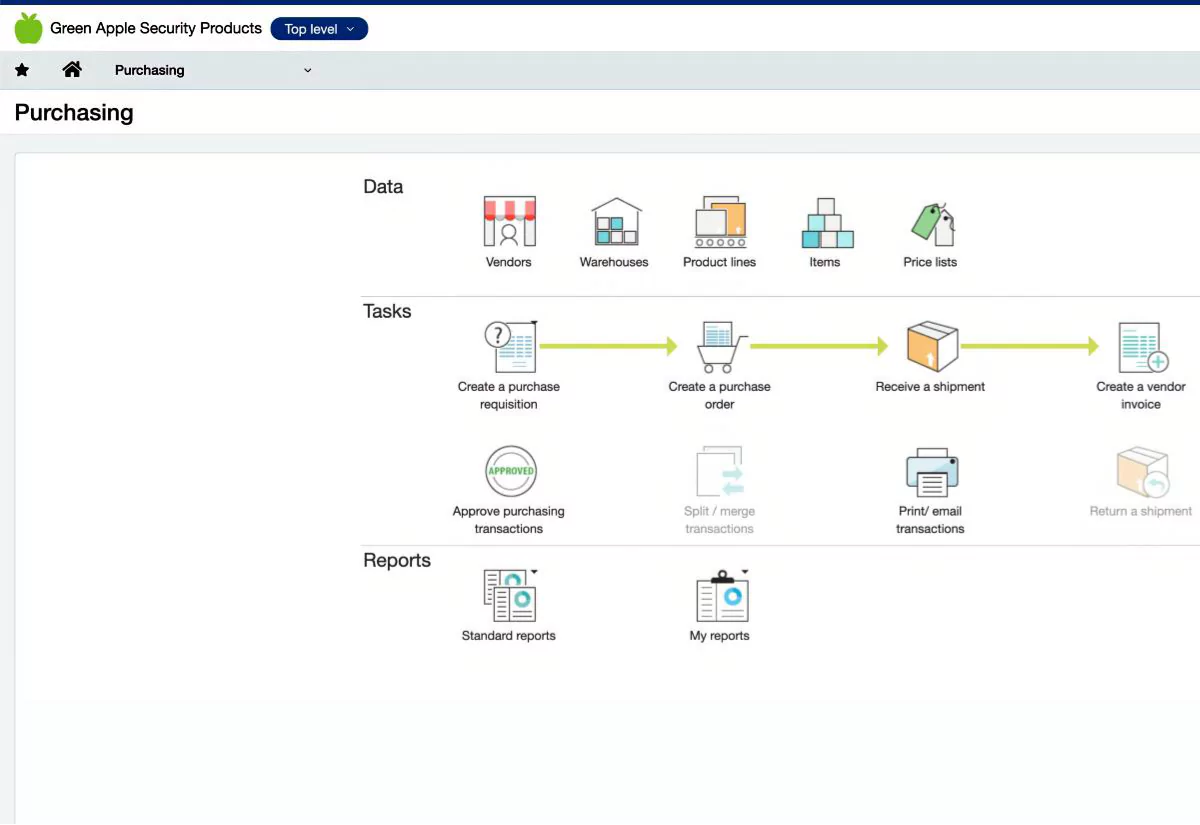
The Purchasing module streamlines procurement by managing vendor relationships, purchase orders, and approvals. It tracks costs, monitors deliveries, and ensures timely inventory replenishment. Integration with Accounts Payable and Inventory eliminates errors, automates workflows, and provides real-time visibility to support better decision-making and cost control.
Returns
Returns helps businesses manage product returns in Sage 100 more efficiently. It tracks returned items, records reasons, and issues credits or replacements quickly. By streamlining the returns process, it improves customer satisfaction and gives businesses clearer insight into return trends and inventory impact.
Return Merchandise Authorization
Return Merchandise Authorization (RMA) simplifies handling customer returns in Sage 100. It lets users issue RMAs, track items, and manage replacements or credits with ease. This organized process improves customer service, reduces errors, and gives businesses better visibility into product performance and return patterns.
Bill of Materials (BOM)
The Bill of Materials (BOM) module supports manufacturers by detailing product structures, component requirements, and production costs. Multiple BOMs can be defined for standard or custom products. Integration with Inventory and Production Management improves scheduling accuracy, reduces waste, and strengthens overall manufacturing efficiency.
Mobility for Bar Coding
The Mobility for Bar Coding module simplifies warehouse and field operations by enabling barcode scanning and mobile data capture. You can quickly process receiving, picking, shipping, and inventory counts with minimal errors. Real-time synchronization with Sage 100 ensures accurate inventory levels, faster order fulfillment, and improved productivity.
Sage and third-party add-on modules
Production
Production controls shop floor operations, tracks labor and materials, and optimizes capacity. With real-time visibility into work orders, businesses can monitor progress, adjust resources, and control costs. The module streamlines planning, improves lead times, and integrates with Inventory and Sales Orders to support lean manufacturing.
Inventory Requirements Planning (IRP)
Inventory Requirements Planning optimizes inventory levels by analyzing demand, supply, and lead times. It automates replenishment recommendations to ensure stock availability while minimizing carrying costs. Integration with Sales Order, Purchasing, and Production improves accuracy, reduces stockouts, and enhances operational efficiency.
Payroll
The Payroll module automates employee payments while ensuring compliance with federal, state, and local regulations. It handles tax updates, deduction calculations, direct deposits, and W-2 e-filing. Integrated with accounting, Payroll reduces manual entry, minimizes errors, and provides accurate reporting, giving businesses control over payroll operations efficiently and securely.
Time Track
Time Track (Time Card) captures employee hours for regular, overtime, PTO, and sick leave. Users can track hours by job, cost code, or project to support job costing and project profitability. Integration with Payroll ensures accurate pay calculations and reporting. Automation reduces errors, improves efficiency, and enhances workforce management.
Job Costing
Job Costing tracks expenses, revenue, and profitability across projects. Integration with payroll, purchasing, and Accounts Payable provides real-time cost visibility. Detailed reporting allows companies to compare estimated versus actual expenses, improve project planning, and ensure profitability on contracts, construction jobs, or service engagements.
Sage Fixed Assets
Fixed Assets tracks and manages equipment, technology, and property while automating depreciation. Assets purchased through Accounts Payable or Purchase Order are automatically recorded. Businesses benefit from precise depreciation rules, streamlined tax reporting, and audit-ready records, eliminating manual spreadsheets and reducing compliance risk.

Partner with Sage 100 experts
Sage 100 unifies financials, inventory, purchasing, sales, and manufacturing into a flexible, modular ERP solution. To get the most out of the system, partnering with an expert is crucial. Rand Group is a top Sage 100 partner, helping organizations implement, configure, and optimize the software to fit workflows, industry needs, and growth goals.
Our services include:
- Implementation and customization: End-to-end implementation including system setup, workflow configuration, and customizations.
- Integration services: Connect Sage 100 to third-party applications, legacy systems, and business intelligence tools for a unified technology environment.
- Process optimization and automation: Automate workflows, reporting, and real-time analytics to boost efficiency and support data-driven decision-making.
- Ongoing support: Ensure long-term success through support, including system monitoring, updates, troubleshooting, and user training.
Get started
Sage 100 is a comprehensive ERP system with modules for financials, inventory, purchasing, sales, and more. By understanding its capabilities and how they apply to your business, you can choose the right setup and modules for growth. Contact us today to see how Sage 100 can simplify and strengthen your operations.