Sage 100 for distribution companies: Streamlining inventory and warehouse operations

When inventory data is inaccurate or systems don’t communicate, distribution operations become reactive instead of strategic. Missed orders, excess stock, and warehouse inefficiencies aren’t just frustrating; they directly impact your bottom line. For distributors managing multiple locations, these challenges only intensify.
That’s where enterprise resource planning (ERP) systems come in. By unifying core business processes, ERP solutions help distributors gain greater control, improve accuracy, and scale with confidence. For small to mid-sized organizations, Sage 100 stands out as a powerful ERP solution. While often referred to as “Sage 100 distribution,” it’s not a standalone product but rather a suite of integrated modules designed to support key distribution functions, from inventory and purchasing to sales orders and financials. In this blog, we’ll explore what Sage 100 is, how its distribution capabilities work, and why it’s a strong fit for growing wholesale distributors.
What is Sage 100?
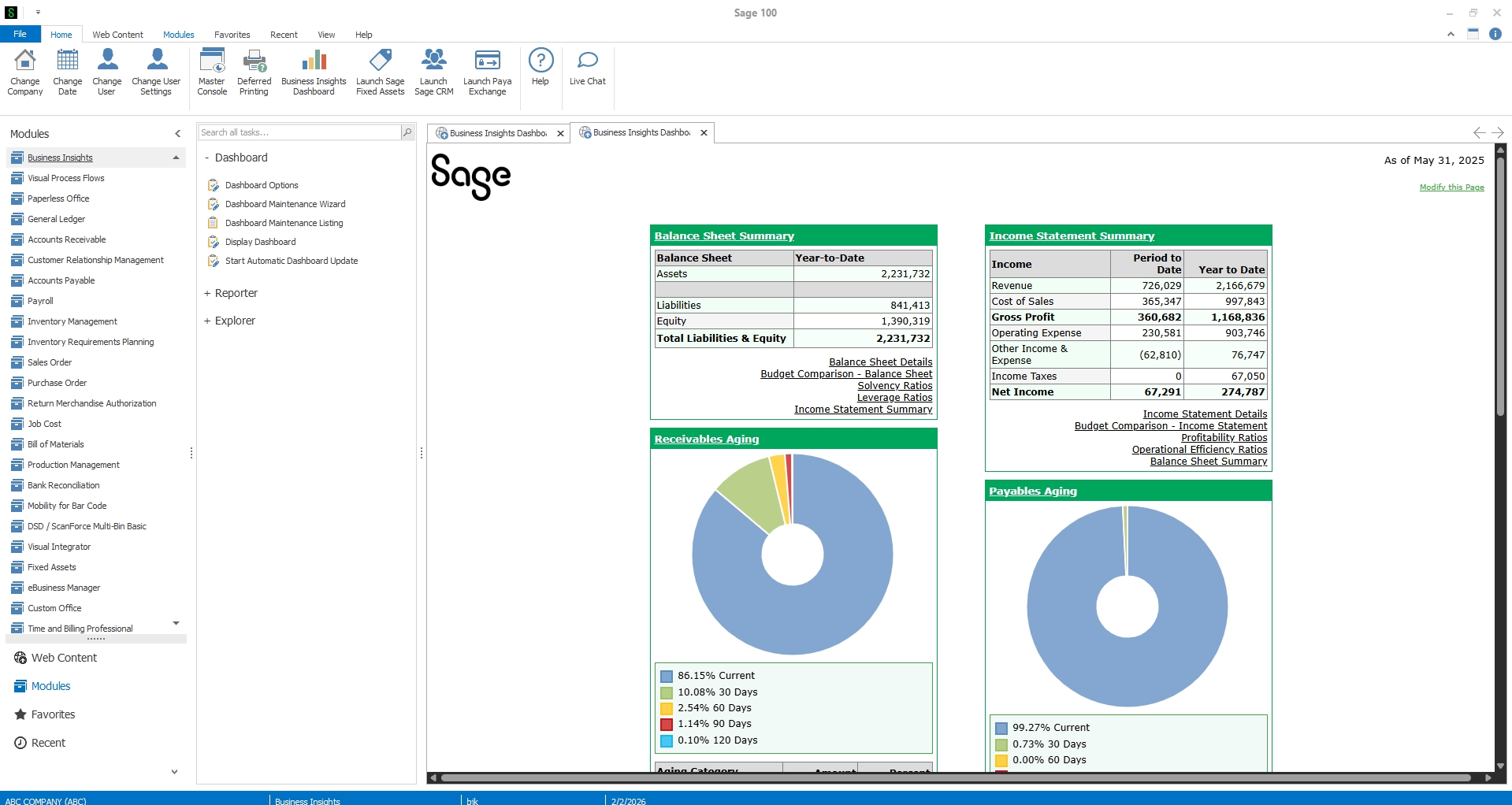
Sage 100 is an enterprise resource planning (ERP) system designed for small and mid-market companies. It offers enhanced functionality for the wholesale distribution and manufacturing sectors. It delivers a modular suite of applications that connect financial management with operational processes, enabling businesses to manage their entire distribution lifecycle within a single system.
Whether deployed on-premises or hosted in the cloud, Sage 100 provides a flexible foundation for managing purchasing, inventory, sales orders, and financials, all in one place. The platform’s modular architecture allows companies to start with core functionality and expand as their needs evolve. This scalability makes it an ideal solution for distributors looking to modernize operations without overhauling their entire technology stack at once.
At its core, Sage 100 connects:
- Inventory and warehouse operations
- Sales and customer management
- Purchasing and vendor relationships
- Financial accounting and reporting
By unifying these functions, distributors gain better visibility, improved accuracy, and more control over day-to-day operations.

Ready to get more from your distribution operations?
Learn how Sage 100 can support your business and streamline your processes. Schedule a consultation with one of our Sage experts today.
Key Sage 100 distribution features
To stay competitive, distributors need more than basic inventory tracking; they need connected tools that provide visibility, automation, and control across the entire supply chain. Sage 100’s distribution modules deliver a comprehensive set of features designed to streamline warehouse operations, improve accuracy, and support smarter decision-making at every stage of the distribution cycle.
Inventory management and warehouse visibility
Inventory is at the heart of any distribution business, and Sage 100 provides robust tools to manage it effectively. With real-time visibility across multiple warehouses, distributors can track stock levels, monitor movement, and make informed decisions about replenishment.
Key capabilities include:
- Multi-warehouse inventory tracking
- Lot and serial number tracking for traceability
- Kitting and light assembly functionality
- Automated reorder points to prevent stockouts
With these capabilities, businesses can reduce excess inventory, avoid shortages, and maintain optimal stock levels while improving warehouse efficiency.

Sales order and order fulfillment
Efficient order processing is essential for maintaining customer satisfaction. Sage 100 streamlines the entire sales order lifecycle, from entry to fulfillment.
Users can access critical information, such as customer history, credit limits, and inventory availability, directly within the order entry process. This ensures orders are accurate and can be fulfilled without delays.
Benefits include:
- Faster order entry and processing
- Improved order accuracy
- Real-time inventory validation
- Better customer service through enhanced visibility
By centralizing order management, Sage 100 helps distributors fulfill orders more efficiently and reduce costly errors.
Purchase order and vendor management
Maintaining strong supplier relationships and ensuring timely replenishment is key to keeping operations running smoothly. Sage 100 automates purchasing workflows and provides tools to manage vendor performance.
With purchase order functionality, distributors can:
- Track open purchase orders and expected receipts
- Monitor vendor performance and delivery timelines
- Automate replenishment based on demand
- Improve communication with suppliers
This level of visibility allows organizations to optimize procurement strategies and avoid disruptions in the supply chain.
Inventory Requirements Planning (IRP)
Demand planning is one of the most complex challenges in distribution. Sage 100 addresses this with Inventory Requirements Planning (IRP), a modern alternative to traditional MRP tools. IRP analyzes current demand, inventory levels, and lead times to recommend purchasing or production quantities. This helps businesses make smarter decisions about when and how much to order.
With Sage 100, distribution companies can:
- Forecast demand more accurately
- Reduce excess inventory and carrying costs
- Improve service levels by avoiding stockouts
- Align purchasing with actual business needs
Warehouse mobility and barcode scanning
Manual data entry in warehouse operations can lead to errors, inefficiencies, and delays. Sage 100 enhances warehouse productivity with mobility and barcode scanning capabilities.
Using handheld devices, warehouse staff can:
- Perform physical inventory counts
- Process shipments and receipts
- Update inventory in real time
This reduces errors, speeds up processes, and ensures data accuracy across the system. For distributors managing high volumes of inventory, these capabilities are essential for maintaining operational efficiency.
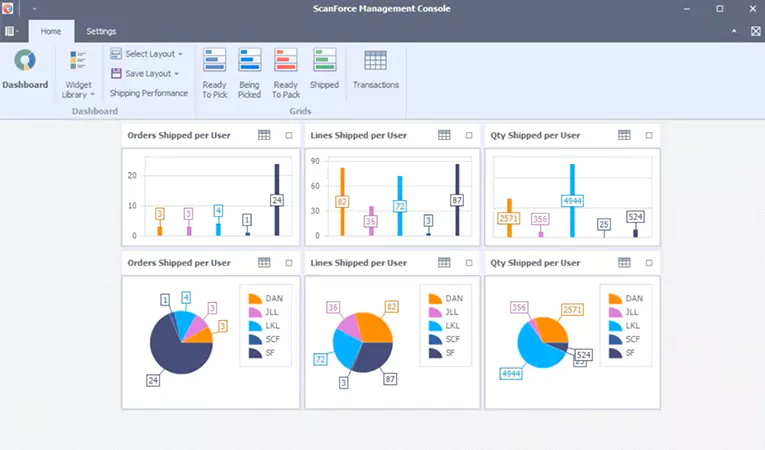
For organizations looking to extend these capabilities even further, we offer add-on solutions like ScanForce. ScanForce is a powerful barcode and warehouse automation application for Sage 100. It provides advanced functionality for real-time data collection, warehouse management, and process optimization. When paired with Sage 100, ScanForce helps create a more connected, efficient, and accurate warehouse environment.
Advanced functionality for distribution companies
Beyond core distribution capabilities, Sage 100 offers advanced tools that help streamline financial processes, enhance reporting, and extend system functionality. These features are designed to reduce manual work, improve accuracy, and provide deeper insights, empowering distributors to operate more strategically and efficiently.
Expense distribution tables
Sage 100 includes specialized features that simplify financial processes, such as expense distribution tables. This functionality allows users to predefine how recurring expenses, like rent or utilities, are allocated across general ledger accounts.
The result is:
- Faster accounts payable processing
- Reduced manual data entry
- Improved consistency in financial reporting
Advanced reporting and analytics
Data-driven decision-making is critical in today’s distribution environment. Sage 100 offers powerful reporting tools, including Sage Business Insights Explorer and Crystal Reports, to help businesses gain deeper insight into operations.
These tools enable:
- Custom report creation
- Exporting data into Excel-like formats
- Real-time visibility into key performance metrics
With Sage 100, distribution leaders can analyze trends, monitor performance, and make informed strategic decisions.
Third-party integrations and ecosystem
No ERP system operates in isolation. Sage 100 supports a wide range of third-party integrations, allowing distributors to extend functionality and connect with other business systems.
Examples include:
- Forecasting tools like Sage Inventory Advisor
- EDI solutions for trading partner communication
- Integration with CRM and eCommerce platforms
This flexibility ensures that your system can adapt to evolving business needs and integrate seamlessly into existing technology ecosystems.
Key benefits of Sage 100 for distributors
- Improved inventory control – With real-time visibility and advanced planning tools, distributors can better manage inventory levels. This reduces the risk of stockouts and overstocking while improving inventory turnover.
- Enhanced operational efficiency – Automation across purchasing, order processing, and warehouse management eliminates manual tasks and reduces errors. This allows teams to focus on higher-value activities and improves overall productivity.
- Better financial visibility – By connecting operational data with financials, Sage 100 provides a complete picture of business performance. Distributors can track margins, monitor costs, and gain insights into profitability.
- Scalability for growth – As businesses expand, their systems must evolve. Sage 100’s modular design and multi-location capabilities make it easy to scale operations without disrupting existing workflows.
- End-to-end distribution management – From purchasing and inventory management to sales and returns, Sage 100 supports the entire distribution lifecycle. This eliminates data silos and creates a more cohesive, efficient operation.
Why Sage 100 stands out for distribution companies
There are many ERP solutions on the market, but Sage 100 is uniquely positioned for small to mid-sized distributors. It strikes a balance between robust functionality and ease of use, making it accessible without sacrificing capability.
Key differentiators include:
- Industry-specific functionality for distribution and manufacturing
- Flexible deployment options (on-premises or cloud-hosted)
- Strong ecosystem of integrations and add-ons
- Proven track record with a large user base
For companies seeking a reliable, scalable ERP solution, Sage 100 offers a compelling combination of features and value.
Sage 100 for distribution companies: FAQs
Who is Sage 100 best suited for?
Sage 100 is ideal for small to mid-sized wholesale distributors and manufacturers that need better visibility and control over operations.
Can Sage 100 handle multiple warehouses?
Yes. It provides real-time inventory tracking across multiple locations, including lot and serial number tracking.
Is Sage 100 cloud-based?
Sage 100 can be deployed on-premises or hosted in the cloud, giving businesses flexibility based on their IT strategy.
Does Sage 100 support barcode scanning?
Yes. Mobility and barcode solutions enable warehouse staff to manage inventory more efficiently using handheld devices.
Can Sage 100 integrate with other systems?
Absolutely. It supports integrations with CRM, eCommerce platforms, EDI solutions, and forecasting tools.
How does Sage 100 improve demand planning?
Through Inventory Requirements Planning (IRP) and integration with advanced forecasting tools, Sage 100 helps businesses align inventory with demand.

What to look for in an ERP implementation partner
A strong ERP partner does more than implement software; they help guide your business toward long-term success. Learn the seven key factors to consider when making your selection in our white paper.
Maximize your Sage 100 investment with Rand Group
Implementing an ERP system is a significant investment, and choosing the right partner is just as important as choosing the right software.
Our Sage team offers deep expertise in ERP consulting and implementation, with a strong focus on distribution and manufacturing organizations. As a trusted Sage partner, Rand Group helps businesses maximize the return on their software investment.
Our services include:
- ERP implementation and system configuration
- Business process optimization
- Custom integrations and enhancements
- Ongoing support, training, and managed services
We take a consultative approach, working closely with your team to understand your unique challenges and design a solution that aligns with your goals. From initial planning to long-term support, we are committed to helping you succeed.
Conclusion
In distribution, inefficiency is expensive. Disconnected systems and manual processes can slow operations, reduce visibility, and limit your ability to scale. Sage 100 for distribution companies offers a unified ERP solution, helping distributors streamline operations, improve inventory control, and make more informed decisions.
Looking to optimize your distribution processes? Connect with our Sage team today to see how Sage 100 can support your next phase of growth.