What does an ERP software selection consultant do?

Choosing the right enterprise resource planning (ERP) software is a major business decision. With so many platforms, features, and vendors available, it can be difficult to determine which system best meets your needs. Businesses must consider functionality, costs, technical requirements, and future growth before committing to a long-term software investment.
An ERP software selection consultant helps businesses navigate these decisions with expert guidance and a structured evaluation process. In this guide, we explain what ERP selection consultants do, their key responsibilities, the benefits of working with one, and how to choose the right consulting partner for your organization.
At a glance
An ERP software selection consultant helps businesses evaluate and choose ERP software that meets their operational, financial, and technical needs. Their responsibilities include assessing business processes, defining requirements, comparing ERP platforms, evaluating vendors, and analyzing costs and risks. ERP selection consulting helps organizations make informed software decisions, reduce selection risks, and prepare for implementation.
What is an ERP software selection consultant?
An ERP consultant is a business technology expert who helps organizations evaluate, implement, and improve enterprise resource planning (ERP) systems. ERP software connects core business functions, including accounting, finance, inventory, manufacturing, and supply chain management. Consultants combine technical expertise with business process knowledge to help organizations choose and use these systems effectively.
An ERP software selection consultant specializes in helping businesses identify and choose the ERP system that best meets their needs. They work with business leaders, IT teams, and department managers to understand current challenges and identify software requirements. Their goal is to help organizations select a solution that aligns with their operations, budget, and long-term business goals.
ERP selection consultants may work independently or as part of consulting firms with expertise across multiple ERP platforms. They bring business, technical, and industry knowledge to the selection process. While both types can provide valuable guidance, their software expertise, vendor relationships, and evaluation methods may differ.
What does an ERP software selection consultant do?
An ERP software selection consultant guides businesses through the process of evaluating and choosing a new ERP system. Their responsibilities include assessing current operations, defining software requirements, comparing ERP platforms, coordinating vendor evaluations, and analyzing costs and risks. The goal is to help organizations make informed decisions and prepare for a successful implementation.
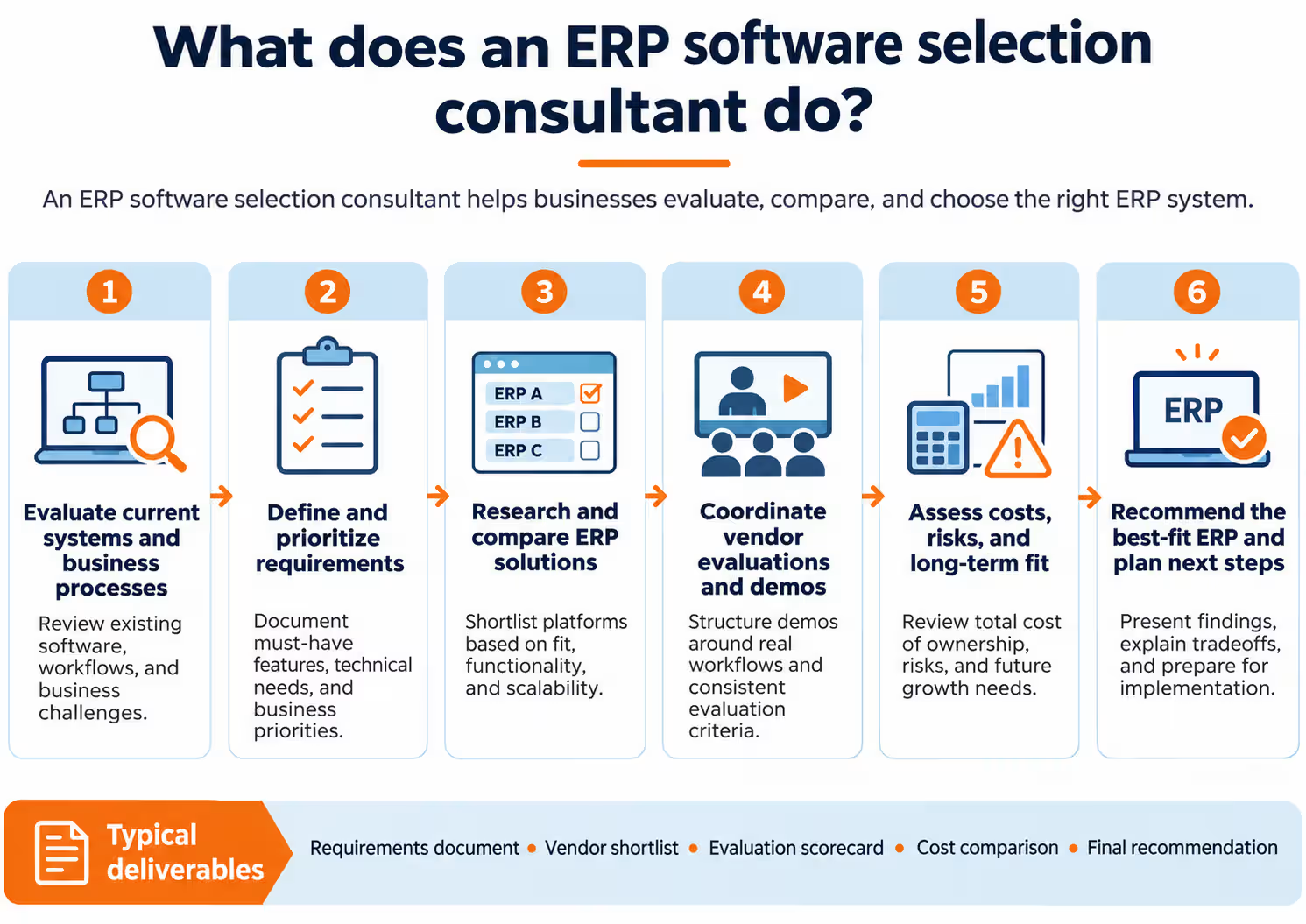
Evaluate current systems and business processes
The first step in ERP software selection is understanding how the business operates today. An ERP consultant reviews existing technology, examines daily workflows, and identifies challenges that affect efficiency. This assessment helps determine which problems the new system needs to solve and where improvements are possible.
Common assessment activities include:
- Reviewing existing systems: Evaluate current ERP software, accounting applications, spreadsheets, and other business tools.
- Interviewing stakeholders: Gather input from employees and leaders across finance, operations, IT, and other departments.
- Analyzing business processes: Review how work moves between departments and identify opportunities to improve workflows.
- Identifying current challenges: Uncover manual processes, duplicate data entry, reporting gaps, and disconnected systems.
- Assessing business goals: Understand plans for growth, expansion, and operational changes that may affect software needs.
Define and prioritize ERP software requirements
Once the current environment is understood, the ERP selection consultant translates business needs into clear software requirements. These requirements establish what the new system must accomplish and provide a consistent basis for evaluating vendors. Consultants also help prioritize requirements so essential capabilities receive the most attention during the selection process.
Key responsibilities include:
- Functional requirements: Document essential capabilities for accounting, finance, inventory, manufacturing, purchasing, and other business functions.
- Technical requirements: Identify integration, security, data migration, deployment, and performance needs.
- Industry-specific requirements: Define specialized workflows, regulatory requirements, and industry-specific functionality.
- Requirement prioritization: Separate must-have capabilities from preferred features and optional enhancements.
- Stakeholder alignment: Confirm that requirements reflect the needs and priorities of key departments and decision-makers.
Research and compare ERP software solutions
With clear requirements established, the consultant identifies ERP platforms that could meet the organization’s needs. Rather than evaluating every available product, they narrow the options based on business size, industry, budget, and operational complexity. This creates a shortlist of suitable ERP solutions for further evaluation.
The comparison process typically includes:
- Identifying suitable platforms: Research ERP systems that align with business requirements and organizational goals.
- Comparing functionality: Assess financial management, operations, reporting, automation, AI capabilities, and other required features.
- Evaluating technical compatibility: Review integration capabilities, deployment options, scalability, and customization requirements.
- Identifying functionality gaps: Determine whether specific needs require additional modules, third-party applications, or custom development.
- Creating a vendor shortlist: Select the strongest ERP candidates for detailed demonstrations and evaluation.
Coordinate vendor evaluations and demonstrations
ERP software demonstrations help businesses understand how different platforms would support their operations. However, standard vendor presentations may focus on features rather than specific business needs. An ERP selection consultant coordinates structured demonstrations that allow stakeholders to evaluate each system using consistent criteria and realistic scenarios.
Their responsibilities may include:
- Managing vendor communication: Coordinate requests for information, requests for proposals (RFPs), and follow-up questions.
- Preparing demonstration scenarios: Ask vendors to demonstrate important workflows using examples relevant to the business.
- Engaging key stakeholders: Include employees and decision-makers who will use or manage the future ERP system.
- Developing evaluation scorecards: Establish consistent criteria for scoring functionality, usability, and overall suitability.
- Documenting evaluation results: Record findings, outstanding questions, and potential limitations for each platform.
Assess costs, risks, and long-term fit
ERP software costs extend beyond licensing fees or monthly subscriptions. An ERP consultant evaluates the total cost of ownership (TCO) to help businesses understand the full financial commitment. They also identify potential risks and assess whether each solution can support changing business needs over time.
Key areas of evaluation include:
- Software and licensing costs: Compare subscription fees, user licenses, additional modules, and third-party applications.
- Implementation expenses: Estimate costs for configuration, customization, data migration, integrations, and employee training.
- Ongoing ownership costs: Consider maintenance, support, upgrades, and future system enhancements.
- Project risks: Identify potential challenges involving data quality, system compatibility, business disruption, and user adoption.
- Long-term suitability: Assess whether the platform can support business growth, additional users, and evolving operations.
Recommend the best-fit ERP and plan next steps
After completing the evaluations, the ERP software selection consultant presents the findings and recommends the most suitable solution. This recommendation considers how well each platform meets business requirements, its total cost, and potential implementation challenges. The consultant helps decision-makers understand the tradeoffs between options and prepare for the next stage of the project.
Typical responsibilities include:
- Presenting evaluation results: Summarize how each shortlisted ERP solution meets the organization’s requirements.
- Explaining tradeoffs: Highlight strengths, limitations, potential risks, and areas requiring additional investment.
- Providing recommendations: Identify the ERP solution that offers the strongest overall business and technical fit.
- Supporting final decisions: Help stakeholders review findings and reach agreement on the preferred solution.
- Preparing for implementation: Outline initial project considerations, resource needs, and recommended next steps.
At the end of the engagement, typical ERP selection consultant deliverables include a business requirements document, vendor shortlist, software evaluation scorecard, total cost comparison, and final recommendation. The exact deliverables depend on the scope of the project.
For a more detailed look at evaluating ERP systems, read our ERP selection checklist blog.

Download our top 10 ERP software selection checklist
Choosing the right ERP system requires careful planning and evaluation. Download our free checklist to review key considerations, compare your options, and prepare for a successful ERP selection.
What is the difference between an ERP selection consultant and an implementation consultant?
An ERP selection consultant helps businesses evaluate and choose the right software, while an ERP implementation consultant helps configure and deploy the selected system. Both roles require technical and business expertise, but they focus on different stages of an ERP project.
While businesses can hire separate consultants for each stage, working with a partner that offers both ERP selection and implementation services provides important advantages. The same team can carry your business requirements, software decisions, and project goals directly into implementation. This continuity reduces the need to repeat assessments, improves communication, and helps prevent requirements from being lost between project stages.
An end-to-end ERP consulting partner can also identify potential implementation challenges during software selection, helping your organization make decisions with the full project in mind. With one partner managing both stages, your business benefits from consistent guidance, clearer accountability, and a smoother transition from evaluation to deployment.
To understand the next stage of an ERP project, read our ERP implementation timeline blog.
When should you hire an ERP software selection consultant?
Businesses should consider hiring an ERP software selection consultant when choosing a new ERP system involves complex requirements, competing priorities, or limited internal expertise. The best time to engage a consultant is early in the selection process, before committing to a specific platform or software contract. This allows your organization to evaluate its options before making a major investment.
Signs your business may need ERP selection consulting include:
- Your current software no longer meets your needs: Outdated systems, disconnected applications, or manual workarounds make daily operations difficult and limit growth.
- You are comparing multiple ERP platforms: Your team needs help understanding differences in functionality, pricing, and suitability for your business.
- You lack internal ERP expertise: Employees have limited experience evaluating ERP systems, comparing vendors, or managing software selection projects.
- Your business has complex requirements: Multiple entities, industry-specific processes, integration needs, or compliance requirements make finding the right software more challenging.
- Departments have competing priorities: Finance, operations, IT, and other teams have different expectations for what the new ERP system should deliver.
- Your internal resources are limited: Employees lack the time or capacity to manage vendor research, software demonstrations, and detailed evaluations alongside daily responsibilities.
- Your organization is undergoing major changes: Business expansion, acquisitions, restructuring, or cloud migration create new software requirements.
Not every business needs an external ERP selection consultant. Organizations with straightforward requirements and experienced internal teams may be able to manage the process themselves. However, as business complexity increases, an experienced consultant can provide the guidance needed to evaluate options and make a confident software decision.
What are the benefits of working with an ERP selection consultant?
Working with an ERP selection consultant helps businesses make better software decisions while saving time, reducing risks, and gaining a clearer understanding of their investment. Consultants bring experience across ERP platforms, industries, and software projects. This expertise helps organizations avoid common selection mistakes and choose a system that supports their business today and as it grows.
The key benefits of ERP selection consulting include:
- More informed decisions: Choose ERP software based on your business needs, rather than vendor claims, sales presentations, or individual preferences.
- Reduced selection risk: Identify potential software limitations, technical challenges, and costly requirements before committing to a system.
- Time and resource savings: Reduce the workload on internal teams and streamline the evaluation process without disrupting daily operations.
- Greater cost transparency: Understand the full cost of ERP ownership, including licensing, implementation, maintenance, and ongoing support.
- Access to specialized expertise: Gain insights from professionals who understand ERP technology, industry requirements, and common implementation challenges.
- Stronger stakeholder alignment: Build agreement across departments and give decision-makers greater confidence in the final software choice.
- Improved implementation readiness: Begin the next phase with clear requirements, realistic expectations, and fewer unexpected challenges.
These benefits help businesses make ERP investments with greater confidence and a stronger foundation for long-term success. However, the value of ERP selection consulting depends on choosing a partner with the right experience, expertise, and approach.

Find the right ERP software for your business
Not sure which ERP system is the best fit for your organization? Rand Group’s ERP selection consultants can help you evaluate leading solutions, compare costs, and select software that aligns with your business needs and long-term goals.
How to choose the right ERP software selection consultant
Choosing the right ERP software selection consultant requires more than reviewing technical skills and software certifications. Look for a partner who understands your business, has experience with relevant ERP platforms, and follows a clear evaluation process. The consultant should be able to explain how they compare solutions and ensure their recommendations reflect your organization’s needs.
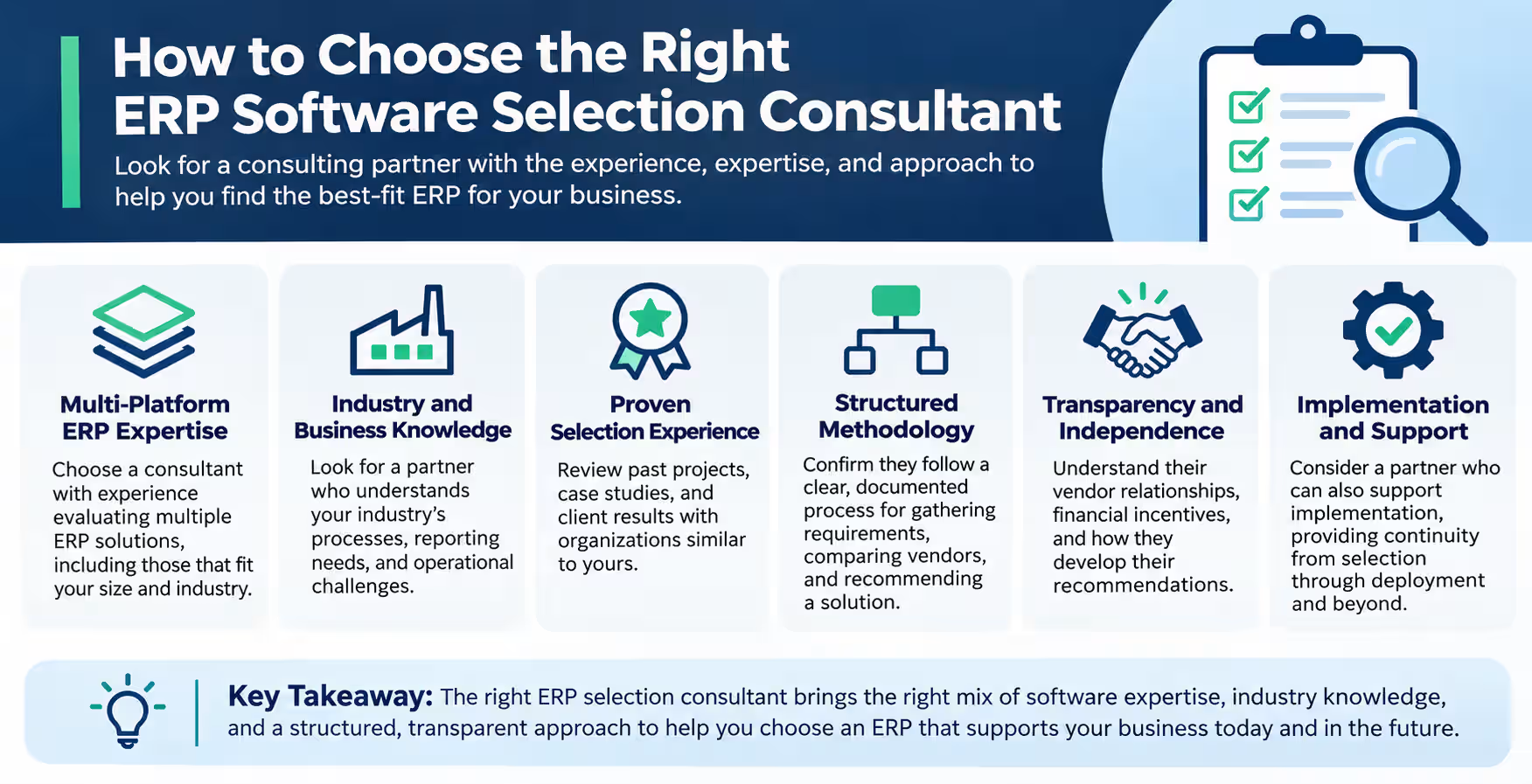
What to look for in an ERP consultant
A qualified ERP consultant should bring a combination of software knowledge, industry experience, and business process expertise. Before selecting a partner, evaluate their qualifications and how they approach ERP software selection projects.
Key factors to consider include:
- Multi-platform ERP expertise: Look for experience evaluating different ERP systems, including solutions that fit your business size, industry, and requirements.
- Industry and business knowledge: Choose a consultant who understands your industry’s workflows, reporting needs, compliance requirements, and operational challenges.
- Proven selection experience: Review past ERP selection projects involving organizations with similar needs and levels of complexity.
- Structured evaluation methodology: Confirm the consultant follows a clear process for gathering requirements, comparing vendors, scoring solutions, and presenting recommendations.
- Transparent vendor relationships: Understand the consultant’s software partnerships, financial incentives, and how these relationships may influence recommendations.
- Implementation and support capabilities: Consider a partner who can support both software selection and implementation, providing continuity throughout the ERP project.
- Client references and results: Look for case studies, testimonials, and client references that demonstrate relevant experience and successful outcomes.
A strong ERP consultant should take the time to understand your business before recommending software. They should also explain where each platform may fall short, helping you evaluate potential limitations before making a commitment.
Questions to ask before hiring an ERP consultant
Before hiring an ERP software selection consultant, ask questions that help you evaluate their experience, approach, and ability to support your project.
- What ERP platforms do you have experience evaluating? Ask about their experience with different software publishers and businesses similar to yours.
- How do you assess our business needs and software requirements? Understand how they gather information, involve stakeholders, and identify your organization’s priorities.
- How do you compare ERP systems and make recommendations? Ask about their evaluation criteria, scoring methods, and approach to managing vendor relationships.
- What deliverables should we expect from the engagement? Confirm which documents, evaluations, recommendations, and other resources will be provided.
- Can you help with implementation once the software is selected? Determine whether the consultant provides implementation services and how they support the transition from selection to deployment.
The answers should help you compare potential ERP consulting partners and understand what to expect from the engagement. Look for clear explanations, relevant examples, and a defined scope of work before making your decision.
Why partner with Rand Group for ERP software selection?
Rand Group helps businesses evaluate and select ERP software based on their unique operational needs and long-term goals. As a multi-platform ERP consulting partner, we bring together software expertise, business process knowledge, and industry experience to help organizations identify the right solution. Our team also provides implementation and ongoing support, allowing us to consider the full ERP lifecycle from the start.
Founded in 2003, Rand Group has completed more than 3,000 successful engagements, serves more than 1,200 clients, and maintains a 90% client retention rate. Our team includes experienced consultants, accountants, engineers, and industry specialists who understand both the business and technical sides of ERP systems.
Why businesses choose Rand Group for ERP software selection consulting:
- Multi-platform ERP expertise: Evaluate leading ERP solutions, including Microsoft Dynamics 365 Business Central, Dynamics 365 Finance & Operations, Oracle NetSuite, Sage Intacct, and Sage 100, to identify the best fit for your business.
- Business and industry knowledge: Work with consultants who understand accounting, finance, manufacturing, distribution, professional services, and industry-specific requirements.
- Structured selection methodology: Follow a clear evaluation process that connects your business requirements with suitable ERP solutions, helping you make informed decisions.
- End-to-end ERP services: Work with one partner for software selection, implementation, integrations, training, and ongoing support to maintain continuity throughout your ERP journey.
- Proven client experience: Benefit from our experience helping organizations replace outdated systems, improve business processes, and achieve measurable results with modern ERP solutions.
Rand Group offers ERP selection consulting as a standalone service or as the first step in a complete ERP implementation engagement. Explore our ERP software selection services to learn how we can help your business evaluate its options.
Case study: From ERP selection to measurable results at Conquest Completion Services
Conquest Completion Services, an oilfield services company, needed to replace QuickBooks, spreadsheets, and paper-based processes with an integrated ERP system. After evaluating SAP, Oracle, and Microsoft solutions, the company turned to Rand Group for industry and technical expertise. Our team helped Conquest select and implement Dynamics 365 Finance & Operations and Dynamics 365 Field Service. Following implementation, purchase order approval times decreased from 10 days to 3 days, while days sales outstanding dropped from 15–20 days to just 3 days.
What our clients say about Rand Group
“We have always felt like a top priority when working with Rand Group’s team and have the utmost confidence in their industry and technical knowledge.”
– Christa Curette, VP of Engineering & Technology, Conquest Completion Services, LLC
“The level of care, thoughtfulness, and in-depth knowledge provided by Rand Group exceeded our expectations. We now have a partner who not only understands NetSuite but also comprehends the intricacies of accounting and finance. Rand Group has become an extension of our internal technical team, providing invaluable support as we continue to grow.”
– Carolina Pereira, VP of Finance Shared Services, Unified Women’s Healthcare
“ Rand Group has become a resource we can lean on when we are trying to improve or digitize a process. Because of the time spent with our business, the team can go beyond the superficial layers and help us get to solutions that have a material impact on operations.”
– Scott Rolston, President, Stucchi USA
Key takeaways
- An ERP software selection consultant helps businesses choose an ERP system that aligns with their operations, budget, and long-term goals.
- ERP selection consultant responsibilities include assessing business needs, defining requirements, comparing software, evaluating vendors, and analyzing costs and risks.
- ERP selection consultants focus on choosing the right software, while implementation consultants handle system configuration, data migration, and deployment.
- Businesses should hire an ERP selection consultant early, especially when facing complex requirements, limited internal expertise, or multiple software options.
- ERP selection consulting helps reduce risks, save time, improve cost visibility, and prepare businesses for successful implementation.
- The right ERP consultant should offer multi-platform expertise, industry knowledge, a structured evaluation process, and transparent recommendations.
Frequently asked questions (FAQs)
How much does an ERP software selection consultant cost?
ERP software selection consulting costs depend on the size, complexity, and scope of the project. Consultants may charge hourly rates, fixed project fees, or milestone-based fees. Costs typically increase when engagements involve multiple departments, complex requirements, or extensive vendor evaluations. Request a detailed proposal outlining the expected services, deliverables, and fees.
How long does ERP software selection consulting take?
ERP software selection consulting typically takes several weeks to a few months, depending on the organization’s requirements and evaluation process. Smaller businesses with straightforward needs may complete the process faster, while complex organizations may need more time. Stakeholder availability, the number of vendors evaluated, and software demonstrations can also affect the timeline.
What should we prepare before meeting with an ERP selection consultant?
Before meeting with an ERP selection consultant, prepare an overview of your current software, business challenges, and goals for a new system. It also helps to identify key stakeholders, required integrations, and an estimated budget. You do not need a complete requirements document, as developing one is often part of the consulting engagement.
How involved should our internal team be during ERP software selection?
Your internal team should remain actively involved throughout the ERP software selection process. Business leaders, department managers, and IT staff provide essential information about workflows, requirements, and priorities. They should also participate in key demonstrations and decisions. The consultant manages the evaluation process, but your organization retains responsibility for the final software choice.
Can an ERP selection consultant help if we already have a preferred ERP system?
Yes, an ERP selection consultant can evaluate a preferred ERP system to confirm whether it meets your organization’s needs. They can identify functionality gaps, assess implementation requirements, review total costs, and compare the platform with alternatives. This helps validate your preferred solution before committing to software licenses and implementation services.
Does an ERP selection consultant need to be independent of software vendors?
No, an ERP selection consultant does not need to be independent of software vendors to provide valuable guidance. Independent consultants and multi-platform ERP partners can both support software evaluations. The most important factors are transparent vendor relationships, relevant platform expertise, and a structured evaluation process based on your business requirements.
Can the same ERP consultant handle software selection and implementation?
Yes, many ERP consulting firms offer both software selection and implementation services. Working with the same partner can improve continuity because the team already understands your business requirements, software decisions, and project goals. However, ERP selection can also be a standalone engagement if you prefer to use a different implementation provider.
Make an informed ERP software selection
Selecting the right ERP system requires a clear understanding of your business needs, available software options, and long-term goals. An experienced ERP software selection consultant can help you navigate the evaluation process, identify potential risks, and choose a solution that supports your operations. With the right guidance, your organization can make a more informed investment and build a strong foundation for implementation.
Rand Group combines multi-platform ERP expertise, industry knowledge, and a structured evaluation approach to help businesses select software that fits their needs. Whether you are replacing a legacy system, comparing ERP platforms, or preparing for your first ERP implementation, our team can guide you through the process. Contact us to discuss your ERP software selection needs and determine the right next steps for your business.