NetSuite
 for acquisitions: Simplify ERP integration and consolidation

Acquisitions create opportunities for growth, but bringing multiple businesses together can introduce significant financial and operational complexity. As organizations acquire companies operating on different accounting and ERP systems, disconnected data, inconsistent processes, and manual financial consolidation can make it increasingly difficult to manage the combined business.
For private equity-backed companies, holding companies, and businesses pursuing a buy-and-build strategy, acquisitions often create the need for a more scalable ERP platform. Oracle NetSuite helps organizations unify financial management, streamline multi-entity consolidation, and establish consistent processes across acquired businesses. Whether you’re implementing NetSuite for the first time or integrating new subsidiaries into an existing environment, this guide explores how NetSuite supports acquisition-driven growth and the steps involved in building a scalable ERP foundation.
At-a-glance: NetSuite for acquisitions
NetSuite helps acquisition-driven organizations consolidate multiple businesses onto a centralized ERP platform. For companies managing disconnected accounting systems, NetSuite provides a scalable foundation for multi-entity financial management, automated consolidation, intercompany accounting, and standardized reporting. Organizations can implement NetSuite to replace fragmented legacy systems or integrate newly acquired businesses into an existing NetSuite environment. With the right implementation strategy, businesses can improve financial visibility, reduce manual processes, and establish a repeatable framework for future acquisitions.
Why is ERP integration challenging after an acquisition?
When organizations acquire new businesses, they inherit more than customers, employees, and operations. They also inherit accounting systems, financial records, technology infrastructure, and established business processes that may differ significantly from those of the parent company.
Without a structured integration strategy, these differences can create inefficiencies, complicate financial reporting, and limit visibility across the combined organization.
Common post-acquisition ERP integration challenges include:
- Disconnected ERP and accounting systems: Acquired businesses may operate on QuickBooks, legacy ERP platforms, or separate NetSuite accounts, making it difficult to access consistent financial and operational information.
- Inconsistent financial and master data: Different charts of accounts, customer and vendor records, inventory items, and reporting structures complicate data migration and consolidation.
- Complex financial consolidation: Multiple subsidiaries, currencies, intercompany transactions, and ownership structures can increase accounting complexity and manual reconciliation.
- Different operational workflows: Purchasing, inventory management, sales, approvals, and financial close processes may vary significantly between organizations.
- Limited financial and operational visibility: Leadership may struggle to evaluate the performance of acquired businesses alongside existing operations.
- Change management challenges: Employees must adapt to new systems, standardized workflows, and updated internal controls while maintaining day-to-day operations.
For private equity-backed companies and organizations pursuing ongoing acquisitions, these challenges often become more significant as the number of entities grows. A business that once managed a few subsidiaries through separate accounting systems may eventually struggle to consolidate financial information, enforce consistent controls, and evaluate performance across its portfolio.
At this stage, the challenge extends beyond integrating another acquired company. Organizations may need to reevaluate their entire ERP strategy and establish a centralized platform that can support the combined business and future acquisitions.

Outgrowing your accounting systems after an acquisition?
Managing multiple acquired businesses across disconnected accounting and ERP systems can limit visibility and slow financial consolidation. Rand Group can help you evaluate whether NetSuite is the right platform to unify your operations, streamline reporting, and support future acquisitions.
When do acquisitions create the need for a new ERP system?
Not every acquisition requires a new ERP system. Many organizations initially allow acquired businesses to retain their existing accounting and operational applications to minimize disruption. However, as additional entities join the portfolio, maintaining separate systems can become increasingly costly and difficult to manage.
For private equity-backed companies, holding companies, and acquisition-driven businesses, the decision to implement a centralized ERP platform often comes down to whether existing systems can support consolidated reporting, consistent financial controls, and continued growth.
Common signs that an acquisition-driven organization may need a new ERP platform include:
- Increasingly complex financial consolidation: Finance teams rely on spreadsheets and manual adjustments to combine financial results across multiple entities.
- Limited portfolio-wide visibility: Leadership cannot easily compare profitability, cash flow, and operational performance across acquired businesses.
- Inconsistent accounting processes: Different charts of accounts, reporting structures, and financial close procedures make it difficult to establish consistent financial information.
- Growing intercompany complexity: Transactions between subsidiaries require additional reconciliation, allocations, and elimination entries.
- Difficulty onboarding new acquisitions: Every acquired business introduces another system, reporting process, or integration requirement.
- Limited scalability: Existing accounting systems struggle to support additional entities, transaction volumes, or increasingly complex reporting requirements.
For organizations facing these challenges, implementing NetSuite can provide an opportunity to consolidate financial management and establish a consistent ERP foundation.
Rather than continuing to connect disconnected systems, businesses can use NetSuite OneWorld to manage multiple subsidiaries, automate financial consolidation, and standardize core accounting processes while maintaining appropriate entity-level controls.
This approach is particularly valuable for private equity-backed companies pursuing a buy-and-build strategy, where the ability to integrate future acquisitions efficiently can become an important part of the organization’s long-term growth plan.
How NetSuite unifies acquired businesses on one ERP platform
NetSuite provides a centralized ERP platform for organizations managing multiple acquired businesses, whether they are implementing a new system or expanding an existing NetSuite environment. By bringing financial and operational information together, businesses can reduce reliance on disconnected applications, establish consistent processes, and maintain visibility into individual subsidiaries.
Several NetSuite capabilities make it particularly valuable for acquisition-driven organizations.
Centralize subsidiary management with NetSuite OneWorld
NetSuite OneWorld enables organizations to manage multiple subsidiaries and legal entities within a single NetSuite account. Each subsidiary can maintain its own financial records and operational requirements while participating in consolidated reporting and shared business processes.
This approach helps organizations:
- Maintain separate financial records for individual legal entities.
- Establish parent-child subsidiary hierarchies.
- Support subsidiary-specific currencies, tax requirements, and reporting.
- Standardize accounting structures and business processes.
- Add new subsidiaries as the organization expands.
For businesses pursuing a buy-and-build strategy, a consistent subsidiary structure can simplify onboarding and reduce the need to redesign ERP processes with every acquisition.
For organizations implementing NetSuite after several acquisitions, the subsidiary structure can be designed around the combined business from the beginning, helping establish consistent reporting and governance as the portfolio grows.
However, acquiring a company that already uses NetSuite does not automatically mean its existing account can be added as a subsidiary. Separate NetSuite accounts generally require a planned data migration or integration process to bring the acquired business into the parent organization’s ERP environment.
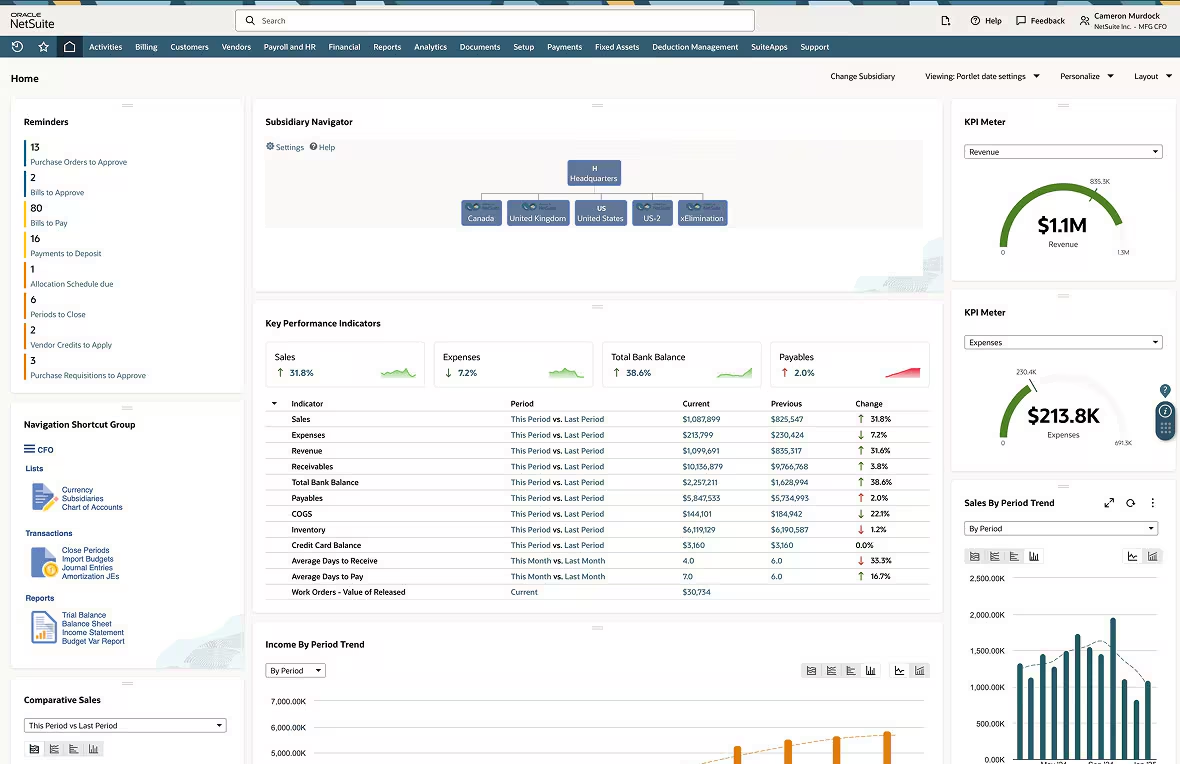
Automate financial consolidation and intercompany accounting
As organizations acquire additional businesses, consolidating financial information across subsidiaries can become increasingly complicated.
NetSuite OneWorld supports consolidated financial reporting and intercompany accounting capabilities that help reduce manual work and improve financial visibility.
Depending on the configuration and enabled functionality, organizations can:
- Consolidate financial statements across multiple subsidiaries.
- Automate qualifying intercompany transactions and elimination entries.
- Manage multi-currency accounting and currency translation.
- Generate subsidiary-level and consolidated financial reports.
- Reduce spreadsheet-based reconciliation and reporting processes.
These capabilities help finance teams spend less time preparing financial information and more time analyzing performance across acquired businesses.
For organizations managing complex ownership structures or international operations, subsidiary configuration and consolidation requirements should be evaluated carefully to ensure the system supports the appropriate accounting treatment.
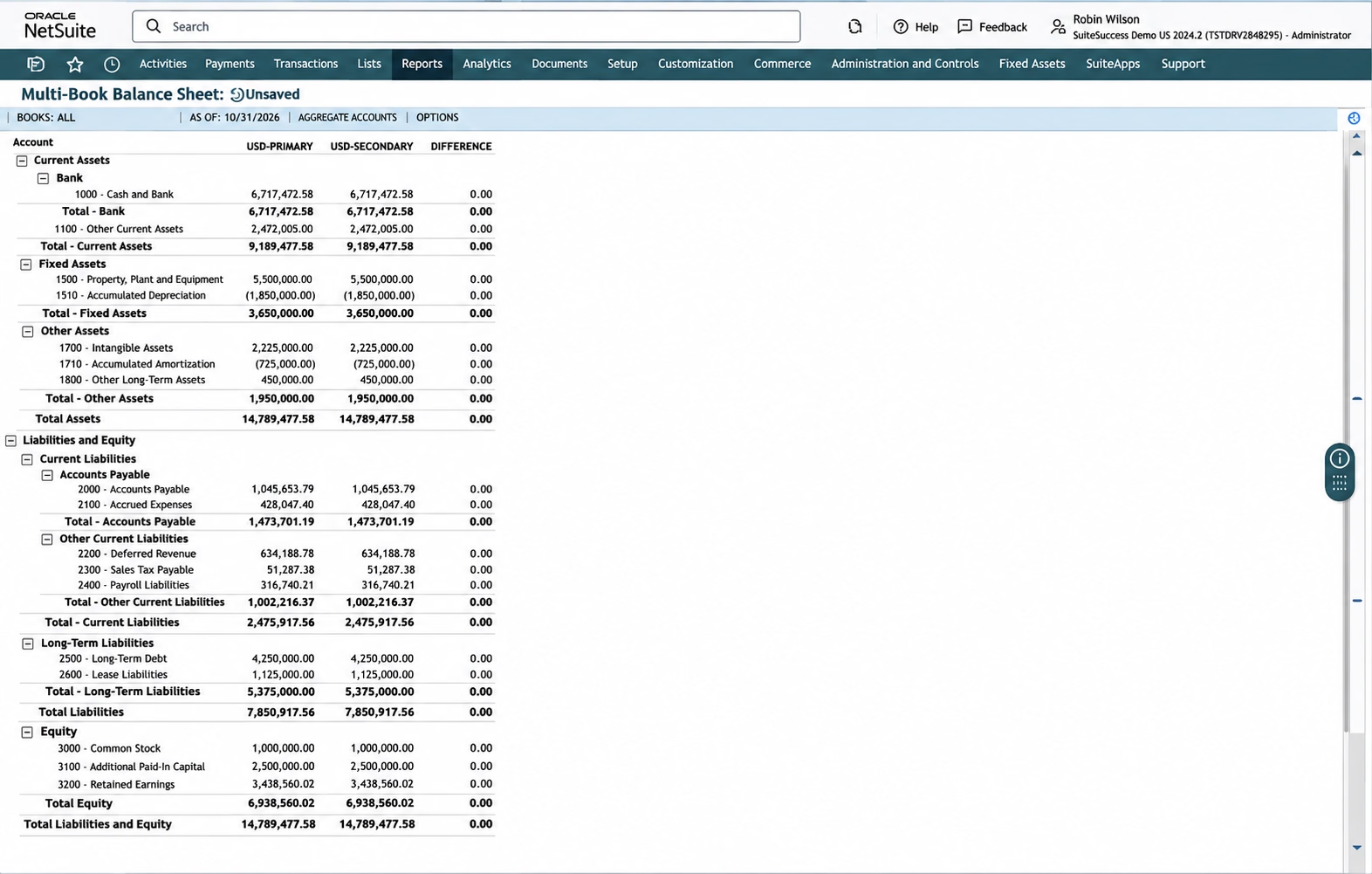
Standardize financial and operational data
Acquired businesses frequently use different charts of accounts, customer and vendor records, inventory classifications, and reporting structures. Without consistent data standards, comparing performance and connecting business processes can require extensive manual work.
NetSuite provides a centralized environment for managing financial and operational records, helping organizations establish greater consistency across subsidiaries.
Businesses can standardize:
- Financial data: Charts of accounts, accounting classifications, and reporting structures.
- Customer and vendor information: Shared master data and consistent record management.
- Inventory and item records: Product information, SKUs, and inventory classifications.
- Business processes: Approval workflows, purchasing procedures, and financial controls.
- Reporting requirements: Financial statements, dashboards, and operational KPIs.
Standardization does not mean every acquired business must operate identically. Organizations can maintain appropriate subsidiary-specific processes while establishing common data structures and reporting standards.
Connect financial and operational processes
Unlike financial integration alone, post-acquisition ERP integration often involves coordinating processes across accounting, inventory, purchasing, sales, and other business functions.
NetSuite’s broader ERP capabilities help organizations connect these processes within a shared environment.
For example, an acquired distributor may use a specialized warehouse management system that supports unique operational requirements. Rather than immediately replacing that application, the organization may choose to integrate it with NetSuite to exchange inventory and financial information.
NetSuite supports integrations through APIs, connectors, and integration platforms that can connect applications such as:
- Customer relationship management (CRM) systems.
- Warehouse management systems (WMS).
- Electronic data interchange (EDI) solutions.
- Payroll and human resources applications.
- Specialized manufacturing and operational software.
These integrations can help reduce duplicate data entry, improve information consistency, and support a phased transition to a more connected ERP environment.
Improve financial visibility and controls across subsidiaries
Acquisitions often introduce different approval procedures, user permissions, and reporting practices. Establishing consistent controls is important for maintaining accountability as the organization grows.
NetSuite supports role-based permissions, configurable workflows, audit trails, and reporting dashboards that help organizations manage access and monitor business performance.
Finance and operational leaders can use these capabilities to:
- Establish consistent approval and authorization processes.
- Restrict access based on user roles and subsidiary responsibilities.
- Monitor financial and operational performance across entities.
- Improve visibility into profitability, cash flow, and other business metrics.
- Maintain centralized oversight while supporting local operational requirements.
This combination of visibility and control helps organizations manage increasingly complex business structures without sacrificing accountability at the subsidiary level.
How to implement NetSuite for acquired businesses
Implementing NetSuite across acquired businesses requires careful planning, whether an organization is consolidating multiple legacy systems onto NetSuite for the first time or adding a newly acquired subsidiary to an existing environment. The following six steps provide a practical framework for assessing business requirements, designing the ERP environment, migrating data, and establishing processes that support continued growth.
Step 1: Assess existing systems and business requirements
Begin with a discovery and fit-gap assessment across the businesses being consolidated. Evaluate existing accounting and ERP systems, operational processes, and reporting requirements to determine whether the organization needs a new NetSuite implementation or an expansion of its current environment.
Key areas to evaluate include:
- Current accounting, ERP, CRM, and operational applications.
- Charts of accounts and financial reporting requirements.
- Customer, vendor, inventory, and item master data.
- Existing customizations, scripts, and third-party integrations.
- Accounts payable, accounts receivable, purchasing, and inventory workflows.
- Internal controls, compliance requirements, and approval processes.
This assessment should also determine how closely the acquired business needs to align with the parent organization’s operating model.
Some businesses may benefit from fully transitioning into NetSuite, while others may need to retain specialized applications or operate with greater independence.
Understanding these requirements early helps organizations develop an integration strategy that balances standardization with operational needs.
Step 2: Design the NetSuite subsidiary structure and governance model
Once requirements are understood, design the NetSuite environment to reflect the organization’s legal entity structure, financial reporting needs, and operating model.
For a new NetSuite implementation, this means establishing the subsidiary hierarchy, accounting structures, and governance standards across the combined business. Organizations already using NetSuite OneWorld should evaluate how newly acquired entities will fit into their existing configuration.
Important considerations include:
- Legal entity and parent-child subsidiary relationships.
- Base currencies, tax requirements, and accounting periods.
- Chart of accounts mapping and financial reporting structures.
- Intercompany accounting and consolidation requirements.
- User roles, subsidiary permissions, and approval workflows.
- Data ownership and governance responsibilities.
Organizations should also consider how the subsidiary structure will support future acquisitions.
A well-designed environment can help reduce repetitive configuration work and establish consistent financial reporting as additional businesses are acquired.
Step 3: Clean, map, and migrate financial and operational data
Data migration is one of the most important components of consolidating acquired businesses into NetSuite, particularly when multiple companies are transitioning from different accounting and ERP systems.
Before transferring information into NetSuite, organizations should cleanse existing records, identify duplicates, and establish consistent data mapping rules.
Depending on the project, data migration may include:
- General ledger balances and selected historical transactions.
- Open accounts payable and accounts receivable balances.
- Customer and vendor master records.
- Inventory items, quantities, and valuation information.
- Open purchase orders and sales orders.
- Supporting financial and operational records required for reporting or compliance.
NetSuite provides CSV import capabilities and APIs that can support data migration and integration. Third-party migration utilities and integration platforms may also be appropriate depending on the source systems and project complexity.
Not every acquisition requires migrating the complete transaction history. Some organizations may transfer opening balances, open transactions, and selected historical records while retaining access to legacy systems for prior-period reporting.
A phased approach may involve migrating master data first, followed by transactional information and financial balances during a planned cutover.
Regardless of the approach, migrated information should be validated and reconciled before the new environment becomes operational.
Step 4: Configure accounting processes and operational integrations
After establishing the subsidiary structure and preparing the data, configure the financial and operational processes needed to support the combined organization.
This may include:
- Intercompany accounting and elimination rules.
- Accounts payable, accounts receivable, and purchasing workflows.
- Financial close procedures and reporting requirements.
- Inventory management and order processing.
- Approval workflows, user permissions, and internal controls.
- Integrations with CRM, WMS, EDI, payroll, and other applications.
The goal is to establish consistent processes where practical while preserving specialized functionality that continues to meet business requirements.
For example, an acquired manufacturer may need to retain specific production processes or third-party applications while adopting standardized financial reporting and purchasing controls.
Working with an experienced NetSuite implementation partner can help organizations evaluate these requirements and determine which processes should be standardized, integrated, or maintained separately.
Step 5: Test, train, and complete the transition
Before go-live, organizations should validate that the configured NetSuite environment supports the financial and operational requirements of the combined organization.
Testing should include:
- Reconciling migrated balances and open transactions.
- Validating consolidated financial statements and intercompany eliminations.
- Testing order-to-cash and procure-to-pay workflows.
- Confirming integrations exchange information accurately.
- Reviewing user permissions and approval workflows.
- Verifying subsidiary-level and consolidated reporting.
Where appropriate, testing should be completed in a NetSuite sandbox or other suitable nonproduction environment before changes are introduced into production.
Employee training and change management are equally important. Teams from the acquired business need to understand updated processes, responsibilities, and reporting requirements before transitioning to the new environment.
A coordinated cutover plan should define final migration activities, system responsibilities, user training, and post-go-live support.
Step 6: Optimize the environment for future acquisitions
Once the initial businesses have transitioned to NetSuite, review the implementation and integration process to identify opportunities for improvement.
Document subsidiary configurations, data mapping templates, reporting standards, and lessons learned. These resources can help establish a repeatable framework for future acquisitions.
Organizations should also monitor system performance, reporting accuracy, and user adoption to identify opportunities for additional optimization.
For businesses pursuing ongoing acquisitions, a consistent integration framework can reduce repetitive setup activities, improve implementation planning, and support more efficient onboarding as the organization expands.
Should you consolidate acquired businesses onto NetSuite?
One of the most important decisions following an acquisition is how to bring financial and operational information together. Some organizations may benefit from implementing NetSuite as a centralized ERP platform across the combined business, while others may already use NetSuite and need to determine how to integrate additional entities.
The right approach depends on the organization’s existing systems, number of entities, operational complexity, reporting requirements, and long-term acquisition strategy.
For example, a private equity-backed company that has acquired several businesses using different accounting systems may choose to implement NetSuite as its centralized financial platform. The organization can establish consistent reporting and consolidation processes while transitioning individual businesses in phases.
Alternatively, an organization already operating on NetSuite may prioritize integrating a newly acquired subsidiary while retaining certain specialized applications.
Each approach involves tradeoffs related to implementation costs, operational disruption, integration complexity, and long-term scalability. Working with an experienced NetSuite partner can help organizations evaluate these considerations and develop an ERP strategy aligned with their acquisition plans.
Best practices for successful post-acquisition ERP integration
Technology provides the foundation for integrating acquired businesses, but long-term success also depends on planning, governance, and consistent processes.
Organizations can improve their post-acquisition integration strategy by following several best practices:
- Prioritize financial visibility: Identify the consolidated financial statements, KPIs, and operational metrics leadership needs to evaluate the acquired business.
- Evaluate the long-term ERP strategy: Determine whether existing systems can support the combined organization or whether a centralized ERP implementation would better accommodate future acquisitions.
- Establish clear data governance: Define ownership, validation procedures, and consistent standards for financial and operational information.
- Standardize processes strategically: Align common accounting and operational workflows without unnecessarily disrupting specialized business requirements.
- Plan for complex entity structures: Consider subsidiary relationships, ownership interests, currencies, intercompany activity, and consolidation requirements during system design.
- Involve key stakeholders early: Include finance, IT, operational leadership, and representatives from the acquired business throughout integration planning.
- Address change management: Provide training, communication, and support to help employees transition to new systems and processes.
- Design for repeatability: Document configurations, migration procedures, and lessons learned to simplify future acquisitions.
For private equity-backed companies and organizations pursuing a buy-and-build strategy, these practices can help establish a scalable ERP operating model as the portfolio expands.
Real-world success: How Henry Resources improved multi-entity financial management with NetSuite
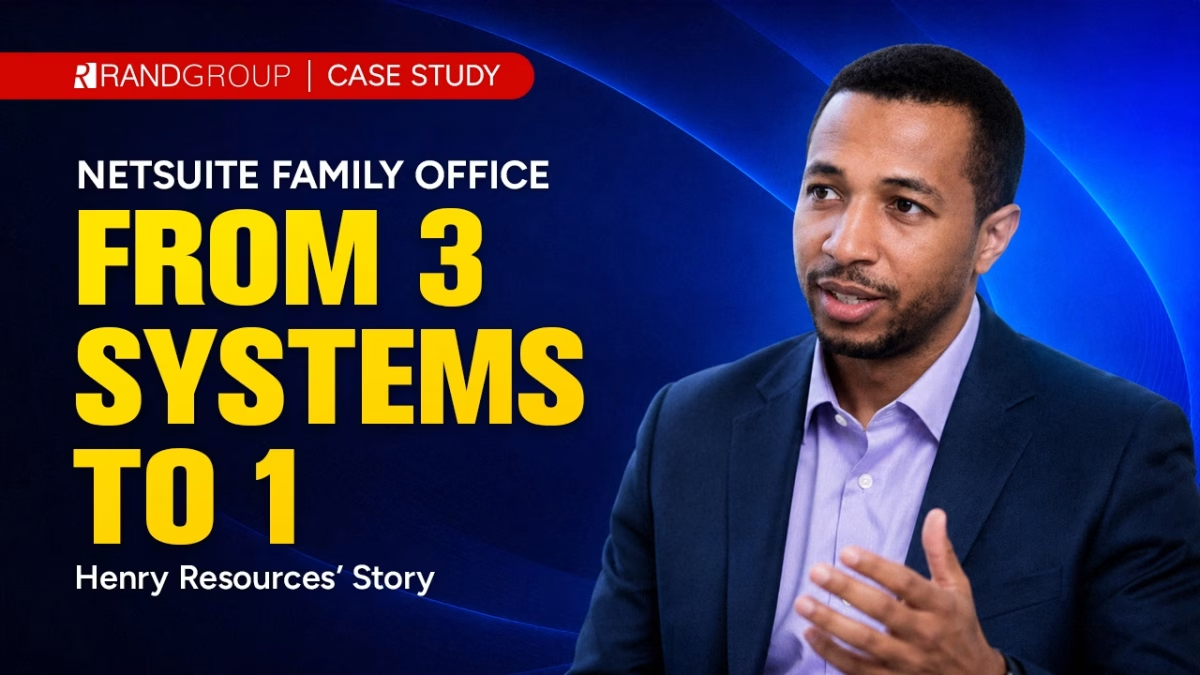
Henry Resources partnered with Rand Group to consolidate multiple entities and disconnected financial systems onto NetSuite, improving financial visibility and streamlining complex accounting processes.
Although not an acquisition integration project, Henry Resources demonstrates how organizations can establish a centralized ERP foundation to manage complex multi-entity operations.
Explore the full Henry Resources case study or watch the video below to see the transformation in action.
How Henry Resources streamlined multi-entity financial management with NetSuite
Discover how Rand Group helped Henry Resources consolidate 30–40 entities and multiple financial systems into one NetSuite platform. Hear how the organization standardized financial processes, automated monthly consolidation, and improved visibility across its investment portfolio.

Ready to unify your acquired businesses with NetSuite?
Whether you’re consolidating multiple accounting systems or expanding an existing NetSuite environment, Rand Group can help you develop the right ERP strategy. Our consultants can guide implementation planning, data migration, financial consolidation, and integration to support your current operations and future acquisitions.
Implement and integrate NetSuite with Rand Group
Whether you’re implementing NetSuite for the first time or integrating newly acquired businesses into an existing environment, a successful ERP strategy requires careful planning, technical expertise, and an understanding of complex financial and operational requirements.
As an Oracle NetSuite Alliance Partner, Rand Group helps private equity-backed companies, holding companies, and acquisition-driven organizations implement, integrate, and optimize NetSuite to support multi-entity operations and continued growth.
Having joined forces with MicroAccounting and WebSan, Rand Group also brings firsthand experience navigating organizational integration, aligning business processes, and bringing established businesses together.
Our NetSuite consultants can assist with:
- ERP assessments and strategy: Evaluate existing accounting systems, identify consolidation challenges, and determine the right NetSuite implementation approach.
- New NetSuite implementations: Consolidate multiple businesses onto a centralized ERP platform with consistent financial management and reporting.
- NetSuite OneWorld configuration: Design subsidiary structures, financial consolidations, and intercompany accounting processes.
- Data migration and system integration: Transition financial and operational data from legacy systems and connect specialized applications.
- Process standardization: Align financial workflows, reporting structures, and internal controls across acquired businesses.
- Ongoing optimization and support: Refine the ERP environment and establish repeatable processes for future acquisitions.
Key takeaways: Using NetSuite for acquisitions
- Acquisitions can create the need for a new ERP system: As businesses combine multiple entities, disconnected accounting systems and manual financial consolidation can become difficult to manage.
- NetSuite provides a centralized ERP foundation: NetSuite OneWorld supports multi-subsidiary management, financial consolidation, intercompany accounting, and consistent reporting.
- Organizations can implement or expand NetSuite: Businesses can consolidate acquired companies onto a new NetSuite platform or integrate additional subsidiaries into an existing environment.
- Successful ERP consolidation requires careful planning: Data migration, financial reporting structures, operational integrations, and change management are important considerations.
- An experienced NetSuite partner can support acquisition-driven growth: Rand Group helps organizations implement NetSuite, consolidate financial systems, and establish scalable processes for future acquisitions.
Frequently asked questions about NetSuite for acquisitions
Can NetSuite consolidate multiple acquired companies?
Yes. NetSuite OneWorld enables organizations to manage multiple subsidiaries within a centralized ERP environment. Businesses can consolidate financial information, manage intercompany transactions, standardize reporting, and maintain visibility into individual entities. Organizations can implement NetSuite across multiple acquired businesses or add subsidiaries to an existing NetSuite environment.
How does NetSuite OneWorld support acquisitions?
NetSuite OneWorld supports acquisitions by enabling organizations to manage multiple subsidiaries within a single ERP account. Its capabilities include consolidated financial reporting, intercompany accounting, multi-currency management, and subsidiary-level controls. These features help businesses standardize financial management while maintaining the flexibility needed to support individual legal entities.
Can two separate NetSuite accounts be merged after an acquisition?
Two separate NetSuite accounts cannot simply be merged by changing a subsidiary setting. When an acquired company already uses NetSuite, organizations generally need to configure the business within the target NetSuite environment and migrate or integrate the necessary records, transactions, and processes. The approach depends on account configurations, data requirements, and operational complexity.
When should a company implement a new ERP system after an acquisition?
A company may need a new ERP system when acquisitions create significant challenges with financial consolidation, reporting consistency, intercompany accounting, or operational visibility. Organizations managing multiple disconnected accounting systems may benefit from implementing a centralized ERP platform such as NetSuite to support the combined business.
What data should be migrated into NetSuite after an acquisition?
Data migration typically includes general ledger balances, open accounts payable and receivable transactions, customer and vendor records, inventory information, and other financial or operational data needed for ongoing business processes. Historical transaction requirements vary by organization. Some businesses migrate selected historical records while retaining access to legacy systems for prior-period reporting and compliance.
How long does it take to integrate an acquired company into NetSuite?
The timeline for integrating an acquired company into NetSuite depends on the number of subsidiaries, existing systems, data quality, customization requirements, and operational complexity. A straightforward subsidiary onboarding project may require less time than a full ERP migration involving multiple integrations and extensive historical data. A detailed assessment helps establish a realistic implementation timeline.
Is NetSuite suitable for private equity-backed companies?
Yes. NetSuite can support private equity-backed companies pursuing acquisition-driven growth through multi-subsidiary management, consolidated financial reporting, and integrated business processes. These capabilities help organizations establish consistent financial management, improve visibility across portfolio businesses, and develop repeatable processes for onboarding future acquisitions.
Do all acquired companies need to move to NetSuite immediately?
No. Organizations can adopt a phased implementation strategy based on operational complexity, existing systems, and reporting requirements. Some acquired businesses may transition directly to NetSuite, while others temporarily retain specialized applications or legacy systems that integrate with the centralized ERP platform.
Build a scalable ERP foundation for future acquisitions
As organizations acquire additional businesses, managing disconnected accounting systems and inconsistent financial processes can become increasingly difficult. NetSuite provides a centralized ERP foundation that helps businesses consolidate financial information, standardize operations, and improve visibility across multiple entities. Whether implementing NetSuite for the first time or expanding an existing environment, the right ERP strategy can help organizations manage their combined operations and prepare for future acquisitions.
Rand Group helps acquisition-driven organizations evaluate their ERP requirements, implement NetSuite, and integrate acquired businesses into a scalable financial and operational environment. Contact our NetSuite experts to explore how we can help you consolidate your systems and support continued growth.