NetSuite
 Data Intelligence: The next evolution of NetSuite Analytics Warehouse

Businesses increasingly need more than traditional reports and dashboards to make informed decisions. They need the ability to connect data across their operations, identify trends, and turn insights into action. Oracle NetSuite is responding to these needs by expanding its analytics capabilities with new AI-powered tools, intelligent agents, and deeper data insights.
As part of this evolution, NetSuite Analytics Warehouse (NSAW) is being renamed NetSuite Data Intelligence (NSDI), reflecting the solution’s broader capabilities and growing emphasis on AI-driven insights.
In this article, we’ll explore what’s changing, the new capabilities coming to NetSuite Data Intelligence, and what the transition means for existing NSAW customers.
At a glance: NetSuite Data Intelligence
NetSuite Data Intelligence, formerly NetSuite Analytics Warehouse, is a cloud-based analytics solution that brings together NetSuite and third-party business data for advanced reporting, predictive analytics, and AI-powered insights. Effective November 13, 2026, the rebrand reflects the solution’s evolution beyond traditional data warehousing toward conversational analytics, intelligent agents, and more proactive decision-making. Existing analytics capabilities remain central to the solution, while recent enhancements simplify reporting and data integration. New AI capabilities are designed to help business users uncover deeper insights, investigate complex questions, and take action based on connected business information.
What is NetSuite Data Intelligence?
NetSuite Data Intelligence is a cloud-based analytics and data warehousing solution that combines NetSuite and third-party data to provide advanced reporting, business intelligence, predictive analytics, and AI-powered insights. Previously known as NetSuite Analytics Warehouse, the solution extends NetSuite’s native reporting capabilities to help organizations analyze business performance across multiple data sources.
Built on Oracle’s analytics and data warehousing technologies, NetSuite Data Intelligence helps businesses:
- Centralize business data: Combine financial, operational, customer, and other information from NetSuite and external applications.
- Improve reporting and visualization: Create dashboards and reports that provide visibility into key performance indicators (KPIs) and business trends.
- Analyze historical performance: Examine trends across reporting periods, business units, departments, and other dimensions.
- Apply predictive analytics: Use machine learning models to identify patterns, anticipate potential outcomes, and support planning.
- Access AI-powered insights: Explore business information using natural-language questions and emerging intelligent agent capabilities.
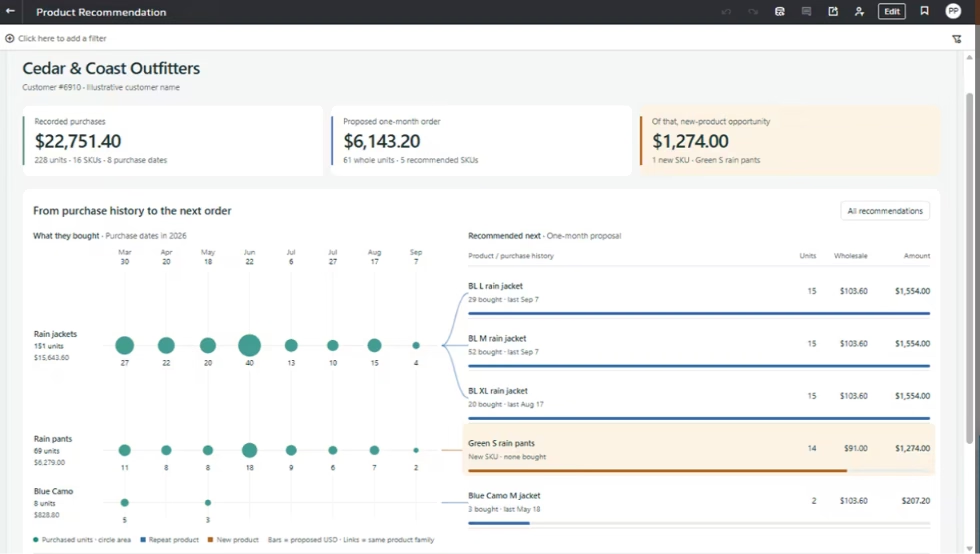
NetSuite Data Intelligence complements existing NetSuite reporting tools, including Saved Searches, standard reports, and SuiteAnalytics Workbooks. Rather than replacing these capabilities, it provides a more comprehensive analytics environment for organizations that need to combine data sources, analyze larger datasets, or uncover deeper business insights.
For a closer look at the solution’s foundation, explore our guide What is NetSuite Analytics Warehouse.

Turn your NetSuite data into better business decisions
Are disconnected reports and manual analysis limiting your visibility into business performance? Rand Group helps organizations connect data, improve reporting, and build analytics solutions that support more informed decisions.
Why is NetSuite Analytics Warehouse becoming NetSuite Data Intelligence?
The transition from NetSuite Analytics Warehouse to NetSuite Data Intelligence represents a broader shift in how businesses access and use analytics.
Traditional business intelligence solutions have primarily focused on organizing data, generating reports, and visualizing historical performance. While these capabilities remain essential, organizations increasingly need tools that help explain business trends, anticipate potential issues, and recommend next steps.
NetSuite Data Intelligence builds on the existing analytics foundation with a growing emphasis on AI-powered capabilities that make business intelligence more accessible and actionable.
The evolution is designed to help organizations move from:
- Static reporting to conversational analytics: Ask business questions in natural language rather than relying exclusively on predefined reports.
- Historical analysis to predictive insights: Identify emerging trends and potential risks before they significantly affect operations.
- Disconnected information to connected intelligence: Analyze NetSuite data alongside information from other business applications.
- Manual investigation to AI-assisted analysis: Use intelligent agents to explore complex questions and identify potential contributing factors.
- Reactive decisions to proactive action: Surface relevant insights and alerts that help teams respond to changing business conditions.
The new name officially takes effect November 13, 2026, with an associated product release scheduled for November 20, 2026. Although the branding and commercial product names are changing, no additional commercial changes are currently planned as part of the rebrand.
Key NetSuite Data Intelligence features and enhancements
Beyond its new name, NetSuite Data Intelligence builds on several enhancements designed to simplify analytics, reduce manual effort, and make business information easier to access.
Financials Foundation Collection
The Financials Foundation Collection provides prebuilt templates for commonly used NetSuite financial reports, helping finance teams accelerate reporting without building every analysis from scratch.
Organizations can use these templates as a starting point for examining financial performance, including revenue, expenses, and budget comparisons.
Business benefits include:
- Reduce time spent creating frequently used financial reports.
- Establish more consistent reporting structures.
- Simplify access to financial performance information.
- Give finance teams more time to analyze results instead of preparing reports.
Data Transforms
Combining information from multiple business systems often requires extensive data preparation. NetSuite Data Intelligence’s Data Transforms capabilities provide a visual, drag-and-drop approach to preparing and transforming data.
This makes it easier to work with information from external applications without relying entirely on complex manual data manipulation.
For example, an organization could combine NetSuite financial data with information from a separate CRM or e-commerce platform to analyze customer profitability and purchasing trends.
NetSuite Account Analysis
NetSuite Account Analysis simplifies financial reporting by providing pre-joined datasets that reduce the effort required to establish relationships between accounting information.
Instead of manually combining multiple financial datasets, finance teams can use these prepared structures to accelerate analysis.
This can be particularly valuable for organizations that need to investigate account activity, compare financial results, or analyze performance across departments and business units.
Transfer Saved Searches and Datasets
Many NetSuite organizations have invested significant time creating Saved Searches and Datasets that support their reporting requirements.
NetSuite Data Intelligence helps preserve that investment by allowing users to transfer supported analytics content rather than rebuilding it from the beginning.
This can help organizations:
- Reuse existing reporting logic and analytics configurations.
- Reduce duplicate report development.
- Maintain greater consistency between reporting environments.
- Accelerate adoption of advanced analytics capabilities.
Together, these enhancements demonstrate that the evolution to NetSuite Data Intelligence is not solely focused on AI. Simplifying everyday analytics and making existing business data easier to work with remain important priorities.

New AI capabilities in NetSuite Data Intelligence
One of the most significant developments behind the NetSuite Data Intelligence rebrand is the introduction of AI capabilities designed to make analytics more conversational, predictive, and action-oriented.
At SuiteWorld 2026, Oracle NetSuite showcased several capabilities that demonstrate how AI can help users move beyond traditional dashboards and reports.
Feature availability varies. Some capabilities are established or recently introduced, while others are newly announced or planned for future releases. Organizations should confirm availability, licensing, and technical requirements before planning an implementation.
AI Assistants and the NetSuite AI Connector Service
The NetSuite AI Connector Service for NetSuite Data Intelligence is designed to enable conversational analysis using compatible external large language models (LLMs) and governed business data.
Rather than manually navigating multiple reports, authorized users can ask questions about business performance and explore relevant information through AI-powered interactions.
For example, a finance leader could ask:
Which customer segments experienced the largest revenue declines over the past year?
An AI assistant connected to the appropriate datasets could help identify relevant trends and provide a starting point for further investigation.
This approach can make sophisticated analytics more accessible to business users while allowing organizations to work with their preferred compatible AI technologies.
NetSuite Data Intelligence Agent
The NetSuite Data Intelligence Agent is designed to bring conversational analytics into NetSuite Next through Ask Oracle.
By drawing on live NetSuite information and governed third-party warehouse data, the agent aims to help users investigate business performance without switching between multiple reporting environments.
For example, a CFO could ask why operating expenses increased during a particular quarter and explore relevant financial information to identify potential contributing factors.
The goal is to make advanced analytics more intuitive and accessible within the applications employees already use.
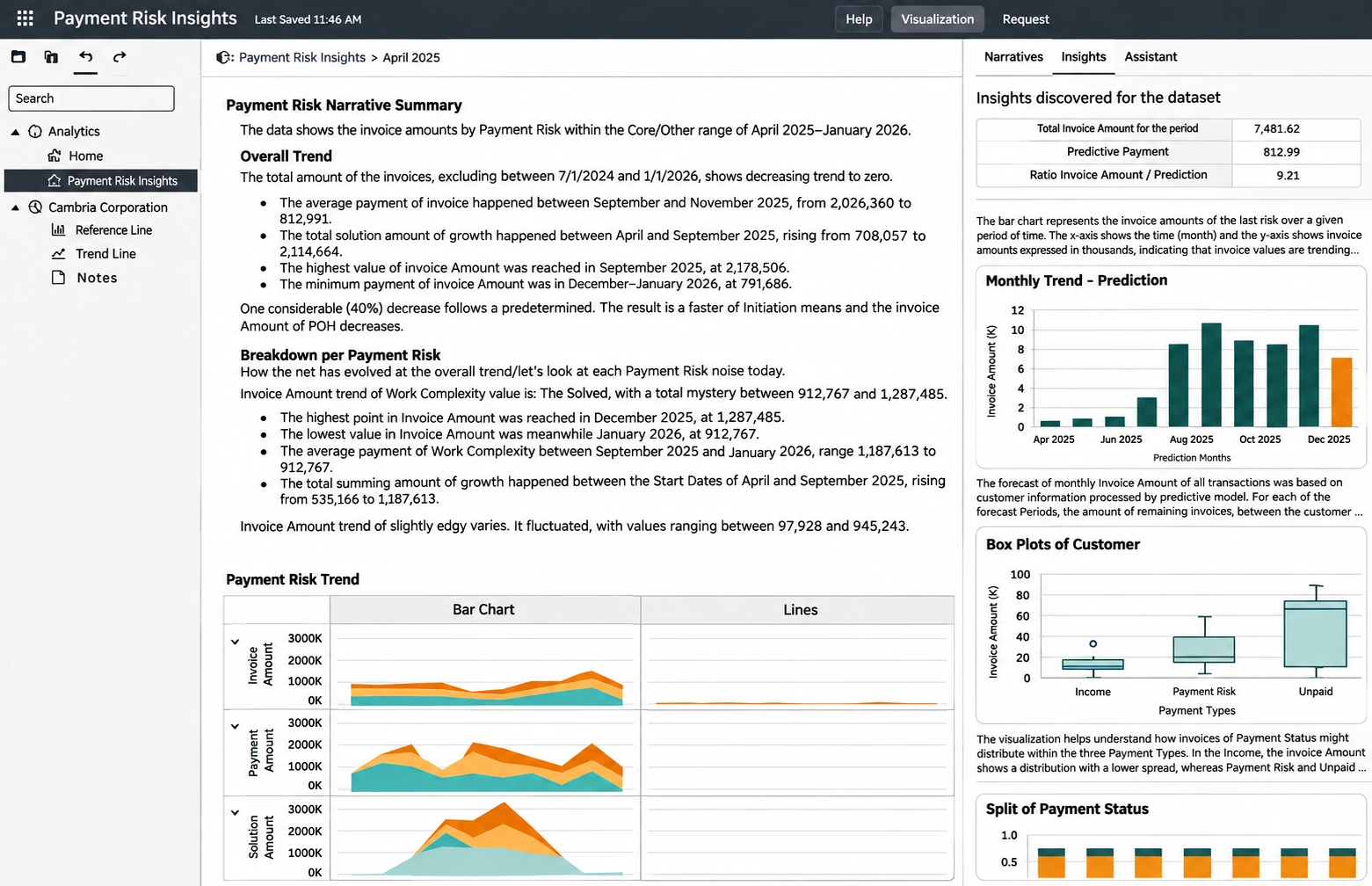
Deep Insights Agent
The Deep Insights Agent is designed to support more complex business investigations by analyzing NetSuite data alongside relevant external information.
Unlike a traditional reporting tool that retrieves predefined information, the agent is intended to explore multifaceted questions, identify relationships, and generate tailored insights and recommendations.
For example, a business experiencing declining gross margins could use deeper analysis to investigate potential relationships between pricing changes, discounting practices, product costs, and sales performance.
By helping users examine possible causes rather than simply identifying changes, this capability represents an important step toward more actionable business intelligence.
Intelligent Alerts
Intelligent Alerts are designed to help organizations recognize potential business issues before they become more significant.
For example, an alert could identify inventory items at risk of stocking out and provide contextual links that allow users to investigate the issue and take appropriate action.
This proactive approach could help organizations reduce time spent monitoring individual reports and focus attention on situations requiring intervention.
As these AI capabilities evolve, organizations will need reliable data, appropriate access controls, and well-designed integrations to ensure the resulting insights are accurate, relevant, and actionable.
NetSuite Data Intelligence: From dashboards to conversations
Discover how NetSuite Analytics Warehouse, now NetSuite Data Intelligence, helps organizations move beyond traditional reporting. In this Rand Group webinar, our NetSuite experts explore connected business data, predictive analytics, and conversational insights that make financial and operational information more accessible.
How NetSuite Data Intelligence helps businesses make better decisions
The value of NetSuite Data Intelligence extends beyond individual reporting features. By combining connected business data with advanced analytics and emerging AI capabilities, organizations can improve how they monitor performance, investigate challenges, and plan for the future.
Key business benefits include:
- Improve financial visibility: Analyze revenue, expenses, profitability, and other financial metrics across departments, subsidiaries, and reporting periods.
- Accelerate reporting and analysis: Reduce manual data preparation and provide business users with faster access to relevant information.
- Connect data across systems: Bring together NetSuite information and data from CRM, e-commerce, inventory, and other applications to develop a more comprehensive view of operations.
- Support proactive decision-making: Use predictive analytics and intelligent alerts to identify potential risks and opportunities earlier.
- Empower business users: Make analytics more accessible through prebuilt reports, visual tools, and natural-language interactions.
For example, a multi-entity organization could use NetSuite Data Intelligence to compare profitability across subsidiaries, investigate unexpected expense increases, and evaluate performance trends over time. With emerging AI capabilities, finance leaders may be able to ask follow-up questions conversationally and identify areas requiring closer attention.
However, successful analytics depends on more than technology alone. Organizations also need consistent financial data, well-defined KPIs, appropriate data governance, and integrations that provide reliable information across systems.
What does the rebrand mean for existing NetSuite Analytics Warehouse customers?
For organizations currently using NetSuite Analytics Warehouse, the transition to NetSuite Data Intelligence is primarily a change in product branding and positioning, rather than the introduction of an entirely separate analytics platform.
Existing customers do not need to migrate to a different product solely because of the name change. Their current analytics capabilities remain part of the evolving solution.
Important dates and commercial details include:
Service descriptions will retain their existing item numbers and identify the offering as formerly known as NetSuite Analytics Warehouse. No other commercial changes are currently planned as part of the rebrand.
Although the name change does not require a separate migration, it presents an opportunity for organizations to reassess their analytics strategy.
Existing customers should consider:
- Reviewing current reporting processes and identifying manual bottlenecks.
- Evaluating opportunities to reuse saved searches and datasets.
- Assessing whether additional third-party data could improve business visibility.
- Reviewing data quality, governance, and user permissions.
- Exploring emerging AI capabilities as they become available.
Working with an experienced NetSuite partner can help organizations determine which enhancements align with their reporting requirements and where additional configuration, integration, or optimization may be beneficial.
Partner with Rand Group to get more value from NetSuite Data Intelligence
As an Oracle NetSuite Alliance Partner, Rand Group helps organizations implement, integrate, customize, and optimize NetSuite solutions to support their financial and operational goals.
Our NetSuite consultants understand that effective business intelligence requires more than access to advanced analytics tools. Organizations need reliable data, meaningful reporting structures, and solutions configured around the decisions their teams need to make.
Rand Group helps businesses strengthen their analytics capabilities through:
- Analytics strategy and reporting design: Identify meaningful KPIs, reporting requirements, and opportunities to improve business visibility.
- NetSuite implementation and optimization: Configure and enhance NetSuite environments to support financial and operational processes.
- Data integration: Connect NetSuite with third-party applications to improve reporting consistency and access to business information.
- Financial reporting and dashboards: Develop reporting solutions that help teams monitor performance and investigate business trends.
- AI readiness and ongoing support: Evaluate data quality, governance, and emerging capabilities to support the responsible adoption of AI-powered analytics.
Rand Group’s NetSuite experts also provide practical guidance on advanced analytics and AI adoption, including through our on-demand webinar exploring how NetSuite Analytics Warehouse is evolving from traditional dashboards toward conversational business intelligence.
Whether your organization currently uses NetSuite Analytics Warehouse or is evaluating advanced analytics for the first time, Rand Group can help you understand your options and build a strategy that supports both current reporting requirements and future growth.

Ready to unlock more value from your NetSuite data?
From improving financial reporting to exploring AI-powered analytics, Rand Group helps organizations turn business information into actionable insights. Connect with our NetSuite experts to evaluate your analytics requirements and identify opportunities to improve visibility, efficiency, and decision-making.
Key takeaways
- NetSuite Analytics Warehouse is becoming NetSuite Data Intelligence: The new name takes effect November 13, 2026, reflecting an expanded emphasis on AI-powered analytics and business intelligence.
- Core analytics capabilities remain: NetSuite Data Intelligence continues to combine NetSuite and third-party information for advanced reporting, dashboards, and predictive analysis.
- Recent enhancements simplify reporting: Financials Foundation Collection, Data Transforms, NetSuite Account Analysis, and analytics content transfer capabilities help reduce manual effort.
- Emerging AI capabilities support deeper insights: AI assistants, the NetSuite Data Intelligence Agent, Deep Insights Agent, and Intelligent Alerts are designed to make analytics more conversational and proactive.
- Data readiness remains essential: Reliable data, governance, and well-designed integrations are critical to realizing value from advanced analytics and AI.
- Rand Group can help organizations prepare: An experienced NetSuite partner can help evaluate new capabilities, optimize reporting, and align analytics investments with business objectives.
Frequently asked questions about NetSuite Data Intelligence
What is NetSuite Data Intelligence?
NetSuite Data Intelligence is a cloud-based analytics solution that combines NetSuite and third-party business data for advanced reporting, predictive analytics, and AI-powered insights. Formerly known as NetSuite Analytics Warehouse, it helps organizations analyze business performance, identify trends, and make more informed decisions using connected data.
Is NetSuite Data Intelligence the same as NetSuite Analytics Warehouse?
Yes. NetSuite Data Intelligence is the new name for NetSuite Analytics Warehouse, effective November 13, 2026. The rebrand reflects the solution’s evolution toward AI-driven analytics, conversational insights, and intelligent workflows. It is not an entirely separate product that existing customers must migrate to.
What is the difference between NetSuite Data Intelligence and NetSuite Analytics Warehouse?
NetSuite Data Intelligence builds on the existing capabilities of NetSuite Analytics Warehouse, including data integration, reporting, dashboards, and predictive analytics. The new name emphasizes the solution’s expanded direction, with AI assistants, intelligent agents, natural-language analysis, and proactive insights becoming increasingly important.
What AI capabilities are available in NetSuite Data Intelligence?
NetSuite Data Intelligence includes predictive analytics and is expanding toward conversational AI, intelligent agents, and proactive alerts. Announced capabilities include the NetSuite AI Connector Service, NetSuite Data Intelligence Agent, Deep Insights Agent, and Intelligent Alerts. Availability varies by capability, release, and licensing requirements.
Do existing NetSuite Analytics Warehouse customers need to migrate to NetSuite Data Intelligence?
No. NetSuite Analytics Warehouse is being renamed NetSuite Data Intelligence, so existing customers do not need to migrate to a separate product solely because of the rebrand. Organizations should review new functionality and confirm individual feature availability before making changes to their analytics environments.
Is NetSuite Data Intelligence included with NetSuite ERP?
NetSuite Data Intelligence is a separately licensed analytics offering rather than a standard feature included with every NetSuite ERP subscription. Pricing and licensing depend on the organization’s requirements and applicable NetSuite offerings. Businesses should consult NetSuite or an authorized partner to understand their options.
Unlock the full potential of NetSuite Data Intelligence
The evolution from NetSuite Analytics Warehouse to NetSuite Data Intelligence marks an important step toward more intelligent, accessible, and proactive business analytics. With enhanced reporting capabilities, predictive insights, and emerging AI-powered agents, organizations have new opportunities to connect business data, streamline analysis, and make more informed financial and operational decisions.
As an Oracle NetSuite Alliance Partner, Rand Group helps businesses maximize the value of their NetSuite investments through implementation, integration, reporting optimization, and ongoing support. Whether you’re looking to improve existing analytics capabilities or explore what’s possible with NetSuite Data Intelligence, our experts can help you develop a strategy aligned with your business goals. Contact Rand Group to learn how we can help you turn business data into actionable insights.