Sage Intacct advanced financial capabilities: A guide to extended modules

As businesses grow, financial complexity grows with them. What once worked for basic accounting can quickly become inefficient when organizations begin managing multiple entities, project-based billing, subscription revenue, inventory, or complex reporting requirements. Finance teams often find themselves relying on disconnected systems and manual spreadsheets just to keep operations moving.
That’s where Sage Intacct’s advanced financial capabilities come in. Sage Intacct’s advanced or extended modules are designed to help organizations automate complex financial processes, improve operational visibility, and scale more efficiently. Instead of replacing your ERP as your business evolves, Sage Intacct allows companies to add specialized functionality as needs become more sophisticated.
From revenue recognition and project accounting to multi-entity consolidations and spend management, these capabilities help finance leaders reduce manual work, strengthen compliance, and gain deeper insight into business performance.
In this guide, we’ll explore Sage Intacct’s advanced financial capabilities, the benefits of each module, and why partnering with an experienced Sage Intacct implementation partner can help maximize long-term success.
- What is Sage Intacct?
- What are Sage Intacct’s advanced features?
- Key Sage Intacct advanced financial capabilities
- Revenue recognition
- Project accounting
- Lease accounting
- Multi-entity and global consolidations
- Inventory management
- Fixed assets management
- Budgeting and planning
- Spend management
- Time and expense management
- How to know which advanced modules you need
- Why expertise matters when implementing Sage Intacct
- Partner with Rand Group
- FAQs
What is Sage Intacct?
Sage Intacct is a cloud-based financial management and ERP solution designed to help growing organizations streamline accounting, reporting, and operational workflows.
At its core, Sage Intacct provides robust accounting functionality, including:
- General ledger (GL)
- Accounts payable (AP)
- Accounts receivable (AR)
- Cash management
- Financial reporting
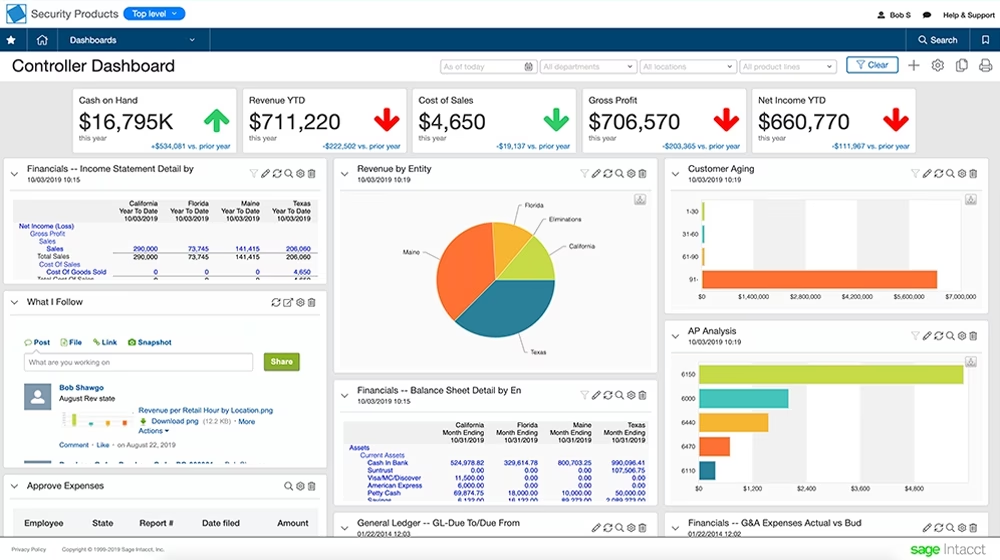
- Dashboards and analytics
- Purchasing and order management
However, Sage Intacct is more than a core accounting platform. The solution also includes advanced modules that extend functionality for organizations with more complex financial and operational needs.
These advanced capabilities support businesses managing:
- Multiple entities or subsidiaries
- Subscription or recurring revenue
- Project-based billing
- Inventory and warehouse operations
- Fixed asset tracking
- Procurement controls
- Employee time and expense workflows
Because Sage Intacct is cloud-based and modular, organizations can implement the capabilities they need today while scaling over time as operational complexity increases.

Learn more about Sage Intacct
Looking to explore how Sage Intacct can support your organization’s growth? Our Sage experts can help you evaluate advanced financial capabilities, identify the right modules for your business, and build a scalable solution tailored to your operational goals.
What are Sage Intacct’s advanced features?
Sage Intacct advanced add-ons go beyond core accounting functionality to automate complex business processes and improve financial visibility.
These modules are designed to help organizations:
- Automate manual workflows
- Improve financial accuracy
- Strengthen compliance
- Gain real-time operational insights
- Support scalability and growth
- Reduce spreadsheet dependency
Rather than forcing businesses into rigid systems, Sage Intacct allows organizations to select the advanced modules that align with their industry, business model, and operational needs.
For example:
- A SaaS company may prioritize revenue recognition and subscription billing.
- A professional services organization may need project accounting and time tracking.
- A multi-location company may require global consolidations and intercompany automation.
- A product-based business may benefit from inventory management and procurement controls.
In our experience, this flexibility is one of the reasons Sage Intacct continues to be a leading financial management solution for growing organizations.
Key Sage Intacct advanced financial capabilities
Sage Intacct offers a wide range of advanced modules designed to help growing organizations automate complex financial processes, improve operational visibility, and scale more efficiently. These extended capabilities allow businesses to customize their ERP environment based on operational needs, industry requirements, and growth goals.
Revenue recognition
Revenue recognition has become increasingly complex, especially for organizations with subscription models, milestone billing, bundled contracts, or recurring services.
Sage Intacct’s Revenue Recognition module helps automate compliance with ASC 606 and IFRS 15 requirements while reducing the manual effort associated with deferred revenue tracking.
Key capabilities include:
- Automated revenue schedules
- Deferred revenue management
- Subscription and recurring revenue support
- Contract modification handling
- Multi-element arrangement tracking
- Audit-ready reporting
By automating revenue recognition processes, finance teams can improve accuracy, reduce compliance risk, and accelerate month-end close cycles.

Project accounting
Organizations that manage projects need visibility into budgets, labor costs, utilization, and profitability.
Sage Intacct’s Project accounting module enables businesses to track project financials in real time while improving billing accuracy and resource management.
This module is especially valuable for:
- Professional services firms
- Nonprofit organizations
- Construction companies
- Engineering firms
- Consulting organizations
Key features include:
- Project budgeting and forecasting
- Time and expense tracking
- Project billing and invoicing
- Resource allocation
- Profitability reporting
- Revenue recognition by project
Instead of relying on spreadsheets or disconnected project systems, organizations can centralize operational and financial visibility within Sage Intacct.

Lease accounting
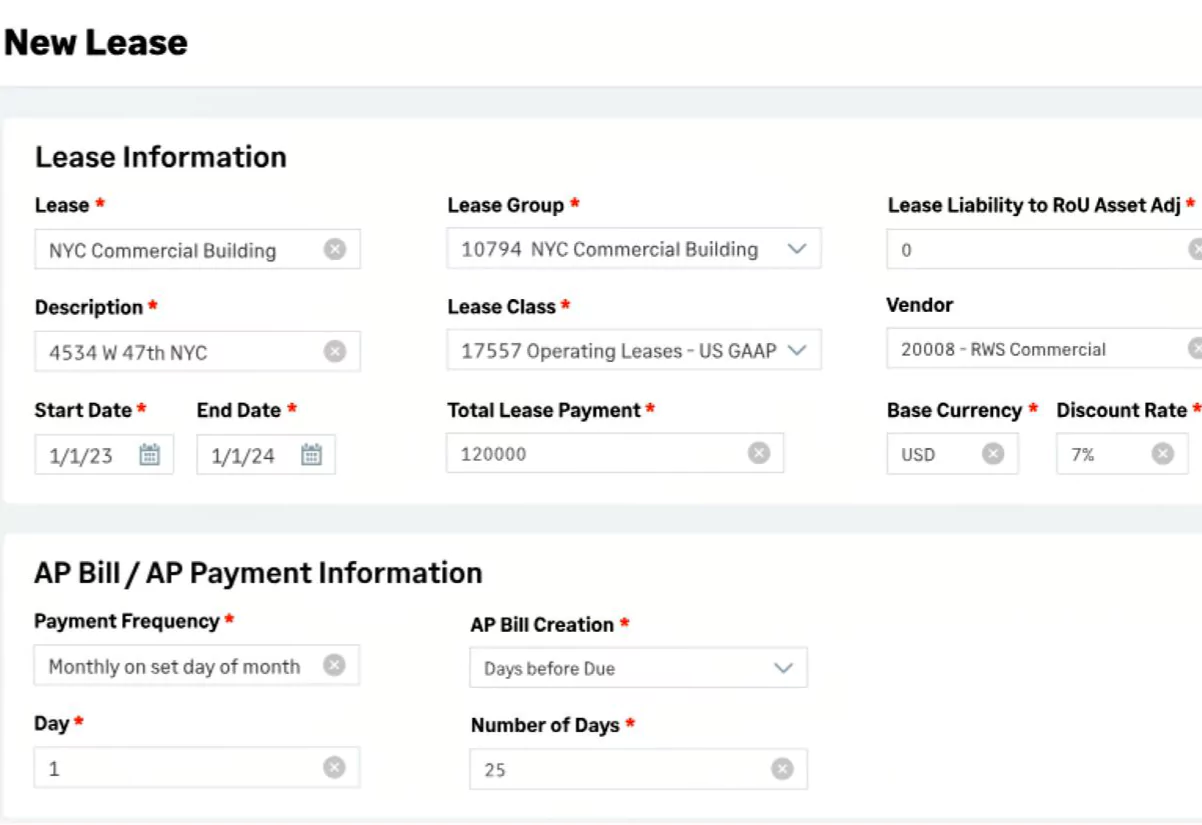
Managing lease accounting manually can create compliance challenges and reporting inconsistencies. Sage Intacct’s lease accounting capabilities help organizations streamline lease management while supporting compliance with ASC 842 and IFRS 16 standards.
Organizations can automate:
- Lease amortization schedules
- Right-of-use asset calculations
- Liability tracking
- Lease modifications
- Financial disclosures
This functionality is particularly valuable for organizations managing large property portfolios or equipment leases across multiple entities.
Multi-entity and global consolidations
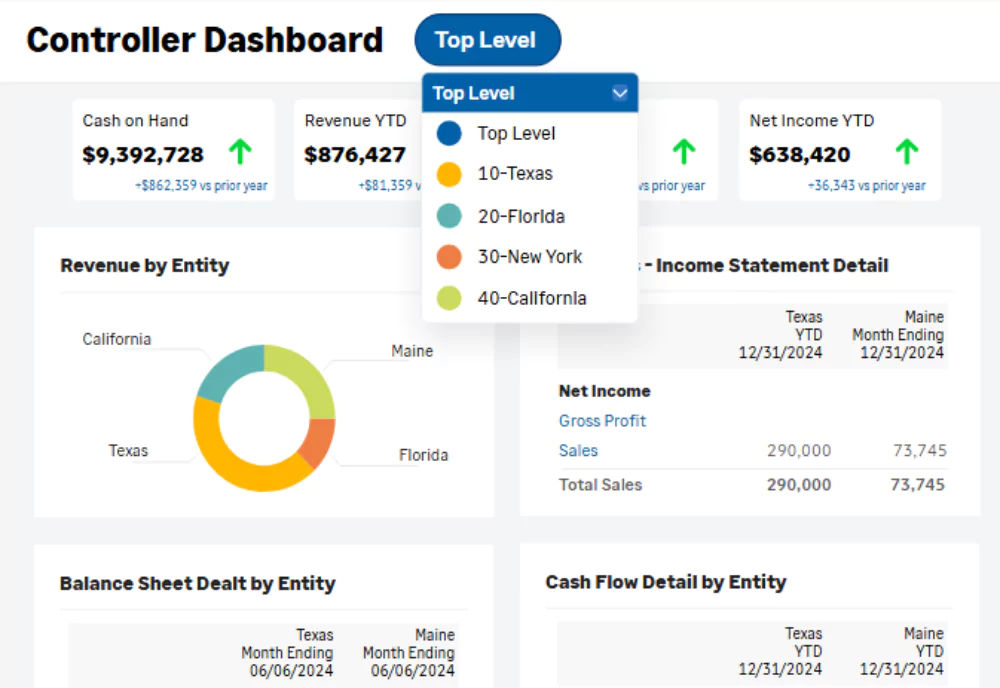
As organizations expand through acquisitions, geographic growth, or multiple business units, financial management becomes significantly more complex. Sage Intacct’s Multi-entity and global consolidations module helps organizations simplify accounting across entities, currencies, and locations.
Capabilities include:
- Automated consolidations
- Intercompany eliminations
- Multi-currency support
- Shared chart of accounts
- Real-time entity visibility
- Consolidated reporting
Instead of manually consolidating spreadsheets each month, finance teams can access real-time consolidated financial data across the organization. This is an area where implementation expertise matters significantly. Proper entity structure, reporting design, and workflow configuration are critical for long-term scalability.
Rand Group has extensive experience helping organizations implement multi-entity financial management strategies, including clients like B-29 Investments, where improved financial visibility and operational efficiency were key business goals.
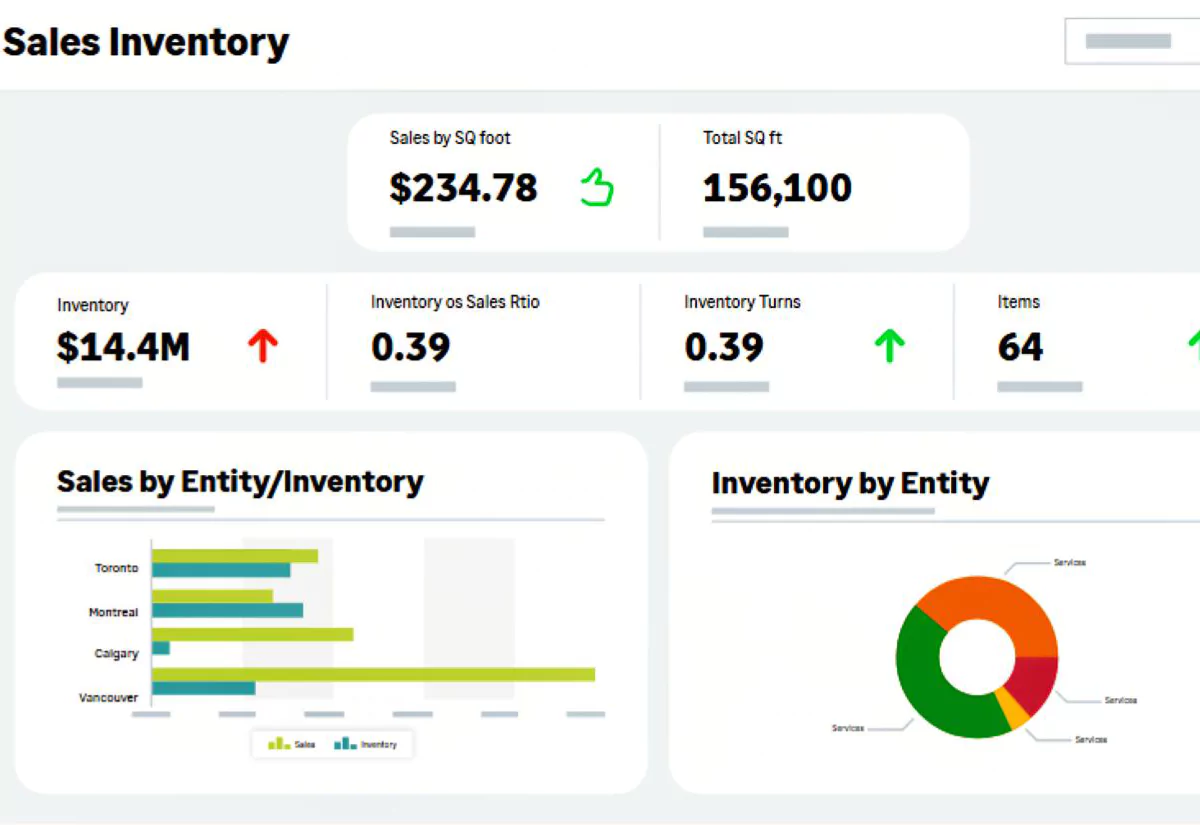
Inventory management
Inventory management can quickly become difficult when businesses operate across multiple warehouses, locations, or distribution channels.
Sage Intacct’s inventory management module helps organizations improve inventory accuracy while gaining greater visibility into operational performance.
Key features include:
- Real-time inventory tracking
- Multi-location inventory visibility
- Automated valuation methods
- Reorder point management
- Warehouse tracking
- Order and fulfillment visibility
For distribution, retail, and manufacturing-related organizations, improved inventory accuracy can directly impact profitability and cash flow. By integrating inventory operations directly into financial management, businesses can eliminate duplicate data entry and improve reporting accuracy.
Fixed assets management
Managing fixed assets manually often leads to spreadsheet complexity, inaccurate depreciation calculations, and audit challenges. Sage Intacct’s fixed assets management module automates the entire asset lifecycle, from acquisition through disposal.
Capabilities include:
- Asset tracking
- Automated depreciation schedules
- Asset transfers
- Disposal management
- Tax and book depreciation support
- Audit-ready reporting
Automation reduces administrative burden while helping finance teams improve compliance and reporting accuracy. Organizations with large equipment, facility, or technology investments often benefit substantially from this module.

Budgeting and planning
As businesses grow, spreadsheets alone often become insufficient for managing budgeting and forecasting processes. Manual processes, version control issues, and disconnected financial data can slow down planning cycles and reduce visibility into performance.
Sage Intacct’s budgeting and planning capabilities help organizations streamline forecasting, budgeting, and financial planning with real-time data and collaborative tools.
Key capabilities include:
- Driver-based budgeting and forecasting
- Rolling forecasts and scenario planning
- Real-time budget vs. actual reporting
- Departmental collaboration
- Automated synchronization with Sage Intacct financials
By integrating planning directly with financial data, organizations can improve forecasting accuracy, reduce spreadsheet dependency, and make more informed business decisions.
Spend management
Alongside budget management, controlling purchasing processes becomes increasingly important. Sage Intacct’s spend management functionality helps organizations strengthen procurement controls while improving visibility into purchasing activity.
Key benefits include:
- Purchase approval workflows
- Budget enforcement
- Procurement visibility
- Automated purchasing processes
- Spend tracking and reporting
One of the biggest advantages of spend management is proactive budget control. Instead of identifying overspending after purchases occur, organizations can stop out-of-policy or over-budget requests before approvals are finalized.
Time and expense management
Manual timesheets and expense reporting can create inefficiencies for both employees and finance teams. Sage Intacct’s time and expense management module helps automate employee submissions, approvals, and billing workflows.
Capabilities include:
- Mobile expense capture
- Employee time tracking
- Automated approval routing
- Expense reimbursement workflows
- Integration with project accounting
- Improved billing accuracy
For project-based organizations, accurate time and expense tracking directly impacts profitability and client billing accuracy. Automation also reduces administrative burden and improves employee experience.

How to know which advanced modules you need
Not every organization requires every Sage Intacct module. The right advanced financial capabilities depend on factors such as:
- Industry
- Business model
- Growth plans
- Compliance requirements
- Reporting complexity
- Operational workflows
For example:
An experienced Sage Intacct partner can help organizations evaluate their current processes and identify which modules provide the greatest operational value.

Not sure which Sage Intacct advanced financial capabilities are right for your organization?
Our Sage experts can help you evaluate your business needs, identify the right modules, and build a scalable solution tailored to your growth goals. Contact our team to discuss which Sage Intacct capabilities best fit your business.
Why expertise matters when implementing Sage Intacct
Implementing Sage Intacct advanced financial capabilities is not simply about turning on new features. Successful implementations require:
- Workflow design
- Reporting architecture
- Entity structure planning
- User adoption strategies
- Integration expertise
- Industry-specific best practices
Without proper implementation, organizations may struggle with inefficient processes, poor reporting visibility, or underutilized functionality. At Rand Group, our Sage experts bring decades of ERP consulting experience and deep Sage software expertise to every implementation engagement.
We’ve helped organizations like:
- B-29 Investments improve financial visibility and operational scalability
- Little Rock Athletic Club streamline financial operations and reporting processes
0 %
reduction in month-end close time
0 %
improvement in data accuracy
0 +
hours saved daily on manual tasks
These types of projects require more than software knowledge. They require strategic financial process expertise and industry-specific implementation experience.
Trust Rand Group for your Sage Intacct implementation, optimization, and support
Choosing the right Sage Intacct partner is just as important as selecting the right modules.
Our team helps organizations:
- Evaluate Sage Intacct capabilities
- Implement advanced modules
- Configure custom workflows
- Integrate third-party systems
- Optimize reporting and dashboards
- Provide ongoing support and training
As a long-standing Sage partner, we combine technical expertise with practical business consulting experience to help organizations maximize ROI from their ERP investment.
Sage Intacct advanced financial capabilities FAQs
What are Sage Intacct’s advanced financial capabilities?
Sage Intacct advanced financial capabilities are extended modules designed to help businesses automate complex financial and operational processes beyond core accounting. These capabilities include revenue recognition, project accounting, multi-entity consolidations, inventory management, fixed assets, spend management, budgeting and planning, and time and expense management.
What advanced modules does Sage Intacct offer?
Sage Intacct offers a wide range of advanced modules, including:
- Revenue recognition
- Project accounting
- Multi-entity and global consolidations
- Inventory management
- Fixed assets management
- Spend management
- Time and expense management
- Budgeting and planning
- Lease accounting
Organizations can add these modules as business needs become more complex.
What Sage Intacct modules are best for growing businesses?
The best Sage Intacct modules depend on the organization’s industry, operational complexity, and growth goals. For example:
- Multi-entity businesses often benefit from Global Consolidations.
- SaaS companies commonly use Revenue Recognition.
- Project-based organizations may need Project Accounting and Time & Expense Management.
- Product-based businesses often require Inventory Management.
An experienced Sage Intacct partner can help identify the right modules for your business.
Does Sage Intacct support multi-entity accounting?
Yes. Sage Intacct supports multi-entity and multi-currency accounting, including automated intercompany transactions, entity-specific reporting, and real-time consolidations. This helps growing organizations manage financial operations across subsidiaries, locations, or global entities more efficiently.
Can Sage Intacct automate revenue recognition?
Yes. Sage Intacct automates revenue recognition for subscription, contract, service, and project-based revenue models. The platform also helps organizations support ASC 606 and IFRS 15 compliance while reducing manual calculations and spreadsheet dependency.
Is Sage Intacct good for project-based businesses?
Yes. Sage Intacct’s Project Accounting module helps project-based organizations track budgets, labor costs, billing, profitability, time, and expenses in real time. This functionality is commonly used by professional services firms, nonprofits, construction companies, and consulting organizations.
What are the benefits of Sage Intacct budgeting and planning?
Sage Intacct Budgeting and Planning helps organizations improve forecasting accuracy, streamline budgeting processes, and reduce spreadsheet dependency. Key capabilities include rolling forecasts, scenario planning, real-time reporting, and collaborative budgeting workflows.
Why work with Rand Group for Sage Intacct?
Next steps
As businesses grow, financial complexity grows with them. Sage Intacct’s advanced financial capabilities help organizations automate manual processes, improve financial visibility, strengthen compliance, and scale operations more effectively.
Working with an experienced Sage Intacct partner can help ensure your implementation is designed for long-term success. Our Sage expertise, implementation experience, and customer-focused approach help organizations maximize the value of Sage Intacct while building a scalable foundation for future growth. Contact us today to learn if your business could benefit from Sage Intacct’s advanced modules and functionality.