Top SAP alternatives for small, midsize, and enterprise businesses

SAP is a widely used ERP system, but it is not the right fit for every organization. Some businesses need an ERP system with different functionality, greater flexibility, simpler administration, lower cost, or stronger alignment with their industry and technology stack.
The best SAP alternative depends on company size, operational complexity, required features, budget, growth plans, and deployment preferences. A small business may need a simpler cloud ERP with strong financial management, while a global manufacturer may need advanced finance, supply chain, production, compliance, and reporting tools.
The top SAP alternatives include Dynamics 365 Business Central, Sage Intacct, Acumatica, NetSuite, Dynamics 365 Finance and Operations, and Epicor. For small to midsize businesses, Dynamics 365 Business Central, Sage Intacct, and Acumatica are often the strongest options. For medium to large businesses, NetSuite, Dynamics 365 Finance and Operations, and Epicor are often better suited for more complex financial, operational, manufacturing, and global requirements.
In this blog, we will explore:
- What is SAP?
- Why consider SAP alternatives?
- Common SAP limitations businesses consider
- SAP alternatives comparison table
- Top SAP alternatives for small to midsize businesses
- Top SAP alternatives for medium to large businesses
- SAP alternatives by business need
- How to choose the right SAP alternative
- How Rand Group helps businesses evaluate and implement SAP alternatives
- Frequently asked questions about SAP alternatives
What is SAP?
SAP is a global enterprise software provider best known for enterprise resource planning, or ERP, systems. ERP systems help businesses manage finance, procurement, supply chain, manufacturing, sales, reporting, and other core processes in one connected platform.
SAP S/4HANA is SAP’s modern ERP platform, built on the SAP HANA database. SAP S/4HANA Cloud Public Edition is positioned as a modular cloud ERP solution with built-in AI for core business processes, real-time data, and support for large-scale operations.
SAP solutions are often used by large or complex organizations that need broad functionality, global controls, and deep process coverage. However, many companies compare SAP with other ERP systems because SAP may be more complex, rigid, or costly than their business requires.

Why consider SAP alternatives?
SAP is a powerful ERP system, but many organizations evaluate SAP alternatives when the platform feels too complex, costly, or rigid for their needs. This is especially true for companies that need strong ERP functionality but do not require the full scale of SAP S/4HANA.
For some businesses, SAP may require more time, budget, training, and internal support than expected. SAP S/4HANA can also have a steep learning curve, and customization may require specialized expertise. These factors can make SAP harder to adopt for companies that need a more flexible or user-friendly ERP system.
You may want to consider SAP alternatives if:
- SAP is more complex than your business requires: A broad ERP system can create extra work if your team only needs core finance, inventory, reporting, or operational capabilities.
- Your team needs a shorter learning curve: SAP S/4HANA can require significant training, especially for users who are new to enterprise ERP systems.
- Your business needs more flexibility: Some organizations need an ERP system that is easier to configure around existing workflows, reporting needs, or industry processes.
- Customization is becoming too complex: SAP customization may require specialized tools, technical resources, and ongoing maintenance.
- Total cost of ownership is a concern: ERP cost includes software, implementation, training, support, integrations, reporting, and long-term system maintenance.
- Your company wants stronger ecosystem alignment: Some businesses prefer ERP systems that connect more naturally with Microsoft, Oracle NetSuite, Sage, or industry-specific tools.
ERP fit matters more than ERP size. A larger ERP system is not always the better ERP system. The best ERP is the one that supports your current processes, scales with your future plans, and can be adopted by your team.
ERP selection also carries real risk. According to Gartner, approximately 55% to 75% of ERP projects fail to meet their objectives. This does not mean companies should avoid ERP. It means they should choose a system and partner that fit their size, industry, processes, people, and long-term goals.
At Rand Group, we see the impact of ERP fit and partner selection firsthand. Many organizations come to us after a prior implementation did not meet expectations. In fact, 60% of our existing clients transitioned to Rand Group from another partner, which shows how important the right ERP strategy and implementation team can be.
SAP alternatives such as Dynamics 365 Business Central, Sage Intacct, Acumatica, NetSuite, Dynamics 365 Finance and Operations, and Epicor give organizations more options. The right alternative can reduce risk by matching the system to the business instead of forcing the business into a system that does not fit.
Common SAP limitations businesses consider
SAP can be a strong ERP platform, especially for large enterprises and highly regulated industries that need deep process control, global compliance, and standardized operations. However, SAP may not align with every business model, budget, workflow, or technology strategy. The following limitations are common reasons companies evaluate SAP alternatives.
- Implementation complexity: SAP implementations can require significant planning, process alignment, data migration, testing, training, and change management. This may be challenging for companies that need a faster ERP deployment or have limited internal IT resources.
- Cost and resource requirements: SAP requires a higher investment in software, consulting, implementation, training, integrations, and long-term support than some businesses expect. Other ERP systems may be more practical for growing companies with leaner teams or tighter budgets.
- Rigid process structure: SAP is built around standardized processes, which can be valuable for large or regulated organizations. However, companies with unique workflows may find SAP less flexible than ERP systems designed for easier configuration and process adaptation.
- Fit-to-standard approach: SAP S/4HANA Cloud Public Edition uses fit-to-standard workshops to compare standard SAP functionality with customer requirements. This can support best practices, but it may also require companies to change workflows to fit the system.
- Customization and flexibility needs: Businesses that need custom workflows, reporting, integrations, or industry-specific processes may find SAP customization complex. Custom changes can require specialized expertise, longer timelines, and ongoing maintenance.
- Capability fit: SAP offers broad ERP functionality, but more functionality is not always better. A company that only needs core finance, inventory, projects, reporting, or light manufacturing may find that SAP provides more complexity than value.
- User adoption: A powerful ERP system only creates value when users adopt it. If the system feels too complex or hard to navigate, teams may rely on spreadsheets or manual workarounds, which can reduce data quality and process visibility.
SAP is often shortlisted by companies that need scale, control, and enterprise process depth. However, many growing businesses choose SAP alternatives when they need a more flexible system, lower complexity, faster deployment, stronger user adoption, or better alignment with Microsoft, Oracle NetSuite, Sage, or industry-specific ecosystems.
SAP alternatives comparison table
When comparing SAP alternatives, start with business size, operational complexity, industry needs, and required functionality. Some ERP systems are designed for small and midsize businesses that need financial management, inventory, projects, reporting, and core operations in one system.
Other ERP systems are built for larger organizations that need advanced supply chain management, manufacturing, multi-entity accounting, compliance, global operations, or industry-specific functionality. The best fit depends on your business requirements, not vendor popularity.
Below is a comparison table we created to help evaluate different alternatives to SAP.

Need help choosing the right SAP alternative?
Choosing the right ERP system starts with a clear view of your requirements, risks, and long-term goals. Rand Group’s software selection engagement helps you compare options, evaluate fit, and build a practical ERP roadmap before you commit to a platform.
Top SAP alternatives for small to midsize businesses
Small and midsize businesses often need an ERP system that improves visibility without adding unnecessary complexity. The strongest SAP alternatives in this category are typically Dynamics 365 Business Central, Sage Intacct, and Acumatica.
These systems are often easier for growing companies to manage than SAP S/4HANA. They can support finance, reporting, operations, and growth without requiring the same level of enterprise ERP overhead.
Dynamics 365 Business Central
Dynamics 365 Business Central is Microsoft’s ERP solution for small and midsize businesses. It connects finance, sales, service, and operations in one system, and Microsoft includes Copilot in both the Essentials and Premium plans.
Business Central is a strong SAP alternative for companies that want broad ERP functionality with a familiar Microsoft experience. It is especially useful for businesses that already use Microsoft 365, Teams, Excel, Outlook, Power BI, or Power Platform.
Business Central can support finance, inventory, purchasing, sales, warehousing, projects, service management, and manufacturing. The Essentials plan supports core business management, while Premium adds enhanced service management and manufacturing capabilities.
Best for: Small to midsize businesses that want finance, operations, reporting, inventory, manufacturing, and Microsoft integration in one ERP system.
Why it stands out:
- Strong Microsoft alignment: Business Central works well for companies already using Microsoft 365, Teams, Excel, Outlook, Power BI, or Power Platform.
- Broad ERP functionality: It can manage financials, purchasing, inventory, sales, projects, warehousing, service management, and manufacturing, making it a strong option for growing companies that need connected operations.
- Flexible path for growth: Companies can start with core ERP functionality and expand as their needs grow. This makes Business Central a practical SAP alternative for companies that need scalability without moving straight into enterprise-level complexity.
- User adoption advantage: The Microsoft interface can feel familiar to many users, which may reduce training friction.
In our experience, organizations often choose Business Central because it provides broad ERP functionality without the infrastructure complexity or implementation overhead associated with larger enterprise ERP platforms.
For example, Rand Group helped Subs for Pools use Dynamics 365 Business Central to support rapid growth with stronger reporting, controls, and operational visibility. With Business Central, we helped our client scale construction projects by 185% and position the business for an additional 75%+ growth in the next year without a proportional increase in office staff.

Sage Intacct
Sage Intacct is a cloud accounting and financial management system for growing organizations and midsize companies. Sage positions it as software for financial management, automation, insights, planning, HR, and payroll.
Sage Intacct is a strong SAP alternative when financial management is the main priority. It is often a better fit than a broad enterprise ERP when the business needs stronger accounting, reporting, approvals, consolidations, and controls, but does not need advanced manufacturing or supply chain functionality.
Sage Intacct supports core financial functions such as accounts payable, accounts receivable, cash management, general ledger, order management, and purchasing. It also supports multi-entity management, which helps organizations manage multiple entities from a shared environment.
Best for: Finance-led organizations that need cloud accounting, multi-entity reporting, strong controls, and real-time financial visibility.
Why it stands out:
- Strong financial management: Sage Intacct is built around accounting, close, reporting, and financial control. This makes it a strong SAP alternative for companies where the finance team is driving the ERP search.
- Multi-entity support: Sage Intacct helps organizations manage multiple entities from one shared environment. This is useful for companies with multiple locations, departments, funds, business units, or ownership structures.
- Reporting and visibility: Sage Intacct is known for financial reporting and dimensional accounting. Finance teams can track performance by dimensions such as location, department, project, or fund without relying on complex spreadsheets.
- Good fit for services and nonprofit needs: Sage Intacct is commonly considered by professional services, nonprofit, healthcare, and other finance-led organizations.
- Focused scope: It can be a better fit than SAP when finance is the priority and advanced operational ERP is not required.
Sage Intacct should be high on the shortlist when the business problem is mainly financial management, reporting, consolidations, or controls. For example, Rand Group helped B-29 Investments streamline multi-entity accounting and improve financial visibility across more than 20 companies. With Sage Intacct, we helped our client save 2+ hours per day through automated intercompany accounting and reporting.

Acumatica
Acumatica is a cloud ERP system for small and midsize businesses. It offers secure, anytime access and promotes unlimited users as part of its cloud ERP model.
Acumatica can be a practical SAP alternative for companies that want cloud ERP with financial and operational functionality. It can support finance, projects, distribution, CRM, inventory, and related workflows depending on the edition and configuration.
Acumatica is worth evaluating, but companies should compare it carefully against Business Central and Sage Intacct. The best fit can depend heavily on reporting needs, integrations, partner experience, industry requirements, and how much Microsoft or Sage alignment matters to the business.
Best for: Growing SMBs that want adaptable cloud ERP for finance, projects, inventory, and operational workflows.
Where it can fit:
- Operational SMBs: Acumatica can support finance, inventory, projects, CRM, and distribution-related processes. This makes it a useful option for companies that need more than finance but may not need a full enterprise ERP.
- Cloud ERP requirements: Acumatica is built as a cloud ERP system with access from different locations and devices. This can help companies that want a more modern alternative to older on-premises systems.
- Flexible user model: Acumatica promotes unlimited users as part of its cloud ERP approach. This can be appealing for companies that want broader system access without managing every decision around named user licensing.
- Industry editions: Acumatica offers industry-specific options that may help with fit in certain markets.
Acumatica can be a fit in the right setting, but it should be evaluated against long-term reporting, integrations, support, and ecosystem needs.

Top SAP alternatives for medium to large businesses
Medium and large businesses usually need more than core accounting. They may need multi-entity management, global operations, advanced supply chain, manufacturing, compliance, planning, warehouse management, and integrated reporting. For this group, NetSuite, Dynamics 365 Finance and Operations, and Epicor are often the strongest SAP alternatives.
NetSuite
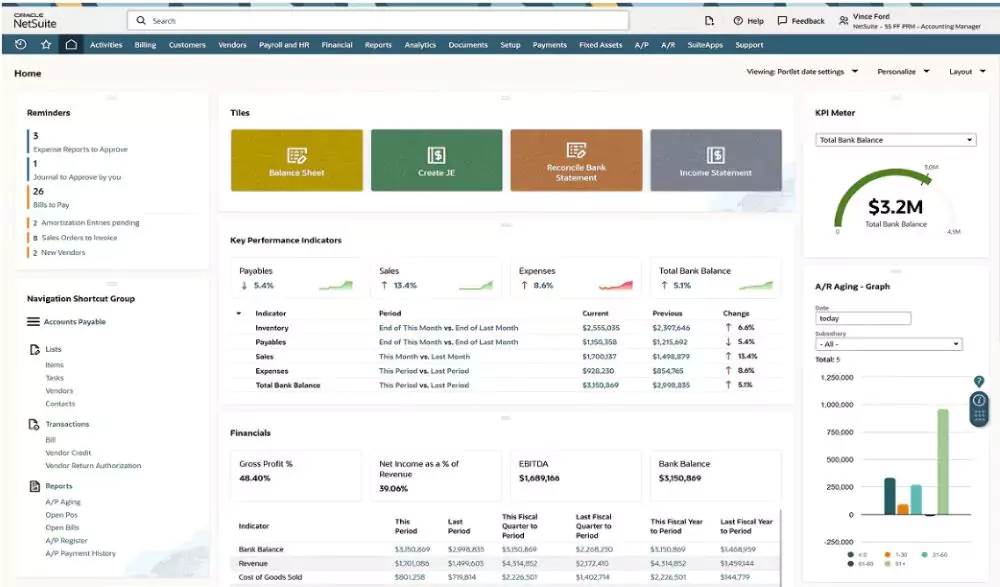
Oracle NetSuite is a cloud-based business management suite that includes ERP, accounting, CRM, ecommerce, and related business applications. It is a strong SAP alternative for companies that want one cloud platform across finance, operations, customer data, inventory, commerce, and services.
NetSuite is often a good fit for midsize and larger companies that have outgrown basic accounting or disconnected systems. It can support financials, procurement, inventory, order management, CRM, ecommerce, professional services automation, and reporting.
NetSuite also offers SuiteSuccess, which includes preconfigured processes and industry functionality designed to improve time to value, adoption, and ROI. NetSuite states that SuiteSuccess includes ready day-one functionality, continuous engagement, and preconfigured solutions for specific industry needs.
Best for: Midsize and larger companies that want a unified cloud ERP suite across finance, operations, inventory, CRM, ecommerce, and services.
Why it stands out:
- Unified cloud suite: NetSuite brings ERP, CRM, ecommerce, inventory, procurement, and reporting into one cloud platform. This makes it a strong SAP alternative for companies that want to reduce disconnected systems and manage core business processes in one place.
- Industry packages: NetSuite SuiteSuccess provides preconfigured processes and industry functionality. This can help companies adopt leading practices while still gaining a cloud ERP platform that can scale as the business grows.
- Strong manufacturing and distribution support: NetSuite supports production planning, demand forecasting, inventory management, quality control, order tracking, and finances across facilities and supply chains.
- Scalability: NetSuite can support companies as they add users, entities, modules, and business lines. This makes it a better fit than smaller ERP tools when a company needs a broader business management platform.
- Modular design: Companies can start with core functionality and add modules as needs grow.
NetSuite should be on the shortlist when a company wants one cloud suite across finance, operations, customer data, ecommerce, and services. For example, Rand Group helped Mann Eye Institute modernize financial operations with NetSuite across 17 locations. With NetSuite, we helped our client reduce AP report generation time from 20 minutes to under 10 seconds, support 40–50% revenue growth, and improve financial reporting without adding accounting headcount.
Dynamics 365 Finance and Operations
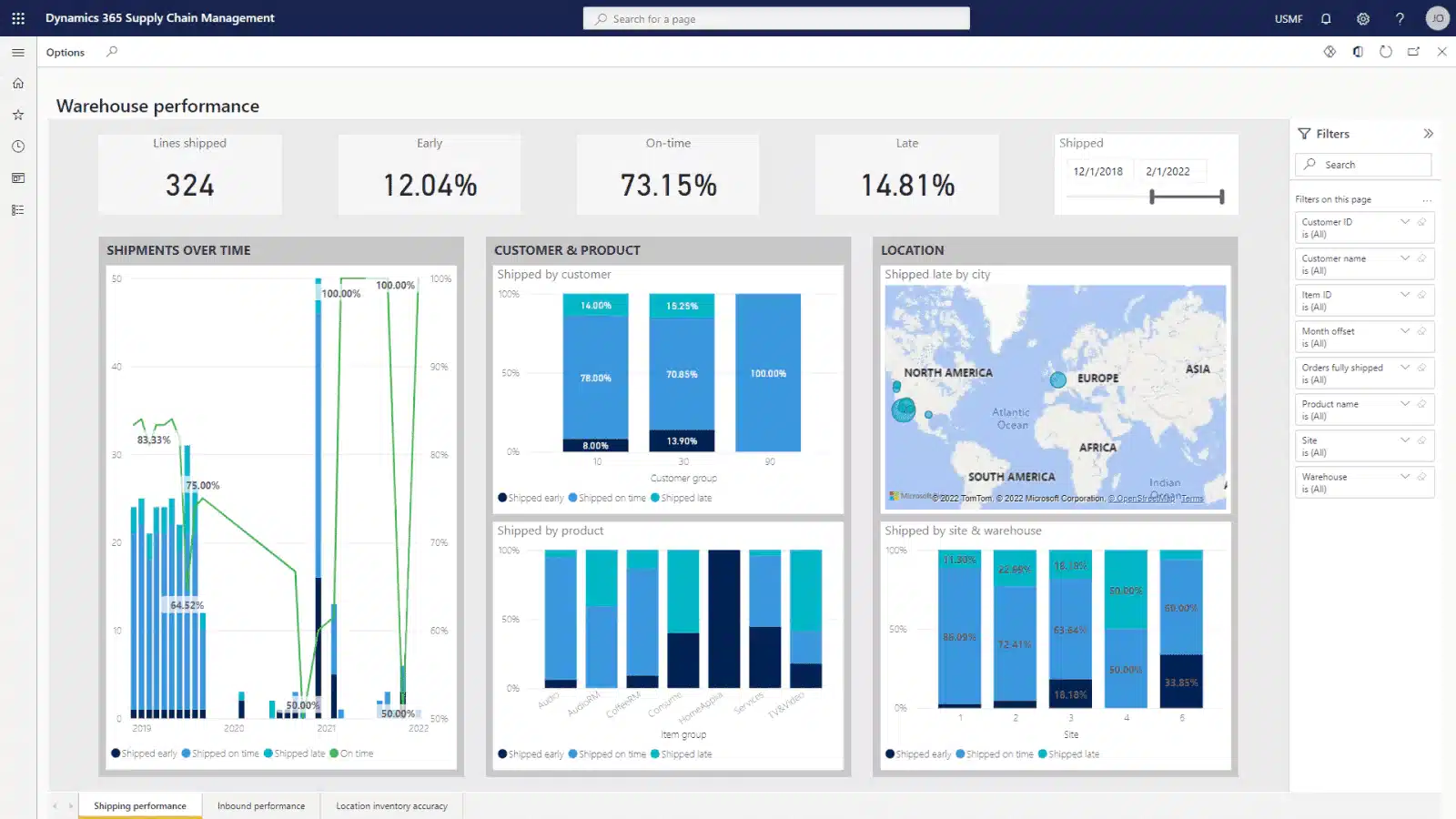
Dynamics 365 Finance and Operations refers to Microsoft’s enterprise ERP capabilities across Dynamics 365 Finance and Dynamics 365 Supply Chain Management. Together, these applications support complex financial management, supply chain management, manufacturing, procurement, warehousing, planning, and global operations.
Dynamics 365 Finance provides financial reporting, embedded analytics, AI-driven insights, planning, budgeting, forecasting, cash management, and business performance management.
Dynamics 365 Supply Chain Management supports supply chain planning, procurement, manufacturing and shop floor management, order management, warehouse management, fulfillment, asset management, and maintenance.
To learn more, read our Dynamics 365 Finance & Operations vs SAP S/4HANA comparison guide.
Best for: Medium to large organizations that need enterprise finance, supply chain, manufacturing, warehousing, reporting, compliance, and Microsoft ecosystem integration.
Why it stands out:
- Enterprise finance: Dynamics 365 Finance supports advanced financial management, reporting, planning, budgeting, forecasting, and cash management. This makes it a strong SAP alternative for companies with complex finance teams, multiple entities, and stricter reporting requirements.
- Advanced supply chain: Dynamics 365 Supply Chain Management supports planning, procurement, manufacturing, warehousing, fulfillment, asset management, and maintenance. This makes it a strong fit for manufacturers, distributors, and large operational businesses that need enterprise supply chain functionality.
- Microsoft ecosystem: Dynamics 365 Finance and Operations connects with Microsoft 365, Teams, Excel, Power BI, Azure, and Power Platform. This is a major advantage for companies that want enterprise ERP functionality without leaving the Microsoft ecosystem.
- AI and automation: Microsoft is investing heavily in Copilot, AI agents, embedded analytics, and intelligent automation across Dynamics 365. This can help companies improve forecasting, reporting, process automation, and decision-making over time.
- Reporting depth: Dynamics 365 Finance and Operations supports in-app views, Power BI, financial statements, formatted documents, and other reporting methods.
Dynamics 365 Finance and Operations is one of the strongest SAP alternatives for enterprise organizations that want scale, control, and Microsoft integration. For example, Rand Group helped The Museum of Fine Arts, Houston modernize financial operations with Dynamics 365 Finance and Operations. With D365 F&O, we helped our client reduce its monthly close cycle by 50%, complete financial close within three days, and make purchase approvals 67% faster.
Epicor
Epicor Kinetic is an ERP system focused on operational businesses. Epicor describes Kinetic as an industry-tailored, cognitive ERP that helps companies work smarter and stay connected.
Epicor can be a good SAP alternative for companies that need production, inventory, supply chain, and shop floor functionality. It is often considered by manufacturers and distributors that want an operations-focused ERP system.
However, Epicor may be less ideal for companies that prioritize finance-led ERP, Microsoft ecosystem integration, or a broader business suite. In those cases, NetSuite or Dynamics 365 Finance and Operations may offer a stronger long-term platform.
Best for: Companies with production, inventory, and distribution requirements that want an operations-focused ERP system.
Where it can fit:
- Operational focus: Epicor is built with a strong focus on production, inventory, and supply chain processes. This can make it useful for companies that need deeper operational workflows than a finance-first system provides.
- Shop floor support: Epicor Kinetic is designed for manufacturing environments where production visibility matters. This can help companies manage shop floor activity, production workflows, and operational execution.
- Industry-tailored approach: Epicor offers ERP capabilities designed around operational industries. This can be helpful for companies that want a system built around production and inventory needs rather than a general finance platform.
Epicor can be a strong SAP alternative for companies with manufacturing, production, inventory, and distribution requirements. It is often a good fit when operational execution is the main priority, while companies with broader finance, reporting, integration, or global needs may want to compare it against other ERP platforms before making a final decision.

SAP alternatives by business need
The right SAP alternative depends on the business problem you are solving. Use the list below to narrow your ERP shortlist before reviewing pricing or scheduling demos.
- Best SAP alternative for Microsoft-first businesses: Dynamics 365 Business Central and Dynamics 365 Finance and Operations are strong options for companies already using Microsoft 365, Teams, Excel, Power BI, Azure, or Power Platform. Business Central fits small and midsize companies, while Dynamics 365 Finance and Operations fits larger or more complex companies.
- Best SAP alternative for finance-led organizations: Sage Intacct is often a strong fit for companies focused on accounting, reporting, multi-entity management, and financial controls. It is especially useful when the business does not need advanced manufacturing or supply chain functionality.
- Best SAP alternative for growing SMBs: Dynamics 365 Business Central is often the strongest all-around option for small and midsize businesses that need finance and operations in one ERP. Sage Intacct is the better fit when financial management is the main priority.
- Best SAP alternative for midsize business suites: NetSuite is a strong option for companies that want a unified cloud platform across ERP, CRM, ecommerce, inventory, procurement, and services. It can be a good fit when the organization has outgrown basic accounting and needs broader business management.
- Best SAP alternative for global or complex operations: Dynamics 365 Finance and Operations and NetSuite are strong candidates for organizations with multi-entity, multi-currency, global reporting, and operational complexity. Dynamics 365 Finance and Operations is especially strong for Microsoft-first enterprise environments.
- Best SAP alternative for manufacturing: Dynamics 365 Finance and Operations, NetSuite, and Business Central Premium may all be considered. The best fit depends on production complexity, warehouse needs, global scale, and reporting requirements.
How to choose the right SAP alternative
Choosing the right SAP alternative starts with business fit. Do not compare ERP systems only by feature lists because the best system is the one your team can implement, adopt, support, and scale.
- Start with business size and complexity: Small and midsize businesses often need a system that is easier to implement and maintain. Larger companies may need more advanced finance, supply chain, security, and compliance capabilities.
- Define your core requirements: List your required processes before comparing vendors. Include finance, inventory, purchasing, manufacturing, projects, reporting, approvals, integrations, compliance, and user roles.
- Evaluate industry fit: A system that works well for a services company may not fit a manufacturer. Use industry fit to narrow the list before reviewing pricing.
- Compare total cost of ownership: Look beyond software licensing. Include implementation, integrations, data migration, training, support, infrastructure, customizations, reporting, and future upgrades.
- Review reporting and analytics needs: Reporting is often a major ERP selection factor. Dynamics 365 Finance and Operations, for example, supports operational views, financial reporting, Power BI, formatted documents, and other reporting methods.
- Consider user adoption: The best ERP is not just the system with the most features. It is the system your team can use correctly and consistently.
- Choose the right partner: ERP success depends on software fit and implementation quality. The right partner should understand your industry, business processes, reporting needs, integrations, and long-term roadmap.
ERP selection should start with process, data, and outcomes. Software demos are more useful after the business has a clear view of what the new system must solve.
How Rand Group helps businesses evaluate and implement SAP alternatives
Rand Group helps organizations evaluate, implement, optimize, and support ERP systems that fit their business goals. As a multi-platform solution provider, we help companies compare SAP alternatives based on functionality, industry fit, reporting needs, integrations, user adoption, scalability, and long-term cost.
Our team brings more than 20 years of ERP and business application experience. With 3,000+ successful engagements, 1,200+ clients, and a 90% client retention rate, we help organizations make practical technology decisions that support growth instead of adding unnecessary complexity.
We also support the full business technology stack, including ERP, CRM, reporting, analytics, integrations, automation, AI, cloud infrastructure, and ongoing managed support. This gives clients a single partner for ERP strategy, implementation, optimization, and long-term system value.
- ERP selection and roadmap planning: We assess your current systems, pain points, reporting needs, integrations, data quality, process gaps, and growth plans. This helps identify which SAP alternatives should be shortlisted and which systems should be removed early.
- ERP implementation: We help plan, configure, integrate, test, and deploy ERP systems based on your business requirements. Our implementation approach focuses on process alignment, data readiness, user adoption, and long-term scalability.
- Reporting, analytics, and AI: We help businesses improve visibility through dashboards, native ERP reporting, business intelligence, AI-enabled automation, and system integrations. This is especially important when replacing SAP because reporting and data migration are common transition risks.
- Ongoing ERP support: We provide support after go-live, including troubleshooting, training, reporting, integrations, customizations, system optimization, and release readiness. Our goal is to help your ERP system stay reliable, useful, and aligned with your business as it changes.
Frequently asked questions about SAP alternatives
What is the best SAP alternative?
The best SAP alternative depends on your business size, industry, required functionality, budget, and long-term goals. Dynamics 365 Business Central and Sage Intacct are often strong options for small to midsize businesses, while NetSuite and Dynamics 365 Finance and Operations are often better fits for midsize and large organizations.
What is the best SAP alternative for small businesses?
Dynamics 365 Business Central is often one of the strongest SAP alternatives for small and growing businesses that need finance, operations, reporting, inventory, and Microsoft integration in one system. Sage Intacct is also a strong option for small businesses that need cloud financial management, multi-entity reporting, and stronger accounting controls.
What is the best SAP alternative for midsize to enterprise businesses?
The best SAP alternatives for midsize to enterprise businesses are often NetSuite and Dynamics 365 Finance and Operations. NetSuite is a strong fit for companies that need a unified cloud ERP suite, while Dynamics 365 Finance and Operations is a strong fit for companies that need enterprise finance, supply chain, manufacturing, reporting, and Microsoft integration.
Is Dynamics 365 a good SAP alternative?
Yes. Dynamics 365 can be a strong SAP alternative for businesses that want ERP functionality with Microsoft ecosystem integration. Dynamics 365 Business Central is designed for small and midsize organizations, while Dynamics 365 Finance and Operations supports more complex finance, supply chain, manufacturing, and global operations.
Is NetSuite a good SAP alternative?
Yes. NetSuite is a strong SAP alternative for organizations that want a unified cloud ERP suite. It can support financial management, CRM, ecommerce, inventory, procurement, manufacturing, distribution, services, and reporting from one platform.
Is SAP too complex for small businesses?
SAP may be more complex than some small businesses need. Smaller organizations often compare SAP with Dynamics 365 Business Central, Sage Intacct, and Acumatica because these systems may offer a simpler path to ERP, lower overhead, and functionality that better fits their current stage of growth.
What should I consider before replacing SAP?
Before replacing SAP, review your current processes, integrations, data quality, reporting needs, customizations, compliance requirements, user adoption challenges, and future growth plans. You should also compare total cost of ownership, not just software licensing.
Which SAP alternative is best for manufacturing?
Dynamics 365 Finance and Operations, NetSuite, Dynamics 365 Business Central Premium, Epicor, and Acumatica may all be considered for manufacturing. The best fit depends on production complexity, warehouse needs, supply chain requirements, reporting goals, company size, and whether the business needs broader finance and operational functionality.
Which SAP alternative works best with Microsoft 365?
Dynamics 365 Business Central and Dynamics 365 Finance and Operations are the strongest SAP alternatives for companies that rely on Microsoft 365, Teams, Excel, Power BI, Azure, and Power Platform. Business Central is better suited for small to midsize organizations, while Dynamics 365 Finance and Operations is better suited for medium to large organizations with more complex requirements.
How can Rand Group help me choose an SAP alternative?
Rand Group helps businesses assess ERP requirements, compare platforms, review process needs, evaluate system fit, plan data migration, design integrations, train users, and support the system after go-live. We also provide software selection services to help organizations compare ERP options before choosing a platform.
Final thoughts on choosing an SAP alternative
SAP is a powerful ERP system, but it is not the only path to modern finance, operations, supply chain, manufacturing, and reporting. Many organizations can find a better fit with an ERP system that aligns more closely with their size, industry, budget, workflows, and technology strategy.
For small to midsize businesses, Dynamics 365 Business Central and Sage Intacct are often strong SAP alternatives. Acumatica may also fit certain organizations that need flexible cloud ERP for finance, projects, inventory, or operational workflows.
For medium to large businesses, NetSuite and Dynamics 365 Finance and Operations are two of the strongest SAP alternatives. Epicor may also be worth evaluating for companies with production, inventory, and distribution requirements.
The right decision should come from a structured ERP evaluation, not a feature list alone. Rand Group can help you compare SAP alternatives, understand tradeoffs, and build a practical ERP roadmap for your business. Contact us today to learn more.