
Demand planning & forecasting solutions
Forecast customer demand, plan inventory requirements, and align purchasing and production with connected ERP software, AI-powered forecasting, and automation. Rand Group helps businesses improve forecast accuracy, reduce stockouts and excess inventory, and make better supply chain decisions.

Plan ahead for changing customer demand
Unexpected changes in customer demand can leave businesses with too much inventory or not enough products to fill orders. When sales forecasts, inventory data, and purchasing plans are spread across systems, teams struggle to determine what they need and when they need it.
Rand Group helps you connect demand forecasting with supply planning. We bring historical sales, available inventory, supplier lead times, and production requirements into shared workflows so teams can anticipate demand and plan the right materials and resources.
We also help you use AI-powered forecasting and automation to identify demand trends, compare planning scenarios, and adjust plans as conditions change. These tools help teams spend less time updating spreadsheets and more time preparing for future supply needs.

Improve forecast accuracy
Use historical sales, seasonal trends, and customer demand patterns to create more reliable forecasts. Update projections as new information becomes available to improve planning decisions.
Reduce stockouts and excess inventory
Align inventory targets and replenishment plans with expected demand and supplier lead times. Maintain product availability while reducing unnecessary stock, storage costs, and slow-moving inventory.

Coordinate purchasing and production
Give purchasing, manufacturing, and sales teams a shared view of upcoming demand and supply requirements. Plan materials, production capacity, and replenishment earlier to reduce delays and last-minute changes.
Real results from connected planning and operations
%
Fewer raw material stockouts
%
Reduction in production scheduling hours per order
Hours saved each week on manual tasks
Rand Group has become a resource we can lean on when we are trying to improve or digitize a process. Because of the time spent with our business, the team can go beyond the superficial layers and help us get to solutions that have a material impact on operations.
Forecast demand with historical data and trends
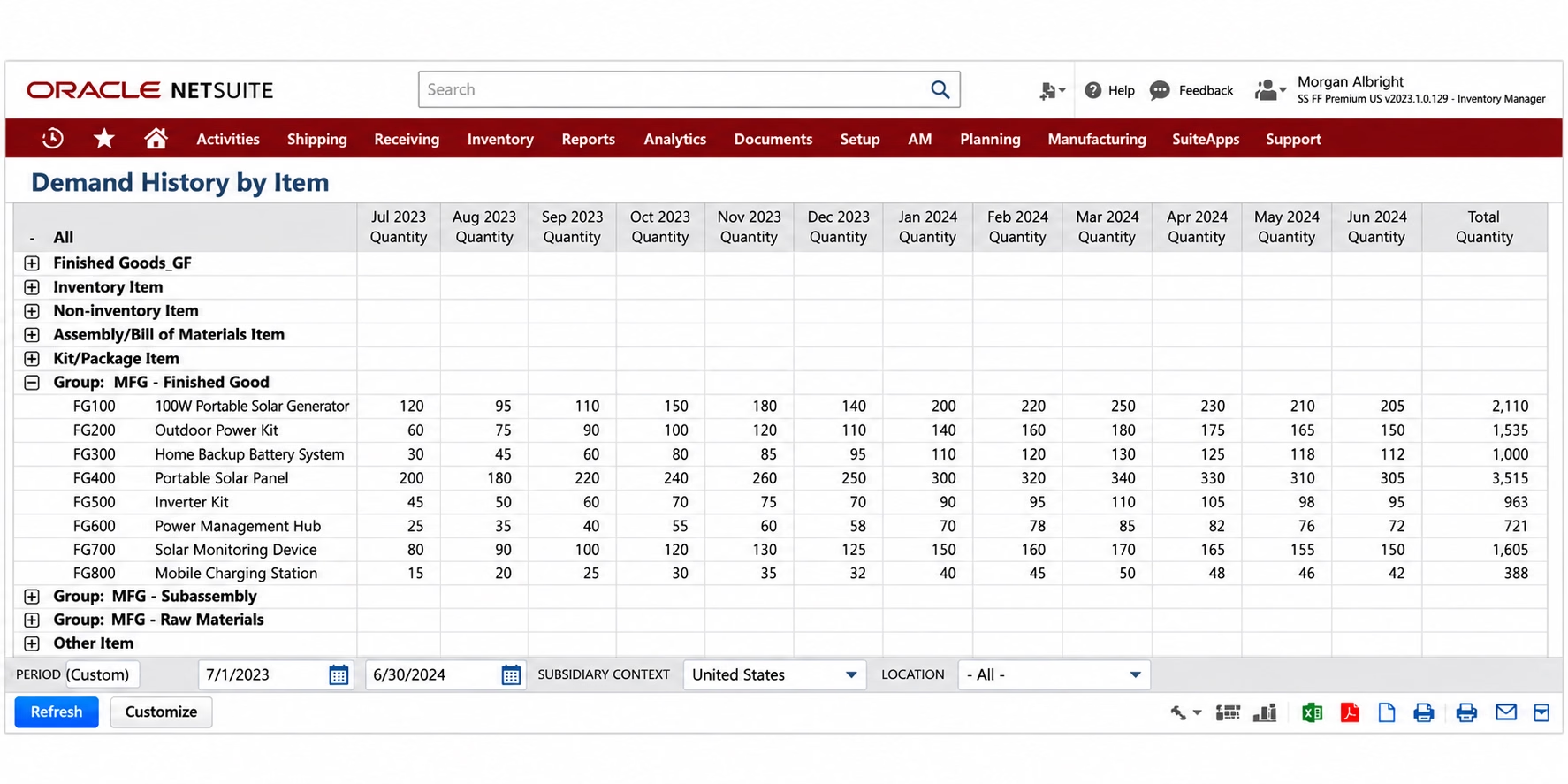
Build demand forecasts using historical sales, seasonal patterns, and other business data. Demand forecasting software helps teams identify trends and predict future needs by product, customer, or location.
- Historical sales analysis: Review past sales and order data to identify buying patterns and create a baseline demand forecast.
- Seasonal demand forecasting: Account for recurring changes in demand during holidays, peak seasons, and other periods.
- Statistical forecasting models: Use moving averages, trend analysis, and seasonal models to estimate future demand.
- AI-powered demand forecasting: Apply machine learning to historical data to identify patterns and predict demand.
- Forecasts by item and location: Create demand projections for specific products, warehouses, customer groups, or business locations.
- Forecast adjustments: Refine forecasts based on promotions, new customers, market conditions, and expected sales activity.
Turn demand forecasts into supply plans
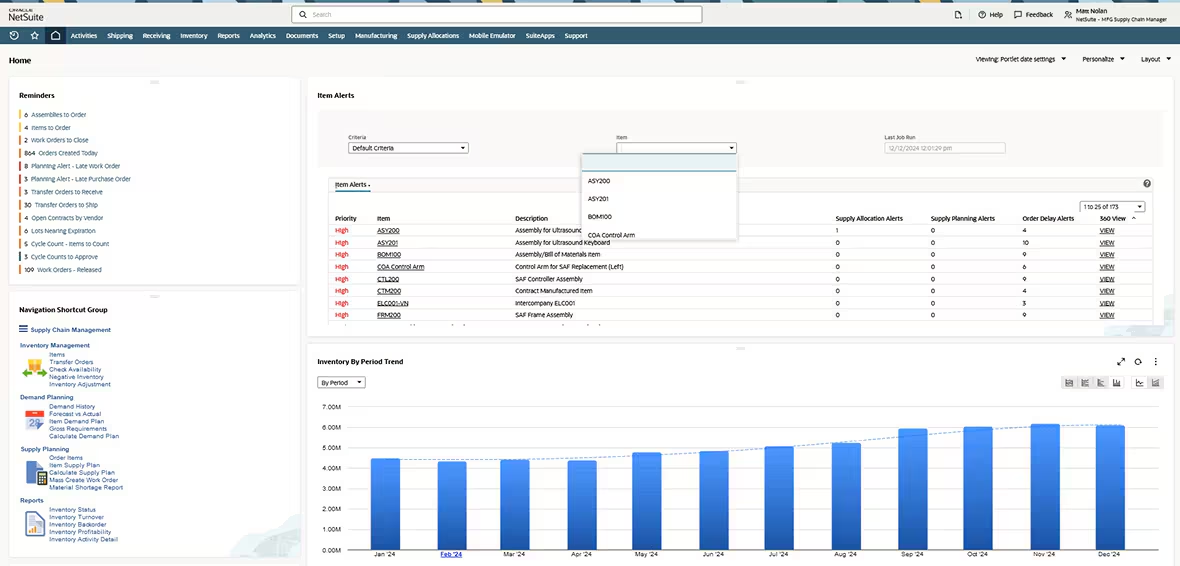
Convert expected demand into inventory, purchasing, and production plans. Supply planning software compares forecasts with available stock, incoming orders, and supplier lead times to determine what materials and products are needed.
- Supply and demand planning: Compare expected demand with available and incoming inventory to identify future supply gaps.
- Inventory replenishment planning: Determine when and how much inventory to reorder to meet expected demand.
- Reorder points and safety stock: Set inventory thresholds that account for demand changes and supply uncertainty.
- Material requirements planning (MRP): Calculate raw material and component needs using demand forecasts, production plans, and bills of materials.
- Supplier lead time planning: Account for purchasing and delivery times when scheduling replenishment and production.
- Purchase and production recommendations: Generate suggested purchase, transfer, or production orders based on planned supply requirements.
Align sales, operations, and financial planning
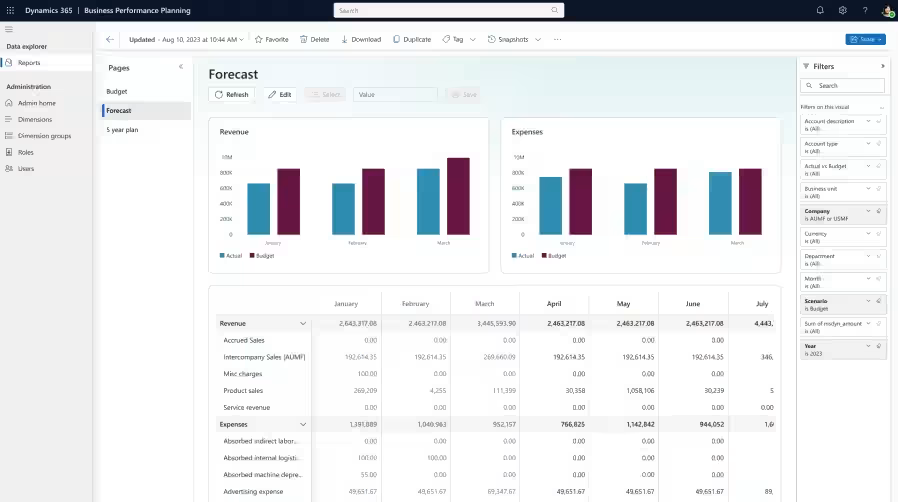
Bring sales, purchasing, production, and finance teams together around a shared plan. Sales and operations planning (S&OP) helps businesses review forecasts, evaluate supply constraints, and adjust plans as demand and business priorities change.
- Cross-functional planning: Align sales forecasts with inventory requirements, purchasing plans, production schedules, and financial goals.
- Scenario planning: Evaluate how changes in demand, supply availability, or operating conditions could affect future plans.
- Production capacity planning: Compare expected demand with available labor, equipment, and manufacturing capacity.
- Forecast accuracy reporting: Compare forecasts with actual sales to identify differences and improve future projections.
- Budget alignment: Connect demand and supply plans with revenue targets, inventory costs, and financial budgets.
- Product lifecycle planning: Account for new products, discontinued items, and changing requirements with accurate product and item data management.

Improve your demand planning and forecasting
Whether you need more accurate demand forecasts, better inventory replenishment, or stronger coordination between sales and operations, Rand Group can help. Talk with our team about the ERP software, AI-powered forecasting, and automation that can reduce supply disruptions, control inventory costs, and improve planning accuracy.
Demand planning and forecasting software for your business
The right demand planning and forecasting software depends on your inventory requirements, production complexity, and forecasting needs. Rand Group works with Microsoft, Oracle NetSuite, and Sage to help businesses implement ERP solutions that connect demand forecasts with purchasing, inventory, production, and financial planning.
Dynamics 365 Finance & Operations
Dynamics 365 Finance & Operations supports advanced demand forecasting and supply planning for complex operations. AI-powered forecasting, scenario analysis, and master planning help manufacturers and distributors anticipate demand, calculate material requirements, and coordinate inventory and production across locations.
Dynamics 365 Business Central
Dynamics 365 Business Central connects demand forecasting, purchasing, inventory, and accounting in one cloud ERP. Planning worksheets, replenishment tools, and sales forecasts help growing businesses calculate supply requirements, maintain inventory availability, and coordinate purchasing and production.
Oracle NetSuite
Oracle NetSuite connects demand planning, inventory, purchasing, and financial operations in one cloud ERP. Historical sales analysis, forecasting methods, and replenishment planning help businesses estimate future demand, manage inventory requirements, and coordinate supply across multiple locations.
Sage 100
Sage 100 supports inventory replenishment and material planning for small and midsize manufacturers and distributors. Reorder points, Inventory Requirements Planning, and available MRP tools help teams calculate purchasing needs, account for supplier lead times, and manage stock levels.

Case Study

How Bartek Ingredients improved material availability and production planning
Bartek Ingredients partnered with Rand Group to replace paper-based processes with Dynamics 365 Business Central, Power Apps, and Power BI. The connected solution brought inventory, production, warehouse, and financial information into one system. With better visibility into materials and production activity, Bartek reduced raw material stockouts by 85% and production scheduling hours per order by 50%, helping teams plan and execute operations more efficiently.
Enhance demand planning with AI and automation
Use AI-powered forecasting and connected ERP apps to improve demand and supply planning. Rand Group helps businesses analyze historical sales, compare planning scenarios, and track incoming inventory to make more informed decisions and reduce manual work.
Featured AI Agent
Sales and Operations Planning
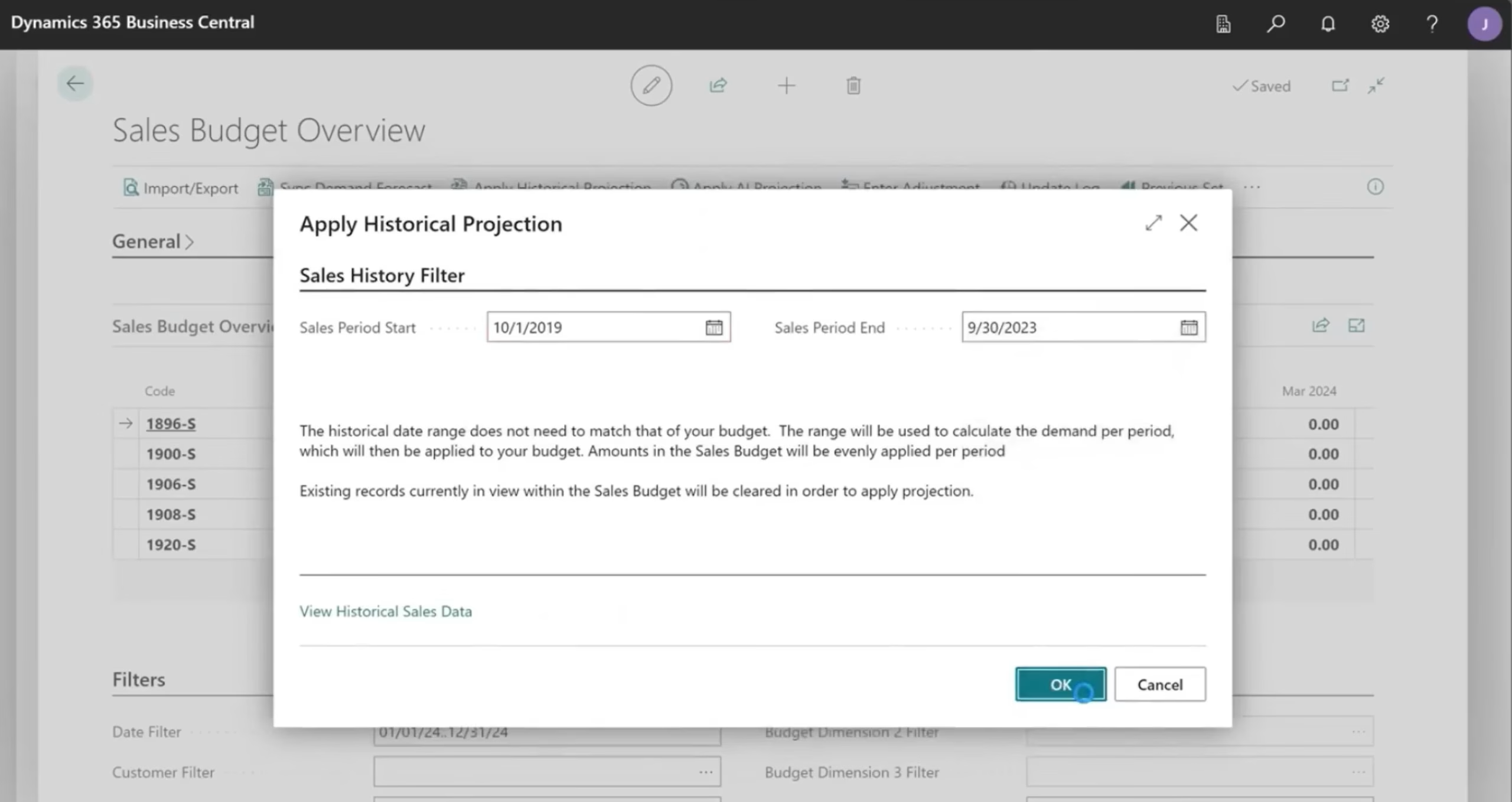
Create demand forecasts and sales budgets using historical sales data. With the optional AI Forecasting capability, use machine learning models to predict future demand. Compare planning scenarios and share forecasts across teams to help align sales, purchasing, and production with expected demand.
- Generate AI-powered forecasts: Use historical sales data and trained machine learning models to predict future demand.
- Evaluate planning scenarios: Adjust forecasts and budgets to assess changes in demand, market conditions, and expected sales.
- Align sales and operations: Connect demand forecasts and sales budgets to support coordinated purchasing and production planning.
Supply Chain Accelerator
Improve supply planning with safety stock adjustments, manufacturing lead time settings, and visibility into inventory in transit. Help teams calculate material requirements, manage replenishment, and respond to changing supply needs.
Inbound Container Handling
Track incoming shipping containers, purchase orders, and expected receipt dates to improve visibility into future inventory availability. Help planning teams account for incoming supply, coordinate receiving, and make better replenishment decisions.
Explore related supply chain solutions
Demand planning and forecasting help businesses prepare for future needs. Related supply chain solutions turn those plans into purchasing decisions, inventory management, and order fulfillment.

Inventory & warehouse management
Track inventory across locations, maintain accurate stock records, and streamline warehouse operations to keep products available when needed.

Order management & fulfillment
Connect customer orders with available inventory and coordinate picking, packing, and shipping to improve order accuracy and meet delivery expectations.

Procurement & purchasing
Turn supply plans into purchase orders, manage supplier relationships, and streamline purchasing approvals to keep materials available on time.
Why partner with Rand Group?
Solutions built around your planning needs
Demand patterns, supplier lead times, and production constraints vary by business. Rand Group reviews your forecasting methods and planning workflows, then configures ERP software and automation to meet your operational needs.
Long-term partnership and support
With a 90% client retention rate, Rand Group supports your team beyond implementation. We provide training, forecasting improvements, and ongoing ERP optimization as demand patterns, planning requirements, and business operations change.
Supply chain planning expertise
Rand Group understands how demand forecasts, inventory needs, and production schedules work together. Our experience with manufacturers and distributors helps businesses improve forecasting, plan material requirements, and align purchasing with production.
Multi-platform ERP expertise
Rand Group works with Microsoft, Oracle NetSuite, and Sage to implement demand planning and forecasting solutions. We assess planning complexity, inventory requirements, and integrations to help you select the right platform.
Frequently asked questions (FAQs)
What are demand planning and forecasting solutions?
Demand planning and forecasting solutions help businesses predict customer demand and prepare the inventory, materials, and resources needed to meet it. These tools analyze historical sales, seasonal trends, and other business data to estimate future requirements. Connected ERP software helps turn those forecasts into purchasing, replenishment, and production plans.
What is the difference between demand planning and demand forecasting?
Demand forecasting predicts future customer demand, while demand planning uses those predictions to prepare business operations. Forecasting focuses on estimating sales using historical data, trends, and statistical models. Demand planning connects those estimates with inventory, purchasing, production, and financial goals to determine how the business should respond.
How can businesses improve demand forecasting accuracy?
Businesses can improve demand forecasting accuracy by combining historical sales data, seasonal trends, and current market information. Statistical models and AI-powered forecasting tools help identify demand patterns and generate predictions. Comparing forecasts with actual sales and updating projections regularly helps businesses improve accuracy over time.
How does demand planning software help reduce stockouts and excess inventory?
Demand planning software helps reduce stockouts and excess inventory by aligning replenishment decisions with expected customer demand. It compares forecasts with available stock, incoming inventory, and supplier lead times to identify future supply needs. This helps businesses maintain product availability while reducing unnecessary inventory and storage costs.
How do demand forecasting and material requirements planning (MRP) work together?
Demand forecasting estimates future product demand, while material requirements planning (MRP) calculates the materials needed to meet that demand. MRP uses forecasts, production schedules, inventory levels, and bills of materials to determine purchasing and production requirements. Together, these tools help businesses plan materials and reduce production delays.
What is sales and operations planning (S&OP), and how does it support demand planning?
Sales and operations planning (S&OP) is a process that aligns demand forecasts with purchasing, inventory, production, and financial plans. Teams review expected demand, evaluate supply constraints, and agree on a shared operating plan. This improves coordination between departments and helps businesses respond to changing customer needs.
How can AI and machine learning improve demand forecasting?
AI and machine learning can improve demand forecasting by analyzing historical sales data and identifying patterns that traditional methods may miss. AI-powered tools can generate forecasts, recognize seasonal trends, and support scenario planning. Forecast accuracy depends on data quality, model configuration, and regular review of results.
How do I choose the right demand planning and forecasting software for my business?
Choose demand planning and forecasting software based on your demand patterns, inventory needs, production complexity, and integration requirements. Dynamics 365 Finance & Operations supports advanced planning, while Dynamics 365 Business Central provides forecasting and replenishment tools for growing businesses. Oracle NetSuite offers cloud-based demand planning, and Sage 100 supports inventory and material requirements planning. Compare features, implementation costs, and long-term needs before selecting a solution.
Related Insights

Rand Group’s EDI 365 named a top Microsoft Dynamics ERP supply chain tool for 2026
Rand Group’s EDI 365 has been recognized by ERP Software Blog as one of the top Microsoft Dynamics ERP supply chain tools for 2026. Learn how EDI 365 helps manufacturers and distributors automate EDI workflows directly inside Dynamics 365 Business Central.

Healthcare supply chain management: Building resilient operations
Healthcare supply chain management software is critical for ensuring medical supplies reach the right place at the right time. Learn how ERP solutions like Microsoft Dynamics 365 improve visibility, streamline workflows, reduce costs, and strengthen operational resilience—helping healthcare organizations deliver safer, more efficient, and higher-quality patient care.

What is NetSuite Material Requirements Planning?
With NetSuite Material Requirements Planning NetSuite streamlines inventory and production planning. Eliminate disconnected data, manual processes, and limited visibility with this module built directly into NetSuite ERP. Determine exactly what materials you need, in what quantities, and when those materials must be available in this modern solution to supply planning obstacles.