NetSuite
 vs SAP: Comparing NetSuite and SAP S/4HANA

Choosing the right enterprise resource planning (ERP) system is a critical decision for businesses looking to streamline operations, improve financial visibility, and support long-term growth. Two leading ERP solutions are Oracle NetSuite and SAP S/4HANA. While both platforms offer comprehensive capabilities for managing financials, operations, and business processes, they differ in deployment options, functionality, implementation complexity, and organizational fit.
NetSuite is a cloud-native ERP platform designed to support growing and established businesses, while SAP S/4HANA is an enterprise ERP solution built to manage complex financial, manufacturing, and supply chain operations. Understanding these differences can help organizations evaluate which platform best aligns with their business requirements, technology strategy, and growth objectives. In this blog, we compare NetSuite vs SAP S/4HANA across key features, scalability, costs, and implementation considerations to help you make an informed ERP software decision. For businesses evaluating SAP’s small-business ERP offering specifically, explore our detailed NetSuite vs SAP Business One comparison covering features, pricing, deployment, and scalability.
At a glance: NetSuite vs SAP S/4HANA
NetSuite and SAP S/4HANA are comprehensive ERP solutions designed to support financial management, operational efficiency, and business growth. NetSuite is a cloud-native platform that offers integrated accounting, CRM, inventory management, and multi-entity capabilities, making it a strong choice for growing businesses seeking a unified ERP system. SAP S/4HANA provides advanced financial, manufacturing, and supply chain functionality suited to organizations with complex enterprise requirements. This comparison explores the key differences in features, deployment, scalability, pricing, and implementation to help businesses determine which ERP solution best aligns with their needs.
What is NetSuite?
NetSuite is a cloud-based ERP system developed by Oracle. Designed for small to mid-sized companies and rapidly growing enterprises, NetSuite offers a suite of applications including accounting, CRM, inventory management, eCommerce, and professional services automation. With its SaaS (Software-as-a-Service) model, businesses benefit from real-time data access, automatic updates, and reduced IT overhead.
Key benefits of NetSuite include:
- Cloud-native architecture
- Integrated suite of applications
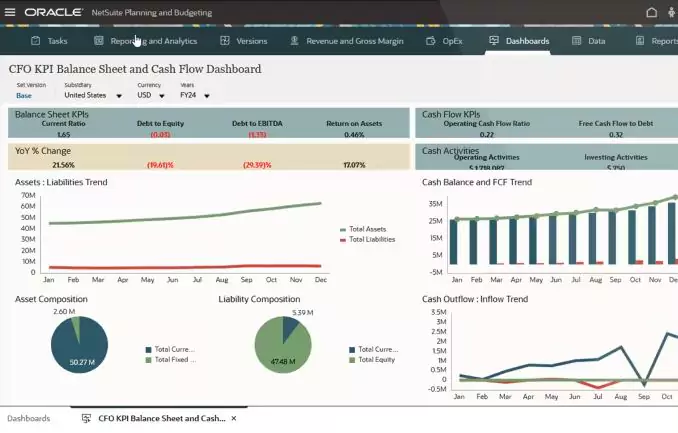
- Customizable dashboards and reporting
- Real-time visibility across departments
- Scalable to support growth and global operations
- Pre-configured industry specific editions through SuiteSuccess


Schedule a NetSuite demo today!
Want to see NetSuite in action and get your questions answered by one of our expert consultants? Schedule a custom demo today!
What is SAP S/4HANA?
SAP S/4HANA is an enterprise resource planning (ERP) system developed by SAP to help organizations manage complex financial, manufacturing, supply chain, and operational processes. Built on the SAP HANA in-memory database, SAP S/4HANA provides advanced analytics, integrated business processes, and industry-specific capabilities designed to support large and complex organizations.
SAP S/4HANA is available through cloud and on-premises deployment options, with functionality, customization capabilities, and operational responsibilities varying by edition. The platform is particularly well-suited for organizations with sophisticated manufacturing requirements, complex supply chains, or extensive global operations.
Key benefits of SAP S/4HANA include:
- Advanced financial management and controlling capabilities
- Comprehensive manufacturing and supply chain functionality
- Industry-specific business processes and capabilities
- Embedded analytics powered by SAP HANA
- Support for complex multinational operations
- Cloud and on-premises deployment options
- Extensive integration and extensibility capabilities

NetSuite vs SAP comparison breakdown
NetSuite and SAP S/4HANA both provide comprehensive ERP capabilities, but they serve different business requirements and operational environments. NetSuite emphasizes cloud-native accessibility, integrated financial management, and scalability for growing organizations. SAP S/4HANA offers extensive enterprise functionality, particularly for organizations managing complex manufacturing processes, global supply chains, and sophisticated financial operations.
While NetSuite may offer a more streamlined implementation approach for organizations with standard business requirements, SAP S/4HANA provides advanced capabilities that can support highly complex business environments. However, implementation costs, timelines, and technical requirements vary significantly based on the selected edition, integrations, customizations, and organizational needs.
The following table highlights key differences between NetSuite and SAP S/4HANA.
When should you choose NetSuite over SAP S/4HANA?
NetSuite is a strong option for organizations seeking a unified, cloud-native ERP platform that supports financial management, inventory, customer relationships, and business operations. Its integrated architecture, automated updates, and configurable functionality make it particularly attractive to growing businesses looking to modernize their systems without maintaining on-premises ERP infrastructure.
Businesses may prefer NetSuite over SAP S/4HANA when they prioritize:
- Cloud-native ERP: Access financial and operational information through a unified SaaS platform without managing on-premises infrastructure.
- Integrated business applications: Connect accounting, inventory management, CRM, eCommerce, and other processes within a single ERP environment.
- Multi-entity financial management: Support subsidiaries, intercompany transactions, currency conversion, and consolidated reporting with NetSuite OneWorld.
- Implementation flexibility: Take advantage of standardized configurations and industry-specific SuiteSuccess methodologies to help streamline deployment.
- Scalable operations: Add functionality, users, and subsidiaries as business requirements evolve.
- Reporting and visibility: Use configurable dashboards, saved searches, and reporting tools to access financial and operational insights.
SAP S/4HANA may be a better fit for organizations requiring highly sophisticated manufacturing functionality, extensive global supply chain management, or complex enterprise processes.
Ultimately, the right choice depends on your organization’s operational requirements, budget, existing technology environment, and long-term business strategy.
Key takeaways
- NetSuite offers a unified, cloud-native ERP platform with integrated financial management, CRM, inventory, and reporting capabilities.
- SAP S/4HANA supports complex enterprise operations with advanced manufacturing, supply chain, and financial management functionality.
- Deployment options differ: NetSuite is exclusively cloud-based, while SAP S/4HANA offers cloud and on-premises options.
- Both platforms support business growth, but NetSuite is often well-suited for growing and mid-sized organizations, while SAP S/4HANA is commonly used for complex enterprise environments.
- Implementation timelines and costs vary depending on licensing, business requirements, integrations, customizations, and deployment models.
- The best ERP choice depends on your business needs, including operational complexity, industry requirements, budget, and long-term growth objectives.
NetSuite vs SAP frequently asked questions
What is the main difference between NetSuite and SAP S/4HANA?
The primary difference is their architecture and typical organizational fit. NetSuite is a cloud-native ERP platform that provides integrated financial and operational management capabilities. SAP S/4HANA offers extensive enterprise functionality, including advanced manufacturing, supply chain, and financial management, with cloud and on-premises deployment options.
Is NetSuite better than SAP S/4HANA for mid-sized businesses?
NetSuite is often a strong choice for mid-sized businesses seeking integrated cloud ERP functionality, financial automation, and scalability. However, SAP S/4HANA Cloud Public Edition may also be appropriate for some mid-sized organizations. The best fit depends on industry requirements, process complexity, budget, and implementation objectives.
Is NetSuite less expensive than SAP S/4HANA?
NetSuite may offer a lower total cost of ownership for organizations with relatively standard ERP requirements, but costs depend on licensing, implementation scope, customizations, integrations, and ongoing support. SAP S/4HANA costs also vary significantly by deployment edition and business requirements. Organizations should compare total cost of ownership rather than licensing costs alone.
Which ERP is better for manufacturing, NetSuite or SAP S/4HANA?
Both platforms support manufacturing operations. NetSuite offers production planning, work order management, inventory control, and manufacturing functionality suited to a range of business requirements. SAP S/4HANA provides extensive manufacturing capabilities that may be better suited to highly complex production environments, advanced planning requirements, and global supply chains.
How long does it take to implement NetSuite vs SAP S/4HANA?
Implementation timelines vary based on company size, data migration requirements, integrations, customizations, and business process complexity. NetSuite implementations can be relatively streamlined when organizations use standardized configurations and established deployment methodologies. SAP S/4HANA implementation timelines vary considerably between cloud editions and complex enterprise deployments.
Can NetSuite support large multinational businesses?
Yes. NetSuite OneWorld supports multi-subsidiary operations, multiple currencies, intercompany transactions, and consolidated financial reporting. However, organizations should evaluate their specific operational complexity, regulatory requirements, and industry needs when comparing NetSuite with SAP S/4HANA.

NetSuite pricing guide
NetSuite offers a unique modular approach to subscription licensing by providing product configuration options designed to fit your business objectives. Download this guide to get a better understanding of NetSuite pricing and its licensing model.
NetSuite implementation, customization, and support with Rand Group
Implementing NetSuite as your preferred ERP system is a strategic investment—trust our expert consultants to help you maximize your ROI. As an experienced Oracle NetSuite Alliance Partner, we specialize in NetSuite implementations, customizations, and long-term support for organizations across a wide range of industries. We’ve helped our clients deploy NetSuite to streamline their financial reporting and optimize their business processes.
We offer end-to-end services to ensure your NetSuite solution delivers measurable value from day one. Our services include:
- Implementation: We follow proven methodologies to guide your NetSuite implementation, including a business process review, system configuration, data migration, and user training. Our structured approach ensures NetSuite aligns with your current business processes and enhances your financial reporting.
- Customization: Every organization has unique needs. Our consultants tailor NetSuite ensuring the platform fits your specific business operations and provides flexibility as you evolve.
- Support and training: Our engagement doesn’t end at go-live. We offer ongoing support including troubleshooting, user onboarding, and performance tuning—keeping your team productive, agile, and ready for growth.
By partnering with Rand Group, you gain a strategic advisor who understands both the technical power and business impact of NetSuite. We help you evaluate, configure, and optimize your NetSuite application to meet your business objectives.
NetSuite vs SAP S/4HANA: Which ERP is right for your business?
Choosing between NetSuite and SAP S/4HANA depends on your organization’s operational complexity, financial requirements, and growth plans. NetSuite offers a unified, cloud-native ERP platform designed to streamline operations and support growth, while SAP S/4HANA provides advanced capabilities for businesses with complex manufacturing, supply chain, and global operations.
If you’re considering NetSuite, Rand Group can help you determine whether it’s the right fit. As an Oracle NetSuite Alliance Partner, our experts provide implementation, customization, and ongoing support to help businesses maximize their ERP investment. Contact Rand Group to discuss your requirements and explore how NetSuite can support your business goals.