NetSuite
What is NetSuite Enterprise Performance Management (EPM)?

Speed and accuracy are no longer optional in modern finance. They’re expected. Yet many organizations are still managing critical processes like budgeting, forecasting, and financial close with manual spreadsheets and disconnected tools. These outdated approaches create bottlenecks, increase the risk of errors, and make it difficult to get a clear, timely view of business performance.
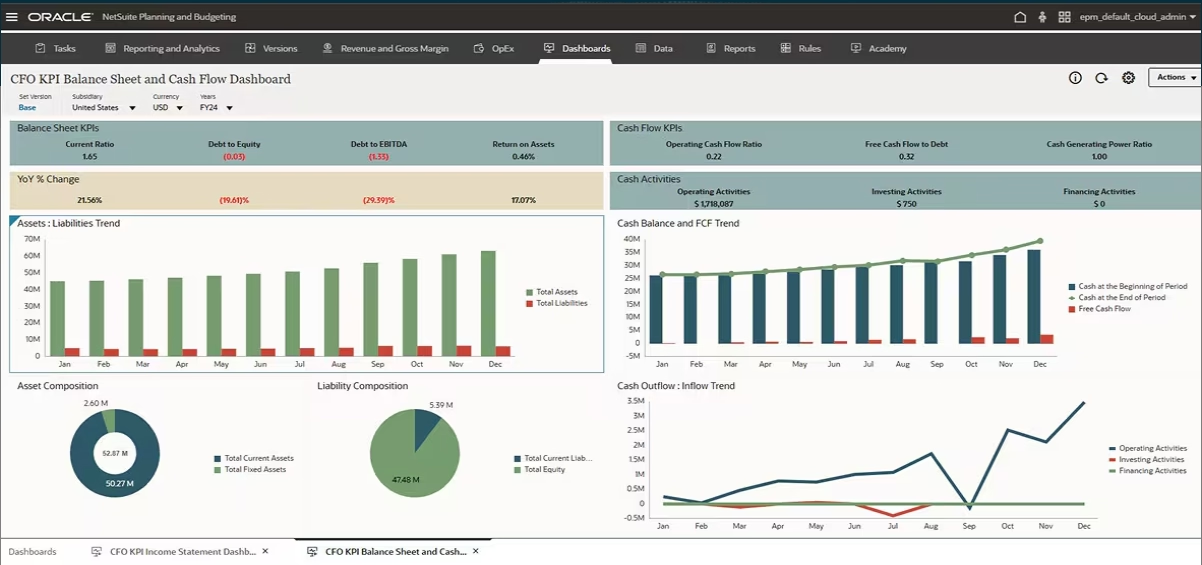
NetSuite EPM addresses these challenges by providing a unified, cloud-based solution for managing key financial processes. As an extension of NetSuite ERP, the module enables organizations to streamline planning, automate reporting, and gain real-time insights from a single source of truth. With EPM tools for finance teams, businesses can accelerate financial close cycles, improve forecasting accuracy, and make more informed, data-driven decisions.
What is NetSuite Enterprise Performance Management (EPM)?
NetSuite EPM is a suite of integrated, cloud-based applications designed to help organizations plan, budget, forecast, consolidate, and report on financial performance. Built on the Oracle Fusion Cloud EPM platform, it extends the capabilities of NetSuite ERP to support more advanced financial planning and analysis (FP&A).
Unlike traditional tools that rely heavily on spreadsheets and manual data entry, NetSuite EPM centralizes financial processes in a single platform. Because it integrates natively with NetSuite ERP, it provides a single source of real-time financial and operational data, eliminating data silos and inconsistencies.

Unlock the power of NetSuite EPM
Wondering if NetSuite Enterprise Performance Management is the right fit for your organization? Our NetSuite experts can help you evaluate your current financial processes and identify opportunities to improve planning, forecasting, and reporting.
NetSuite EPM vs ERP
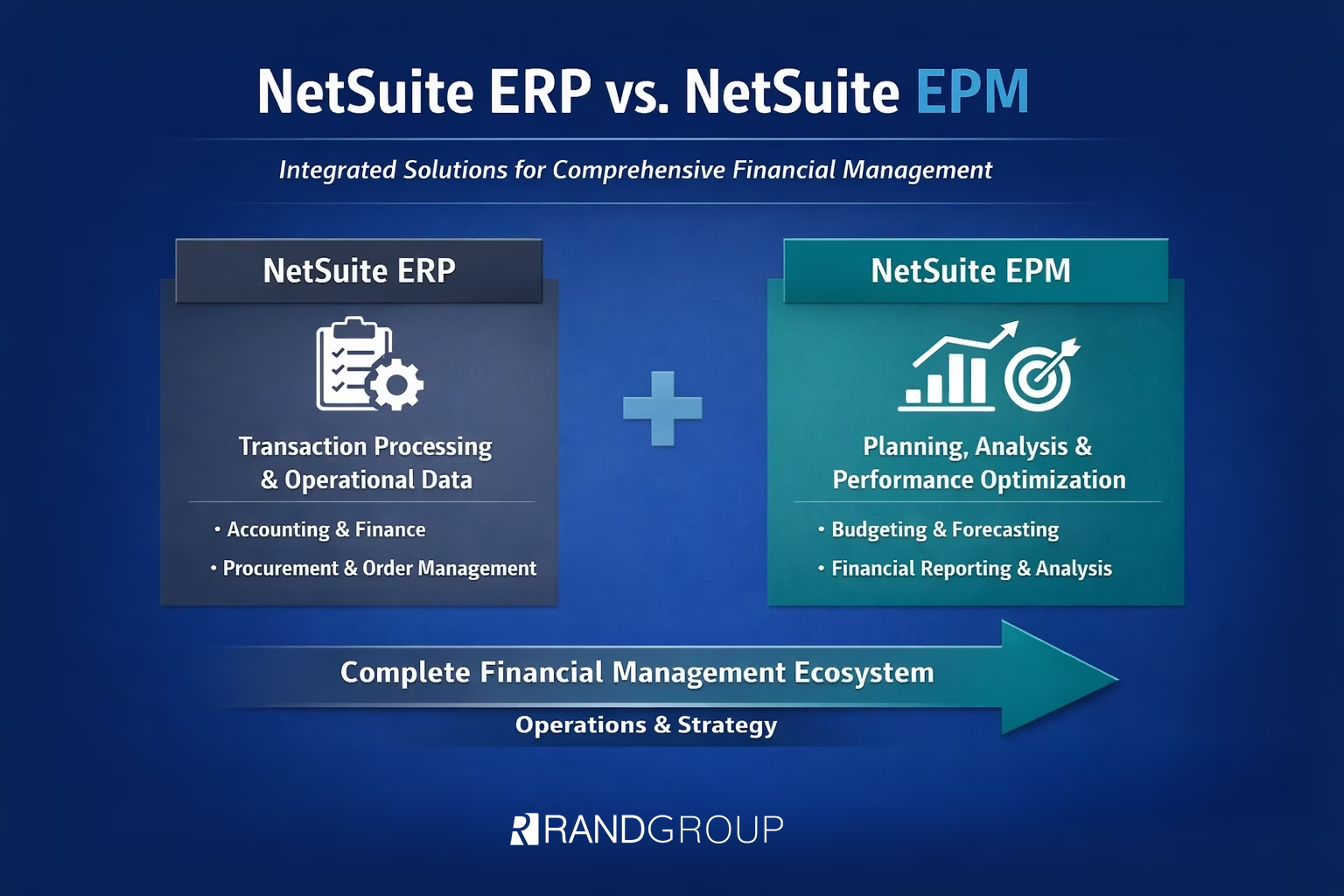
While NetSuite ERP manages core business operations such as accounting, procurement, and order management, NetSuite’s EPM solution focuses on strategic financial processes. In other words:
- NetSuite ERP = Transaction processing and operational data
- NetSuite EPM = Planning, analysis, and performance optimization
Together, they create a comprehensive financial management ecosystem that supports both day-to-day operations and long-term strategy.
Who should use NetSuite Enterprise Performance Management?
NetSuite EPM is ideal for:
- CFOs and finance leaders seeking better visibility and control
- Finance and accounting teams managing complex processes
- Growing organizations with multiple entities or subsidiaries
- Companies looking to move beyond spreadsheets and manual workflows
Key features of NetSuite EPM
NetSuite Enterprise Performance Management includes a range of modules designed to automate and optimize financial processes.
Planning and Budgeting
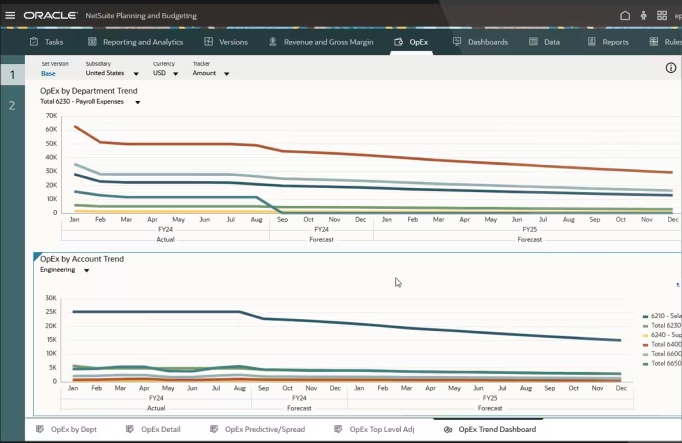
NetSuite EPM simplifies and accelerates budgeting and forecasting by replacing manual spreadsheets with automated workflows. By centralizing financial planning in a single platform, organizations can improve collaboration across departments and ensure alignment with strategic goals.
- Automates data collection and consolidation
- Enables what-if scenario modeling for better planning
- Uses predictive analytics to improve forecast accuracy
Finance teams can quickly adapt to changing business conditions, evaluate multiple scenarios, and make more confident, data-driven decisions.
Account Reconciliation
Manual account reconciliation can be time-consuming and prone to errors. EPM streamlines this process with automation and standardized workflows, reducing reliance on manual tracking and improving overall control.
- Automates balance sheet reconciliations
- Enhances accuracy and audit readiness
- Provides visibility into reconciliation status and exceptions
With real-time visibility and built-in controls, finance teams can resolve discrepancies faster, strengthen compliance, and accelerate the financial close process.
Financial Management and Consolidation
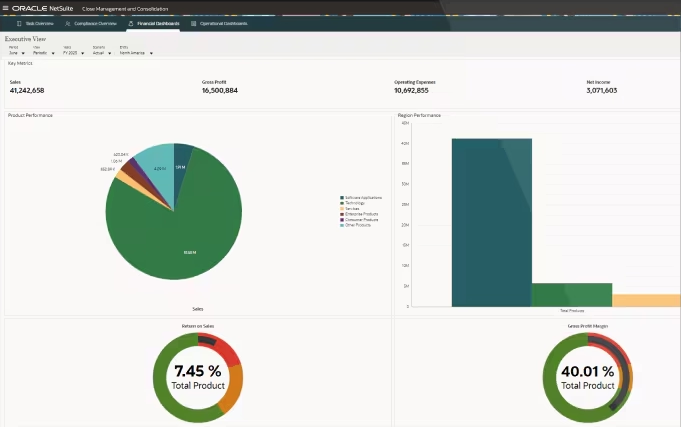
Managing the financial close across multiple entities can be complex. NetSuite Enterprise Performance Management provides a centralized solution for tracking and automating close activities, helping organizations standardize processes across the enterprise.
- Centralized dashboard for close management
- Task tracking and workflow automation
- Supports multi-entity and multi-currency consolidation
This streamlined approach improves transparency and coordination, enabling organizations to reduce close times while maintaining compliance and accuracy across global operations.
Narrative Reporting
Financial reporting often requires combining data with written insights. NetSuite EPM enables organizations to create dynamic, data-driven reports that bring financial results to life for stakeholders.
- Integrates financial data with narrative explanations
- Supports collaborative reporting processes
- Uses AI-assisted tools to generate insights and commentary
By connecting numbers with context, organizations can improve communication, enhance decision-making, and deliver more meaningful reports to leadership and external stakeholders.
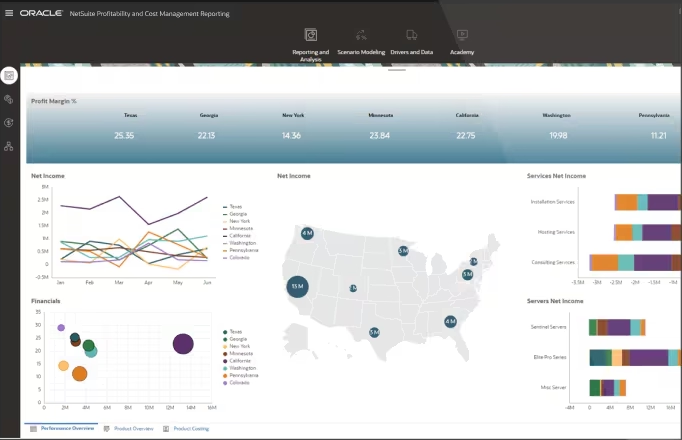
Profitability and Cost Management
Understanding profitability at a granular level is critical for strategic decision-making. NetSuite EPM provides detailed insights into costs, margins, and performance drivers across the organization.
- Analyze profitability by customer, product, or business unit
- Perform cost allocations and margin analysis
- Identify opportunities to improve efficiency and profitability
These insights empower organizations to make more informed decisions around pricing, resource allocation, and operational strategy to drive sustainable growth.
Corporate Tax Reporting
Tax reporting is a complex and highly regulated process. NetSuite Enterprise Performance Management helps organizations streamline and automate tax-related tasks while ensuring alignment with financial data.
- Aligns tax reporting with financial data
- Automates tax provisioning calculations
- Improves compliance and reduces risk
By improving accuracy and transparency, organizations can reduce the burden of tax reporting, minimize risk, and ensure timely compliance with evolving regulations.
Benefits of NetSuite EPM for finance teams
Implementing NetSuite Enterprise Performance Management delivers measurable benefits across finance and the broader organization.
Improved accuracy and data integrity
By integrating directly with NetSuite ERP, NetSuite Enterprise Performance Management eliminates the need for manual data entry and reconciliation.
- Reduces human error
- Ensures consistency across departments
- Provides real-time, reliable data
This creates a strong foundation for accurate reporting and analysis.
Faster financial close
Automation and centralized workflows significantly reduce the time required to close the books.
- Streamlines reconciliation and close processes
- Reduces month-end and year-end timelines
- Improves visibility into close status
Finance teams can shift their focus from manual tasks to strategic initiatives.
Enhanced forecasting and agility
NetSuite’s EPM solution leverages advanced analytics to improve forecasting and planning.
- AI and machine learning identify trends and anomalies
- Enables rapid scenario analysis
- Supports proactive decision-making
Organizations can respond more quickly to market changes and evolving business conditions.
Centralized collaboration
With NetSuite Enterprise Performance Management, finance teams can collaborate more effectively in a single environment.
- Role-based workflows and approvals
- Shared dashboards and reporting tools
- Real-time access to financial data
This improves alignment across teams and departments.
Scalable financial management
As organizations grow, financial processes become more complex. NetSuite EPM is designed to scale alongside the business.
- Supports multi-entity and global operations
- Adapts to changing business needs
- Enables long-term growth and expansion
How NetSuite EPM works with NetSuite ERP
One of the key advantages of NetSuite Enterprise Performance Management is its seamless integration with NetSuite ERP. Through the EPM Connector, data is synchronized between the ERP and EPM environments in real time. This includes financial data, metadata, and organizational structures across the business.
Key benefits of this integration include:
- Eliminates data silos between operational and financial systems
- Ensures consistency and accuracy across all processes
- Provides end-to-end visibility into financial performance
With NetSuite Enterprise Performance Management and NetSuite ERP working together, organizations gain a comprehensive view of their business, from transactions to strategic planning.
NetSuite EPM implementation and pricing
NetSuite Enterprise Performance Management is available as an add-on module to NetSuite ERP, allowing organizations to extend their existing system with advanced financial capabilities.
Implementation timelines vary depending on the scope and complexity of the solution, including:
- Number of modules deployed
- Level of customization required
- Data migration and integration needs
A structured implementation approach with an experienced NetSuite partner is essential to ensure success and maximize ROI.
NetSuite EPM follows a subscription-based pricing model. Subscription costs include annual licensing fees, pricing per module and user count, and a one-time implementation fee. Working with an experienced NetSuite partner can help organizations optimize costs and ensure a smooth deployment.

White Paper
NetSuite pricing guide
NetSuite’s modular pricing model is designed to scale with your business, but understanding what you actually need (and what it will cost) can be complex. From add-on modules to service tiers, the options can quickly add up. Download our NetSuite Pricing Guide to explore real-world pricing examples, understand how licensing works, and determine the right configuration for your organization.
Why partner with Rand Group for NetSuite Enterprise Performance Management
Successfully implementing NetSuite EPM requires both technical expertise and a deep understanding of financial processes. That’s where Rand Group comes in. As a trusted NetSuite partner, we help organizations design, implement, and optimize NetSuite solutions tailored to their unique needs.
Our expertise includes:
- NetSuite implementation
- Financial process assessment and optimization
- Custom configuration and integrations
- Reporting and analytics enhancements
Our NetSuite experts bring extensive industry experience and a consultative approach to every engagement. We work closely with your team to ensure adoption, drive efficiency, and deliver measurable business value. Whether you’re looking to streamline planning, accelerate close cycles, or improve financial visibility, we can help you get the most out of your NetSuite investment.
NetSuite Enterprise Performance Management FAQs
What is NetSuite EPM used for?
NetSuite Enterprise Performance Management is used to manage key financial processes such as planning, budgeting, forecasting, consolidation, and reporting. It helps organizations improve accuracy, efficiency, and strategic decision-making.
Is NetSuite EPM part of NetSuite ERP?
NetSuite Enterprise Performance Management is not part of the core ERP but is an add-on module that integrates seamlessly with NetSuite ERP to extend its financial capabilities.
How long does a NetSuite EPM implementation take?
Implementation timelines vary based on factors such as the number of modules, complexity of requirements, and organizational size. A typical implementation can range from a few weeks to several months.
Who should use NetSuite EPM?
NetSuite Enterprise Performance Management is ideal for growing organizations, multi-entity businesses, and finance teams looking to improve planning, reporting, and overall financial performance.
Does NetSuite EPM replace Excel?
While NetSuite Enterprise Performance Management does not completely eliminate Excel, it significantly reduces reliance on spreadsheets by automating processes and centralizing data in a single platform.
Final thoughts
NetSuite Enterprise Performance Management equips organizations with tools to modernize financial processes, improve accuracy, and drive better business outcomes. By unifying planning, budgeting, forecasting, and reporting in a single platform, it enables finance teams to move beyond manual tasks and focus on strategic initiatives.
When combined with NetSuite ERP, NetSuite EPM delivers a complete, scalable solution for data-driven decision-making. Ready to streamline your financial operations? Contact us today to learn how we can help you implement and optimize NetSuite EPM.