AI-powered healthcare ERP: Modernizing finance and operations

Artificial intelligence (AI) is reshaping the healthcare industry—but not only in diagnostics and clinical care. In fact, some of the most significant transformation is happening behind the scenes in financial management, supply chain management, and administrative operations. For healthcare providers and healthcare organizations facing tighter margins, increasing regulatory compliance requirements, and growing patient demand, AI-powered healthcare ERP has become more than a modernization initiative. It is a strategic lever for improving operational efficiency across healthcare operations.
Across the healthcare industry, organizations are turning to AI-powered tools embedded within healthcare ERP systems to streamline and strengthen financial operations and improve visibility across healthcare systems. Today’s healthcare ERP systems no longer simply record financial transactions. They analyze operational data, automate routine tasks, and connect operational systems. The result is stronger financial oversight, reduced administrative burdens, and more resilient healthcare operations. AI is already delivering measurable results across the healthcare industry. Research from McKinsey & Company suggests that automation and analytics, including AI technologies, could eliminate approximately $200 billion to $360 billion of annual healthcare spending in the United States. Much of that impact comes from automation, cost reduction, and improving operational efficiency.
What are healthcare ERP systems?
Healthcare ERP systems serve as the operational backbone of healthcare organizations. They centralize core business functions into a single platform, enabling better coordination across departments and locations.
A modern healthcare ERP typically supports:
- Financial management and automated reporting
- Supply chain management and procurement
- Inventory management
- Budgeting and forecasting
- Multi-entity management
- Administrative operations
- Compliance monitoring and audit trails
By connecting financial data, operational data, and administrative functions into unified operational systems, healthcare ERP systems provide the foundation for improving efficiency across healthcare operations. While electronic health records (EHR systems) manage patient records and clinical data, healthcare ERP manages the financial and operational side of care delivery. Through seamless integration and real-time data exchange, ERP systems connect clinical workflows with financial operations. This helps ensure accuracy in billing, reporting, and resource allocation. In a complex and highly regulated environment, ERP systems help healthcare leaders ensure compliance while maintaining transparency and accountability.
How AI is transforming healthcare ERP
Traditional ERP systems focus on processing transactions. AI healthcare ERP enhances those systems with intelligence.
Healthcare organizations are accelerating AI adoption because they must:
- Reduce manual processes and administrative burdens
- Strengthen regulatory compliance and audit readiness
- Improve financial management and cost control
- Replace fragmented legacy systems
- Respond quickly to shifts in patient demand
Healthcare AI within modern ERP systems often incorporates AI tools such as robotic process automation and natural language processing to reduce routine tasks and improve operational efficiency. AI enhances healthcare professionals’ expertise by processing datasets far too large for manual analysis. Cloud-based AI-powered healthcare ERP systems can analyze vast volumes of financial data, operational data, and even relevant clinical data to identify patterns that would otherwise remain hidden. This supports faster, more informed decision-making.
Predictive analytics helps healthcare leaders forecast cash flow, staffing needs, and supply chain disruptions. Generative AI can produce executive-ready summaries from financial data, while advanced analytics surface insights hidden within large volumes of operational data.
Together, these AI-powered tools transform ERP from a recordkeeping system into an intelligent operational platform designed to optimize operations while preserving human oversight.

The CFO's guide to healthcare ERP
Navigate the evolving healthcare landscape with a practical resource built for CFOs and financial executives. This guide explores how today’s healthcare ERP systems improve operational efficiency, strengthen compliance frameworks, and provide deeper financial visibility across complex organizations. Discover strategies, technology considerations, and actionable insights to help your team modernize ERP infrastructure and maximize long-term value.
Where AI-powered healthcare ERP delivers the most value
AI creates value across multiple areas of healthcare ERP. However, its most immediate impact is often seen in financial operations, supply chain management, compliance monitoring, and resource planning. The sections below highlight where AI-powered automation and analytics deliver measurable improvements in efficiency, accuracy, and operational control.
Financial operations and accounts payable workflow
Financial operations are often the first area where healthcare organizations see measurable gains. Manual accounts payable workflow can be time-consuming and prone to errors. AI-powered healthcare ERP automates invoice capture, matching, approvals, and exception handling. It can flag irregular financial transactions before they become compliance risks, generate automated reporting in real time, and strengthen compliance monitoring across departments.
AI-enabled anomaly detection within healthcare ERP systems can also analyze medical claims and billing data to flag suspicious patterns in real time. This reduces the likelihood of rejected claims and strengthens financial accuracy. In many cases, AI-enabled ERP systems automate large portions of billing and reconciliation processes with accuracy rates exceeding 95%.
Organizations benefit from:
- Faster month-end and year-end close
- Reduced errors in financial transactions
- Improved financial oversight
- Stronger audit trails
- Greater productivity across finance teams
- Improved cost control
By reducing manual processes and administrative burdens, AI helps healthcare organizations improve financial management while ensuring regulatory compliance. Automating back-office functions also allows healthcare providers to focus more time on patient care rather than paperwork.
Smarter resource allocation with predictive analytics
AI healthcare ERP platforms combine financial data and operational data to support more strategic decision-making across healthcare systems.
Predictive analytics enables healthcare organizations to:
- Forecast patient demand
- Optimize staffing levels within healthcare operations
- Improve budget forecasting accuracy
- Plan maintenance schedules for medical devices and surgical equipment
- Identify cost-saving opportunities
AI models analyze historical trends and operational metrics to forecast service demand and support workforce and capacity planning.
Rather than reacting to inefficiencies, healthcare leaders can proactively optimize operations based on real-time data insights. This approach supports improving operational efficiency across both financial and administrative operations.
Supply chain optimization and inventory management
Supply chain management remains a critical challenge in the healthcare industry. AI-powered healthcare ERP strengthens supply chain resilience through intelligent forecasting and automation.
With embedded advanced analytics and real-time data visibility, healthcare organizations can:
- Automate replenishment of medical supplies and critical inventory
- Improve inventory management across multiple facilities
- Monitor vendor performance
- Reduce excess stock while preventing shortages
- Strengthen supply chain optimization efforts
AI analyzes usage trends to improve inventory planning and forecasting accuracy. This helps ensure critical medical supplies, pharmaceuticals, and equipment are available when needed while minimizing waste. By forecasting seasonal trends and patient volume fluctuations, AI-driven ERP systems help reduce stockouts and enhance supply chain visibility. Aligning procurement with patient demand allows healthcare companies to streamline operations, reduce waste, and protect continuity of patient care.
Compliance monitoring and audit readiness
Regulatory compliance is central to healthcare operations. AI healthcare ERP systems enhance compliance monitoring by embedding controls directly into financial and operational systems.
Modern platforms help healthcare organizations:
- Enforce role-based access controls
- Maintain segregation of duties
- Preserve immutable audit trails
- Automate regulatory reporting
- Monitor compliance continuously using real-time data
AI can automate aspects of regulatory reporting and compliance monitoring, generating structured audit documentation from operational data. AI-powered tools monitor system access patterns in real time. This helps healthcare organizations detect anomalies, strengthen data protection, and ensure compliance with standards such as HIPAA. This structured approach reduces risk, strengthens audit readiness, and helps healthcare organizations ensure compliance without increasing administrative burdens.
Real-time visibility across healthcare systems
Fragmented legacy systems often limit insight into performance. AI-powered healthcare ERP helps consolidate and connect previously disconnected systems. When financial operations, supply chain management, and administrative operations are connected, healthcare leaders gain:
- Real-time visibility into performance metrics
- Integrated reporting across locations
- Faster, data-driven decision-making
- Greater transparency across multi-entity healthcare organizations
AI-driven analytics provide actionable insights into key performance indicators such as cost trends, staff efficiency, and resource utilization. These insights support stronger strategic decision-making. This unified visibility supports streamlining operations and improving operational efficiency across healthcare systems.

Leading AI healthcare ERP solutions
Several healthcare ERP systems stand out for embedding artificial intelligence directly into financial operations, supply chain management, and administrative workflows. The right platform depends on an organization’s size, complexity, regulatory environment, and long-term growth strategy.
Microsoft Dynamics 365 Business Central
Ideal for growing healthcare providers seeking scalable automation within the Microsoft ecosystem.
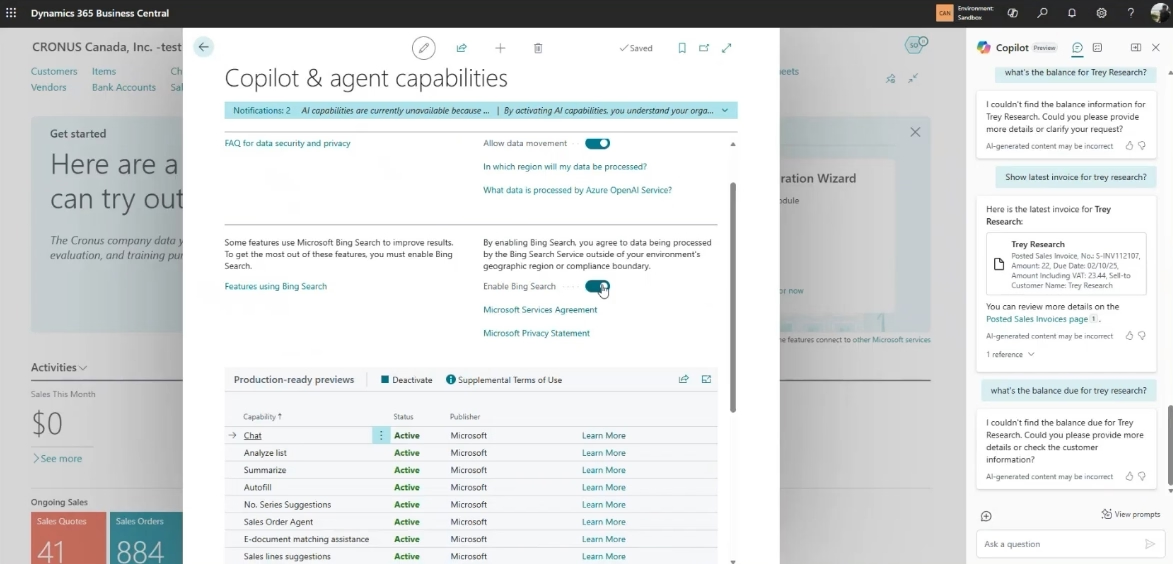
Microsoft Dynamics 365 Business Central delivers AI-powered healthcare ERP capabilities in a flexible, cloud-based platform that integrates seamlessly with Microsoft tools such as Power BI, Microsoft 365, and Azure. For small to mid-sized healthcare organizations, Business Central modernizes financial operations without introducing unnecessary system complexity.
AI-driven capabilities include:
- Intelligent cash flow forecasting based on historical and real-time financial data
- Automated accounts payable workflow with invoice matching and exception handling
- Embedded anomaly detection to reduce errors in financial transactions
- Real-time dashboards powered by advanced analytics
The impact is immediate operational improvement—faster close cycles, reduced administrative burdens, and improved financial oversight—while maintaining a scalable foundation that supports future expansion.
Microsoft Dynamics 365 Finance & Operations
Designed for complex, multi-entity healthcare systems requiring enterprise-level financial control.
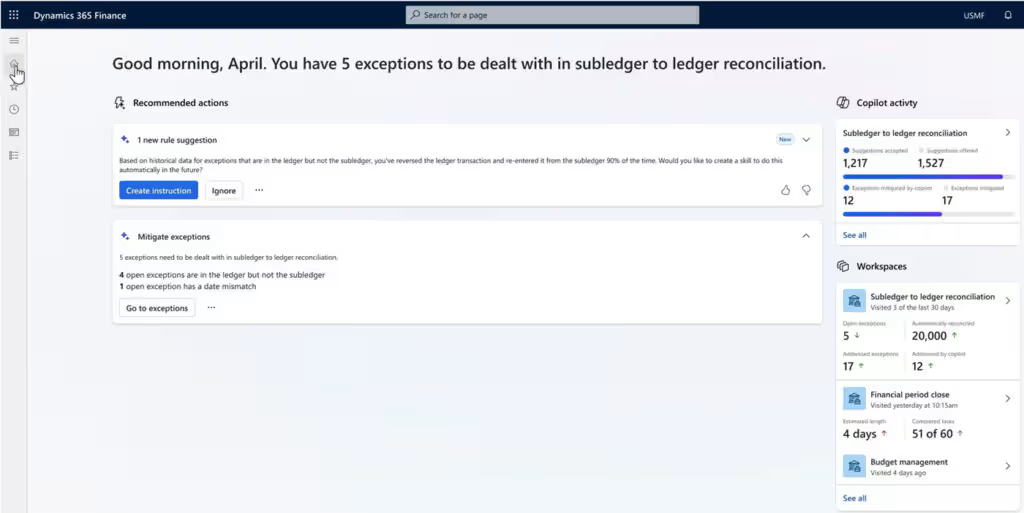
Microsoft Dynamics 365 Finance & Operations is well-suited for large healthcare organizations operating across multiple facilities or healthcare systems. Its AI healthcare ERP functionality extends beyond automation into predictive operational intelligence. Predictive analytics within the platform help healthcare leaders forecast revenue, manage reimbursement variability, and anticipate cash flow shifts. By analyzing operational data across entities, the system surfaces patterns that impact financial management and resource allocation.
AI-powered capabilities include:
- Advanced multi-entity financial consolidation
- Real-time anomaly detection across high-volume financial transactions
- Predictive budgeting and forecasting models
- AI-driven supply chain optimization across locations
For healthcare systems navigating regulatory complexity and scale, Dynamics 365 Finance strengthens compliance monitoring, enhances audit readiness, and improves operational efficiency across interconnected operational systems.
Sage Intacct
Strong choice for healthcare organizations prioritizing financial visibility, reporting depth, and compliance.
Sage Intacct is widely adopted in the healthcare industry for its robust financial management capabilities and dimensional reporting framework. It is particularly effective for specialty providers and healthcare companies that require granular financial oversight across programs, departments, or funding sources. Sage Intacct enhances healthcare ERP functionality through intelligent automation and real-time insight.
AI-enhanced capabilities include:
- Automated inter-entity eliminations and consolidations
- Continuous reconciliation support
- Real-time variance analysis and financial performance monitoring
- Intelligent alerts for unusual account activity
These tools help healthcare leaders reduce manual processes while improving financial accuracy and strategic planning. Built-in audit trails and compliance monitoring features further support regulatory compliance and audit readiness. For organizations where financial clarity is mission-critical, Intacct delivers structured, actionable visibility.

NetSuite ERP
Well-suited for rapidly growing healthcare organizations seeking a unified, cloud-native platform.
NetSuite ERP provides a fully cloud-based, AI-powered healthcare ERP solution that integrates financial operations, supply chain management, and inventory management into a single system. Its embedded AI-driven automation supports both back-office efficiency and forward-looking planning.
Key capabilities include:
- Automated invoice processing and intelligent transaction categorization
- Predictive revenue and expense forecasting
- Anomaly detection to reduce financial errors
- Demand-driven inventory forecasting and automated replenishment
- Supply chain optimization through real-time analytics
NetSuite’s unified architecture reduces reliance on fragmented legacy systems, enabling seamless integration across healthcare applications and departments. For healthcare organizations scaling quickly or modernizing outdated infrastructure, this approach strengthens operational efficiency while maintaining compliance and financial control.

Choosing the right AI-powered healthcare ERP for your organization
Each of these AI-powered healthcare ERP systems demonstrates how artificial intelligence is becoming embedded in everyday healthcare operations. Whether the priority is enterprise-level multi-entity management, financial reporting depth, Microsoft ecosystem integration, or cloud-native scalability, healthcare organizations now have platforms that combine automation, predictive analytics, and compliance monitoring in practical, measurable ways.
Rand Group works across all of these leading healthcare ERP platforms, helping organizations evaluate which solution aligns best with their operational complexity, compliance requirements, and long-term growth strategy. Rather than approaching AI healthcare ERP from a single-vendor perspective, our team focuses on practical automation outcomes—improving financial management, strengthening compliance monitoring, and optimizing supply chain performance. This cross-platform experience enables healthcare leaders to make informed decisions grounded in operational realities rather than product marketing alone.

Find the right ERP for your healthcare needs
Choosing the right healthcare ERP system requires more than comparing features and AI capabilities. It demands a clear understanding of your financial operations, compliance requirements, growth plans, and existing technology environment. Our team works with healthcare companies to evaluate ERP options, identify automation opportunities, and build a modernization roadmap aligned with your operational priorities.
Measuring the impact of AI healthcare ERP adoption
AI-powered healthcare ERP should produce measurable results. Healthcare companies often report:
- Reduced days to close
- Faster invoice and payment processing
- Fewer manual processes
- Lower error rates in financial operations
- Reduced administrative burdens
- Improved operational efficiency
- Increased productivity across teams
AI does not replace financial leadership or compliance oversight. Instead, it enhances human expertise by surfacing insights faster and reducing routine work. By streamlining operations, reducing errors, and strengthening financial oversight, AI healthcare ERP becomes a strategic asset that supports sustainable growth and long-term resilience across healthcare operations.
Frequently asked questions (FAQs)
What is AI-powered healthcare ERP?
AI-powered healthcare ERP is an ERP system that uses artificial intelligence to automate financial and operational processes. It improves efficiency, reporting, and compliance across healthcare organizations.
How does AI improve financial operations in healthcare ERP systems?
AI automates accounts payable, detects financial anomalies, and supports predictive forecasting. This reduces manual work and improves financial accuracy.
Can AI healthcare ERP integrate with electronic health records (EHR systems)?
Yes. AI healthcare ERP integrates with EHR systems through real-time data exchange, improving billing accuracy and operational visibility.
How does AI support supply chain management in healthcare?
AI analyzes operational data to forecast demand and optimize inventory management. It can also automate replenishment of medical supplies, helping healthcare organizations reduce stockouts and improve supply chain efficiency.
Is AI healthcare ERP compliant with healthcare regulations?
When properly implemented, AI healthcare ERP supports compliance by automating reporting, generating audit trails, and monitoring system access.
How Rand Group supports healthcare ERP transformation
Selecting and implementing an AI-powered healthcare ERP requires more than software evaluation. It requires a clear understanding of healthcare operations, regulatory compliance, and financial management strategy. Rand Group works with healthcare providers and healthcare organizations to modernize healthcare ERP systems and integrate operational systems and EHR platforms. We also help strengthen compliance monitoring and implement AI-powered automation in practical, measurable ways. With experience across Microsoft Dynamics, Sage, and NetSuite, Rand Group helps healthcare companies optimize operations, improve financial management, and ensure compliance—without unnecessary complexity.
Conclusion
Healthcare systems continue to navigate cost pressures, regulatory demands, and increasing operational complexity. In this environment, AI healthcare ERP is becoming a critical foundation for improving operational efficiency and long-term resilience. If your organization is exploring AI-powered healthcare ERP solutions, our team can help you assess your current environment and build a roadmap aligned with your operational priorities and strategic growth objectives. Contact us to schedule a consultation. We’ll assess where AI-powered automation can deliver the greatest impact across your healthcare operations.