ERP implementation best practices

An enterprise resource planning (ERP) implementation is one of the most impactful initiatives an organization can undertake. When done right, ERP systems unify business processes, improve data accuracy, increase operational efficiency, and provide leadership with real-time insights to drive smarter decisions. When done poorly, ERP projects can result in missed deadlines, budget overruns, frustrated users, and underutilized systems that fail to deliver expected ROI.
Because ERP implementations are complex, organizations must approach them with a clear strategy, disciplined execution, and the right expertise. This blog outlines proven ERP implementation best practices, along with practical ERP implementation tips, to help organizations reduce risk, improve adoption, and achieve long-term success. We’ll also cover how to recognize when an implementation is struggling, what to do if it has failed, and how Rand Group helps organizations implement ERP solutions that support real business outcomes.
What is ERP and why do organizations use it?
Enterprise resource planning (ERP) software integrates core business functions into a single system, replacing disconnected applications and manual processes. ERP systems typically support functions such as finance, accounting, supply chain, inventory management, manufacturing, sales, purchasing, and human resources.
Organizations implement ERP systems to:
- Eliminate data silos by creating a single source of truth.
- Improve efficiency through automation and standardized workflows.
- Enhance reporting and visibility with real-time insights.
- Support scalability and growth as business complexity increases.
- Improve compliance and controls with built-in governance features.
ERP systems become the operational backbone of the organization. However, realizing these benefits depends not just on selecting the right software, but on following ERP implementation best practices that align the system with business goals and user needs.

Ready to find the right ERP for your business?
Connect with our ERP experts today to start a software selection engagement to identify the best-fit ERP solution for your business and build a clear path to a successful implementation.
Understanding the ERP implementation lifecycle
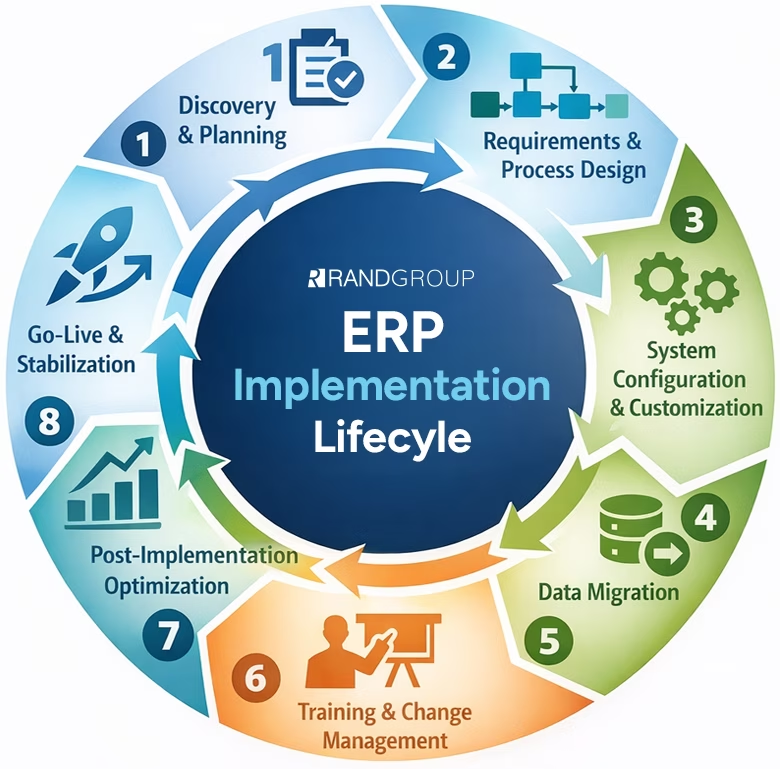
ERP implementations typically follow a structured lifecycle. Skipping or rushing any of these phases increases the likelihood of issues later in the project. While methodologies may vary, most successful projects include the following phases:
- Discovery and planning – Defining objectives, scope, timeline, and success metrics.
- Requirements and process design – Documenting current-state processes and designing future-state workflows.
- System configuration and customization – Aligning the ERP system to business requirements.
- Data migration – Cleaning, mapping, and validating historical data.
- Testing and validation – Ensuring the system functions correctly across real-world scenarios.
- Training and change management – Preparing users for new processes and tools.
- Go-live and stabilization – Launching the system and addressing early issues.
- Post-implementation optimization – Refining processes and expanding system capabilities.
Common ERP implementation challenges
Even organizations with strong teams and budgets can struggle during ERP implementations. Common challenges include:
- Unclear business objectives or scope creep.
- Limited executive sponsorship or decision-making authority.
- Inadequate requirements definition.
- Poor data quality or incomplete data migration planning.
- Resistance to change from end users.
- Insufficient training and communication.
- Underestimating time, cost, and internal resource needs.
Understanding these challenges early allows organizations to apply ERP implementation best practices that proactively address risk rather than reacting after problems arise.
ERP implementation tips
Building a strong foundation
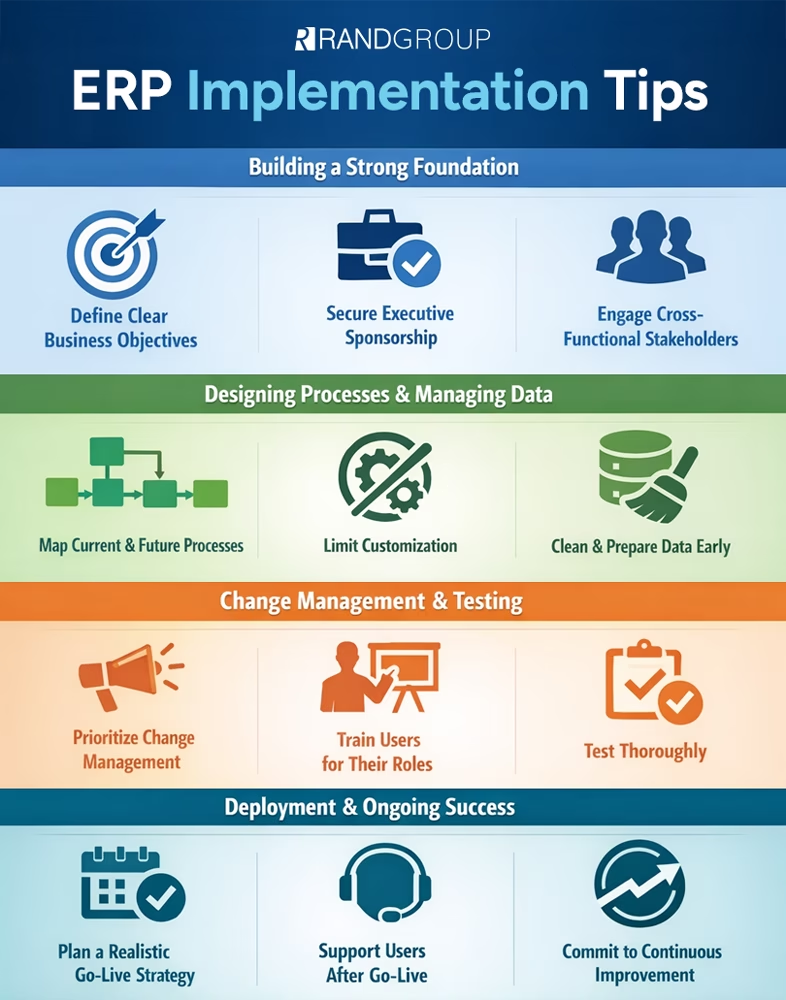
- Define clear business objectives – One of the most important ERP implementation best practices is aligning the project with measurable business outcomes. Rather than focusing solely on software features, define what the organization expects to achieve, such as faster financial close, improved inventory accuracy, or better forecasting.
- Secure executive sponsorship – ERP implementations require strong leadership support. Executive sponsors help remove roadblocks, reinforce priorities, and ensure decisions are made quickly. Without executive alignment, projects often stall or lose focus.
- Engage cross-functional stakeholders – ERP impacts nearly every department. Engaging representatives from finance, operations, IT, and other functional areas early ensures requirements are accurate and encourages user buy-in.
Designing processes and managing data
- Map current and future state processes – Documenting existing workflows helps identify inefficiencies and improvement opportunities. Designing future-state processes ensures the ERP system supports how the business wants to operate, not just how it operates today.
- Limit customization – Over-customization increases cost, complexity, and long-term maintenance challenges. One of the most effective ERP implementation best practices is adapting business processes to fit standard ERP functionality wherever possible.
- Clean and prepare data early – Data migration is often underestimated. Investing time in cleansing, validating, and governing data before migration reduces errors and builds trust in the new system.
Change management and testing
- Prioritize change management – ERP implementations represent significant change for users. Clear communication, leadership support, and role-based training are essential to driving adoption and minimizing resistance.
- Train users for their roles – Training should focus on how users perform their day-to-day tasks in the new system, not just on system navigation. Well-trained users are far more likely to embrace ERP and use it effectively.
- Test thoroughly – Comprehensive testing, including user acceptance testing, ensures the ERP system performs as expected in real-world scenarios. Testing helps uncover issues before go-live, when fixes are less disruptive and less expensive.
Deployment and ongoing success
- Plan a realistic go-live strategy – Whether deploying all at once or in phases, go-live planning should account for business cycles, staffing availability, and risk tolerance. A phased approach can reduce disruption and allow teams to adapt gradually.
- Support users after go-live – Post-go-live support is critical. Providing help desk support, additional training, and performance monitoring helps stabilize operations and reinforces adoption.
- Commit to continuous improvement – ERP systems are not static. Organizations should regularly review processes, performance metrics, and system usage to ensure the ERP continues delivering value as the business evolves.
Signs your ERP implementation is struggling
ERP projects don’t always fail outright, many struggle silently. Warning signs include:
- Missed milestones or escalating costs.
- Low user adoption or reliance on spreadsheets.
- Inaccurate or inconsistent reporting.
- Manual workarounds replacing ERP workflows.
Recognizing these signs early allows organizations to take corrective action before problems worsen.
What to do if your ERP implementation has failed
A struggling ERP project doesn’t mean the investment is lost. Recovery is often possible with the right approach. ERP implementation recovery requires both technical expertise and business process insight.
- Conduct a formal ERP health check or project assessment.
- Re-align the system with core business objectives.
- Stabilize critical processes before expanding scope.
- Engage experienced ERP consultants to guide recovery.

White Paper:
Top 7 ERP implementation partner selection criteria
Choosing the right ERP implementation partner can make or break your project. Learn the seven key criteria to look for in an ERP partner and set your implementation up for long-term success.
How to choose the right ERP implementation partner
Selecting the right ERP implementation partner is a critical factor in ERP success. The right partner works as an extension of your team, helping guide key decisions, minimize risk, and keep the project aligned with business goals from planning through post–go-live. Effective ERP partners combine deep platform expertise and industry knowledge with a proven implementation methodology, a focus on measurable outcomes, and long-term support beyond deployment.
Rand Group helps organizations successfully deploy and optimize ERP solutions across platforms such as Microsoft Dynamics 365, NetSuite, and Sage. Each engagement is tailored to align ERP technology with real business objectives, using flexible implementation approaches ranging from rapid, fixed-scope deployments to hybrid and full digital transformation projects. All implementations follow a structured, phased methodology focused on process alignment, data accuracy, user adoption, and risk mitigation, with ongoing support and optimization to maximize long-term ERP value.
Next steps
ERP implementations are complex, but success is achievable with the right approach. By following proven ERP implementation best practices and applying practical ERP implementation tips, organizations can reduce risk, improve adoption, and unlock long-term value from their ERP investment.
Contact our team today, whether you’re planning a new ERP implementation, struggling with adoption, or recovering a stalled project, we’re here to help. Partnering with experienced ERP professionals can make all the difference. A thoughtful strategy, disciplined execution, and the right expertise turn ERP from a challenge into a competitive advantage.



Subscribe to our Insights