How to select the best ERP software for life sciences

Choosing the right enterprise resource planning (ERP) system is a crucial decision for life sciences companies. ERP systems simplify business operations. They also ensure regulatory compliance, protect product quality, and provide end-to-end traceability. In turn, this reduces compliance risk, speeds product launches, and builds trust with regulators and patients. Whether your company is in the pharmaceutical industry, manufactures medical devices, or manages clinical trials, an ERP solution built for life sciences will accelerate growth and reduce risk.
At Rand Group, we guide companies in the life sciences industry through every step of ERP selection and implementation. This blog highlights key considerations and leading solutions to help you choose the best ERP system for your life sciences company.
Business requirements for ERP
Life sciences organizations have unique operational needs. These include complex supply chain management, quality control, and regulatory compliance. Your system must meet these requirements and also be a scalable ERP system that supports growth. Scalability ensures your ERP continues to support operations as you expand globally, avoiding costly system replacements. Additionally, global operations may require multi-entity, multi-location, and multi-currency capabilities.
Key requirements:
- Simplifies operations while maintaining compliance
- Intuitive interface with minimal learning curve
- Multi-entity, multi-location, and multi-language support
- Complex financial reporting and intercompany transactions
- Advanced financial management, budgeting, and forecasting
- Supply chain and quality management
- Scalable ERP system for future growth

Rand Group, your trusted partner for ERP software selection
Simplify your ERP selection with Rand Group. We uncover your unique needs upfront and provide unbiased guidance to ensure you choose the perfect ERP for your life sciences company. Get started today.
Customization, scalability, and future-proofing
The life sciences industry changes rapidly. Your ERP system must adapt to evolving processes and regulations. A flexible, customizable system supports growth from early-stage operations to full commercialization. Moreover, this flexibility helps avoid bottlenecks, accelerates time-to-market, and protects your ERP investment long term.
Ensure your ERP system:
- Adapts to changing business processes and regulations
- Scales from startup to commercial operations
- Manages multiple entities, locations, and languages
- Is customizable for life sciences workflows
- Protects your investment against obsolescence
Integration and interoperability
Life sciences companies often use specialized systems like laboratory information management systems (LIMS), quality management system (QMS), and clinical trial management systems (CTMS). Your ERP must integrate with these systems to enable collaboration across departments, partners, and vendors. Integration eliminates duplicate data entry, reduces errors, and ensures faster decision-making across your company
Choose an ERP solution that:
- Integrates with laboratory, quality, and other industry systems
- Supports cloud and on-premises deployment options
- Shares data across partners and vendors
- Provides cross-system reporting and analytics

Regulatory compliance and validation readiness
Life science companies are subject to strict regulations like FDA, EMA, and GxP standards. For global operations, there are also country-specific variations such as PMDA in Japan and Health Canada. Your ERP should support electronic signatures, data integrity, and audit trails. Validation readiness is key. It should include pre-built validation documentation, change control workflows, and qualification protocols (IQ/OQ/PQ). This reduces audit preparation time, lowers compliance costs, and minimizes the risk of regulatory setbacks.
ERP capabilities that simplify compliance:
- Tracks and reports on compliance efficiently
- Supports audits, inspections, and documentation requirements
- Maintains GMP and GLP compliance
- Reduces risk of non-compliance and penalties
- Provides regulatory reporting across the company
Traceability, quality, and product lifecycle management
An effective ERP system for the life sciences industry must provide complete lot and batch traceability. This applies to every stage—from raw materials through manufacturing and distribution—along with integrated quality management. Features including non-conformance tracking, CAPA (corrective and preventive action), and complaint-handling to protect product integrity. These tools safeguard patient safety, preserve brand reputation, and help avoid costly recalls. Product lifecycle management (PLM) tools ensure accurate version control and regulatory submissions. They also make multi-market labeling reliable and auditable.
Requirements include:
- End-to-end visibility into supply chain and production data
- Automated reporting aligned with regulations, including FDA and EMA
- Electronic records and signatures (21 CFR Part 11)
- Integration with LIMS
Supply chain and manufacturing
Effectively managing complex supply chains and manufacturing processes is critical in the life sciences industry. ERP should track inventory, batches, quality, vendor management, procurement, and distribution. This ensures continuity, prevents costly production delays, and maintains compliance across your entire value chain.
Key capabilities to look for:
- Procurement, inventory, and vendor management
- Manufacturing processes and batch control
- Quality control throughout the supply chain
- Distribution and logistics management
- Traceability and reporting for compliance

Commercialization and revenue recognition
ERP selection requires balancing cost, implementation timeline, and ROI. Evaluate total cost of ownership (TCO) including implementation, licensing, maintenance, training, and upgrades. Consider cloud vs on-premises solutions to minimize IT and infrastructure costs.
Key considerations:
- Implementation, configuration, and consulting costs
- Ongoing maintenance, support, and updates
- Staff training to maximize adoption and efficiency
- Subscription vs license-based pricing
- ROI based on efficiency gains, cost savings, and compliance
- TCO analysis for long-term planning
Data and analytics
Life sciences companies generate large volumes of data from clinical trials, manufacturing operations, and research labs. A centralized ERP provides insights to improve operations and guide strategic decisions. These real-time insights empower leadership to spot inefficiencies early, reduce waste, and allocate resources strategically
Effective ERP solutions should:
- Centralize and integrate data across all operations
- Provide analytics and reporting for informed decision-making
- Consolidate clinical, laboratory, and manufacturing data
- Offer real-time visibility and insights
- Improve operational efficiency and strategic planning
ERP selection process
A structured approach ensures your ERP meets the business, financial, and regulatory needs of the life sciences industry. Engage stakeholders from IT, finance, and operations and evaluate vendors through demos and case studies.
Best practices:
- Gather detailed business and system requirements
- Involve stakeholders from IT, finance, and operations
- Evaluate vendors through demos and references
- Ensure the system supports growth and compliance
- Choose a future-ready solution
Implementation and support
ERP deployment requires careful planning and ongoing support. Partner with experienced consultants such as Rand Group to accelerate adoption and reduce risk. Configure the system to match business processes, migrate data securely, and ensure compliance. With the right partner, your ERP implementation runs more smoothly. Also, employees adopt it more quickly and your business sees ROI sooner.
Key steps:
- Partner with consultants experienced in life sciences operations
- Align system configuration to business processes and compliance needs
- Migrate data securely and test before go-live
- Train staff to maximize adoption and efficiency
- Provide support for updates, security, and compliance
- Adapt the system as business and regulatory requirements change
Recommended ERP solutions for life sciences
Several ERPs are suitable for the life sciences industry. Each has strengths in financial management, manufacturing, or supply chain visibility. Rand Group implements leading ERP platforms designed to meet the complex needs of life sciences companies: Microsoft Dynamics 365 Finance and Supply Chain Management, Microsoft Dynamics 365 Business Central, and Oracle NetSuite.
- Microsoft Dynamics 365 Finance and Supply Chain Management – A powerful cloud ERP with advanced compliance features, global scalability, and deep analytics through the Microsoft Power Platform.
- Microsoft Dynamics 365 Business Central – Ideal for growing medical device and life sciences companies moving from startup to commercial operations, offering robust financial controls and full lot and serial traceability.
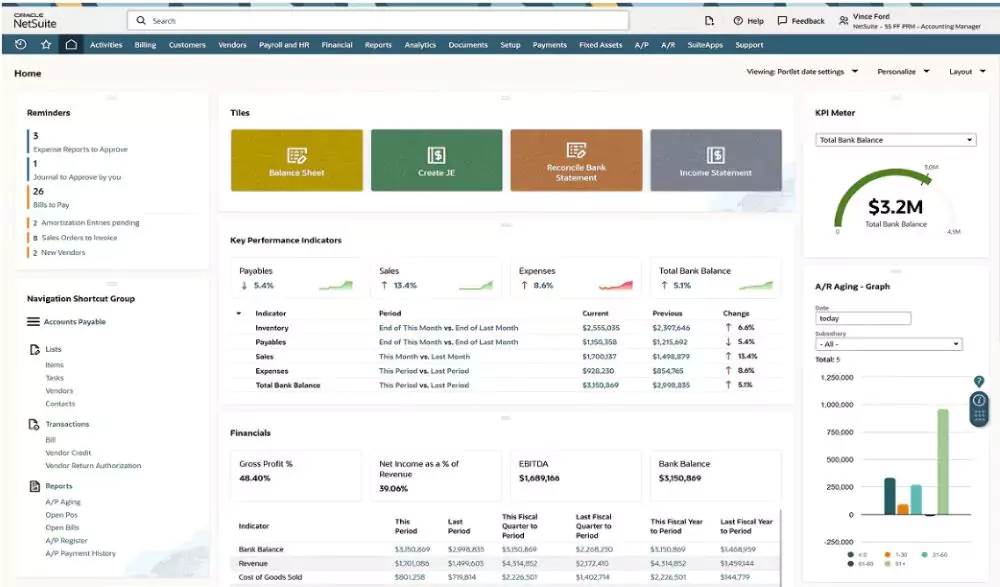
- Oracle NetSuite – A flexible, cloud-native ERP well-suited for fast-scaling biotech and medical device firms, with strong built-in quality and compliance functionality and easy integration with LIMS and other specialized systems.
Each solution can be configured and validated to meet FDA and GxP requirements while supporting rapid growth and innovation.

Top 10 ERP software selection checklist
Download our ERP selection checklist to confidently navigate the 10 essential steps for choosing the right software. Ensure your life sciences business picks the solution that streamlines operations, supports growth, and meets your unique needs.
Summary
Choosing the right ERP system is crucial for life sciences companies. A well-selected and implemented ERP simplifies operations, ensures compliance, and supports growth. By carefully evaluating business requirements, system features, integration, scalability, cost, and vendors, your company can implement a solution that improves efficiency today. At the same time, it future-proofs operations for long-term success.
Businesses choose Rand Group because of our deep expertise in life sciences operations and regulatory requirements. Furthermore, our team guides companies through every stage—from vendor selection to secure deployment and long-term system optimization. This approach ensures a smooth transition and delivers maximum return on investment. Contact us to schedule a consultation today.