NetSuite
NetSuite vs. Rillet: Modern AI ERP vs. a proven platform

Rillet is one of a new wave of AI-native ERP platforms built specifically for SaaS and usage-based companies. It’s modern, intuitive, and designed to make finance teams faster with embedded automation and real-time metrics. But when evaluating NetSuite vs. Rillet, the bigger question is whether a modern finance-first platform can replace a proven ERP built to support the full business.
In this blog, we take a closer look at NetSuite vs. Rillet. The short answer: while Rillet delivers speed and usability for SaaS finance teams, NetSuite continues to lead with unmatched breadth, enterprise readiness, and long-term scalability.
Innovation matters, but ERP decisions aren’t just about how fast you can move today. They’re about choosing a platform that can support your business as complexity increases tomorrow.
What is NetSuite?
To understand the difference between NetSuite vs. Rillet, it’s important to start with what each platform is designed to do.
NetSuite by Oracle supports finance, operations, and growth within a single system. It’s trusted by many organizations worldwide to manage evolving and complex business environments.
NetSuite includes:
- Financial management and accounting.
- Multi-entity, multi-subsidiary, and multi-currency support.
- Revenue recognition and compliance.
- Inventory and supply chain management.
- CRM and customer data.
- Advanced reporting, automation, and customization.
NetSuite is built for organizations that need a single source of truth as they scale across teams, entities, and geographies.

What is Rillet?
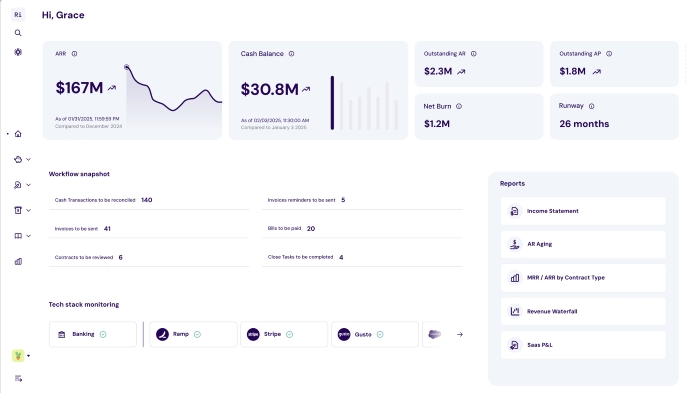
Rillet is a modern, AI-native ERP designed primarily for SaaS, AI, and usage-based businesses. Its focus is on streamlining accounting, revenue recognition, and key SaaS metrics like ARR, churn, and MRR. Rather than offering a broad operational ERP, Rillet concentrates on making finance teams more efficient through automation, native integrations, and a clean user experience.
Rillet is known for:
- Intuitive, finance-friendly UI.
- Native integrations with tools like Stripe and Salesforce.
- AI-driven automation for invoicing and revenue recognition.
- Faster implementation timelines.
- Strong support for SaaS-specific metrics.

Download the complete NetSuite vs. AI startups comparison
Want to see how NetSuite compares to Rillet, Campfire, Everest, and DualEntry? Our detailed whitepaper offers a side-by-side look at features, AI capabilities, scalability, implementation, and pricing. Download the guide to understand the trade-offs between fast deployment and long-term growth, and get expert guidance to help you choose the right ERP for your organization.
NetSuite vs. Rillet: Feature comparison
One of the clearest differences in NetSuite vs. Rillet is functional scope.
NetSuite vs. Rillet: Evaluating AI across finance and operations
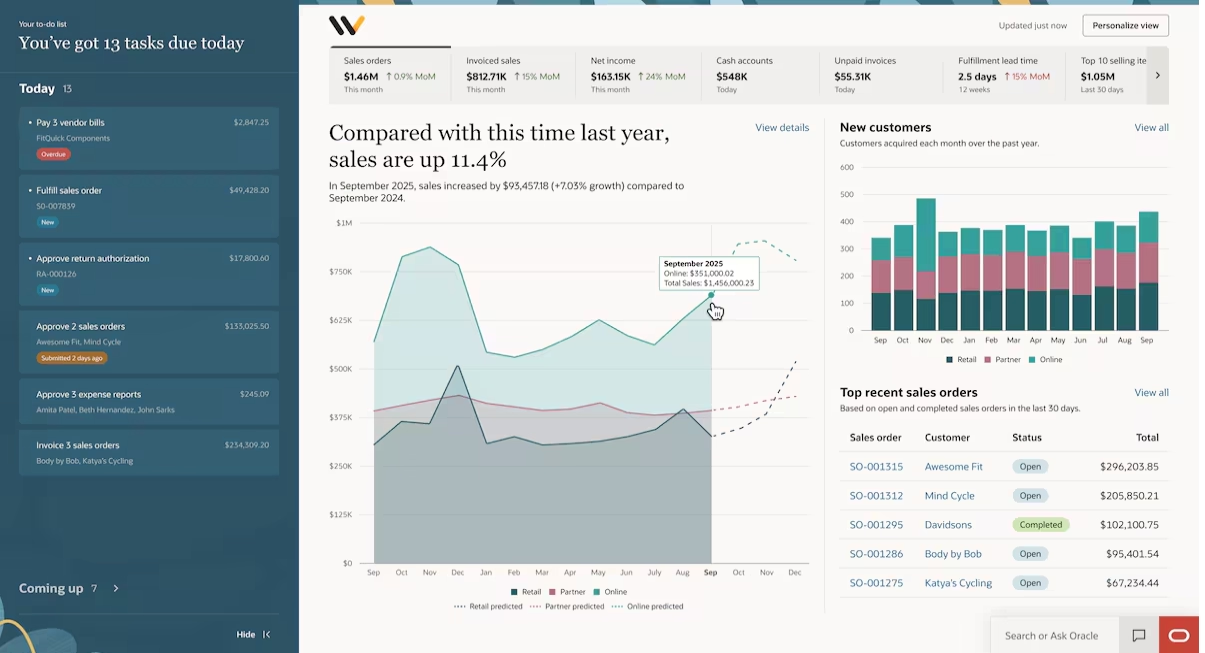
Although Rillet markets itself as AI-native, its AI capabilities are largely focused on finance and accounting efficiency. NetSuite, by contrast, embeds AI throughout its platform, delivering intelligence that scales across the entire organization.
NetSuite Next, Oracle’s AI innovation layer, enhances business performance by:
- Providing predictive insights across finance, inventory, and sales to support smarter decision-making.
- Automating routine tasks like reconciliations, approvals, and reporting for greater efficiency.
- Optimizing revenue management and detecting anomalies with AI-enhanced analytics.
- Connecting ERP, CRM, and commerce data to deliver actionable, cross-functional insights.
With enterprise-wide AI, NetSuite equips organizations with the intelligence and automation needed to support long-term growth, beyond the finance-focused scope of Rillet.
Pricing & implementation planning
Pricing and implementation are key factors when comparing NetSuite to new ERP startup systems. In the NetSuite vs. Rillet decision, the tradeoff is often speed today versus cost clarity and scalability tomorrow.
Rillet typically offers lower upfront costs and faster implementation timelines due to its finance-focused scope. This makes it appealing for SaaS teams looking to automate revenue and accounting quickly. However, as operational needs expand, additional integrations or add-on systems are often required to support CRM, inventory, or broader reporting, causing costs and complexity to increase over time.
NetSuite uses a modular, subscription-based pricing model that scales with users and business complexity. While implementations take longer, the investment delivers a unified ERP that supports finance and operations in one system. This results in more predictable long-term costs and broader value across the organization from the start.
Which platform should you choose?
Choose Rillet if:
- You’re a SaaS or usage-based company.
- Finance automation and subscription metrics are the main priorities.
- You want fast deployment and minimal complexity.
- You don’t need operational ERP functionality.
Choose NetSuite if:
- You want a comprehensive ERP for finance and operations.
- You manage multiple entities, currencies, or geographies.
- You need a single source of truth as complexity increases.
- You value proven scalability over short-term efficiency.
Why NetSuite is the safer long-term ERP
Rillet delivers modern UX and efficient finance workflows, but NetSuite remains the stronger long-term ERP for organizations planning to scale. NetSuite supports the full scope of business operations, not just accounting. Its functional breadth spans finance, revenue, inventory, CRM, and reporting, enabling organizations to operate from a unified system as they grow.
NetSuite also offers enterprise-ready controls, compliance, and governance, critical for audits, acquisitions, and global expansion. Its mature platform provides stability and reliability that newer AI startups have yet to demonstrate at scale. While Rillet’s AI-driven approach is compelling, ERP decisions rarely hinge on one area of innovation. When evaluating NetSuite vs. Rillet, NetSuite’s depth, maturity, and proven track record make it the safer, more strategic choice.
NetSuite vs Rillet: Frequently asked questions
What are the main differences between NetSuite and Rillet?
Rillet is designed for modern SaaS and tech companies, focusing on AI-driven finance automation, native integrations (e.g., Stripe, Salesforce), and a fast, intuitive user experience. NetSuite offers a full ERP suite covering finance, CRM, inventory, supply chain, eCommerce, and reporting, making it ideal for organizations with complex operations, multi-entity structures, and global expansion needs.
How do AI capabilities compare between NetSuite and Rillet?
Rillet applies AI primarily to accounting, invoicing, and revenue recognition tasks. NetSuite Next extends AI across the enterprise, delivering predictive analytics, intelligent automation, and cross-department insights, including finance, operations, CRM, and commerce, supporting broader business decision-making.
How do support and partner options differ?
Rillet provides vendor support, but as a newer startup, its ecosystem of certified partners and consulting resources is limited. NetSuite benefits from Oracle’s backing and a global partner network, including firms like Rand Group, offering implementation expertise, ongoing support, and guidance to ensure smooth adoption and long-term ERP success.
Who is Rillet best for compared to NetSuite?
Rillet is best suited for SaaS or tech companies seeking fast implementation, modern UX, and AI-focused finance workflows. NetSuite is the preferred choice for organizations looking for a comprehensive, scalable, and proven ERP solution that can grow with the business over the long term.
Choosing the right ERP with Rand Group
Choosing between NetSuite vs. Rillet isn’t just about features, it’s about aligning technology with your growth strategy and operational needs. As an Oracle NetSuite Alliance Partner, Rand Group guides organizations through every stage of the ERP journey, from evaluation to long-term optimization.
We help businesses make informed, strategic decisions by:
- Understanding your needs: Assess current processes, pain points, and growth goals to ensure the ERP fits your real requirements.
- Comparing your options: Provide unbiased analysis of ERP solutions, including AI-first platforms like Rillet, highlighting trade-offs between speed, usability, and scalability.
- Planning a smooth implementation: Develop roadmaps for deployment, integrations, and alignment with finance, operations, and executive priorities.
- Maximizing long-term value: Deliver ongoing support, process improvements, and optimization to ensure ERP scales with your business.

6 key criteria for selecting a NetSuite partner
Picking the right NetSuite partner can accelerate your ERP success, while the wrong choice can create delays and challenges. Explore our top 6 criteria for choosing the best NetSuite partner, including essential questions to guide your evaluation. From deep expertise in NetSuite implementations to a proven history of successful projects, this guide helps ensure you select a partner who can drive your business forward.
Final thoughts
The NetSuite vs. Rillet debate highlights a broader shift in ERP: speed-focused AI startups versus enterprise systems built for scale. Rillet offers modern finance efficiency for SaaS teams. NetSuite offers a complete ERP platform designed to support complexity, expansion, and change. For organizations planning beyond their next funding round or growth milestone, NetSuite remains the stronger ERP choice. If you are debating which ERP is right for your business reach out today. Our ERP experts can guide your software selection journey and set your team up for long-term ERP success.