
CRM and relationship management solutions
Strong customer relationships depend on having the right information, consistent communication, and a clear understanding of customer needs. When customer data is scattered across systems and departments, building and maintaining strong customer relationships becomes more difficult. Rand Group helps organizations centralize customer information, connect customer-facing teams, and improve relationship management with CRM solutions tailored to their business. Gain a more complete view of your customers, strengthen engagement, and deliver more consistent experiences throughout the customer lifecycle.

Build stronger customer relationships with connected CRM
Managing customer relationships becomes increasingly complex when account information, communication histories, and customer activities are spread across spreadsheets, emails, and disconnected business systems. Without a centralized view of customer interactions, teams may struggle to coordinate communication, maintain accurate records, and provide consistent experiences as relationships evolve.
Rand Group helps organizations bring customer information, relationship history, and business processes together in a connected CRM environment. By improving access to customer data and connecting teams across sales, account management, and service, businesses can strengthen collaboration, improve customer engagement, and build lasting relationships that support long-term growth.

Gain a complete view of your customers
Centralize account details, contact information, communication histories, and related business data to give teams a clearer understanding of customer relationships and needs.

Improve collaboration across teams
Connect sales, account management, and customer service teams with shared customer information to improve coordination, reduce information gaps, and deliver more consistent interactions.

Strengthen long-term customer relationships
Track customer engagement, maintain personalized communication, and identify changing account needs to improve customer satisfaction, strengthen loyalty, and support long-term retention.
Real results from connected sales operations
%
Reduction in manual data entry
Back-and-forth emails eliminated
%
Faster pipeline reviews
They worked with us every step of the way, walking alongside our team to define and execute the right CRM solution. The immediate buy-in from our staff made it clear that this was an investment well worth making.
Centralize customer information and strengthen relationships
Effective customer relationship management starts with having accurate, accessible information about your customers and their interactions with your business. CRM software brings account details, contact information, communication histories, and relationship activities together in one place, helping teams better understand customer needs and deliver consistent experiences throughout the customer lifecycle.
- Centralized customer records: Maintain account profiles, contact details, key stakeholders, and relationship histories in one connected system.
- Contact and account management: Organize customer accounts, contacts, roles, and account ownership to improve relationship visibility.
- Customer interaction tracking: Record emails, calls, meetings, and other communications to maintain a complete history of customer engagement.
- Customer segmentation: Group customers by industry, location, account type, or other criteria to support more relevant communication and engagement.
- Account activities and follow-ups: Manage meetings, reminders, customer check-ins, and important milestones to maintain consistent communication.
- Customer lifecycle management: Track relationships from initial engagement through ongoing account management, renewals, and retention.
- Account growth opportunities: Use customer information, relationship history, and purchasing activity to identify opportunities to expand existing relationships.

Connect customer relationships with business operations
Customer relationships extend beyond sales and account management. When CRM software connects with ERP, financial, and service systems, teams gain access to a broader view of customer activity and business transactions. Rand Group helps organizations integrate CRM with their existing technology to improve information sharing, reduce duplicate data entry, and support more coordinated customer interactions across departments.
- CRM and ERP integration: Connect customer records with financial, sales, and operational systems to improve data consistency and accessibility.
- Customer order visibility: Access relevant quotes, sales orders, purchasing history, and transaction details to better understand customer activity.
- Financial information: Give authorized users visibility into customer billing, payment status, and account information to support informed conversations.
- Sales and service coordination: Share customer information, communication histories, and relevant activities across sales, account management, and service teams.
- Customer reporting and analytics: Monitor account activity, customer engagement, and relationship trends to identify opportunities for improvement.
- Connected workflows: Streamline information sharing and reduce duplicate entry between CRM, ERP, and other business applications.

Bring your customer relationships into focus
Your CRM should do more than store customer information. It should help your teams understand relationships, coordinate interactions, and deliver more consistent customer experiences. Rand Group helps organizations evaluate their CRM needs, connect customer data across systems, and implement solutions that strengthen account management, improve collaboration, and support long-term customer relationships.
CRM and relationship management software for your business
The right CRM software depends on how your organization manages customer relationships, coordinates interactions, and connects customer information across departments. Rand Group works with Microsoft, Oracle NetSuite, and Sage to help businesses evaluate and implement CRM solutions based on their account management needs, existing systems, and integration requirements.
Microsoft Dynamics 365 Sales
Build stronger customer relationships with a connected view of accounts, contacts, and interactions. Dynamics 365 Sales provides centralized customer records, communication tracking, relationship insights, and AI-assisted capabilities to help teams better understand customer needs and manage ongoing engagement. Its integration with Microsoft 365 and other Dynamics 365 applications makes it particularly well suited for organizations seeking structured account management, improved collaboration, and greater visibility into customer relationships.
Oracle NetSuite CRM
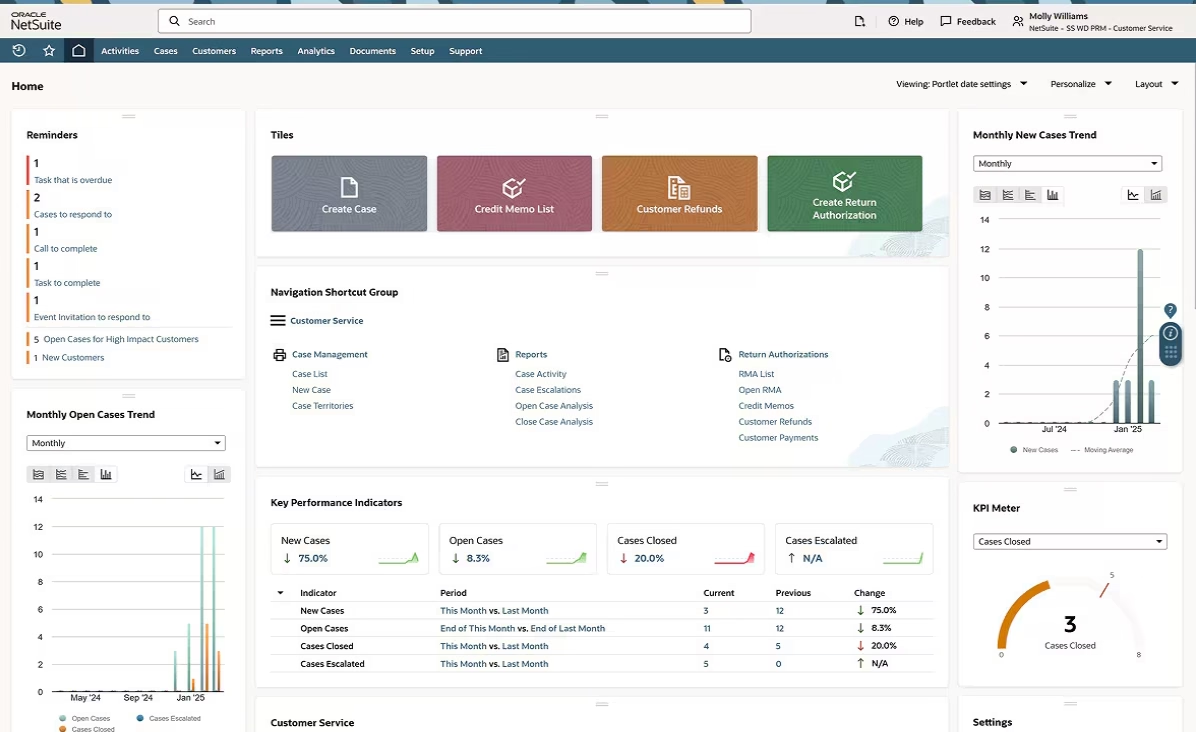
Manage customer relationships alongside the financial and operational information that supports them. NetSuite CRM connects account and contact management, customer interactions, and sales activities with transactions, orders, and financial data within the broader NetSuite platform. It is particularly valuable for organizations that want customer-facing teams to access relevant business information without relying on disconnected systems, supporting more informed account management and coordinated customer interactions.
Sage CRM
Simplify customer relationship management with centralized account information and communication tracking. Sage CRM helps businesses organize customer records, manage contacts, track interactions, and coordinate activities across sales and customer service teams. With integration options for Sage ERP systems, it is a practical choice for small and midsized organizations seeking to improve customer visibility, maintain consistent communication, and strengthen account management, particularly those using Sage 100.

Case Study

Connecting customer relationships and business operations with Dynamics 365 Sales
Sapphire Gas Solutions, a provider of LNG and CNG fuel solutions, struggled with disconnected customer information, limited visibility, and inefficient communication across departments. As the business grew, its existing CRM system could no longer support its evolving relationship management needs. Rand Group helped Sapphire implement Microsoft Dynamics 365 Sales integrated with Business Central, bringing customer, sales, and operational information into a more connected environment. The solution improved access to customer data, strengthened collaboration between teams, and provided greater visibility to support informed decisions and more consistent customer interactions.
Enhance customer relationships with AI agents and connected apps
Get more value from your customer data with AI-powered recommendations and connected business applications. Rand Group helps organizations extend their customer management capabilities with tools that provide greater visibility into purchasing history, simplify account management, and identify opportunities to strengthen existing customer relationships.

Featured AI Agent
Sales Qualification Agent
Streamline lead research and qualification with the AI-powered Sales Qualification Agent in Dynamics 365 Sales. This agent helps sales teams evaluate leads against ideal customer profiles, automate personalized outreach and follow-up, and identify prospects with genuine buying interest. By reducing manual research and qualification tasks, sellers can focus on high-potential opportunities, build stronger customer relationships, and move qualified leads through the sales pipeline more efficiently.
- Automate lead research and qualification: Analyze CRM data and external information to evaluate leads against your ideal customer profile and identify promising prospects.
- Streamline personalized outreach: Generate tailored emails and, when configured, automate prospect engagement and follow-up to assess buying interest.
- Prioritize qualified sales opportunities: Evaluate lead fit and buying interest, then hand off qualified prospects to sellers so they can focus on opportunities most likely to convert.
Customer Item Invoice History
Give sales and customer-facing teams easier access to historical purchasing information in Dynamics 365 Business Central. Customer Item Invoice History helps users review previously invoiced items, quantities, and pricing to answer customer questions, support repeat purchases, and make more informed account management decisions.
Bill-To Manager
Simplify the management of customer billing relationships in Dynamics 365 Business Central. Bill-To Manager helps organizations manage billing arrangements across customer accounts, improving visibility into customer billing structures and reducing administrative complexity when working with customers that have multiple locations or related accounts.
Explore related sales and customer management solutions
Strong customer relationships depend on connected sales processes, responsive service, and a clear understanding of customer needs. Explore related solutions that help your teams streamline sales activities, improve customer experiences, and make more informed decisions throughout the customer lifecycle.

Sales automation
Streamline lead management, opportunity tracking, and sales activities with connected workflows that reduce manual work, improve pipeline visibility, and help teams build stronger customer relationships.

Customer service
Manage customer inquiries, support cases, and service requests with connected workflows that help teams respond faster, resolve issues, and improve customer satisfaction.

Customer insights & analytics
Bring together customer data, interactions, and behavior to better understand your audience, identify trends, and support more informed sales and engagement decisions.

Marketing automation
Connect customer data with targeted campaigns to automate outreach, nurture relationships, deliver personalized experiences, and improve engagement throughout the customer lifecycle.
Why partner with Rand Group?
Customer relationship and CRM expertise
Rand Group understands the challenges of managing customer information, coordinating interactions, and maintaining strong relationships across teams. We help organizations design CRM solutions around their account management processes, customer engagement needs, and relationship workflows to improve visibility, strengthen collaboration, and deliver more consistent customer experiences.
Multi-platform CRM expertise
Rand Group works with Microsoft, Oracle NetSuite, and Sage to help businesses evaluate and implement CRM software that fits their requirements. Our team considers customer management processes, existing systems, integration needs, and long-term goals to identify solutions that support effective relationship management and business growth.
Connected customer and business operations
Our expertise spans CRM, ERP, AI, and integrations, helping organizations connect customer information with sales, service, financial, and operational data. By reducing disconnected systems and improving information sharing, we help teams gain a more complete view of customer relationships and coordinate interactions across departments.
Long-term partnership and support
With a 90% client retention rate, Rand Group focuses on building lasting partnerships. We provide ongoing CRM support, training, enhancements, and system optimization to improve user adoption, adapt to changing customer management requirements, and help organizations continue getting value from their CRM investment.
Frequently Asked Questions (FAQs)
What is CRM and relationship management software?
Customer relationship management (CRM) software helps businesses organize customer information, track interactions, and manage relationships throughout the customer lifecycle. It centralizes account records, contact details, communication histories, and customer activities so teams can better understand customer needs and coordinate engagement. CRM solutions can also connect with ERP, sales, and service systems to provide a more complete view of customer relationships and business activity.
How do I know if my business needs CRM software?
Your business may benefit from CRM software if customer information is spread across spreadsheets, emails, and disconnected applications, making it difficult to maintain accurate records or coordinate interactions. Other signs include inconsistent follow-up, limited visibility into account activity, duplicate customer data, and challenges sharing information between departments. A CRM system helps centralize customer information, establish consistent relationship management processes, and support collaboration as your business grows.
What features should I look for when choosing CRM software?
The right CRM features depend on your customer management processes, team structure, and existing technology. Important capabilities to evaluate include:
- Contact and account management: Centralized customer records, account ownership, and relationship histories.
- Interaction tracking: Visibility into emails, calls, meetings, and customer activities.
- Customer lifecycle management: Tools for managing ongoing engagement, renewals, and account relationships.
- Reporting and analytics: Dashboards and reports for monitoring customer activity and relationship trends.
- Integration capabilities: Connections with ERP, email, customer service, and other business systems.
- Automation and AI: Tools that reduce administrative work and provide relevant customer insights.
Ease of use, customization, security, and scalability should also factor into your decision.
Can CRM software integrate with my existing ERP system?
Yes. Many CRM platforms can integrate with ERP systems to connect customer information with sales orders, purchasing history, billing details, and other business data. For example, Dynamics 365 Sales can integrate with Business Central, while NetSuite CRM operates within the broader NetSuite ERP environment. Integration capabilities vary by platform and may require additional configuration or development. Rand Group helps organizations evaluate integration requirements and connect CRM with existing business systems to improve information sharing and reduce duplicate data entry.
Can CRM software help improve customer retention and account management?
Yes. CRM software can support customer retention by giving teams better visibility into customer interactions, account histories, and ongoing relationship activities. Account managers can track important milestones, coordinate follow-ups, monitor engagement, and identify changing customer needs. When CRM is connected with other business systems, teams can also use relevant purchasing and service information to support more informed conversations. These capabilities help organizations maintain consistent communication and strengthen long-term customer relationships.
Can I implement CRM software without replacing my existing business systems?
Yes. Many organizations implement CRM software alongside their existing ERP, accounting, email, and customer service applications. A CRM system can provide centralized relationship management capabilities while integrations connect relevant information from other platforms. The right approach depends on your current technology, data quality, business processes, and integration requirements. Rand Group helps businesses evaluate whether to extend an existing system, implement a separate CRM platform, or establish a more connected business environment.
How much does CRM and relationship management software cost?
CRM software costs vary depending on the platform, number of users, licensing requirements, and features your organization needs. Additional expenses may include implementation, data migration, integrations, customization, training, and ongoing support. Some platforms offer different subscription tiers, while others may require separate licensing for advanced capabilities or integrations. Rand Group helps organizations evaluate CRM options and understand the total cost of ownership based on their requirements and budget.
How long does it take to implement CRM software?
CRM implementation timelines depend on the number of users, complexity of your customer management processes, quality of existing data, and integration requirements. A relatively straightforward implementation with standard account and contact management capabilities may take several weeks, while more complex projects involving multiple departments, data migration, custom workflows, and ERP integrations can take several months. Rand Group helps businesses plan and execute CRM implementations with a focus on system configuration, data accuracy, user adoption, and long-term business requirements.
Related Insights

Dynamics 365 pricing guide: Costs, licensing, and implementation explained
Get a clear view of Dynamics 365 pricing. This guide covers license types, base and attach options, subscription terms, device and team member roles, typical implementation costs, and total cost of ownership. Use it to plan a realistic budget, select the right apps, and purchase through a certified Microsoft partner.

Dynamics 365 Sales & Customer Insights fall 2026 update: What’s new
Discover what's new in the Dynamics 365 Sales & Customer Insights fall 2026 update. Explore upcoming product configuration and pricing rules, enhanced CRM data enrichment, AI-powered customer insights, and marketing automation capabilities. Learn how these updates can help businesses improve sales processes, customer engagement, and operational efficiency.

NetSuite SuiteScript 2.1 requirement: What the 2028.2 deadline means for your custom scripts
NetSuite is phasing out legacy SuiteScript versions and will require all custom scripts to use SuiteScript 2.1 by the 2028.2 release. Learn which scripts are affected, what the transition means for your business, and how to prepare your customizations before the deadline.