Forecasting costs and calculating ROI for Microsoft Copilot and AI initiatives

Microsoft Copilot has rapidly become the most common starting point for organizations exploring AI. Embedded across Microsoft 365 and Dynamics 365, Copilot promises productivity gains, faster insights, and improved decision-making. As interest grows, the same two questions surface for business and IT leaders alike: what will this cost, and how can organizations measure Microsoft Copilot ROI?
While AI capabilities are more accessible than ever, forecasting costs and calculating ROI for Copilot and related AI initiatives remains complex. Costs vary based on licensing, usage patterns, customization, and data readiness. ROI depends on selecting the right use cases, managing expectations, and aligning AI capabilities to real business outcomes.
This article outlines a practical framework for estimating costs and evaluating ROI for Microsoft Copilot and AI solutions, including Dynamics 365 copilots, Microsoft 365 Copilot, Copilot Studio, and custom AI agents built on Azure. The goal is to help decision-makers and practitioners approach AI investments with clarity, realism, and discipline.
Understanding return on investment in AI and how to calculate it
Return on investment (ROI) is a financial metric that compares the value generated by an investment to its cost. In the context of AI, ROI answers a simple question: “How much value do we get back for what we put in?”
Calculating AI ROI requires three core steps:
- Define expected benefits: Identify measurable outcomes, such as time saved, cost reductions, productivity improvements, or revenue growth from AI initiatives.
- Quantify costs: Include all expenses, such as licensing (e.g., Microsoft Copilot), implementation, infrastructure, training, and ongoing operating costs.
- Measure results over time: Track performance against baseline metrics to determine the net value generated by AI, often expressed as a percentage: (Net Benefit ÷ Total Cost) × 100.
For example, if an AI solution saves 100 hours of labor per year at a fully burdened cost of $50 per hour, the value generated is $5,000. If the total annual cost of the AI solution is $1,000, the ROI is 400%:
ROI = ($5,000 – $1,000) ÷ $1,000 × 100 = 400%
Understanding ROI in this structured way helps organizations make informed decisions about AI investments, prioritize initiatives with the greatest potential impact, and monitor whether the expected value is realized over time.
Why forecasting Microsoft Copilot and AI costs is still difficult
The rapid adoption of Microsoft Copilot is driven in part by declining AI infrastructure costs and simplified access through familiar Microsoft tools. Licensing models for Microsoft 365 Copilot and embedded copilots provide a level of predictability that did not exist with earlier AI platforms.
However, cost forecasting is still challenging because AI usage is not static. The more Copilot is adopted and trusted, the more it is used. That usage directly affects operating costs, particularly in scenarios involving high interaction volumes, large documents, or frequent automation.
The challenge is not understanding the price of a license or a token. It is understanding how Copilot and AI services will be used once they become part of daily work.

Using prototyping to estimate AI costs
Reliable AI cost estimation usually begins with a prototyping exercise. Once business objectives and desired functionality are aligned, a lightweight prototype is built to simulate a real transaction or workflow using the intended AI approach.
This allows organizations to observe actual usage patterns and extrapolate costs with greater confidence. Rather than guessing at consumption, teams can measure it directly and model expected volumes before committing to full-scale deployment.
Prototyping does not eliminate uncertainty entirely, but it significantly reduces risk and helps set realistic expectations for both implementation and operating costs.
How AI solution types affect cost and complexity
The Microsoft AI ecosystem offers multiple paths to adoption, each with different cost drivers and implementation considerations.
Microsoft 365 Copilot is licensed per user on an annual commitment, making its costs predictable and easy to forecast. Because it is embedded directly into familiar tools such as Outlook, Teams, Word, and Excel, implementation effort is minimal. The primary success factor is adoption rather than technical complexity.
Dynamics 365 applications now include built-in copilots across areas such as finance, operations, sales, and customer service. These out-of-the-box capabilities typically require limited setup and are monetized primarily through usage rather than custom development.
Copilot Studio sits between out-of-the-box copilots and fully custom AI. It enables organizations to create tailored AI agents using a low-code approach, introducing some implementation effort but maintaining accessibility for internal teams.
Custom AI agents built on Azure are the most flexible and powerful option, but they also introduce additional cost considerations. These solutions are appropriate when AI must support unique workflows, complex logic, or specialized data scenarios that cannot be addressed through standard tooling.
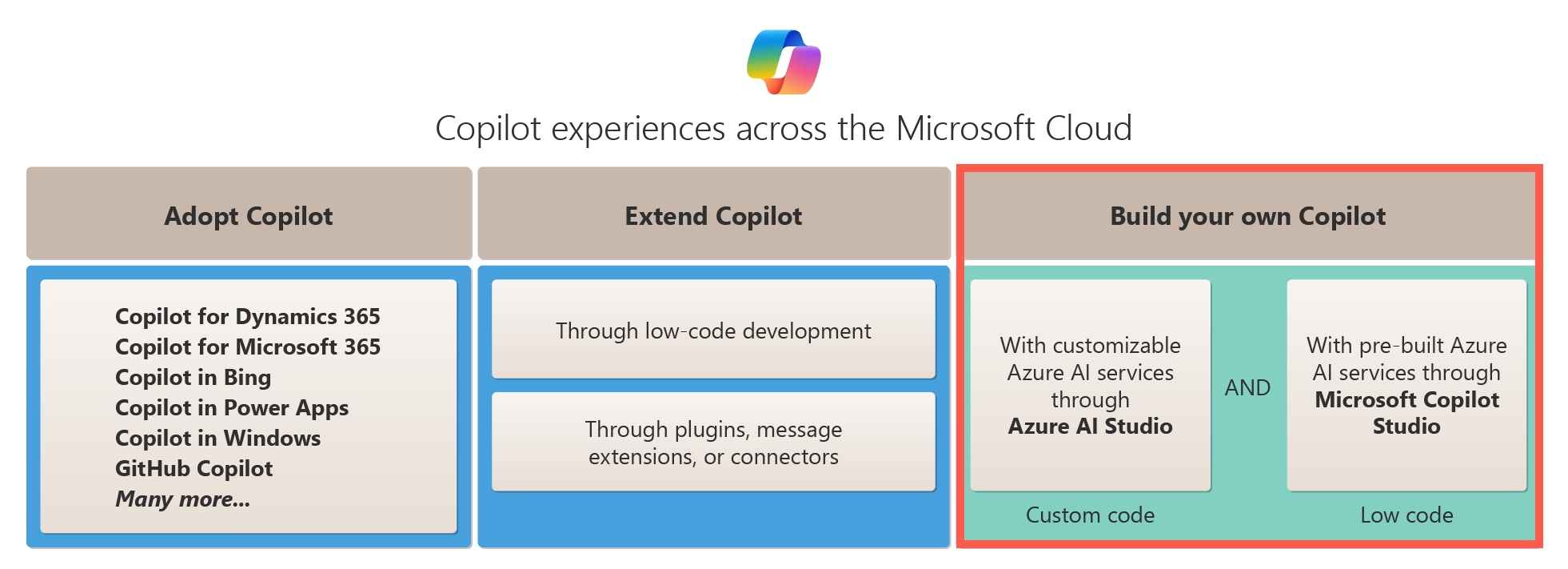
Implementation cost components for Copilot and custom AI solutions
- Data readiness and quality: Copilot effectiveness depends on accurate, well-governed data. Cleanup, enrichment, and security controls are often required.
- Infrastructure considerations: Real-time Copilot extensions or hybrid data environments may introduce additional infrastructure needs.
- Governance, training, and oversight: Teams must understand how Copilot behaves, how outputs should be reviewed, and how issues are escalated.
- Maintenance and lifecycle management: Custom Copilot extensions require monitoring, tuning, and periodic updates as data and usage patterns change.
Planning for these elements early helps prevent cost overruns and adoption challenges later. For guidance on approaching implementation in Dynamics 365, see Getting started with AI in Dynamics 365: Key guidelines for success.

Transform work with Microsoft Copilot
Microsoft Copilot offers a scalable, practical way to bring AI into your organization, helping teams work smarter, gain faster insights, and drive growth. Whether you are starting with Microsoft 365 Copilot or expanding into Dynamics 365 copilots, Rand Group can help you assess readiness, estimate costs, and design a Copilot implementation that aligns with your business objectives.
Understanding Copilot operating costs and token usage
Beyond licensing, most Copilot-related operating costs are driven by token consumption. Tokens represent the units used by AI models to process prompts and generate responses.
Token usage varies based on prompt length, response size, and interaction frequency. Short Copilot prompts consume minimal tokens, while document summarization, conversational agents, or automation scenarios can scale usage quickly.
In fully custom AI scenarios, pricing may shift from token-based models to resource-based consumption, such as CPU or GPU usage. While less common for Copilot-centric initiatives, this becomes relevant for advanced Azure AI implementations.
Prioritizing AI initiatives with a strategic assessment framework
Maximizing value from AI begins with selecting the right initiatives. Rand Group recommends using a strategic assessment framework to guide organizations through evaluating opportunities—from simple out-of-the-box solutions to more complex, custom AI deployments.
- Impact: How much the solution improves outcomes, accelerates workflows, or drives business value.
- Confidence: How likely the solution is to succeed, considering data readiness, team capabilities, and process alignment.
- Ease: How simple the solution is to implement, including required effort, complexity, and resources.
Out-of-the-box Copilot solutions usually score high on confidence and ease, making them ideal starting points for rapid wins. More advanced, custom AI agents may deliver greater impact but require stronger governance, careful data preparation, and human-in-the-loop oversight. Using a structured framework helps organizations sequence initiatives logically, build internal capability, and move from simple to complex solutions effectively.
Common pitfalls that reduce AI ROI
Even well-designed AI initiatives can fail to deliver expected value if certain challenges are not addressed early. Awareness and proactive management of these risks can significantly improve outcomes:
- Poor data quality: AI outputs are only as reliable as the data they consume. Inaccurate, incomplete, or inconsistent data increases manual corrections, reduces trust in the system, and can mislead decision-making. Ensuring data governance, cleansing, and standardization before implementation is essential for maximizing ROI.
- Scope creep: AI projects often expand once early results are seen, whether by adding features, workflows, or departments. Uncontrolled scope growth can inflate costs and delay benefits. Phased rollouts and clear project objectives help maintain focus and capture early wins efficiently.
- Architecture misalignment: Over- or under-engineering the underlying infrastructure can raise costs or compromise performance. AI solutions should balance scalability, responsiveness, and integration with existing systems to avoid unnecessary expenses.
- Chasing perfect accuracy: Expecting AI to deliver 100% accuracy is costly and rarely necessary. Human-in-the-loop oversight allows AI to augment decisions while humans handle exceptions or edge cases.
- Ignoring operational readiness: Teams need training, monitoring, and governance processes to maintain AI performance over time. Establishing a center of excellence or similar oversight mechanism helps ensure sustainability and long-term ROI.
By anticipating these pitfalls, organizations can avoid common mistakes, maintain control over cost and complexity, and design AI programs that truly augment human decision-making while driving measurable business outcomes.
The business case for AI: Forecasting cost and ROI
Are you curious about the true costs and potential return on investment (ROI) of implementing AI in your organization? In this we do a deep dive deep into one of the most common hurdles companies face when starting an AI project: forecasting costs and calculating ROI.
Using Copilot to drive growth, not just efficiency
Many Copilot initiatives begin with productivity and cost savings, but some of the strongest ROI comes from enabling scale and growth. Copilot can support advanced use cases such as personalized sales outreach, intelligent pricing strategies, and contextual recommendations within Dynamics 365.
By leveraging existing CRM and ERP data, Copilot can help organizations engage customers more effectively without increasing headcount. These growth-oriented scenarios often compound value over time and justify broader Copilot investment. Learn more about leveraging AI for productivity in Enhancing productivity with AI in Microsoft 365.
Real-world examples of Copilot ROI at Rand Group
To illustrate the tangible value of Microsoft Copilot, we can look at two internal use cases at Rand Group. Both demonstrate how targeted AI adoption, when prioritized using the strategic assessment framework, can deliver measurable ROI through productivity gains and efficiency improvements.
Example 1: Faster case study development with Microsoft 365 Copilot
Copilot now assists the marketing team with case study creation by automatically generating client background summaries based on client data that is stored in Dynamics 365 and SharePoint. Previously this required manually reviewing project documentation and meeting with the Service Delivery team. Additionally, Copilot helps create the first draft of interview questions based on the summary and a pre-defined interview template. It can also draft case studies to more than 80% completeness, significantly reducing manual writing time.
- Average time saved per case study: ~5 hours
- Case studies produced per month: 2
- Annual time recovered: ~120 hours
- Estimated productivity value: $6,000 annually
- Microsoft 365 Copilot license cost: $360 per year
Using the strategic assessment framework to evaluate this initiative: the impact is high (significant time saved and faster content delivery), confidence is high (simple, repeatable workflow), and ease is moderate (integration into existing content processes). This makes Copilot a highly efficient entry point for AI-assisted content creation.
Example 2: Automated meeting minutes and summaries
Copilot also streamlines internal communication by generating structured meeting minutes, action items, and follow-up tasks in Rand Group’s meeting minute format. Instead of manually reviewing transcripts and filling in the template manually, teams rely on Copilot to produce polished summaries quickly and consistently.
- Meetings per month per manager: ~12
- Time saved per meeting: ~25 minutes
- Annual time saved: ~60 hours
- Token usage per summary: ~15,000 (costing a few cents each)
- Annual AI operating cost: <$5
- Estimated labor value of time saved: >$5,000 annually
When evaluated using the strategic assessment framework: the impact is high (substantial time saved for managers), confidence is high (straightforward implementation), and ease is high (minimal setup required). The minimal operating cost combined with measurable time savings makes this a strong ROI example for Microsoft Copilot adoption.
These examples show that even small, targeted Copilot initiatives can generate outsized benefits, especially when prioritized with the strategic assessment framework to focus on high-impact, high-confidence, and easy-to-implement use cases.
Frequently asked questions
What factors drive the cost of implementing Microsoft Copilot?
Costs depend on licensing, usage patterns, the type of Copilot solution (Microsoft 365, Dynamics 365, Copilot Studio, or custom AI agents), and data readiness. While standard Copilot licenses are predictable, custom solutions can include infrastructure, maintenance, and training costs.
How can organizations estimate ROI for Copilot and AI initiatives?
ROI is best assessed by selecting use cases that align with key business objectives, managing expectations, and prioritizing solutions using frameworks such as ICE (Impact, Confidence, Ease). Prototyping is also useful to model costs and measure expected benefits before full deployment.
What are the most common pitfalls that reduce AI ROI?
Common challenges include poor data quality, scope creep, architecture misalignment, chasing perfect accuracy, and lack of operational readiness. Addressing these early ensures AI augments human decision-making while delivering sustainable value.
How do token-based costs work for Copilot?
Most Copilot operating costs are tied to tokens, which represent units of text processed by the AI model. Token usage depends on prompt length, response size, and frequency of interactions.
Can Copilot help organizations grow, not just reduce costs?
Yes. Beyond productivity and cost savings, Copilot enables growth through personalized sales outreach, intelligent pricing, and contextual recommendations using CRM and ERP data. These use cases can increase revenue, improve customer engagement, and scale operations efficiently.
Next steps
Microsoft Copilot provides a practical, scalable entry point into AI, but meaningful ROI depends on understanding costs, usage patterns, and business priorities from the outset. Whether starting with Microsoft 365 Copilot, expanding into Dynamics 365 copilots, or extending capabilities with Copilot Studio and Azure AI, a structured approach is essential.
Rand Group works with organizations to assess AI readiness, estimate costs through prototyping, and design implementation strategies that align with real business objectives. As a Microsoft-focused consulting partner, we help clients move beyond experimentation toward sustainable, measurable outcomes.
If you are evaluating Microsoft Copilot or planning your next phase of AI adoption, contact Rand Group today to get started.