NetSuite
NetSuite for family offices: Entity management, reporting, and shared expenses

NetSuite gives family offices a cloud-based financial platform to manage multiple entities, automate accounting processes, allocate shared expenses, and improve reporting. As family office structures become more complex, teams often outgrow entry-level systems, spreadsheets, and disconnected tools and begin looking for family office accounting software that can support consolidation, approvals, and financial visibility.
In this article, we explain how NetSuite supports family office accounting, reporting, entity management, ownership allocations, shared expenses, and AI-powered financial analysis. We also cover key NetSuite features, real-world family office use cases, and how Rand Group helps family offices implement and optimize NetSuite.
At a glance
NetSuite for family offices is a cloud ERP platform that helps manage multi-entity accounting, financial consolidation, shared expense allocation, approvals, reporting, and integrations in one system. Family offices can use NetSuite to replace spreadsheets and disconnected accounting tools, improve visibility across trusts and entities, automate manual finance work, and connect financial data with banks, custodians, portfolio systems, tax applications, and other family office technology.
Table of contents
- What is NetSuite?
- Why are family offices adopting NetSuite?
- Key benefits of NetSuite for family offices
- Core NetSuite features for family office management
- How family offices use NetSuite in real-world operations
- Rand Group is your partner for NetSuite implementation and optimization
- Key takeaways
- Frequently asked questions about NetSuite for family offices
What is NetSuite?
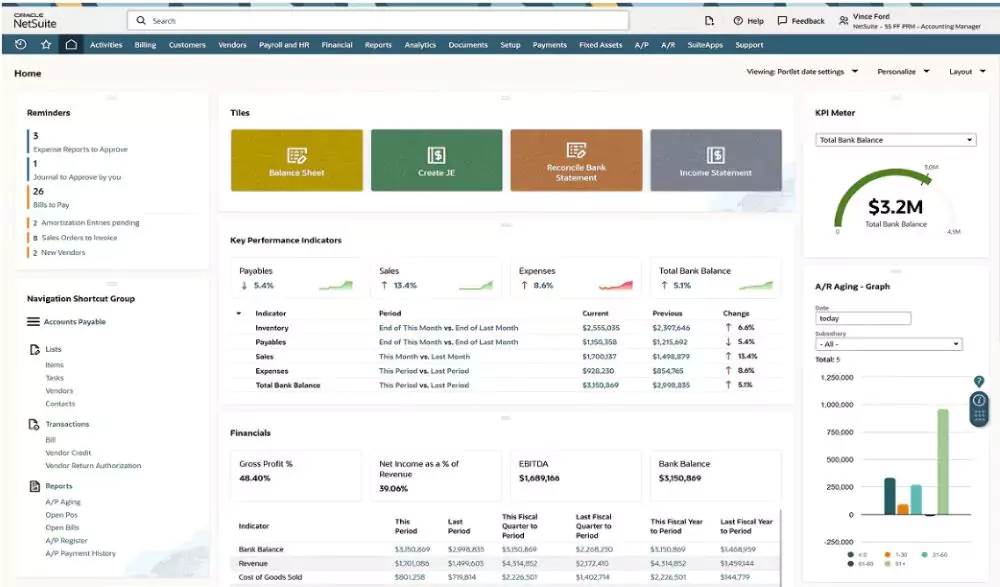
NetSuite is a cloud-based business management platform that combines enterprise resource planning, financial management, customer relationship management, procurement, reporting, and workflow automation in one system. Because it is delivered through the cloud, users can access current data from anywhere while NetSuite manages system updates, security, and infrastructure.
For family offices, NetSuite OneWorld supports multi-company accounting across complex family office structures. It allows each entity to maintain separate financial records while supporting intercompany activity, automated consolidation, shared reporting, and centralized financial oversight.
Why are family offices adopting NetSuite?
Family offices are adopting NetSuite to replace entry-level accounting systems and disconnected tools that cannot support growing financial complexity. As they add trusts, partnerships, investments, properties, owners, and employees, data often becomes spread across accounting platforms, spreadsheets, bank portals, investment systems, and document repositories. NetSuite provides a cloud-based financial system of record that connects multi-entity accounting, consolidation, automation, and reporting while integrating with specialized family office applications.
- Growth in the number of trusts, partnerships, holding companies, and other legal entities
- Time-consuming consolidations built from spreadsheets and exported reports
- Separate charts of accounts and inconsistent processes across entities
- Complex intercompany transactions, loans, charges, and outstanding balances
- Shared expenses that must be allocated across entities, investments, or owners
- Limited visibility into cash, financial performance, and investment-related activity
- Manual invoice approvals, journal entries, reconciliations, and reporting processes
- Increasing security, governance, access control, and audit requirements
- Dependence on employees who understand fragmented legacy systems and workarounds
- Need to connect accounting data with banks, custodians, tax systems, and investment platforms
From our experience implementing NetSuite for complex multi-entity organizations, the greatest improvements often come from standardizing financial processes before automation begins. Family offices that align entity structures, reporting requirements, ownership records, and approval workflows early in the project typically experience smoother implementations and gain value from NetSuite much faster after go-live.

See NetSuite in action for your family office
Get a personalized demo to see how NetSuite helps family offices manage multiple entities, automate financial processes, allocate shared expenses, and improve reporting. Our experts will review your requirements and show how NetSuite can support your family office structure.
Key benefits of NetSuite for family offices
NetSuite helps family offices replace fragmented financial processes with a connected, scalable platform. By bringing multi-entity accounting, consolidation, automation, reporting, and analytics together, NetSuite can reduce administrative work and give authorized stakeholders a clearer view of financial activity.
- Centralized financial data: Manage multiple legal entities in one system while maintaining separate legal and financial records.
- Faster consolidation and close: Automate currency conversion, intercompany eliminations, and consolidated reporting instead of combining data from separate accounting systems and spreadsheets.
- Simplified shared expense allocation: Distribute recurring costs across entities using defined allocation rules. More complex owner-level allocations can be supported through custom family office functionality.
- Greater financial and ownership visibility: Analyze activity by entity, investment, asset, owner, or family branch using reports, custom segments, and tailored records.
- Stronger financial controls: Standardize permissions, approval workflows, account structures, and audit trails across the family office.
- Less manual accounting work: Automate recurring entries, intercompany activity, approvals, reconciliations, allocations, and reporting so finance teams can focus on analysis.
- Timely reporting and analysis: Provide finance leaders, family members, and authorized advisors with role-based dashboards, key performance indicators, and reports suited to their responsibilities.
- Scalable and connected technology: Add entities, users, integrations, reports, and custom processes as the family office grows without rebuilding its financial system.
- AI-powered insights: Use available NetSuite AI and analytics capabilities to summarize data, identify trends, support reconciliations, and accelerate financial analysis.
Core NetSuite features for family office management
NetSuite provides a connected financial platform that family offices can configure around their legal entities, accounting structure, approval requirements, and reporting needs. NetSuite OneWorld supports multiple companies in one environment while preserving separate financial records for each trust, partnership, holding company, foundation, operating business, or investment entity.
Family offices can expand the core platform with additional NetSuite modules, integrations, custom records, and workflows. The final solution may vary based on the number of entities, ownership structure, investment mix, currencies, reporting requirements, and specialized systems already in use.
Core NetSuite features for family offices include:
- Multi-entity accounting: Manage financial activity across multiple trusts, partnerships, holding companies, foundations, and operating businesses. Each entity can maintain its own records while using consistent accounting processes.
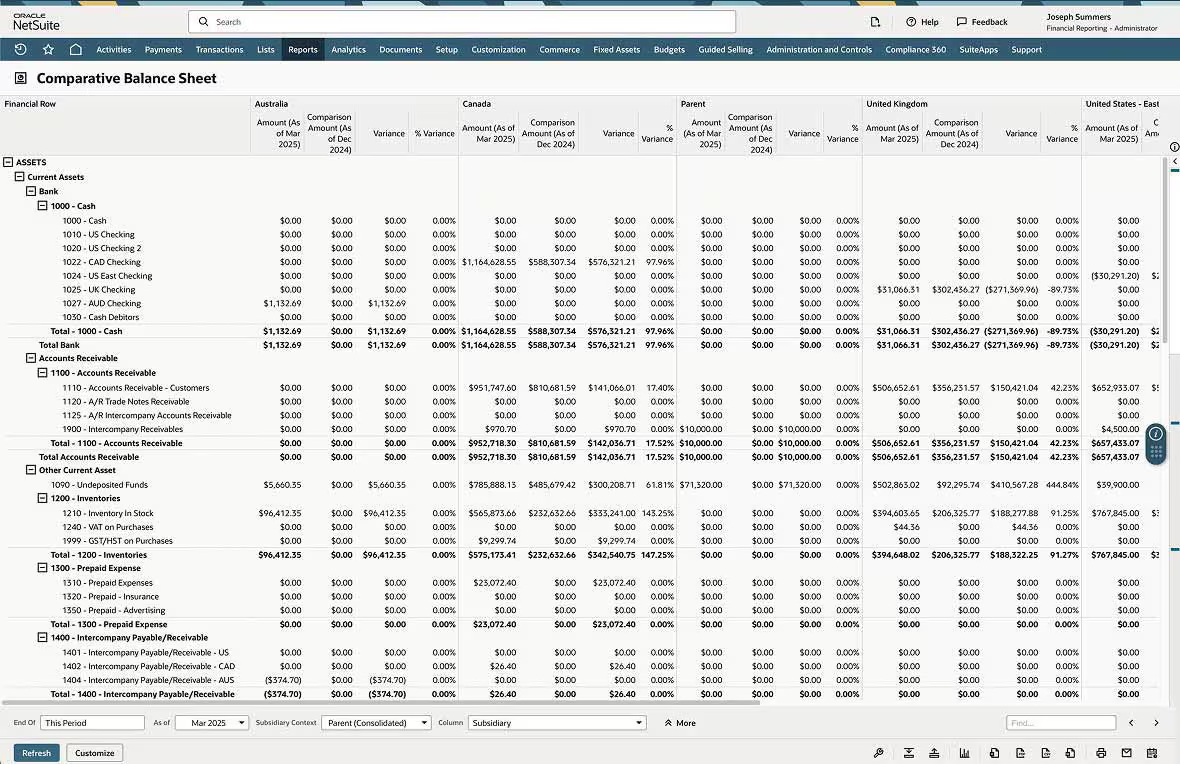
- Financial consolidation: Produce entity-level and consolidated financial statements from one financial database. NetSuite can automate currency conversion and intercompany eliminations to reduce spreadsheet-based consolidation.
- Intercompany accounting: Record charges, loans, transfers, and other transactions between related entities. Automated balancing and elimination processes help keep intercompany accounts accurate.
- Shared expense allocation: Distribute legal fees, payroll, insurance, technology, and other common costs across entities using defined allocation schedules and financial dimensions. More complex owner-level allocations can be managed through custom functionality.
- Multi-book accounting: Maintain different accounting treatments for management, tax, statutory, or other reporting needs. Transactions can be recorded once and reflected across multiple accounting books based on configured rules.
- Financial reporting and dashboards: Create financial statements, saved searches, SuiteAnalytics Workbooks, key performance indicators, and role-based dashboards. Reports can be organized by entity, asset, investment, owner, family branch, or another reporting dimension.
- Accounts payable and workflow automation: Capture vendor bills, route transactions for approval, schedule payments, and retain supporting documents. SuiteFlow can also automate alerts, approval routing, exceptions, and recurring processes.
- Planning and budgeting: Connect current financial results with budgets, forecasts, and scenario models. NetSuite Planning and Budgeting is an optional module that helps teams reduce spreadsheet-based planning and compare actual performance with expectations.
- Fixed asset management: Track asset purchases, depreciation, transfers, lease information, and disposals. NetSuite Fixed Assets Management is an optional module that supports the full accounting lifecycle of family office assets.
- Security and financial controls: Use role-based permissions, approval workflows, audit trails, and subsidiary restrictions to control sensitive information. Access can be tailored to the responsibilities of employees, family members, and external advisors.
- Integration and customization: Connect NetSuite with banks, custodians, portfolio systems, payroll providers, tax applications, CRM platforms, and document repositories. SuiteCloud tools also support custom records, business logic, APIs, and specialized family office processes.
- AI-powered capabilities: Use available NetSuite AI tools to capture invoice data, identify trends, support planning, monitor the financial close, and generate insights. Features and availability depend on the modules, account configuration, and NetSuite release in use.
Extend NetSuite with Family Office Allocation Manager
Rand Group’s NetSuite Family Office Allocation Manager extends the platform for family offices with shared assets, expenses, investments, and ownership structures. The application applies defined ownership rules to financial activity, helping teams replace manual allocation spreadsheets with a repeatable process inside NetSuite.
Family Office Allocation Manager can help you:
- Maintain detailed ownership records: Track ownership percentages by family member, trust, entity, asset, investment, or shared venture.
- Allocate shared financial activity: Distribute income, expenses, fees, capital contributions, and distributions based on defined ownership or participation rules.
- Manage ownership changes: Apply effective dates to ownership percentages so calculations reflect changes over time.
- Automate owner-level calculations: Calculate each owner’s share of financial activity without rebuilding formulas in spreadsheets.
- Create supporting records: Produce clear allocation details and statements that show how amounts were calculated and assigned.
- Improve transparency and control: Maintain calculation history, approvals, adjustments, and supporting data within the NetSuite environment.
How family offices use NetSuite in real-world operations
Family offices use NetSuite to connect financial processes that might otherwise require separate accounting systems, spreadsheets, exports, and manual reconciliations. The platform can support daily accounting while improving visibility across entities, owners, investments, shared expenses, and related financial activity.
Consolidate trusts, partnerships, and operating entities
Family offices may manage dozens of trusts, partnerships, holding companies, foundations, and operating businesses. When each entity uses a separate accounting file or chart of accounts, producing a complete financial view can take days or weeks.
NetSuite OneWorld allows family offices to manage multiple entities within a structured subsidiary hierarchy. Each entity can maintain its own transactions and financial statements while authorized users view consolidated results at different levels of the organization.
- Manage multiple entities in one NetSuite account
- Maintain separate financial records for each entity
- Standardize accounting structures and processes
- Produce entity-level and consolidated financial statements
- Automate currency conversion and intercompany eliminations
- Drill from consolidated totals into supporting transactions

Manage shared ownership with Family Office Allocation Manager
Family offices often manage investments, properties, and operating businesses owned by multiple family members, trusts, or legal entities. Shared expenses such as payroll, legal fees, insurance, advisory services, and administrative costs may also need to be divided among participating owners or entities.
Rand Group’s NetSuite Family Office Allocation Manager applies defined ownership and allocation rules directly to financial activity in NetSuite. The application replaces manual spreadsheets with a structured process for calculating, documenting, and reporting each participant’s share.
- Maintain ownership percentages by entity, asset, investment, or owner
- Apply effective dates when ownership structures change
- Allocate shared income, expenses, fees, gains, and losses
- Use ownership, usage, headcount, or other defined allocation drivers
- Calculate charges and credits for each participant
- Track capital contributions and distributions
- Produce supporting allocation records and statements
- Maintain a clear history of calculations and adjustments
Connect investment and portfolio data
Family offices often use custodians, brokerages, portfolio management systems, and specialized investment applications. Moving all investment processes into an ERP may not be practical, especially when dedicated systems perform complex performance and portfolio calculations.
NetSuite can serve as the financial system of record while connecting to these specialized platforms. Imported transactions and summarized results can support accounting, reconciliation, and reporting across the wider family office structure.
- Import transactions from investment and banking systems
- Record investment income, fees, gains, and losses
- Track activity by entity, asset, fund, or investment
- Compare management, tax, and fair-value information
- Reconcile financial records with custodian data
- Connect investment activity with consolidated reporting

Automate intercompany activity and settlements
Family offices frequently move money or charge expenses between related entities. Common examples include intercompany loans, management fees, shared services, reimbursements, and payments made by one entity on behalf of another.
NetSuite can record intercompany transactions and help generate the balancing and elimination entries required for consolidated reporting. This reduces manual journal entries and makes outstanding balances easier to review.
- Record due-to and due-from balances
- Process cross-entity charges and reimbursements
- Track loans between related entities
- Allocate shared service and management fees
- Automate related elimination entries
- Review open intercompany balances
- Reduce out-of-balance transactions

Improve accounts payable and approval controls
Invoices may relate to different properties, investments, entities, family members, or areas of responsibility. Without a connected process, finance teams may rely on email, paper signatures, and spreadsheets to determine how each bill should be coded and approved.
NetSuite can capture vendor bills and route them through approval workflows based on factors such as entity, amount, expense type, or approver. Supporting documents and approval history remain connected to the transaction for easier review.
- Assign bills to the correct entity and account
- Route approvals based on defined business rules
- Require additional review for sensitive payments
- Identify purchase order and invoice exceptions
- Retain invoices and supporting documents
- Track who reviewed and approved each transaction
- Strengthen segregation of duties

Create reports for different stakeholders
Family members, executives, controllers, trustees, investment teams, tax advisors, and auditors need different levels of financial information. A family member may need a high-level summary, while a controller may need transaction-level detail.
SuiteAnalytics allows family offices to create reports, saved searches, workbooks, key performance indicators, and role-based dashboards. NetSuite Analytics Warehouse can provide broader analysis by bringing NetSuite and external data into one reporting environment.
- Produce consolidated and entity-level financial statements
- Monitor cash, liquidity, and upcoming obligations
- Review budgets against actual results
- Analyze intercompany balances and shared expenses
- Report on owner contributions and distributions
- Track investment-related income and expenses
- Tailor dashboards to each user’s responsibilities
- Limit access to authorized entities and information
Use AI to support analysis and the financial close
Family office finance teams spend significant time reviewing financial changes, researching exceptions, completing reconciliations, and preparing explanations for family members and advisors. NetSuite’s embedded AI capabilities can help users summarize financial data, identify trends, match transactions, and monitor close activities.
NetSuite Next expands these capabilities through Ask Oracle, a conversational AI assistant that lets users search, analyze, and take supported actions using natural language. NetSuite AI agents can assist with multi-step financial workflows, while the NetSuite AI Connector Service supports Model Context Protocol (MCP), allowing approved external AI assistants to securely interact with NetSuite reports, saved searches, records, and queries. Access remains subject to existing NetSuite roles, permissions, and business controls.
- Ask questions about NetSuite financial data in natural language
- Generate reports, summaries, narratives, and visualizations
- Identify trends, anomalies, and material financial changes
- Support transaction matching and account reconciliation
- Monitor close tasks, exceptions, and outstanding work
- Use AI agents to assist with supported multi-step processes
- Connect approved external AI assistants through the NetSuite MCP server
- Access reports, saved searches, records, and SuiteQL data through MCP
- Apply existing user permissions and approval requirements
- Keep finance teams responsible for review and final decisions


Get NetSuite for your family office
If your family office is managing entities, shared expenses, ownership allocations, and reporting across disconnected systems, Rand Group can help you evaluate and implement NetSuite. Our team will review your structure, workflows, integrations, and reporting needs to design a practical NetSuite solution for your family office.
Rand Group is your partner for NetSuite implementation and optimization
NetSuite can provide a strong foundation for family office accounting, but the platform must be designed around your legal entities, ownership structure, reporting needs, integrations, and security requirements. A successful implementation should improve how the family office operates rather than simply recreate legacy processes in a new system.
Rand Group has more than two decades of experience implementing ERP solutions and supporting complex financial organizations. Our team brings hands-on experience with family office operations, multi-entity accounting, investment structures, ownership allocations, and specialized reporting requirements.
Across more than 1,200 clients and 3,000 successful engagements, Rand Group has built a 90% client retention rate. This reflects our focus on long-term partnerships, practical solutions, and continued support after go-live.
- NetSuite implementation: We design and implement NetSuite around your family office structure, workflows, reporting requirements, and long-term goals. Our team manages planning, configuration, data migration, testing, training, and deployment to create a scalable financial foundation.
- Customization and development: Standard NetSuite functionality may not address every ownership, allocation, or reporting requirement. Rand Group configures workflows, dashboards, reports, custom records, and applications such as NetSuite Family Office Allocation Manager to support more complex processes.
- Integration with family office systems: We connect NetSuite with banks, custodians, portfolio management platforms, tax applications, payroll providers, CRM systems, and document repositories. These integrations reduce manual data entry and help create a more complete view of financial activity.
- Ongoing support and optimization: Our team provides troubleshooting, training, enhancements, reporting support, and system reviews after implementation. As your family office adds entities, users, investments, or new requirements, we help NetSuite continue to support the organization.
Case study: How Henry Resources unified family office accounting with NetSuite
Henry Resources is a family office that manages a complex portfolio across 30 to 40 entities. Rand Group replaced three disconnected accounting systems, separate charts of accounts, spreadsheets, and manual consolidation processes with one NetSuite platform designed for multi-entity financial management.
The solution included our custom add-on application to support complex ownership and allocation requirements. Henry Resources now saves about 40 hours each month on consolidation, has unified 30 to 40 charts of accounts into one, and manages accounting, reporting, approvals, and investment-related financial data in a single cloud ERP.
Working closely with the Henry Resources finance team, Rand Group designed a unified chart of accounts and customized ownership allocation processes that reflected how the family office actually operated rather than forcing staff to adapt to generic ERP workflows.
To learn more about the challenges, solution, and results, read the full Henry Resources case study.
What our clients say
“Rand Group felt like part of our team, not a group that was there just to get the project done and move on. We wanted to build the environment the right way the first time, and they helped us customize NetSuite for the oil and gas requirements that were important to us.”
– Laza Assany, Controller, Henry Resources LLC
“For the first time, our cash, tax, and fair-market-value books live in one database instead of scattered across spreadsheets. I can show management exactly what an investment is worth versus its tax basis, side by side—and that kind of visibility simply wasn’t possible before.”
– Laza Assany, Controller, Henry Resources LLC
Key takeaways
- NetSuite gives family offices one platform for multi-entity accounting, consolidation, reporting, and financial controls.
- NetSuite OneWorld supports trusts, partnerships, holding companies, foundations, operating businesses, and investment entities.
- Automation can reduce manual consolidation, intercompany accounting, approval, reconciliation, and reporting work.
- NetSuite can connect with banks, custodians, portfolio systems, tax applications, and other family office tools.
- Family Office Allocation Manager automates ownership-based allocations for shared income, expenses, contributions, and distributions.
- Role-based dashboards provide relevant financial information to family members, finance teams, advisors, trustees, and auditors.
- NetSuite Next, AI agents, and MCP connectivity support natural-language reporting, analysis, reconciliation, and close management.
Frequently asked questions about NetSuite for family offices
Is NetSuite a good ERP system for family offices?
Yes, NetSuite is a strong ERP option for family offices that manage multiple entities, complex financial processes, shared expenses, and consolidated reporting. NetSuite OneWorld provides multi-entity accounting, intercompany processing, financial consolidation, workflows, reporting, and integration capabilities within one cloud platform.
How does NetSuite manage multiple family office entities?
NetSuite OneWorld manages multiple trusts, partnerships, holding companies, foundations, operating businesses, and investment entities within one account. Each entity can maintain separate financial records while authorized users produce entity-level and consolidated reports.
Can NetSuite consolidate financial statements across trusts and legal entities?
Yes, NetSuite can produce consolidated financial statements across a structured entity hierarchy. It can also automate currency conversion, intercompany balancing, and elimination entries to reduce spreadsheet-based consolidation.
How does NetSuite allocate shared family office expenses?
NetSuite can allocate shared costs across entities using defined schedules, accounts, and financial dimensions. More complex allocations based on ownership, usage, assets, or other family office rules may require configuration or a specialized application.
Can NetSuite track family ownership percentages and allocations?
NetSuite can support ownership tracking and allocation processes through custom records, reporting, and extended functionality. Rand Group’s NetSuite Family Office Allocation Manager tracks ownership percentages and allocates income, expenses, contributions, distributions, gains, and losses.
Can NetSuite connect with investment and portfolio management systems?
Yes, NetSuite can integrate with custodians, brokerages, banks, portfolio platforms, tax applications, and other family office systems. NetSuite can serve as the financial system of record while specialized applications continue to manage portfolio performance and investment operations.
Can NetSuite replace a family office portfolio accounting platform?
NetSuite may not replace every specialized portfolio accounting or investment management platform. Many family offices use NetSuite for accounting, consolidation, controls, and reporting while integrating it with systems that manage investment performance, custody, and investor data.
What financial reports can family offices create in NetSuite?
Family offices can create consolidated financial statements, entity-level reports, cash and liquidity reports, intercompany reports, budget-versus-actual reports, and investment-related financial reports. SuiteAnalytics also supports saved searches, workbooks, KPIs, and role-based dashboards.
How can family offices use AI in NetSuite?
Family offices can use NetSuite AI to summarize financial information, identify trends, support transaction matching, monitor close activities, and reduce routine analysis work. NetSuite Next, AI agents, and MCP connectivity also support natural-language access to authorized NetSuite data and workflows.
Why should family offices work with a NetSuite implementation partner?
An experienced NetSuite partner can design the system around the family office’s entity structure, ownership model, integrations, controls, and reporting needs. The partner can also manage data migration, configuration, customization, testing, training, and post-go-live support.
Modernize family office accounting with NetSuite
Family offices need financial systems that can support complex entity structures, ownership models, reporting needs, and governance requirements. NetSuite gives family offices a scalable platform to centralize accounting, automate consolidation, manage shared expenses, improve approval workflows, and gain clearer visibility into financial activity.
Rand Group helps family offices design, implement, customize, and support NetSuite based on their structure, processes, integrations, and reporting goals. Whether you are replacing spreadsheets, moving off disconnected accounting systems, or building a more scalable financial platform, our team can help you create a practical path forward. Contact us today to discuss how NetSuite can support your family office.