ERP implementation methodology: Phases, deliverables, roles, and governance

ERP implementations affect far more than software. They change business processes, data, reporting, responsibilities, and how employees complete day-to-day work. A structured ERP implementation methodology helps organize that change and gives the project team a clear path from requirements through go-live and adoption.
This guide explains the major ERP implementation phases, deliverables, roles, governance practices, and delivery approaches that shape a successful project. It also shows how to choose an implementation approach that fits your business requirements, internal resources, and project complexity.
At a glance
An ERP implementation methodology provides the repeatable framework used to plan, design, build, test, deploy, and adopt a new ERP system. Effective methodologies define project phases, deliverables, responsibilities, governance, and readiness criteria while allowing the delivery approach to reflect the organization’s requirements and resources. Rand Group’s methodology uses five primary phases—Envision & Design, Build, Test, Deploy, and User Adoption—and supports Traditional, Hybrid, and Rapid Activation implementation approaches.
What is an ERP implementation methodology?
An ERP implementation methodology is the structured approach used to move an organization from its current systems and processes to a new ERP environment. It defines how the project progresses, what work takes place at each stage, who participates, and how the solution is designed, tested, deployed, and adopted.
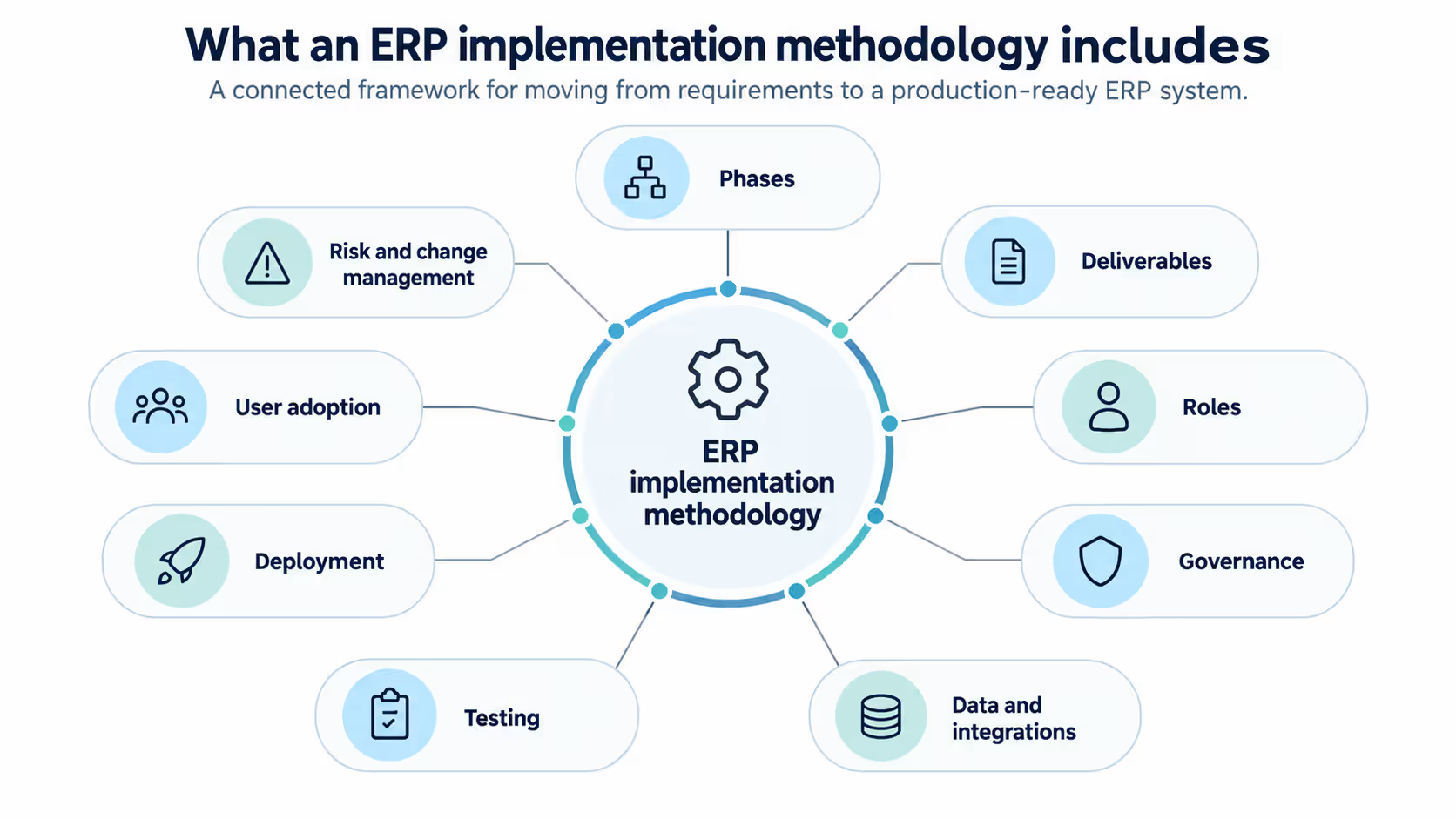
A well-defined ERP implementation methodology typically establishes:
- Project phases and milestones
- Required activities and deliverables
- Roles and responsibilities
- Requirements and solution design processes
- Data migration and integration activities
- Testing and validation requirements
- Training and user adoption activities
- Deployment and cutover processes
- Project governance and approvals
- Risk, issue, and change management
ERP implementation methodologies vary by software platform, implementation partner, and project complexity. The terminology and number of phases may differ, but the methodology should provide a clear and repeatable framework for moving from business requirements to a validated, production-ready ERP system.
The methodology should also be proven through real implementation experience. An experienced ERP implementation partner can refine its approach over time based on what works across different projects, industries, and levels of complexity. This helps create a methodology that is structured enough to manage risk while remaining flexible enough to meet the needs of each organization.
ERP implementation methodology vs. ERP implementation plan
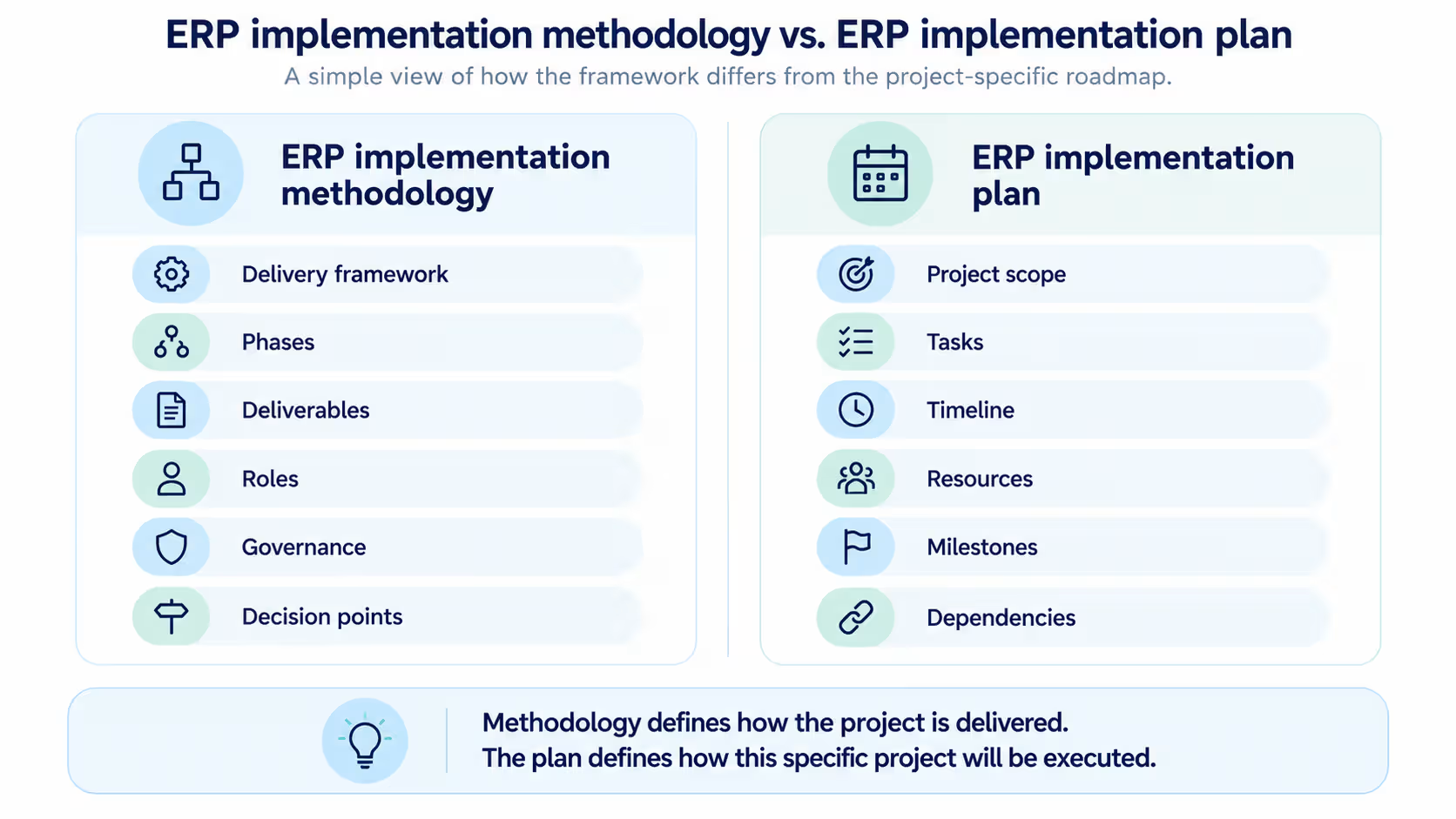
An ERP implementation methodology and an ERP implementation plan are closely related, but they serve different purposes.
The ERP implementation methodology defines how the project should be delivered. It provides the overall framework for the phases, activities, deliverables, responsibilities, controls, and decision points that guide an ERP implementation.
The ERP implementation plan applies that methodology to a specific project. It defines the actual scope, schedule, resources, tasks, dependencies, milestones, and deadlines required to move that implementation forward.
In simple terms, the methodology provides the repeatable framework, while the implementation plan turns that framework into a project-specific roadmap.
For example, the methodology may require system testing before deployment. The implementation plan specifies who will perform the testing, which business scenarios must be validated, when testing will occur, how defects will be addressed, and what approval is required before the project can move to deployment.
What are the phases of an ERP implementation?
ERP implementation phases are the major stages used to organize the project from initial requirements through deployment and user adoption. Each phase has a specific objective, set of activities, and expected outcomes. Together, the phases create a clear progression for the project and give the team defined points to review progress, confirm decisions, and prepare for the next stage.
The number, names, and scope of ERP implementation phases vary by software platform and implementation partner. Rand Group’s methodology, developed through more than two decades of ERP implementation experience, uses five primary phases: Envision & Design, Build, Test, Deploy, and User Adoption.
1. Envision & Design
The Envision & Design phase defines what the ERP implementation needs to accomplish and how the new system should support the business. The project team reviews current processes, defines future-state requirements, and identifies the functional and technical needs that will shape the solution. This phase creates the foundation for the work that follows and helps prevent extensive configuration from beginning before the most important business decisions are understood.
Key activities include:
- Define business goals and success criteria.
- Confirm project scope and priorities.
- Gather and refine business requirements.
- Map current-state and future-state processes.
- Identify reporting, security, data, and integration requirements.
- Develop the solution design and architecture.
- Identify major risks, assumptions, and dependencies.
- Establish the project structure and decision-making process.
2. Build
The Build phase turns the approved design into a working ERP environment. The implementation team configures the system, develops approved extensions or customizations, builds integrations, and prepares the components needed to support the future-state processes. Regular reviews with business stakeholders help confirm that the solution remains aligned with the requirements established during Envision & Design.
Key activities include:
- Configure ERP modules and business processes.
- Set up workflows, roles, permissions, and security.
- Develop approved customizations or extensions.
- Build required system integrations.
- Create reports and dashboards.
- Prepare data mappings and migration processes.
- Complete initial data conversion cycles.
- Demonstrate configured processes and gather business feedback.
3. Test
The Test phase validates that the ERP solution works correctly and can support the business processes required for go-live. Testing should cover more than individual features because ERP transactions often move across departments, integrations, workflows, reports, and financial records. Business users also participate in user acceptance testing to confirm that the configured solution supports realistic day-to-day scenarios.
Key activities include:
- Complete functional testing.
- Test end-to-end business processes.
- Validate system integrations and workflows.
- Test user roles and security.
- Reconcile and validate migrated data.
- Validate reports and business outputs.
- Conduct user acceptance testing.
- Track defects, apply corrections, and retest affected processes.
4. Deploy
The Deploy phase moves the approved ERP solution into the production environment. The focus shifts from configuring and testing the system to managing a controlled transition from the existing environment to the new ERP system. The project team follows the cutover plan, completes final migration activities, validates production, and confirms that the organization is ready to begin operating in the new system.
Key activities include:
- Finalize and rehearse the cutover plan.
- Complete final data migration and reconciliation.
- Configure and validate the production environment.
- Activate required integrations.
- Provision users and confirm system access.
- Complete production validation.
- Conduct the go/no-go review.
- Support users and resolve issues during go-live.
5. User Adoption
The User Adoption phase helps employees successfully transition to the new ERP system and the processes that come with it. Although it appears as the final phase, adoption work begins well before deployment through communication, training preparation, user involvement, and hands-on exposure to the system. After go-live, continued support and feedback help users become comfortable with the new environment and identify opportunities for further improvement.
Key activities include:
- Deliver role-based ERP training.
- Provide process documentation and user guides.
- Prepare super users and internal support resources.
- Communicate process and responsibility changes.
- Provide hands-on practice before go-live.
- Support users after deployment.
- Monitor adoption and recurring questions.
- Gather feedback and identify future training or optimization needs.
ERP implementation deliverables by phase
ERP implementation deliverables are the tangible outputs produced during each phase of the project. They show that required work has been completed, reviewed, and documented before the implementation moves forward.
The exact deliverables vary based on the ERP system, project scope, implementation approach, and division of responsibilities between the organization and its implementation partner. Rand Group recommends tying major deliverables to the decisions and outcomes required in each phase, rather than creating documentation for its own sake.
Deliverables should support a clear project decision. A solution design confirms what will be built. Test results show whether the solution works as expected. A go-live checklist helps determine whether the organization is ready to move into production.
The deliverables should also stay connected as the ERP implementation progresses. A requirement approved during Envision & Design should appear in the configured solution, be validated during testing, and be reflected in the appropriate training and process documentation.
Define acceptance criteria for major deliverables
A deliverable is not complete simply because a document, configuration, or test result exists. The project team should define what must happen before each major deliverable can be accepted.
For important ERP implementation deliverables, define:
- Owner: Who is responsible for producing or coordinating the deliverable?
- Reviewer: Who needs to review the work?
- Acceptance criteria: What conditions must be met for the deliverable to be considered complete?
- Approver: Who has authority to formally accept it?
- Due date: When is the deliverable required?
- Dependencies: Which other tasks, decisions, or deliverables affect completion?
Clear acceptance criteria reduce ambiguity between the business and implementation team. They also help prevent a common problem where one group believes a phase is complete while another believes important work is still outstanding.

Start your ERP implementation with Rand Group
Move from planning to execution with Rand Group’s proven ERP implementation methodology. Our team can help you structure, manage, and deliver your ERP implementation from requirements through go-live and adoption.
Who is involved in an ERP implementation?
An ERP implementation requires participation from both the organization and its implementation partner. The partner brings ERP expertise, methodology, and delivery resources, while the business provides process knowledge, makes key decisions, validates the solution, and prepares users for change.
The exact team structure depends on the size and complexity of the project. Smaller implementations may have one person filling several roles, while larger projects may have dedicated functional, technical, data, and change management teams. What matters is that each major responsibility has a clear owner.
Key ERP implementation roles include:
- Executive sponsor: Provides executive support, reinforces project priorities, secures resources, and helps resolve major escalations.
- Project manager: Coordinates scope, schedule, budget, resources, dependencies, risks, and communication across the project team.
- Business process owners: Define requirements, make decisions for their functional areas, and approve future-state processes.
- Subject matter experts and key users: Provide detailed knowledge of current processes, validate requirements, participate in testing, and identify operational gaps.
- ERP implementation partner and solution architect: Translate business requirements into the overall solution design and guide configuration, development, integrations, testing, deployment, and other agreed implementation services.
- IT, data, and security teams: Support environments, integrations, data migration, access controls, technical dependencies, and production readiness.
- Change and training leads: Coordinate user communication, training, documentation, and readiness activities so employees understand how their work will change.
- End users: Participate in relevant testing and training, begin working in the new ERP system, and provide feedback after go-live.
Business process owners are especially important because the ERP system will affect how departments perform day-to-day work. Finance, operations, supply chain, sales, service, projects, and other affected functions need representatives with enough knowledge and authority to make timely decisions for their areas.
How should ERP implementation governance work?
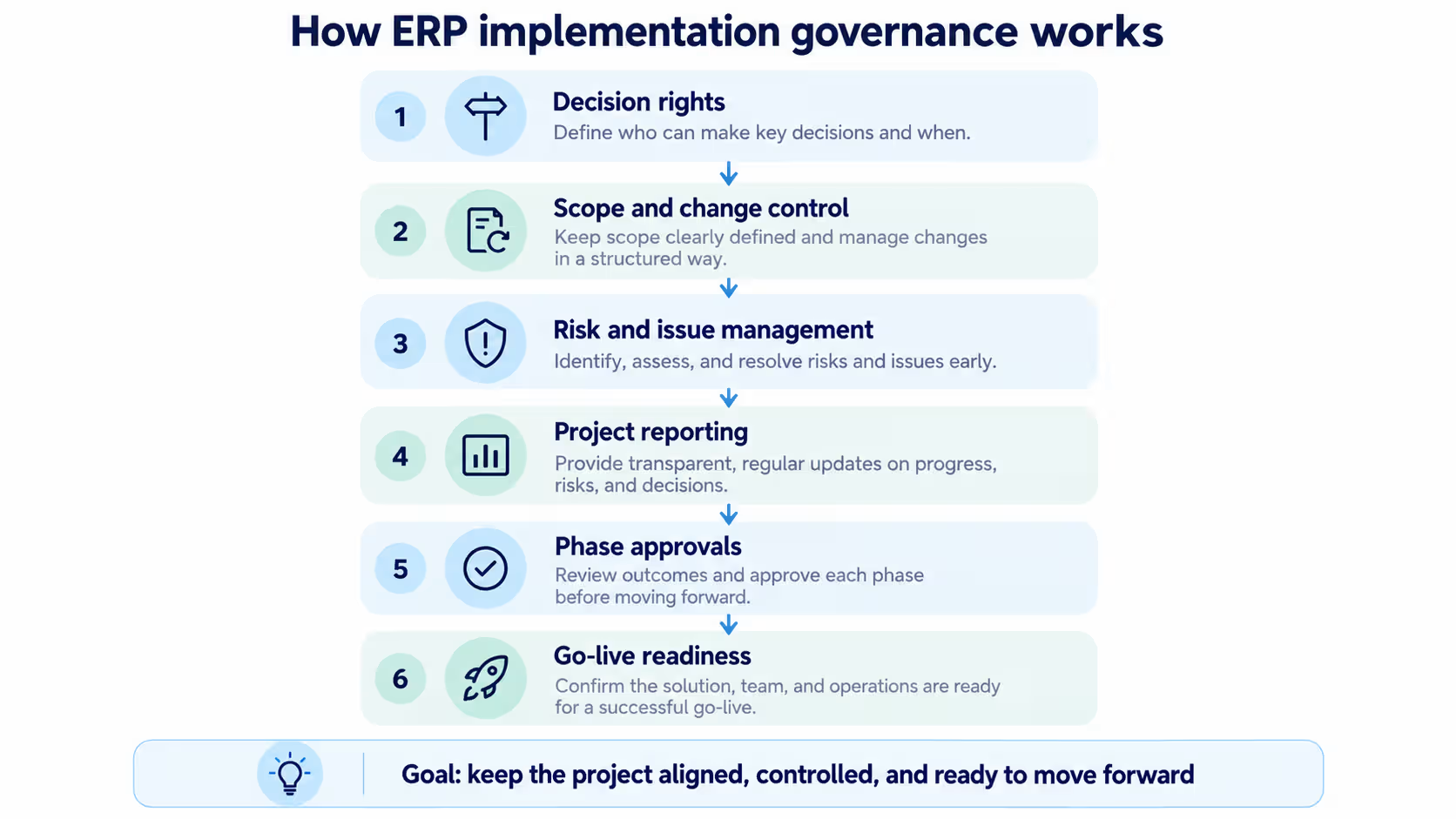
ERP implementation governance is the framework used to direct the project, assign decision authority, manage changes, address risks, and determine whether the implementation is ready to move forward. Strong governance keeps the project aligned with its business goals while giving the team a clear way to resolve issues and make decisions.
Rand Group recommends establishing the governance structure early in the ERP implementation. Day-to-day decisions should stay with project and workstream leaders when possible, while major decisions involving scope, budget, resources, or business risk should move to the appropriate sponsor or steering committee.
A practical ERP implementation governance model should address:
- Decision rights and escalation: Define who can approve process designs, solution decisions, spending, scope changes, and go-live. Create a clear escalation path when the project team cannot resolve an issue.
- Project leadership and oversight: Establish the roles of the executive sponsor, steering committee, project manager, and workstream leaders. Each level should understand which decisions it owns and when leadership involvement is required.
- Scope and change control: Document new requests and evaluate their impact before adding them to the project. Consider the effect on configuration, integrations, data, testing, training, budget, and timeline.
- Risk and issue management: Track risks that could affect the project and issues that are already creating an impact. Assign an owner, planned action, priority, and escalation point to each significant item.
- Roles and accountability: Make ownership visible for major activities, deliverables, and decisions. A RACI framework can help clarify who is responsible, accountable, consulted, and informed without sending every decision to senior leadership.
- Project reporting and meeting cadence: Establish regular project, workstream, steering committee, risk, testing, and readiness reviews as needed. Meetings should focus on decisions, dependencies, risks, and required actions rather than simply reporting completed activity.
- Phase and readiness approvals: Define what must be complete before the implementation moves forward. Major transitions may require approved designs, accepted deliverables, validated data, completed testing, or other readiness criteria.
Governance becomes especially important when new requirements emerge during implementation. If users request an additional workflow after the solution design has been approved, the team should evaluate whether it is required for go-live, can be handled with standard functionality, requires a formal scope change, or should move to a later optimization phase.
The same discipline should apply to go-live. The final decision should be based on ERP implementation readiness, not the target date alone. Critical processes should be validated, data should be reconciled, significant defects should be addressed, and users and support teams should be prepared before the system moves into production.
What are the different ERP implementation approaches?
An ERP implementation approach defines how the project will be delivered, including the level of implementation partner involvement, internal team responsibility, customization, and standardization. Not every ERP project requires the same delivery model. A complex transformation may need extensive partner support and solution design, while a more straightforward implementation may be able to use standard ERP processes and a narrower scope.
Rand Group uses three primary ERP implementation approaches to accommodate these differences:
- Traditional implementation: A comprehensive approach with significant implementation partner involvement across design, configuration, integrations, testing, deployment, and adoption. It is generally best suited for complex requirements or significant business change.
- Hybrid implementation: A shared delivery model in which Rand Group and the client divide defined implementation responsibilities based on internal skills, resources, and project needs.
- Rapid Activation implementation: A standardized approach that uses predefined processes, templates, and a focused scope to reduce implementation time and cost when business requirements align closely with standard ERP functionality.
The right approach depends on the ERP platform, business requirements, project complexity, internal resources, integrations, data needs, and desired timeline.
Traditional vs. Hybrid vs. Rapid Activation ERP implementation
Traditional, Hybrid, and Rapid Activation implementations follow the same goal: putting a reliable ERP system into productive use. The main differences are how much flexibility the project requires, how responsibilities are divided, and how closely the organization can align with standard ERP functionality.
These distinctions are guidelines rather than rigid rules. Discovery may show that a project initially considered for Rapid Activation requires a Hybrid or Traditional approach because of data, integrations, reporting, controls, or process complexity.
How do you choose the right ERP implementation approach?
Choosing an ERP implementation approach requires balancing what the business needs with what the organization and implementation partner can realistically deliver. Rand Group recommends selecting the least complex approach that can responsibly meet the required business outcomes rather than automatically choosing the fastest or most comprehensive option.
Consider the following factors:
- Business process complexity: More complex workflows, approvals, and operating models usually require a more comprehensive approach.
- Customization requirements: Greater reliance on custom workflows, extensions, or specialized functionality increases implementation effort.
- Integration requirements: Multiple or complex integrations often favor a Traditional or Hybrid approach.
- Data complexity: Poor data quality, multiple source systems, historical data, and multi-entity requirements can increase migration effort.
- Internal expertise and capacity: Hybrid and Rapid Activation models require internal teams to have both the skills and time to own assigned tasks.
- Desired timeline: Faster deployment is more realistic when requirements fit a standardized scope.
- Transformation goals: Broader process redesign, consolidation, or automation usually requires more planning and change management.
ERP implementation approach decision matrix
The following decision matrix provides a starting point for evaluating which ERP implementation approach may fit your organization. The final choice should still be confirmed through discovery, when the project team can evaluate requirements, resources, data, integrations, and business processes in greater detail.
The implementation approach should be selected after the project requirements are understood, not based on the approach name alone. A model that appears faster or less expensive at the start can create more risk if it does not provide enough structure, expertise, or resources for the actual complexity of the ERP implementation.
To learn more about how scope and complexity affect project timing, read our ERP implementation timeline guide.
Common ERP implementation methodology mistakes
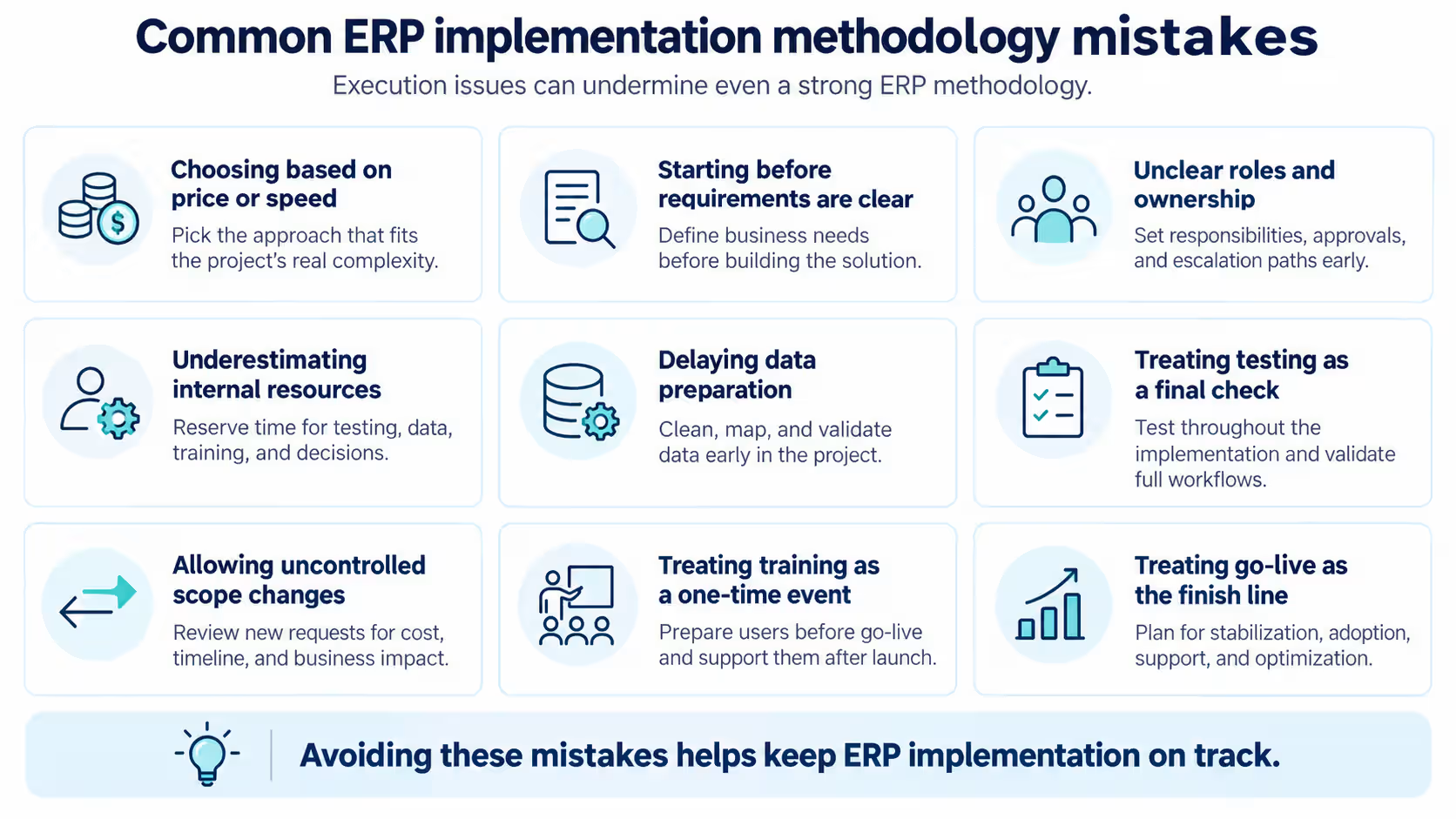
Even a strong ERP implementation methodology can fail when it is poorly executed. Common mistakes usually come from unclear requirements, weak ownership, unrealistic timelines, or treating important activities as one-time tasks.
- Choosing an approach based only on price or speed: Select the implementation model that fits the project’s actual complexity and requirements.
- Starting configuration before requirements are clear: Define business needs and priorities before building the solution.
- Failing to define roles and decision ownership: Make responsibilities, approvals, and escalation paths clear from the start.
- Underestimating internal resource needs: Reserve enough time for business users to support decisions, testing, data, and training.
- Delaying data preparation: Begin cleansing, mapping, and validating data early in the project.
- Treating testing as a final check: Test throughout the implementation and validate complete business processes.
- Allowing uncontrolled scope changes: Evaluate new requests for their impact on cost, timeline, testing, and business value.
- Treating training as a one-time event: Prepare users before go-live and continue support after deployment.
- Treating go-live as the finish line: Plan for stabilization, support, adoption, and ongoing optimization after launch.
To learn how to reduce these risks throughout the project, read our guide to ERP implementation best practices.
Plan your ERP implementation with Rand Group
The right ERP implementation partner brings more than software knowledge. Your partner should understand business and accounting processes, apply a tested implementation methodology, challenge unnecessary complexity, and provide the technical expertise needed to move from planning through go-live.
Rand Group has helped organizations use technology for business success since 2003. We have completed more than 3,000 engagements for more than 1,200 clients across North America and maintain a 90% client retention rate. Our consultants work across Microsoft Dynamics 365, Oracle NetSuite, and Sage, giving organizations access to broad ERP expertise from evaluation and implementation through long-term support.
Our ERP services include:
- ERP evaluation and selection: Our ERP evaluation and selection services help organizations define requirements, compare solutions, and select an ERP that fits their business and technology needs.
- ERP implementation: Our ERP implementation services turn approved requirements into a configured, tested, and production-ready ERP environment using an approach suited to the project.
- ERP configuration and development: Our ERP configuration and development services tailor workflows, reporting, automation, and approved extensions to support defined business requirements.
- Data migration and integrations: Our data migration and integrations services help organizations prepare, transfer, and validate ERP data while connecting the new system with other business applications.
- Training and user adoption: Our training and user adoption services prepare employees for new systems and processes through role-based training, documentation, and post-go-live guidance.
- Ongoing support and optimization: Our ongoing support and optimization services help resolve issues, improve processes, enable new functionality, and adapt the ERP system as business needs change.
ERP implementation success stories
Redpoint Resolutions goes live with Dynamics 365 Business Central in six weeks
Redpoint Resolutions needed to replace FinancialForce within a limited timeline and budget. Rand Group used its proven Rapid Activation implementation methodology to keep the project focused on essential financial requirements, standard functionality, testing, and user preparation. Redpoint implemented Dynamics 365 Business Central in just six weeks, finishing approximately two weeks ahead of the original timeline.
To learn more, read the Redpoint Resolutions case study.
Henry Resources consolidates three legacy systems with NetSuite
Henry Resources needed to replace QuickBooks, Wolfepak, Excalibur, and manual reporting processes with a scalable ERP environment. Rand Group applied its proven implementation methodology to guide requirements, configuration, data migration, testing, custom joint interest billing development, and user preparation before deploying NetSuite. The new system automated multi-entity consolidation across approximately 30–40 entities and helped the accounting team save about one week of time previously spent preparing consolidated financial information.
To learn more, read the Henry Resources case study.
PMC reduces accounting and reporting time with Sage Intacct
Plantation Management Company needed to replace a fragmented accounting environment spanning American Health Tech and QuickBooks across roughly 30 entities. Rand Group used its proven ERP implementation methodology to design and deploy Sage Intacct, establish multi-entity accounting and per-patient-day reporting, integrate PointClickCare and UKG, and prepare PMC’s team to manage the system independently. Following implementation, PMC reduced accounting input time by at least 50% and cut the time required to produce its income statement with per-patient-day reporting by approximately 50%.
To learn more, read the Plantation Management Company case study
What our clients say about us
“There’s a deep level of knowledge at Rand Group. The team was attentive, well organized, and the entire process was clearly planned from the start.”
— Sam Rentz, Corporate Controller, Dairy Products Inc.
“Rand Group didn’t just implement a system—they helped us rethink our business processes. The team went beyond a ‘canned solution’ and worked closely with us to develop practical, customized solutions.”
— Jeff Nelson, Director, Sapphire Gas Solutions
“Rand Group has been top-notch—professional, responsive, and very proactive. You can tell their internal processes are really sound. We come up with ideas, and they help us figure out what will actually work in the system, whether it’s configuration, reporting, or technical support.”
— Derek Atwood, Subs for Pools
Key takeaways
- An ERP implementation methodology provides a repeatable framework for moving from business requirements to a production-ready ERP system.
- An ERP implementation methodology defines how projects are delivered, while the implementation plan defines the specific scope, tasks, resources, and schedule.
- Rand Group’s ERP implementation methodology follows five phases: Envision & Design, Build, Test, Deploy, and User Adoption.
- Clear deliverables, acceptance criteria, roles, and governance help control risk and determine when the project is ready to move forward.
- The right ERP implementation approach depends on business complexity, customization, integrations, data, internal resources, and timeline.
- ERP implementation success extends beyond go-live to user adoption, support, and ongoing system optimization.
Frequently asked questions
What is an ERP implementation methodology?
An ERP implementation methodology is a structured framework for moving an organization from its current systems and processes to a new ERP environment. It defines the phases, activities, deliverables, responsibilities, governance, testing, deployment, and user adoption required throughout the project.
What are the main phases of an ERP implementation?
Rand Group’s ERP implementation methodology uses five primary phases: Envision & Design, Build, Test, Deploy, and User Adoption. The exact number and names of ERP implementation phases can vary by implementation partner and project.
What is the difference between an ERP implementation methodology and an implementation plan?
An ERP implementation methodology defines how ERP projects are delivered, while an ERP implementation plan applies that methodology to a specific project. The plan includes the actual scope, tasks, resources, schedule, dependencies, milestones, and deadlines.
What are the key deliverables in an ERP implementation?
Common ERP implementation deliverables include business requirements, process maps, solution designs, configured ERP functionality, integrations, migrated data, test results, training materials, cutover plans, and go-live approvals. Each major deliverable should have defined ownership and acceptance criteria.
Who should be involved in an ERP implementation?
An ERP implementation typically involves an executive sponsor, project manager, business process owners, subject matter experts, key users, IT and data teams, change and training resources, end users, and the ERP implementation partner. The exact team structure depends on the size and complexity of the project.
What is ERP implementation governance?
ERP implementation governance defines how decisions are made, responsibilities are assigned, scope changes are controlled, risks are managed, and project readiness is approved. Effective governance also establishes escalation paths and determines who has authority to approve major decisions and go-live.
How do you choose the right ERP implementation approach?
Choose an ERP implementation approach based on business complexity, customization, integrations, data requirements, internal resources, transformation goals, and desired timeline. Traditional implementations generally support greater complexity, Hybrid implementations divide responsibilities, and Rapid Activation works best when requirements fit a more standardized scope.
Does an ERP implementation end at go-live?
No. Go-live moves the ERP system into production, but successful implementation continues through user adoption, stabilization, support, and ongoing optimization. Post-go-live activities help users adjust to the new system and identify future improvements.
Build the right foundation for ERP implementation
A successful ERP implementation starts with more than selecting the right software. The project also needs a proven methodology, clear requirements, defined responsibilities, effective governance, realistic scope, and an implementation approach that matches the complexity of the business.
Rand Group helps organizations plan, implement, and optimize ERP systems across Microsoft Dynamics 365, Oracle NetSuite, and Sage. Contact us to discuss your ERP goals and develop an implementation approach that fits your requirements, resources, and timeline.