Best ERPs for distribution companies

Distribution companies today are under more pressure than ever. Rising customer expectations, ongoing supply chain disruptions, and increasing operational complexity are forcing businesses to rethink how they manage inventory, orders, and financials. Companies that rely on disconnected systems or outdated processes often struggle to keep up, leading to inefficiencies, lost revenue, and limited visibility into performance.
From managing multi-warehouse inventory to navigating demand fluctuations, distributors need more than basic accounting software; they need a fully integrated ERP system. The best ERP for distribution companies goes beyond financial management, connecting inventory, order processing, procurement, logistics, and reporting into a single platform that delivers real-time insight and control.
In this guide, we’ll break down the top ERP systems for distribution companies, highlight their strengths, and help you determine which solution is the best fit for your business.
Why distribution companies need an ERP system
Many distributors still rely on disconnected systems, spreadsheets, legacy accounting software, and siloed inventory tools. While these systems may work at a small scale, they quickly become a barrier to growth.
Common challenges without ERP
- Disconnected data across finance, inventory, and operations
- Inventory inaccuracies leading to stockouts or excess inventory
- Manual and inefficient order fulfillment processes
- Limited visibility into supply chain performance
These challenges don’t just impact operations; they directly affect customer satisfaction and profitability.
How ERP solves these challenges
A modern ERP system centralizes and automates core business processes, enabling distributors to:
- Track inventory in real time across multiple locations
- Streamline order-to-cash and procure-to-pay processes
- Gain accurate financial reporting and forecasting
- Improve supply chain coordination and demand planning
When evaluating the best ERP for distribution, look for:
- Multi-location inventory management
- Advanced pricing, rebates, and discount structures
- Demand planning and forecasting tools
- EDI and logistics integrations
- Cloud-based scalability and analytics

Need help selecting the right ERP for your distribution business?
Choosing the best ERP for distribution can be complex. A structured software selection process helps you evaluate options, align stakeholders, and make a confident decision. We help guide distributors through ERP selection with a proven, business-first approach, ensuring you choose the right solution and set your project up for success.
Top ERP systems for distribution companies
The best ERP system for your distribution business depends on your size, operational complexity, and growth plans. Below are some of the leading ERP solutions used by distributors today.
Microsoft Dynamics 365 Business Central
Dynamics 365 Business Central (D365 BC) is a modern, cloud-based ERP solution designed for growing distributors that need to unify financials, inventory, and operations within a single, scalable platform. Built on Microsoft’s trusted ecosystem, Business Central enables distributors to streamline processes, reduce manual work, and gain real-time visibility into inventory and performance, without the complexity of enterprise-level systems.
For distributors that have outgrown entry-level accounting tools or disconnected systems, D365 BC provides a natural next step. Its intuitive interface and seamless integration with tools like Excel, Teams, and Power BI allow teams to work more efficiently while maintaining accurate, up-to-date data across the organization. As operations expand, Business Central can scale with the business through a robust ecosystem of add-ons and extensions tailored to distribution needs.
Unlike legacy systems that require heavy customization and ongoing maintenance, Business Central’s cloud-native architecture supports continuous updates, remote accessibility, and lower IT overhead. This allows distributors to focus on growth and customer service rather than system management.
Key distribution capabilities:
- Real-time inventory visibility across multiple locations and warehouses
- Integrated order management and financials for end-to-end process efficiency
- Native Microsoft integrations for reporting, collaboration, and analytics
- Flexible extension model for EDI, WMS, and industry-specific functionality
- Scalable cloud platform that grows with your business
Overall, Business Central is an ideal choice for distributors seeking a flexible, user-friendly ERP that delivers strong core functionality while supporting long-term growth.

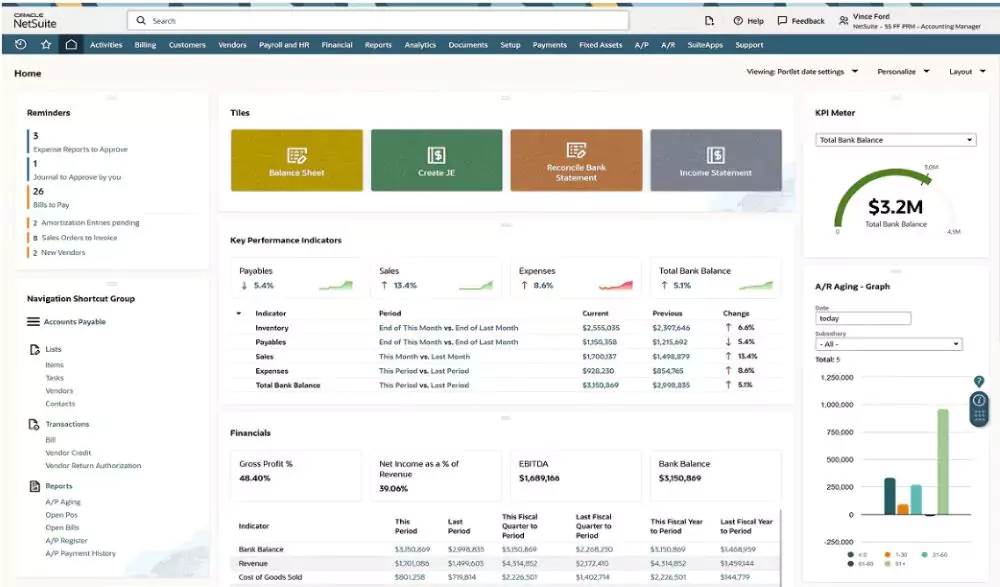
Oracle NetSuite
Oracle NetSuite is a leading cloud ERP platform widely adopted by mid-market and growing distribution companies that require a unified system to manage financials, inventory, and operations across multiple entities and locations. As a true cloud-native solution, NetSuite provides real-time visibility and control over business processes, helping distributors scale efficiently while maintaining operational accuracy.
For distributors managing increasing complexity, whether through geographic expansion, multiple subsidiaries, or higher transaction volumes, NetSuite offers a comprehensive platform that consolidates data and automates key workflows. Its ability to handle multi-entity financials and global operations makes it particularly valuable for organizations operating across regions or currencies.
Unlike traditional on-premise systems, NetSuite eliminates the need for manual upgrades and infrastructure management. Its centralized data model ensures that all departments operate from a single source of truth, improving collaboration and enabling faster, more informed decision-making.
Key distribution capabilities:
- Multi-location inventory and order management within a single platform
- Real-time financial consolidation and reporting across entities
- Built-in demand planning and supply chain visibility
- Customizable dashboards and analytics for operational insights
- Scalable cloud architecture supporting business growth and expansion
Overall, NetSuite is a strong choice for distributors looking for a unified, cloud-first ERP that can support multi-entity operations and long-term scalability.
Microsoft Dynamics 365 Finance and Supply Chain Management (F&SCM)
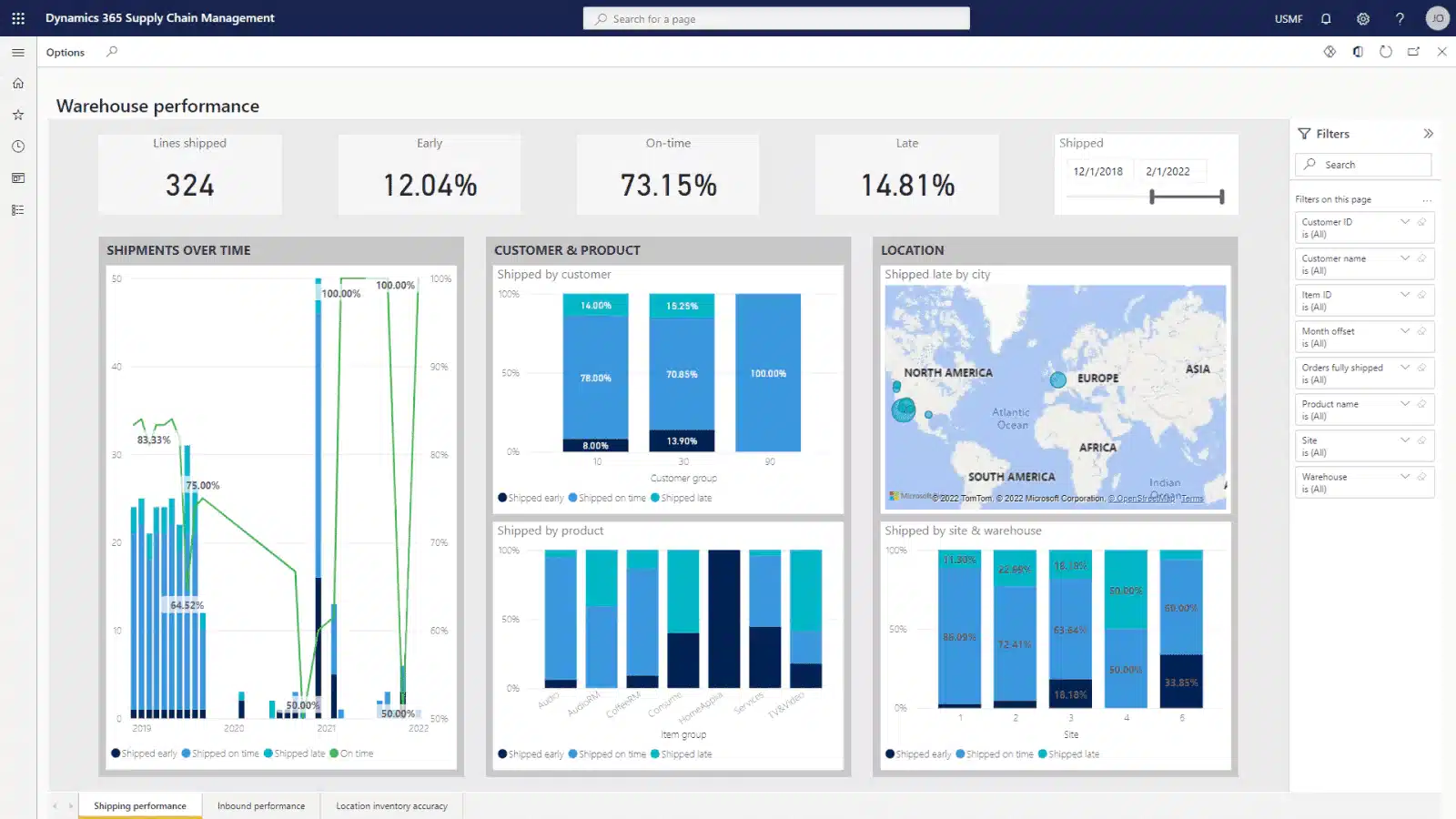
Microsoft Dynamics 365 Finance & Supply Chain Management (F&SCM), previously known as D365 Finance & Operations, is Microsoft’s enterprise ERP offering comprised of D365 Finance and D365 Supply Chain Management. While D365 Finance and D365 Supply Chain Management are separate applications, each with its own licensing, they are designed to work together as a unified platform. Finance manages financials and accounting, while Supply Chain Management delivers advanced capabilities across warehousing, inventory, logistics, and planning. Together, they form a comprehensive solution for end-to-end business operations.
For distributors managing high transaction volumes, multiple distribution centers, or complex fulfillment processes, D365 F&SCM provides the tools needed to optimize efficiency and reduce operational risk. Its advanced warehouse management system (WMS) and AI-driven demand forecasting capabilities help organizations anticipate demand, improve inventory accuracy, and streamline logistics.
Built for enterprise-scale operations, Dynamics 365 F&SCM supports global compliance, multi-entity structures, and highly complex supply chain networks. Its seamless integration with Microsoft tools and analytics platforms enhances visibility, enabling better decision-making across both financial and operational functions.
Key distribution capabilities:
- Advanced warehouse management and logistics optimization
- AI-driven demand forecasting and inventory planning
- Global, multi-entity support with regulatory compliance
- End-to-end supply chain visibility across finance and operations
- Integration with Microsoft Power Platform for analytics and insights
Overall, Dynamics 365 F&SCM is best suited for large distributors that require advanced capabilities to manage complex, global supply chains at scale.
Sage 100
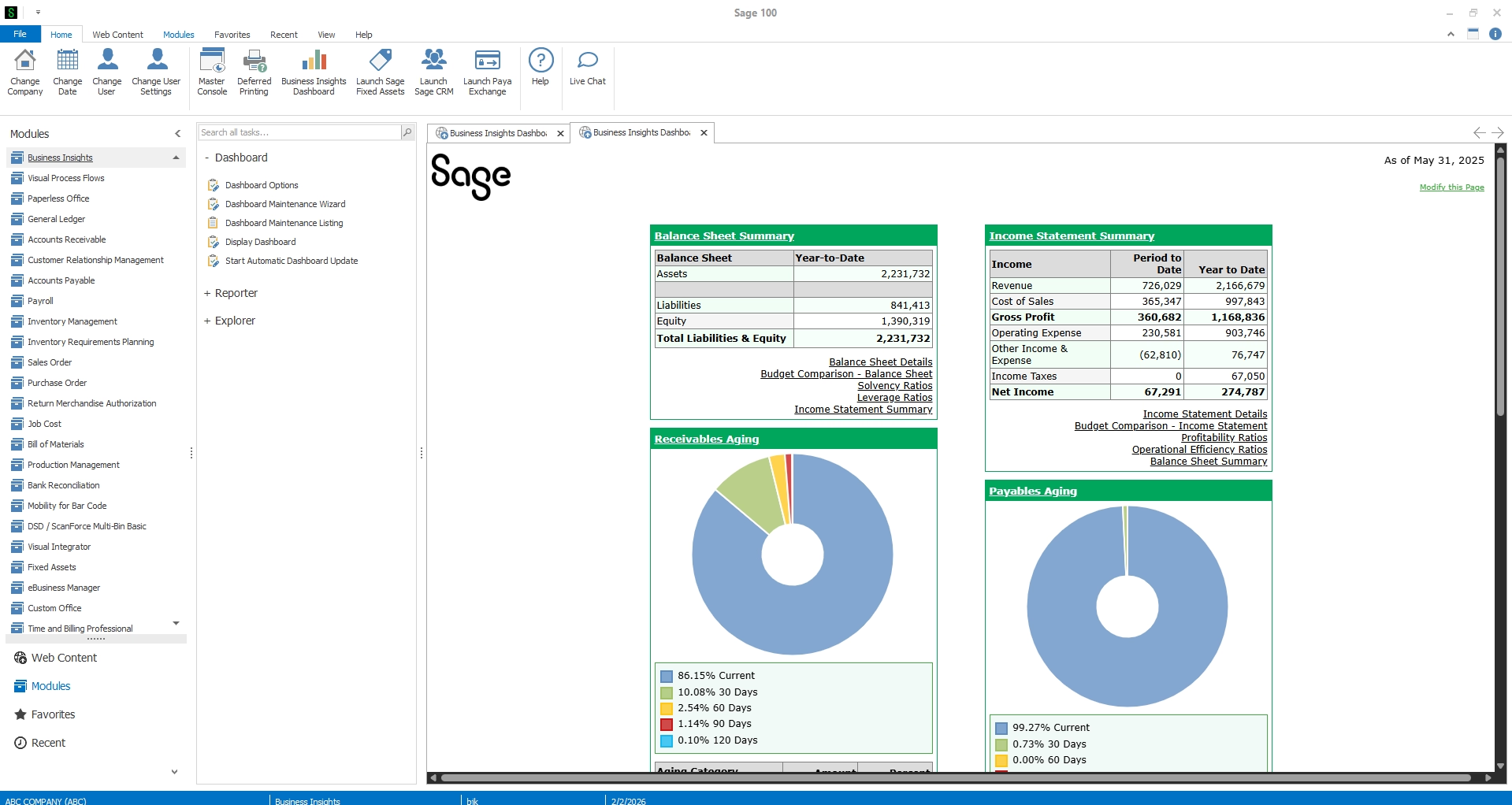
Sage 100 is a proven ERP solution designed for small to mid-sized distributors that need reliable financial management and inventory control within a familiar, on-premise or hosted environment. For organizations that value stability and ease of use, Sage 100 provides a strong foundation to manage core distribution processes without the complexity of larger enterprise systems.
Many distributors rely on Sage 100 to streamline accounting, improve inventory accuracy, and gain better visibility into day-to-day operations. Its straightforward interface and established functionality make it especially appealing for teams looking to move away from spreadsheets or basic accounting tools while maintaining a system that is easy to adopt and manage.
Unlike more complex ERP platforms, Sage 100 focuses on delivering dependable core capabilities that support efficient operations and consistent financial oversight. This makes it a practical choice for distributors that do not require advanced global functionality but still need a system that can support growth.
Key distribution capabilities:
- Core inventory and warehouse management
- Integrated financials and order processing
- Improved visibility into stock levels and transactions
- Customizable reporting for operational and financial insights
- Flexible deployment options (on-premise or hosted)
Overall, Sage 100 is a strong choice for distributors seeking a dependable, cost-effective ERP solution with the flexibility to evolve as business needs change.
Acumatica
Acumatica is a cloud-based ERP platform designed for growing distributors that want a flexible system to manage inventory, order processing, and financials in one place. It is often considered by organizations looking for a modern interface and an alternative to traditional licensing models.
One of Acumatica’s differentiators is its resource-based pricing, which allows companies to add users without increasing per-user costs. Its open architecture also supports integrations with third-party systems such as eCommerce platforms, WMS solutions, and other tools commonly used in distribution environments.
While Acumatica provides a broad set of capabilities, organizations with more complex or highly specialized requirements may need to rely on add-ons or customization to achieve full functionality.
Key distribution capabilities:
- Inventory, order management, and basic CRM functionality
- Flexible pricing model not based on user count
- Open API for third-party integrations
- Real-time operational and financial visibility
- Cloud-based accessibility and scalability
Overall, Acumatica can be a fit for growing distributors seeking a flexible, cloud-based ERP, particularly those prioritizing usability and pricing structure.

Distribution ERP comparison at a glance
How to choose the right ERP for your distribution business
Choosing the best ERP for distribution isn’t just about features, it’s about selecting a system that aligns with your operational complexity, growth plans, and technology strategy. The right ERP should support your current processes while scaling with your business and integrating with the systems you rely on.
What you should consider:
- Business size and complexity: SMB vs mid-market vs enterprise needs
- Supply chain requirements: Warehouses, inventory complexity, demand planning
- Cloud vs. legacy: Flexibility, accessibility, and IT overhead
- Total cost of ownership: Licensing, implementation, support, and scalability
- Integrations: EDI, WMS, CRM, eCommerce, and other critical systems
- Implementation partner: Experience aligning ERP to your business processes

Accelerating ERP implementation for distributors
ERP implementations don’t have to be slow or costly. This white paper outlines practical strategies to help distributors streamline deployment, control costs, and achieve faster ROI. Learn how to prioritize the right functionality, avoid common pitfalls, and select the right ERP partner to ensure long-term success.
Why partner with Rand Group for distribution ERP
Selecting the right ERP system is only part of the equation, how that system is implemented, integrated, and optimized ultimately determines its success. At Rand Group, we combine deep industry knowledge with multi-platform expertise to help distributors not only choose the right ERP but also ensure it delivers long-term business value. Our team supports organizations through every stage of the ERP journey, from initial evaluation to implementation and beyond, aligning technology with real-world operational needs.
- Industry expertise – We bring deep experience in distribution, manufacturing, and supply chain operations, allowing us to understand the unique challenges distributors face.
- Multi-ERP expertise – As a certified partner across Microsoft, NetSuite, and Sage ecosystems, we can recommend the best-fit solution for your business, not just a single platform.
- End-to-end services – From ERP selection and implementation to integration and ongoing support, our team provides a full range of services to ensure success.
- Business-first approach – We focus on optimizing your processes, not just deploying software, so you get measurable business value from your ERP investment.
- Proven methodology – Our structured implementation approach helps reduce risk, control timelines, and ensure a smooth transition.
ERP for distribution FAQs
What is the best ERP for distribution companies?
There is no one-size-fits-all answer. The best ERP depends on your size and complexity:
- SMB → Business Central, Sage 100, NetSuite
- Mid-market → NetSuite, Business Central, Sage 100
- Enterprise → D365 Finance and Supply Chain Management, NetSuite
What features are most important in a distribution ERP?
Key features include:
- Inventory and warehouse management
- Order processing and fulfillment
- Supply chain visibility
- Financial integration and reporting
How long does ERP implementation take?
Most ERP implementations take between 3 to 9 months, depending on the size and complexity of the project.
Cloud vs. on-prem ERP: which is better?
Cloud ERP offers scalability, lower IT overhead, and real-time access to data, making it the preferred choice for many modern distributors.
However, on-premise ERP can still be a fit for some businesses, especially those that require greater control over data, have strict security requirements, or prefer a traditional licensing model.
Ultimately, the right choice depends on your operational needs, IT strategy, and long-term goals.
How much does ERP cost for distributors?
ERP pricing varies based on company size, user count, modules, and implementation complexity.
Cloud ERP licensing:
- SMB: $80–$150/user/month
- Mid‑market: $150–$500/user/month
- Enterprise or advanced systems: $200–$500+
On‑premise licensing:
- $3,000–$10,000 per user upfront
- 18–22% annual maintenance
Implementation costs:
- Small business: $20,000–$150,000
- Mid‑market: $30,000–$250,000+
- Enterprise: $500,000+
Implementation often equals or exceeds software cost, so evaluating total cost of ownership (TCO) and ROI is essential.
Final thoughts
There is no single “best ERP for distribution,” the right solution depends on your business size, operational complexity, and growth goals. Whether you’re a small distributor looking to modernize your systems or a large enterprise managing a complex global supply chain, the right ERP can transform your operations and position your business for long-term success.
If you’re unsure which ERP system is right for your distribution business, our ERP experts can help. Contact us today. We will guide you through the evaluation process and recommend a solution tailored to your needs.