Best ERP software for the oil and gas industry

Choosing the best ERP software for the oil and gas industry depends on your company’s size, operations, reporting needs, and system complexity. Oil and gas companies need ERP systems that can connect finance, field activity, inventory, projects, assets, purchasing, reporting, and customer data.
This guide compares ERP options for oil and gas companies, including Dynamics 365 Finance & Operations, Dynamics 365 Business Central, Oracle NetSuite ERP, Sage 100, and Sage Intacct. It also explains key ERP features, oil and gas use cases, evaluation criteria, and how to choose the right system for your business.
At a glance:
The best oil and gas ERP software helps companies manage financial and operational complexity in one connected system. Dynamics 365 Finance & Operations is often a strong fit for larger and more complex oil and gas companies, while Dynamics 365 Business Central, NetSuite, Sage Intacct, and Sage 100 can fit different needs based on company size, reporting requirements, integrations, and industry-specific workflows. Some companies may use ERP as the main business platform, while others may use ERP as the financial system of record connected to specialized operational software.
Table of contents:
- What is oil and gas ERP software?
- Specialized oil and gas software vs. ERP software
- Why oil and gas companies need an ERP system
- Oil and gas ERP features and capabilities
- Oil and gas ERP comparison at a glance
- Best ERP systems for oil and gas companies
- Which oil and gas ERP software is right for your business?
- How to choose the right oil and gas ERP system
- Choose and implement oil and gas ERP with Rand Group
- Key takeaways
- Frequently asked questions
What is oil and gas ERP software?
Oil and gas ERP (enterprise resource planning) software is a business management system that connects finance, operations, projects, purchasing, inventory, assets, field activity, and reporting in one platform. It gives teams a central system for tracking business data across departments, assets, entities, customers, vendors, and locations.
Unlike basic accounting software, oil and gas ERP software connects financial data with the operational work behind it. This can include work orders, field tickets, project costs, purchase orders, inventory movement, equipment rentals, customer activity, and reporting by well, lease, project, region, or service line.
For oil and gas companies, ERP may also need to support industry-specific workflows such as joint interest billing, AFE tracking, rentals, field service, production data, partner reporting, lease costs, and project accounting. In our experience, the best ERP environment is not just the software itself, but the way it connects people, processes, data, and reporting across the business.
What does oil and gas ERP do?
Oil and gas ERP software helps companies manage daily operations and financial activity in one connected system. It reduces manual work, improves visibility, and gives teams a clearer view of costs, assets, projects, and performance.
- Connects finance, operations, projects, purchasing, inventory, and reporting.
- Tracks costs by well, lease, asset, project, customer, region, or service line.
- Manages purchasing, vendor invoices, approvals, and accounts payable.
- Supports project accounting, AFE tracking, budgets, and actual costs.
- Connects field activity with accounting, invoicing, and reporting.
- Helps manage inventory, equipment, materials, and fixed assets.
- Supports multi-entity reporting, consolidations, and intercompany activity.
- Integrates with CRM, field service, payroll, banking, tax, BI, and production systems.
- Improves reporting through dashboards, analytics, and real-time data.
Who uses oil and gas ERP software?
Oil and gas ERP software is used by companies that need to connect financial, operational, field, and reporting data across complex business environments. It can support organizations across upstream, midstream, downstream, oilfield services, rentals, and energy services.
- Upstream exploration and production companies
- Midstream pipeline, storage, and transportation companies
- Downstream refining, distribution, and marketing companies
- Oilfield services companies
- Energy services companies
- Equipment rental and service companies
- Mineral rights and royalty management organizations
- Multi-entity oil and gas companies
- Project-based oil and gas contractors
- Companies moving from spreadsheets or legacy accounting systems
Specialized oil and gas software vs. ERP software
Oil and gas companies often compare specialized industry software with broader ERP platforms. Specialized oil and gas systems can be strong for operational workflows such as field activity, production data, well information, lease records, tickets, rentals, and other day-to-day processes.
ERP software is often stronger when the business needs deeper financial management, reporting flexibility, controls, scalability, and integration across departments. In our experience, many oil and gas companies use ERP as the financial system of record while connecting it to specialized tools for operations, field activity, production, or asset management.
The right approach is not always specialized software or ERP alone. Many companies use a hybrid strategy, while others extend ERP with oil and gas-specific functionality such as joint interest billing, AFE tracking, rentals, field ticketing, meter-based maintenance, load-out workflows, usage-based billing, crew scheduling, and field service integrations.
The ERP options below should therefore be evaluated not only by base functionality, but also by how well they can serve as the financial foundation, integrate with specialized operational systems, and support oil and gas-specific extensions where needed.
Why oil and gas companies need an ERP system
Oil and gas companies need an ERP system when finance, operations, field activity, inventory, assets, projects, and reporting are too connected to manage in separate tools. As companies grow, disconnected systems make it harder to control costs, close the books, track project performance, manage field work, and report across entities or business units.
Without an integrated ERP system, teams often rely on spreadsheets, manual data entry, duplicate records, and delayed reports. This creates risk for accounting, operations, compliance, cash flow, project profitability, and decision-making.
Benefits of oil and gas ERP software
Oil and gas ERP software helps companies improve visibility, control, and efficiency across the business. The biggest benefits come from connecting daily operational activity with financial reporting, so teams can reduce manual work and act on better data.
- Better field-to-finance visibility: ERP connects field activity, work orders, invoices, approvals, and oil and gas accounting in one system. This helps finance teams see costs sooner and reduces delays between completed work and financial reporting.
- Stronger cost control: ERP helps companies track spending by well, lease, asset, project, customer, region, or service line. This makes it easier to compare budgets, commitments, and actual costs before overruns become harder to correct.
- Faster reporting and close: ERP reduces spreadsheet work by centralizing financial and operational data. Teams can close faster, prepare reports with fewer manual steps, and give leadership more current information.
- Improved inventory and asset visibility: ERP helps teams track equipment, materials, spare parts, and fixed assets across locations. This supports better maintenance planning, fewer stockouts, and clearer equipment cost analysis.
- Stronger controls and audit readiness: ERP can support approvals, role-based access, segregation of duties, and audit trails. These controls help reduce errors, limit unauthorized changes, and make supporting documentation easier to find.
- Better support for growth and acquisitions: ERP helps standardize charts of accounts, vendor records, workflows, and reporting structures. This makes it easier to add entities, locations, assets, or acquired businesses.
- More connected decision-making: ERP can connect with CRM, payroll, banking, tax, production, reporting, and field systems. This gives leaders a clearer view of cash flow, margins, project performance, and operational trends.

Modernize oil and gas operations with connected ERP
If disconnected systems are slowing down finance, field activity, inventory, reporting, or approvals, Rand Group can help you define a better path forward. Our team helps oil and gas companies connect ERP, field service, reporting, automation, and industry-specific workflows into one stronger business foundation.
Oil and gas ERP features and capabilities
Oil and gas ERP software should include core financial tools, operational workflows, reporting, controls, and integration capabilities that support complex energy operations. The right feature set depends on the company’s segment, size, assets, field activity, reporting needs, and industry-specific requirements.
- Financial management and accounting: Manage general ledger, accounts payable, accounts receivable, cash management, revenue, expenses, fixed assets, and close processes. Track transactions by entity, location, project, asset, cost center, or service line.
- Project accounting and AFE tracking: Manage project budgets, commitments, actual costs, billing, and revenue. Track drilling, construction, field service, equipment, and capital projects from approval through completion.
- Multi-entity and intercompany management: Support multiple legal entities, business units, basins, locations, or subsidiaries in one system. Manage consolidations, intercompany transactions, shared services, and entity-level reporting.
- Supply chain, procurement, and inventory management: Manage purchase orders, vendor records, receipts, invoice matching, warehouse activity, and inventory levels. Track parts, materials, equipment, and critical spares across yards, warehouses, field sites, and service locations.
- Asset, equipment, and rental management: Track equipment, fixed assets, service history, depreciation, maintenance activity, location, status, and availability. Support asset lifecycle management for field equipment, facilities, vehicles, tools, and rental assets.
- Field service and operational workflows: Connect work orders, field tickets, dispatch, technician activity, service agreements, and customer work. Support mobile data capture, service scheduling, field approvals, and integration with finance.
- Reporting, dashboards, and analytics: Create financial, operational, project, inventory, and asset reports from connected ERP data. Support dashboards, KPIs, forecasting, variance analysis, and reporting by entity, well, lease, project, customer, or region.
- Security, compliance, and workflow controls: Configure role-based access, approvals, segregation of duties, audit trails, document control, and change tracking. Support internal controls, partner reviews, compliance reporting, and audit readiness.
In our experience, oil and gas companies get the most value from ERP when these capabilities are designed around real workflows, not just standard modules. That includes how field tickets become invoices, how project costs flow to financial reporting, how inventory supports service work, and how leaders review performance across entities, assets, and locations.
Oil and gas ERP comparison at a glance
The best ERP software for oil and gas companies depends on business size, operating model, reporting needs, system complexity, and the level of industry-specific functionality required. Use the table below as a high-level comparison before reviewing each ERP platform in more detail.
How we evaluated the best ERP software for oil and gas companies
Rand Group evaluated these ERP systems based on decades of ERP implementation experience, deep oil and gas industry knowledge, and our position as a multi-platform partner across Microsoft, Oracle NetSuite, and Sage. We considered each platform’s fit for oil and gas workflows, financial management, scalability, integrations, reporting, AI capabilities, field operations, and ability to support industry-specific needs through configuration, add-ons, or custom development.

Find the right oil and gas ERP system
Choosing ERP software is easier with a structured selection process. Rand Group’s software selection engagement helps you define requirements, compare best-fit ERP options, assess risks, and choose the system that aligns with your oil and gas operations.
Best ERP systems for oil and gas companies
The best ERP systems for oil and gas companies connect finance, operations, field activity, inventory, projects, reporting, and customer data. The right choice depends on company size, complexity, reporting needs, integrations, and industry-specific workflows such as JIB, rentals, field service, or project accounting.
Microsoft Dynamics 365 Finance & Operations
Microsoft Dynamics 365 Finance & Operations (D365 F&O) is an enterprise ERP platform for medium to large oil and gas companies with complex financial, supply chain, inventory, asset, project, and reporting needs. It consists of two main applications: Dynamics 365 Finance and Dynamics 365 Supply Chain Management, which can be used together to connect financial management with operational activity across the business.
For oil and gas companies, Dynamics 365 Finance & Operations is a strong fit when the ERP system needs to support scale, controls, multi-entity reporting, procurement, inventory, asset maintenance, field operations, and complex integrations. It is often a better fit for organizations that have outgrown entry-level accounting systems or mid-market ERP and need a more robust system to manage finance and operations in one connected environment.
- Built for complex operations: D365 F&O can support large transaction volumes, advanced approvals, and detailed reporting structures. This makes it a strong fit for oil and gas companies with multiple entities, regions, assets, or service lines.
- Strong financial control: Dynamics 365 Finance helps teams manage accounting, budgeting, cash flow, tax, project costs, and compliance in one system. Oil and gas companies can use it to support more structured financial reporting and stronger controls.
- Connected supply chain management: Dynamics 365 Supply Chain Management helps connect procurement, inventory, warehousing, planning, and asset-related activity. This is useful for companies that manage parts, materials, equipment, yards, warehouses, or field locations.
- Support for field and asset-heavy operations: D365 F&O can be connected with field service, asset maintenance, and operational systems. This helps oil and gas companies manage the flow of work, cost, inventory, and asset data across the business.
- Microsoft ecosystem fit: D365 F&O works with Microsoft 365, Power BI, Power Platform, Dynamics 365 Field Service, Dynamics 365 Sales, and other Microsoft tools. This gives companies a strong foundation for reporting, automation, CRM, field operations, and custom applications.
- AI and automation readiness: D365 F&O includes AI, automation, and analytics capabilities across finance and supply chain workflows. This helps companies manage exceptions, review trends, and reduce routine manual work.
Best for: Larger oil and gas companies, complex oilfield services firms, and multi-entity energy businesses that need advanced financial management, supply chain control, field operations integration, and scalable reporting.
Dynamics 365 Finance & Operations case study: Rand Group helped Conquest Completion Services, an oilfield services company, move from QuickBooks, Excel, and paper-based processes to Dynamics 365 Finance & Operations. We helped Conquest select and implement a connected ERP system that improved financial visibility, inventory tracking, purchase order approvals, reporting, and access to real-time data. As a result, Conquest achieved 3x faster purchase order approval, an 85% reduction in days sales outstanding, and a 4.5-person reduction in A/R and A/P staffing needs. To learn more, read the full case study.

Microsoft Dynamics 365 Business Central
Microsoft Dynamics 365 Business Central is a Microsoft ERP system for small to mid-sized companies that need to connect finance, sales, service, inventory, projects, and operations in one platform. Microsoft positions Business Central as a business management solution for small and medium-sized businesses, with Essentials and Premium licensing options and Microsoft Copilot included.
For oil and gas companies, Dynamics 365 Business Central can be a strong ERP fit when the business needs more structure than QuickBooks, spreadsheets, or a legacy accounting system can provide. It is often a good option for oilfield services firms, rental companies, energy services companies, and project-based oil and gas businesses that want Microsoft familiarity, strong financials, flexible reporting, and the ability to connect ERP with field service, CRM, Power BI, and other Microsoft tools.
- Familiar Microsoft experience: Business Central works well for teams that already use Microsoft tools such as Excel, Outlook, Teams, and Power BI. This can make adoption easier for finance, operations, sales, and service teams.
- Strong fit for growing companies: Business Central gives small and mid-sized oil and gas companies a more structured ERP system without the scale of an enterprise platform. It can support companies moving away from QuickBooks, Dynamics GP, Dynamics NAV, Dynamics SL, or disconnected spreadsheets.
- Good field-to-finance foundation: Business Central can connect accounting, purchasing, inventory, projects, and service-related data. This is useful for oil and gas companies that need field activity, invoices, costs, and reporting to flow through one system.
- Flexible reporting and dimensions: Business Central supports reporting by dimensions such as department, project, location, customer, or business unit. Oil and gas companies can use this structure to report on performance across service lines, regions, entities, projects, or operating groups.
- Cloud and on-premises options: Business Central can be deployed online or on-premises, depending on business and IT requirements. This gives companies flexibility when planning their ERP roadmap.
- AI and automation with Copilot: Business Central includes Copilot capabilities that can help users work with ERP data, automate routine tasks, and improve access to insights. Microsoft notes that Copilot works with Business Central data without requiring expensive or time-consuming model training.
Best for: Small to mid-sized oil and gas companies, oilfield services firms, rental businesses, and project-based energy companies that want a Microsoft ERP with strong financials, flexible reporting, and room to grow.
Dynamics 365 Business Central case study: Rand Group helped Sapphire Gas Solutions, a project-driven oil and gas company, move from a legacy ERP system to Dynamics 365 Business Central. We helped Sapphire improve purchase order approvals, strengthen project-based financial reporting, connect ERP with CRM, and replace spreadsheet-heavy processes with real-time financial visibility. As a result, Sapphire achieved a 67% faster month-end close, 100% improvement across accounting functions, and 3x faster financial reporting. To learn more, read the full case study.

Extend Business Central with Rentals Management
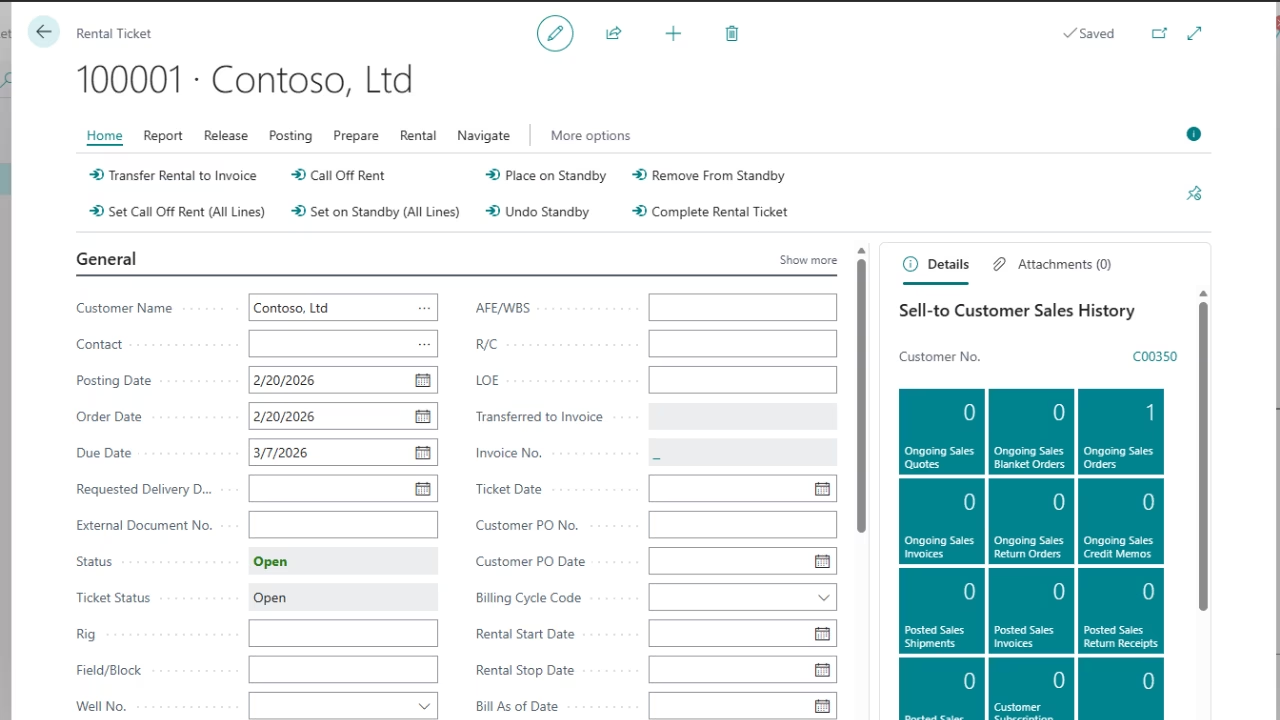
Rand Group developed Rentals Management for Microsoft Dynamics 365 Business Central to help equipment-driven oil and gas companies manage rental assets, tickets, billing, and visibility inside Business Central. The app is designed for oilfield services companies, equipment rental providers, service operations, and asset-intensive distributors that need to reduce spreadsheet tracking, improve billing accuracy, and manage rental activity in one connected workflow.
- Rental asset control: Designate fixed assets for rental or lease while keeping depreciation, rental status, and rental history connected in Business Central.
- Rental ticket management: Create rental tickets with start dates, stop dates, wells, facilities, daily rates, standby status, and completion tracking.
- Flexible billing cycles: Support daily, weekly, bi-weekly, monthly, partial-month, standby, or custom billing terms based on contract requirements.
- Bulk ticket invoicing: Generate invoices from rental tickets individually or in bulk to speed up billing and reduce manual errors.
- Asset availability tracking: See whether equipment is available, on rent, on standby, out of service, or returned.
- Equipment swaps: Replace equipment during breakdowns while keeping rental traceability, billing history, and customer service continuity intact.
- Operational visibility: Track rental activity across wells, facilities, yards, field sites, and customer locations.
- Audit-ready rental history: Keep rental lines tied to open and completed tickets so finance and operations teams can review usage, billing, and asset activity.
Oracle NetSuite ERP
Oracle NetSuite is a cloud-based business management platform that brings ERP, financial management, CRM, inventory, reporting, and other business functions into one system. For oil and gas companies, NetSuite ERP can connect finance, project accounting, procurement, inventory, supply chain, asset management, and compliance data across field sites, facilities, and corporate offices.
NetSuite can be a strong oil and gas ERP for growing companies that want cloud ERP, modular functionality, flexible configuration, and strong financial visibility. It can help oil and gas companies manage costs, improve reporting, strengthen controls, track assets and inventory, and connect operational activity with financial performance.
- Cloud ERP foundation: NetSuite gives oil and gas companies one cloud platform for finance, operations, supply chain, projects, inventory, and reporting.
- Strong financial control: NetSuite supports accounting, financial management, approvals, fixed assets, project accounting, and multi-entity reporting.
- Project and cost tracking: NetSuite can help companies track project budgets, committed costs, actual costs, and profitability across assets, wells, facilities, service lines, or business units.
- Inventory and asset visibility: NetSuite supports visibility into equipment, parts, materials, critical spares, and asset-related costs across field locations, yards, warehouses, and offices.
- Flexible growth model: NetSuite’s modular structure allows companies to start with core ERP and add functionality as needs change.
- Operational and finance alignment: NetSuite can help connect field activity, contractor costs, procurement, inventory, and financial reporting so teams work from more consistent data.
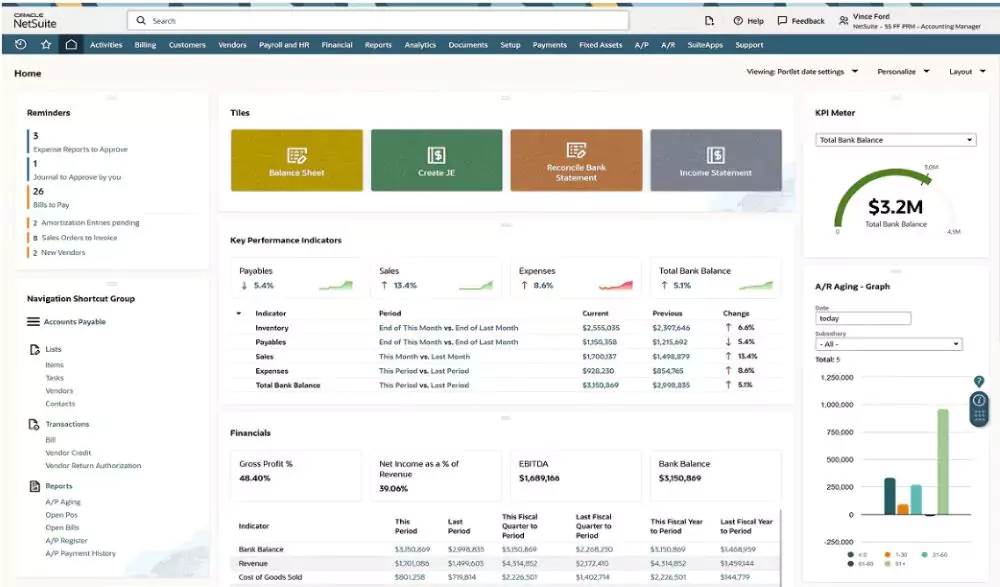
- Reporting and analytics: NetSuite includes dashboards, reporting, and analytics that help teams monitor financial and operational performance across projects, entities, assets, and regions.
Best for: Growing oil and gas companies that want a cloud ERP platform with strong financial management, modular growth, multi-entity support, project accounting, inventory visibility, and flexible configuration options.
Oracle NetSuite case study: Rand Group helped Henry Resources LLC, a family office with significant oil and gas investments, replace three disconnected accounting systems with a unified Oracle NetSuite environment. The implementation consolidated 30 to 40 charts of accounts into one, automated high-volume joint interest billing and revenue imports, streamlined monthly consolidation, and improved financial visibility across the organization. The project also earned Rand Group recognition as a 2026 Oracle NetSuite Alliance Partner Spotlight Winner in the Energy category. To learn more about the implementation, read the full Henry Resources case study.
Extend NetSuite ERP with Joint Interest Billing
Rand Group’s Joint Interest Billing solution extends NetSuite ERP for oil and gas companies that need to manage shared costs, ownership allocations, partner billing, and supporting detail in one system. Built specifically for NetSuite and oil and gas accounting teams, the solution helps operators simplify JIB processing, improve transparency, and manage complex ownership structures.
- Flexible allocation decks: Assign owners to multiple decks and connect decks to wells, properties, or projects.
- Owner assignment and tracking: Maintain centralized owner records and update ownership details as interests change.
- Automated JIB processing: Generate joint interest billing statements and automate billing cycles inside NetSuite.
- Customized billing statements: Create partner-specific billing statements with clear supporting detail.
- JIB history and reporting: Maintain a full history of expenses, allocations, billing activity, and prior JIB transactions.
- Streamlined reconciliations: Review and reconcile JIB activity with accessible transaction records.
Contact Rand Group to learn how our Joint Interest Billing solution can extend NetSuite ERP for your oil and gas operations.

Sage 100
Sage 100 is an ERP system for small and mid-sized businesses that need accounting, inventory, order processing, reporting, and operational control in one system. Sage positions Sage 100 as a business management solution for small and mid-sized businesses, with support for financials, reporting, customization, integrations, and distribution or manufacturing workflows.
For oil and gas companies, Sage 100 can be a fit for smaller or established businesses with defined accounting, inventory, purchasing, and reporting needs. It is not an oil and gas-specific ERP out of the box, so companies that need native joint interest billing, revenue distribution, advanced AFE tracking, or complex upstream accounting will likely need add-ons, integrations, or custom development.
- Practical fit for smaller operations: Sage 100 can support companies that need more structure than entry-level accounting software but do not need a large enterprise ERP. This can work for smaller oilfield service, supply, rental, or equipment-focused businesses.
- Strong accounting foundation: Sage 100 supports core financial processes such as general ledger, accounts payable, accounts receivable, bank reconciliation, and reporting. This gives smaller oil and gas companies a stable base for financial management.
- Inventory and distribution support: Sage 100 can support purchasing, sales orders, inventory management, shipping, and warehouse activity. This is useful for companies that manage parts, materials, tools, supplies, or equipment inventory across locations.
- Customizable and extendable: Sage 100 supports customization, integrations, and connected applications. This matters for oil and gas companies that need to connect accounting with reporting tools, payroll, inventory systems, or industry-specific add-ons.
Best for: Smaller oil and gas companies, equipment suppliers, rental businesses, and oilfield service firms with defined accounting, inventory, purchasing, and reporting needs.
Sage Intacct
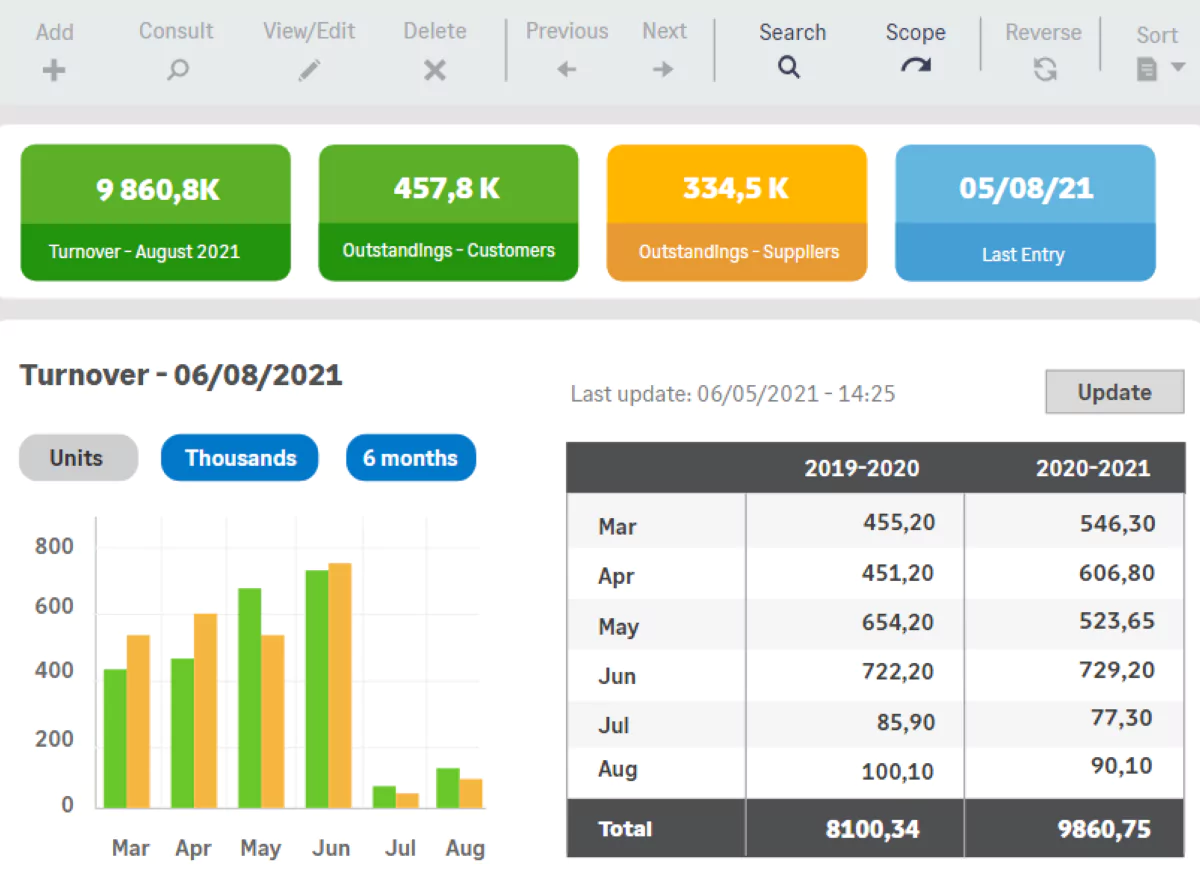
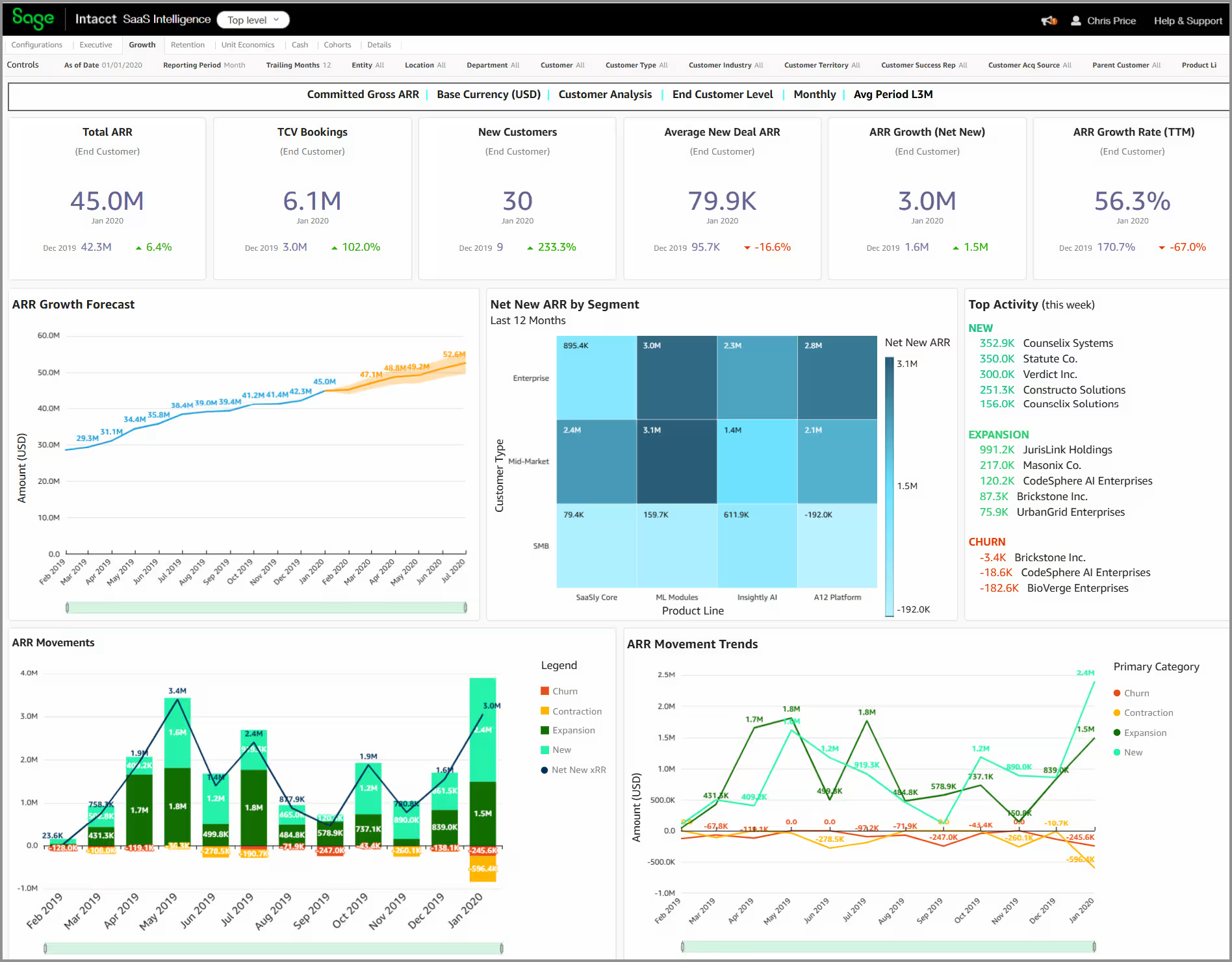
Sage Intacct is a cloud financial management and accounting platform for growing organizations. For oil and gas companies, it can support core financials, reporting, budgeting, project accounting, revenue recognition, fixed assets, and multi-entity accounting.
Sage Intacct is best suited for finance-led oil and gas companies that want stronger accounting control, faster reporting, and flexible financial visibility. It is not designed to manage field-heavy oil and gas operations by itself, so many companies use it as the financial system of record while connecting it to separate systems for field operations, production, asset management, payroll, CRM, or compliance.
- Finance-first design: Sage Intacct is built around accounting, close, reporting, and financial control. This makes it useful for oil and gas companies that need a stronger finance foundation.
- Strong fit for hybrid system strategies: Sage Intacct can serve as the financial hub while operational systems manage field activity, production, assets, or service work. This helps companies keep specialized operational tools while improving financial visibility.
- Dimensional reporting: Sage Intacct helps teams analyze data by entity, location, project, asset, customer, region, or service line. This supports clearer reporting without overcomplicating the chart of accounts.
- Multi-entity management: Sage Intacct can support companies with multiple entities, locations, or business units. This is helpful for energy companies managing growth, acquisitions, or complex ownership structures.
- Project accounting support: Sage Intacct can help track project costs, revenue, expenses, and billing. This is useful for project-based oil and gas and energy services companies.
- Budgeting and planning: Sage Intacct supports forecasting and planning with finance data. This helps teams manage changing costs, cash flow, and project performance.
- Integration flexibility: Sage Intacct can connect with other business systems for field operations, asset management, payroll, CRM, reporting, or compliance. This makes it a good fit for companies that want finance and operations connected without forcing every workflow into one system.
Best for: Finance-led oil and gas, energy services, and renewable energy companies that want Sage Intacct as the financial system of record in a connected or hybrid system strategy.
Which oil and gas ERP software is right for your business?
The right oil and gas ERP software depends on your company size, operating model, reporting needs, system complexity, and industry-specific workflows. Use the table below as a starting point to identify which ERP options may be worth evaluating.
How to choose the right oil and gas ERP system
Choosing the right oil and gas ERP system starts with understanding how your business operates today and where your current systems create risk, delays, or manual work. Rand Group recommends the following steps when evaluating ERP systems for oil and gas companies:
- Map your core workflows: Document how finance, purchasing, inventory, field activity, projects, assets, reporting, and approvals work today.
- Define your oil and gas requirements: Identify whether you need support for JIB, AFE tracking, rentals, field service, revenue distribution, production data, or project accounting.
- Decide whether you need ERP, specialized software, or a hybrid strategy: Determine whether your operational workflows should live in ERP, remain in a specialized oil and gas system, or connect to ERP through integrations.
- Clarify your reporting needs: Determine how you need to report by entity, well, lease, project, asset, customer, region, service line, or business unit.
- Review integration needs: List the systems your ERP must connect with, such as CRM, field service, payroll, banking, tax, production, BI, and compliance tools.
- Evaluate scalability: Choose a system that can support future entities, locations, assets, users, acquisitions, and new service lines.
- Assess controls and security: Review approval workflows, role-based access, segregation of duties, audit trails, and documentation needs.
- Compare implementation scope: Look beyond licensing and compare data migration, configuration, integrations, reporting, training, change management, and support.
- Choose the right partner: Work with a partner that understands ERP, accounting, operations, integrations, and the oil and gas industry.
Download the oil and gas ERP selection guide
Choosing the right ERP system starts with clear requirements, the right functionality, and a partner that understands oil and gas operations. Download our guide to learn how to evaluate deployment options, define ERP requirements, identify key modules, and choose an implementation partner.
Choose and implement oil and gas ERP with Rand Group
Rand Group helps oil and gas companies evaluate, implement, configure, integrate, and support ERP systems that fit their business needs. With decades of experience implementing ERP solutions for the oil and gas industry and a 90% client retention rate, our team understands the financial, operational, reporting, and technology challenges that energy companies face as they grow.
As a multi-platform partner across Microsoft, Oracle NetSuite, and Sage, Rand Group does not evaluate ERP from the perspective of one software publisher. We provide platform-agnostic software evaluation and selection services to help oil and gas companies compare ERP options, understand tradeoffs, and choose the system that best fits their workflows, budget, integrations, and long-term goals.
- Evaluate ERP platforms based on oil and gas requirements, not generic software features.
- Compare Microsoft, Oracle NetSuite, and Sage solutions based on fit, complexity, and growth plans.
- Define ERP requirements across finance, field operations, inventory, projects, reporting, and compliance.
- Configure ERP systems around oil and gas workflows such as JIB, rentals, AFE tracking, and field service.
- Integrate ERP with CRM, payroll, banking, production, reporting, field service, and other business systems.
- Build dashboards and reports that show performance by entity, project, asset, customer, region, or service line.
- Apply AI, automation, and workflow tools to reduce manual work and improve decision-making.
- Provide ongoing support, training, and optimization after implementation.
Rand Group in action
Rand Group helped Petroplex Acidizing Inc., an oilfield services company, modernize from an aging legacy system and manual workflows to a connected ERP and field service environment. We helped implement Dynamics 365 Business Central, integrate Dynamics 365 Field Service, build custom apps, automate workflows, and improve reporting across finance and operations. As a result, Petroplex eliminated lost field tickets, saved 32 hours per month on reporting, saved 4 hours per week in administrative time, and gained a more scalable foundation for growth. To learn more, read the full case study.
Want similar results? Contact Rand Group to discuss your oil and gas ERP goals, system gaps, and next steps.
What our clients say about Rand Group
“Rand Group cares, and that shows in every interaction. No matter what I throw at them, they always have someone on the team who truly knows how to solve it. That consistency and depth of expertise is why we’ve partnered with them for so many years.”
– Amy Washek, ERP Manager, Peak Rentals
“Rand Group has consistently thought outside of the box in ways I haven’t experienced with other providers. They’ve always offered multiple workable options to address our unique challenges, going beyond what we initially requested.”
– Erin Underwood, VP & CFO, Petroplex Acidizing Inc.
“Rand Group didn’t just implement a system—they helped us rethink our business processes. The team went beyond a ‘canned solution’ and worked closely with us to develop practical, customized solutions. We now have real-time visibility into our financials and can make data-driven decisions with confidence.”
– Jeff Nelson, Director, Sapphire Gas Solutions
“We have always felt like a top priority when working with Rand Group’s team and have the utmost confidence in their industry and technical knowledge.”
– Christa Curette, VP of Engineering & Technology, Conquest Completion Services, LLC
Key takeaways
- Oil and gas ERP software connects finance, operations, field activity, inventory, projects, reporting, and customer data.
- Some oil and gas companies use a hybrid strategy, with specialized systems for operations and ERP as the financial system of record.
- The best oil and gas ERP system depends on company size, complexity, integrations, and industry-specific workflows.
- Dynamics 365 Finance & Operations is often a strong fit for larger oil and gas companies with complex operations.
- Dynamics 365 Business Central, NetSuite, Sage Intacct, and Sage 100 can fit different oil and gas needs based on scale and requirements.
- Oil and gas companies may need ERP add-ons, integrations, or a hybrid system strategy for JIB, rentals, field service, AFE tracking, production, or advanced reporting.
- Rand Group helps oil and gas companies compare, implement, configure, integrate, and support ERP systems across Microsoft, NetSuite, and Sage.
Frequently asked questions
What is oil and gas ERP software?
Oil and gas ERP software is a business management system that connects finance, operations, projects, purchasing, inventory, assets, field activity, and reporting. It helps oil and gas companies manage data across departments, entities, assets, customers, vendors, and locations.
Should oil and gas companies use specialized software or ERP?
Oil and gas companies should choose specialized software, ERP, or a hybrid approach based on their operational and financial needs. Specialized systems can support field and production workflows, while ERP often provides stronger financial management, reporting, controls, and scalability.
Why do oil and gas companies need ERP software?
Oil and gas companies need ERP software to connect financial and operational data in one system. ERP helps reduce manual work, improve reporting, control costs, manage field activity, and support better decision-making.
What should oil and gas companies look for in ERP software?
Oil and gas companies should look for ERP software with strong financial management, project accounting, reporting, integrations, inventory, asset tracking, workflow controls, and field-to-finance visibility. Some companies may also need JIB, AFE tracking, rentals, production data, or field service functionality.
What is the best ERP software for oil and gas companies?
The best ERP software for oil and gas companies depends on the company’s size, operations, reporting needs, and industry-specific workflows. Common options include Dynamics 365 Finance & Operations, Dynamics 365 Business Central, Oracle NetSuite ERP, Sage Intacct, and Sage 100.
Is Dynamics 365 Finance & Operations good for oil and gas companies?
Yes, Dynamics 365 Finance & Operations can be a strong fit for larger oil and gas companies with complex operations. It supports advanced financial management, supply chain, inventory, asset management, field operations integrations, reporting, and multi-entity needs.
Is Dynamics 365 Business Central good for oil and gas companies?
Yes, Dynamics 365 Business Central can be a strong fit for small to mid-sized oil and gas companies. It is often a good option for oilfield services, rental, and project-based energy companies that want Microsoft ERP, flexible reporting, and integration with field service or CRM.
Is NetSuite good for oil and gas companies?
Yes, NetSuite can be a strong ERP option for growing oil and gas companies that want cloud ERP, modular growth, and industry-specific configuration options. NetSuite can also be extended with add-ons such as Rand Group’s Joint Interest Billing solution.
Can NetSuite support joint interest billing?
Yes, NetSuite can support joint interest billing with the right add-on or custom solution. Rand Group’s NetSuite JIB solution helps oil and gas companies manage ownership allocations, partner billing, billing history, and supporting transaction details.
Is Sage Intacct good for oil and gas companies?
Yes, Sage Intacct can be a good fit for finance-led oil and gas or energy companies. It is best suited for organizations that need strong cloud accounting, dimensional reporting, budgeting, project accounting, multi-entity management, and financial controls, while using connected systems for field operations, production, asset management, or service workflows.
Is Sage 100 good for oil and gas companies?
Sage 100 can work for smaller oil and gas companies with defined accounting, inventory, purchasing, and reporting needs. Companies with more complex oil and gas workflows may need add-ons, integrations, or a broader ERP platform.
What is the difference between oil and gas accounting software and ERP software?
Oil and gas accounting software focuses mainly on financial processes, while oil and gas ERP software connects finance with operations. ERP can also support inventory, purchasing, projects, assets, field activity, reporting, CRM, and integrations.
How do I choose the right ERP system for an oil and gas company?
Choose the right ERP system by mapping your workflows, defining industry requirements, reviewing reporting needs, identifying integrations, and comparing implementation scope. Rand Group recommends evaluating ERP based on business fit, not just software features.
Find the right ERP path for your oil and gas business
The right ERP system can help oil and gas companies replace disconnected tools with a more connected foundation for finance, operations, field activity, reporting, and growth. Whether your business needs enterprise-scale ERP, a flexible mid-market system, a cloud financial platform, or oil and gas-specific add-ons, the best choice should align with your workflows, integrations, reporting needs, and long-term goals.
Rand Group helps oil and gas companies evaluate, implement, configure, integrate, and support ERP systems across Microsoft, Oracle NetSuite, and Sage. Contact Rand Group today to compare ERP options, define your requirements, and build a connected ERP strategy for your oil and gas business.