Top Acumatica alternatives for small, midsize, and enterprise businesses

Choosing an enterprise resource planning system (ERP) is one of the most consequential technology decisions a growing company makes. The platform selected today can influence financial reporting, operational efficiency, employee productivity, customer service, and the organization’s ability to scale for years. Acumatica is frequently included on ERP shortlists, particularly among small and midsize distributors, manufacturers, construction companies, and project-based businesses. Its flexible deployment options, consumption-based pricing, and broad operational capabilities make it a legitimate contender.
However, Acumatica is not the right choice for every organization. Some businesses need deeper native financial reporting, more extensive multi-entity capabilities, closer integration with Microsoft applications, a larger partner ecosystem, or a clearer path to enterprise-scale operations. This blog compares the leading Acumatica alternatives and explains which types of organizations should consider each one.
At a glance
Acumatica is a flexible ERP platform aimed primarily at small and midsize businesses. It is especially well known for consumption-based pricing and broad user access rather than traditional per-user licensing. Organizations often compare it with Microsoft Dynamics 365 Business Central, Sage Intacct, Sage 100, Oracle NetSuite, Dynamics 365 Finance and Supply Chain Management, and SAP Business One. The best alternative depends on the company’s size, industry, reporting requirements, operational complexity, technology strategy, and anticipated growth—not simply which platform has the longest feature list.
Table of contents
- What is Acumatica?
- Why look at Acumatica alternatives?
- Where Acumatica can fall short
- Acumatica alternatives comparison table
- The top Acumatica alternatives to consider
- Which Acumatica alternative fits your business need?
- How to choose the right Acumatica alternative
- How Rand Group helps you evaluate and implement an Acumatica alternative
- Frequently asked questions about Acumatica alternatives
What is Acumatica?
Acumatica is a cloud-native ERP platform aimed at small and midsize businesses. It runs finance, distribution, manufacturing, construction, retail, project accounting, and CRM from a single browser-based system, and its open architecture and API make it straightforward to connect to other tools in a company’s stack.
One of Acumatica’s main differentiators is its licensing model. Rather than pricing the system primarily according to the number of named users, Acumatica generally bases licensing on the applications selected and the expected level of computing resources or transaction activity required by the organization. User access is therefore not metered in the same way as it is with many traditional per-user ERP licenses.
This approach can be attractive for organizations with many employees who need occasional or limited system access, such as warehouse staff, field teams, project managers, and executives. However, unlimited-user licensing does not automatically make Acumatica the lowest-cost option. Businesses should model expected transaction volumes, resource requirements, applications, implementation costs, and future growth when comparing its total cost of ownership with per-user ERP systems.
Acumatica is a strong option for many midmarket organizations. The purpose of comparing alternatives is not to suggest otherwise. It is to determine whether Acumatica’s architecture, pricing, reporting, functionality, and ecosystem align with the organization’s long-term requirements.

Why look at Acumatica alternatives?
The risks of a poor selection extend beyond software costs. Choosing a system that does not fit the business can result in excessive customization, manual workarounds, weak reporting, low user adoption, difficult integrations, and another ERP replacement sooner than expected.
Rand Group sees the consequences of these decisions first-hand. Approximately 60% of our current clients initially came to us after working with another partner, frequently because an earlier implementation, support relationship, or system design did not deliver the expected results.
Based on more than two decades of ERP selection, implementation, recovery, and optimization work, businesses commonly broaden their search beyond Acumatica for several reasons:
- Finance leaders need more sophisticated reporting, consolidation, or dimensional analysis.
- Operations teams require deeper manufacturing, warehouse, planning, or global supply-chain capabilities.
- Microsoft-centric organizations want an ERP that connects closely with Excel, Outlook, Teams, Power BI, Power Platform, and Azure.
- Leadership wants a larger pool of available consultants, administrators, and implementation talent.
- The business prefers a predictable per-user or subscription model over consumption-based pricing.
- A growing organization needs confidence that the platform can support more entities, countries, products, transactions, or business models.
- The company wants broader embedded artificial intelligence and automation capabilities.
The most important question is not whether Acumatica is a good ERP. It is whether it is the best ERP for the organization’s particular requirements.
Where Acumatica can fall short
Acumatica earns its place on many shortlists, particularly for midmarket distributors, manufacturers, and project-driven firms. The considerations below are not dealbreakers; they are simply the areas where buyers most often decide another platform fits better.
- Cost predictability. Acumatica’s resource- and consumption-based licensing model can be advantageous for organizations with many occasional users. However, costs may change as transaction activity, computing requirements, licensed applications, or operational complexity increase. Buyers should model several growth scenarios rather than assuming that unlimited-user licensing will necessarily cost less than a per-user model.
- Reporting depth. Acumatica includes dashboards, generic inquiries, financial reporting, and report-design capabilities that support many day-to-day requirements. Organizations with highly specialized consolidation, analytics, regulatory reporting, or enterprise business intelligence needs should nevertheless test those requirements during demonstrations and determine whether native tools, configuration, external analytics platforms, or additional applications will be required.
- Ecosystem and talent. Because Acumatica has a smaller overall market footprint than some larger ERP ecosystems, businesses should verify the availability of qualified implementation, support, and internal hiring resources in their region.
- Enterprise and global complexity. Acumatica can support sophisticated midsize organizations and multi-entity operations. However, very large or highly global businesses may require capabilities such as extensive localization, complex consolidation, high transaction scale, advanced supply-chain planning, or broad international infrastructure. These organizations should compare Acumatica directly with enterprise platforms using representative transaction volumes and end-to-end business scenarios.
- Microsoft ecosystem alignment. Acumatica can integrate with Microsoft applications, but organizations that have standardized heavily on Microsoft 365, Power Platform, Power BI, Azure, or Dynamics 365 may prefer an ERP that sits directly within Microsoft’s business application ecosystem. The value of that alignment depends on how extensively the organization plans to connect data, workflows, analytics, and collaboration tools.
Acumatica alternatives comparison table
The right Acumatica alternative depends on your company size, industry, operational complexity, technology environment, and required functionality. The following comparison provides a high-level view of how the leading options differ and where each platform may be the strongest fit.

Build a stronger ERP shortlist
Comparing ERP platforms is only one part of the selection process. Download the Top 10 ERP software selection checklist to identify your requirements, evaluate potential solutions, avoid common selection mistakes, and choose an ERP that supports your long-term business goals.
The top Acumatica alternatives to consider
The following sections provide a closer look at the leading Acumatica alternatives. Each overview explains the platform’s positioning, ideal use cases, and potential value for growing organizations.
Microsoft Dynamics 365 Business Central
Microsoft Dynamics 365 Business Central is Microsoft’s ERP application for small and midsize organizations. It combines financial management with sales, purchasing, inventory, warehousing, projects, service management, and manufacturing.
Business Central’s strongest differentiator is its place within the Microsoft ecosystem. Organizations can connect ERP information with Microsoft 365, Excel, Outlook, Teams, Power BI, Power Automate, Power Apps, and other Microsoft services.
That integration can reduce the need for users to move constantly between disconnected applications. Employees can work with familiar interfaces, analyze ERP information through Power BI, extend processes using Power Platform, and use Copilot capabilities embedded in Business Central. For a more detailed comparison of Business Central and Acumatica, read our blog Business Central vs. Acumatica.
Business Central is a strong Acumatica alternative when:
- The organization already relies heavily on Microsoft technology.
- Finance and operations need to work in one connected ERP.
- The business requires inventory, warehousing, projects, service, or manufacturing.
- Leaders want a large global partner, developer, and application ecosystem.
- The company wants broad embedded AI capabilities and a roadmap toward agent-based automation.
Business Central includes manufacturing and service functionality in its Premium license. More specialized requirements can be supported through Microsoft AppSource extensions and partner-developed applications.
Rand Group used Business Central to help Subs for Pools scale its construction activity by 185% without a proportional increase in office overhead. The new system improved job-level visibility, purchasing efficiency, process control, and reporting while providing a foundation for continued growth.

Sage Intacct
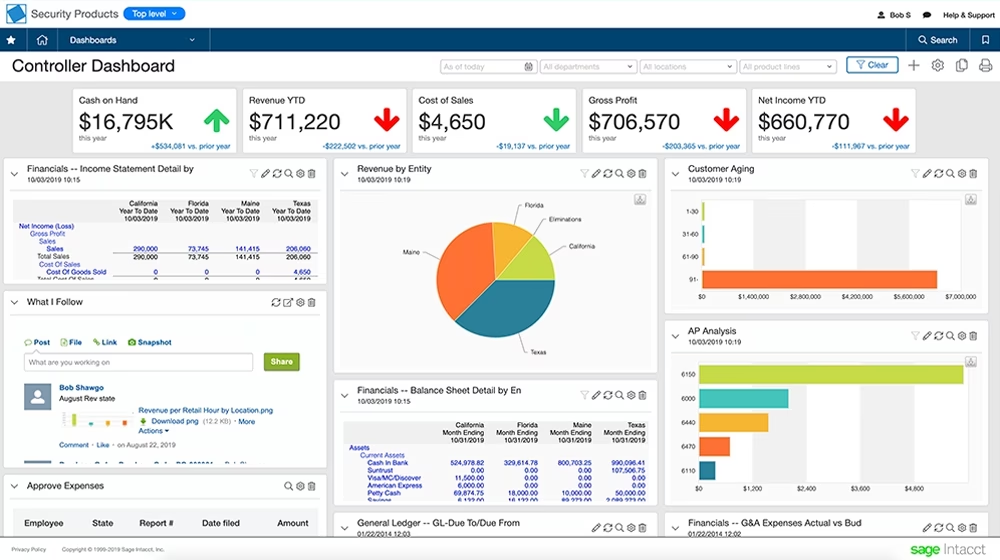
Sage Intacct is a cloud financial management platform designed around accounting, reporting, control, and automation.
It supports accounts payable, accounts receivable, cash management, general ledger, purchasing, order management, revenue management, budgeting integrations, and multi-entity accounting. Its dimensional architecture allows finance teams to report by department, location, project, fund, customer, program, or other business dimension without creating an excessively complex chart of accounts.
Compared with Acumatica, Sage Intacct is generally more finance-focused. It does not attempt to provide the same breadth of native manufacturing, warehouse, or supply-chain functionality. Its strength is giving finance teams sophisticated reporting and accounting capabilities in a cloud-native platform. For a more detailed comparison, read Sage Intacct vs. Acumatica: Which cloud ERP is right for your business?
Sage Intacct is a strong Acumatica alternative when:
- Financial reporting and accounting controls are the primary requirements.
- The company manages multiple entities or complex ownership structures.
- Finance needs flexible reporting without extensive spreadsheet manipulation.
- The organization does not require advanced manufacturing or supply-chain functionality.
- The company wants cloud-based financial automation and Sage Copilot capabilities.
Rand Group helped B-29 Investments transform multi-entity financial management with Sage Intacct. The organization manages more than 20 companies and saved over two hours per day by automating intercompany accounting and simplifying reporting.
Sage 100
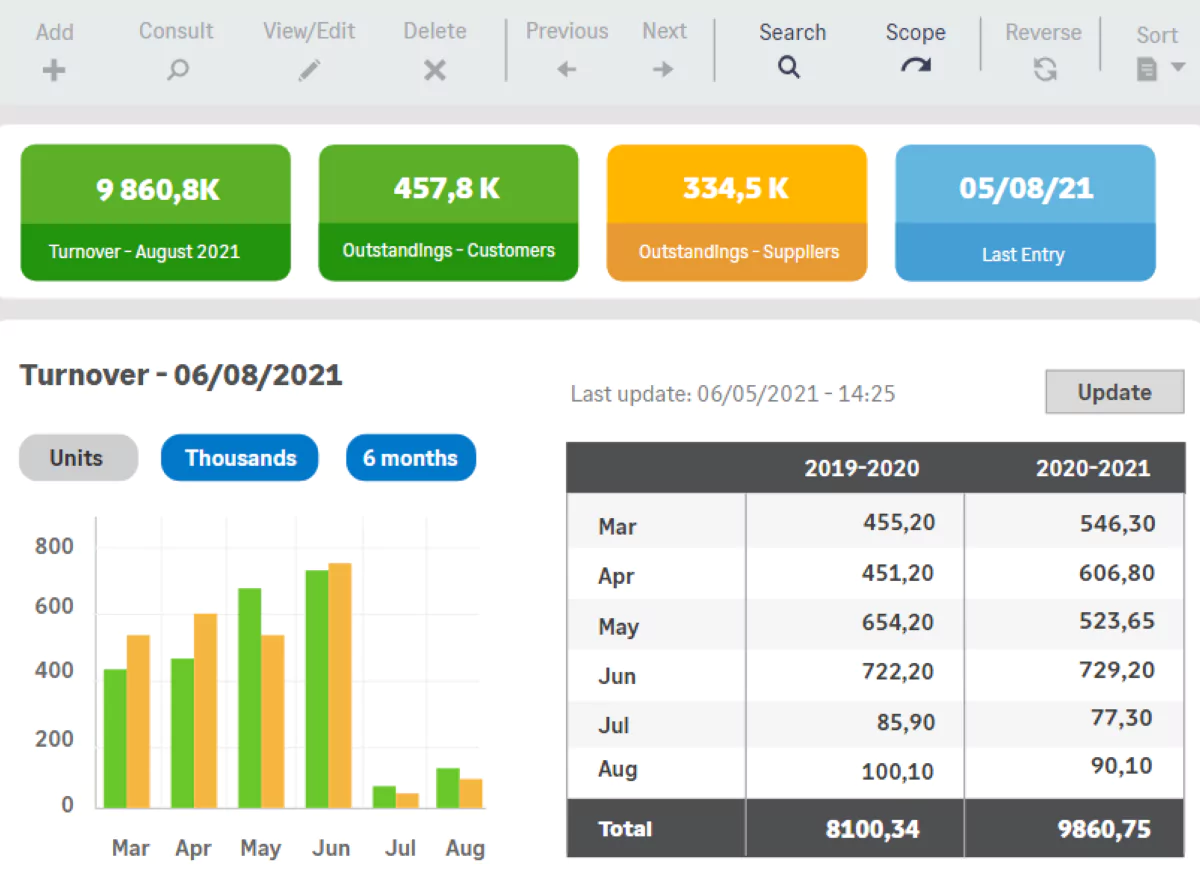
Sage 100 is a long-established ERP and accounting solution for small and midsize businesses that have outgrown entry-level accounting software.
It supports financial management, sales, purchasing, inventory, distribution, job costing, and light manufacturing. The platform is particularly well established among distributors and manufacturers that value dependable inventory control, customization, and a mature network of connected applications.
Sage 100 can be deployed on premises or through hosted environments. That flexibility can benefit businesses that are not ready for a fully multi-tenant cloud ERP or that have specific infrastructure and customization requirements.
Sage 100 is a strong Acumatica alternative when:
- The company wants proven financial, inventory, and distribution functionality.
- Manufacturing requirements are relatively straightforward.
- Cost control is more important than adopting the newest cloud architecture.
- The organization prefers an on-premises or hosted deployment.
- Existing Sage expertise or integrations make remaining in the Sage ecosystem valuable.
Sage 100 now includes AI-powered Search Help. Users can ask questions and find relevant product guidance from within the application. Its AI capabilities are currently focused mainly on user assistance, however, rather than broad financial analysis or autonomous process execution. Companies considering their longer-term Sage strategy can review our Sage 100 versus Sage Intacct comparison.
Rand Group helped Trim-Tex connect departments and add-on solutions through Sage 100. The resulting improvements reduced labor requirements, optimized inventory, saved hundreds of thousands of dollars in accounting fees, and supported fivefold company growth.
NetSuite
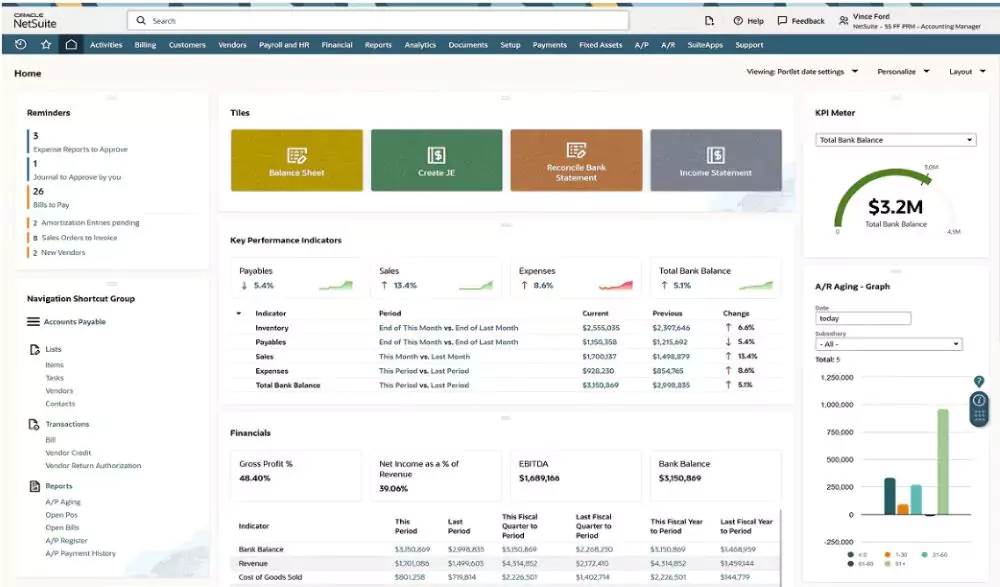
Oracle NetSuite ERP is a unified cloud business suite that combines financial management, procurement, inventory, order management, CRM, ecommerce, professional services automation, and related functionality.
NetSuite’s breadth makes it attractive to organizations that want to consolidate multiple business applications onto one platform. It also supports multiple subsidiaries, currencies, tax requirements, and international operations through NetSuite OneWorld.
Compared with Acumatica, NetSuite generally provides a broader cloud suite, a larger global installed base, and a more extensive marketplace of SuiteApps and implementation resources.
NetSuite is a strong Acumatica alternative when:
- The organization wants ERP, CRM, ecommerce, and services on one cloud platform.
- The company expects to add entities, countries, product lines, or business models.
- Multi-subsidiary and global financial management are important.
- The business wants access to a large cloud ERP ecosystem.
- Leadership needs a platform with extensive embedded AI capabilities.
For a more detailed comparison, read Acumatica vs. NetSuite: Choosing the right ERP for your business.
Rand Group implemented NetSuite for Mann Eye Institute across 17 locations. The organization reduced the time required to generate an accounts payable report from approximately 20 minutes to less than 10 seconds and supported 40% to 50% revenue growth without adding accounting headcount.
Microsoft Dynamics 365 Finance & Operations
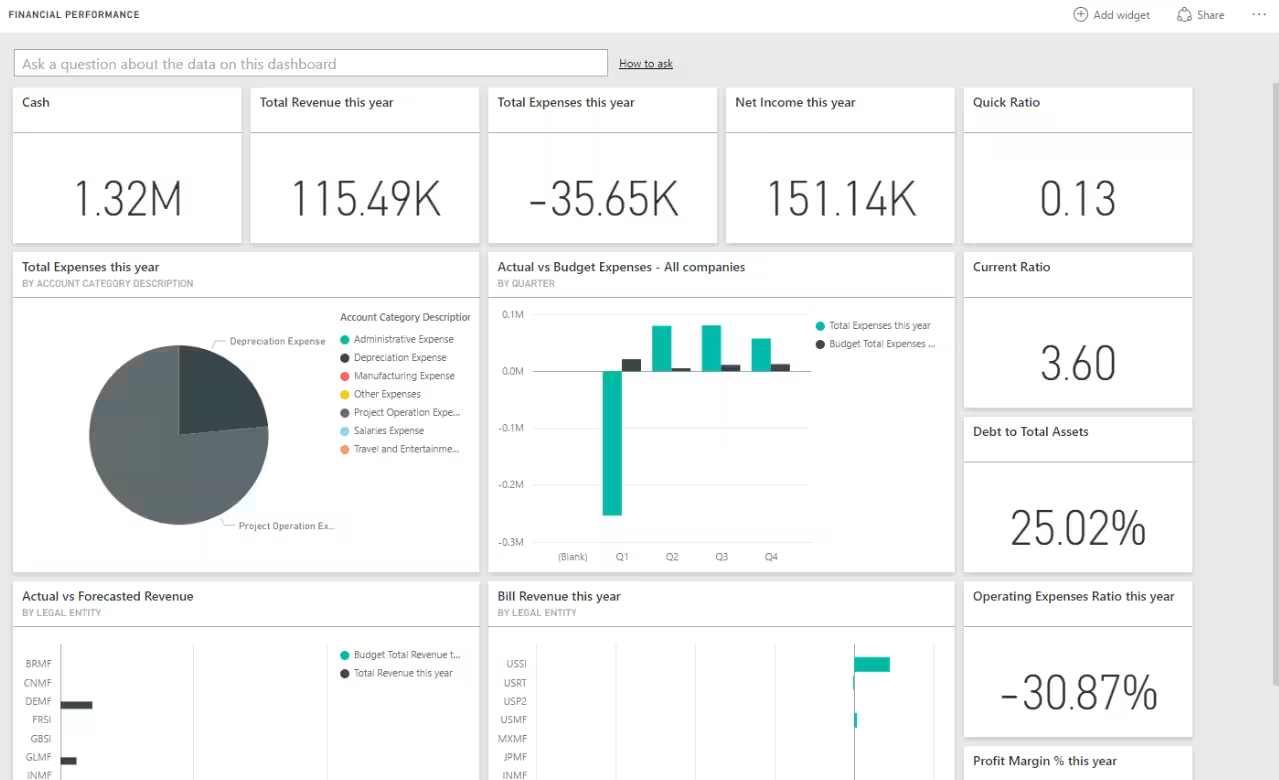
Microsoft Dynamics 365 Finance & Operations is Microsoft’s enterprise ERP application. They are often referred to collectively as Microsoft Dynamics 365 Finance and Supply Chain Management or D365 F&SCM.
Together, the applications support advanced financial management, budgeting, procurement, manufacturing, inventory, warehousing, transportation, asset management, master planning, global operations, reporting, analytics, and related enterprise requirements.
This is the Acumatica alternative for organizations whose scale or operational complexity has moved beyond the typical midmarket ERP. It supports larger transaction volumes, multiple legal entities, sophisticated manufacturing environments, and international operations.
Dynamics 365 Finance and Supply Chain Management are strong alternatives when:
- The company operates across multiple entities, plants, warehouses, or countries.
- Manufacturing, planning, warehousing, or supply-chain requirements are complex.
- The organization requires enterprise financial management and controls.
- Microsoft technology is central to the company’s broader strategy.
- Leadership wants extensive Copilot, automation, analytics, and emerging AI-agent capabilities.
The Museum of Fine Arts, Houston worked with Rand Group to modernize financial operations using Dynamics 365 Finance & Operations. The organization reduced its monthly close cycle by 50%, achieved a three-day close, and accelerated purchase approvals by 67%.
SAP Business One
SAP Business One is SAP’s ERP application for small and midsize companies. It supports accounting, purchasing, inventory, sales, customer management, reporting, distribution, and manufacturing.
Its manufacturing and distribution functionality makes it a frequent Acumatica competitor among operations-heavy businesses. It also offers access to the larger SAP product and partner ecosystem.
SAP Business One may be a good fit when:
- Manufacturing or distribution is central to the organization.
- The business values SAP’s global name and ecosystem.
- The company prefers a mature, established ERP architecture.
- Available SAP partners and industry extensions align with its requirements.
Potential trade-offs include a more traditional architecture than many cloud-native competitors and a reliance on partner applications for certain requirements. AI capabilities can also vary based on the version, deployment, connected SAP services, and third-party solutions used. SAP Business One remains a relevant option because many small and midsize manufacturers evaluate it directly against Acumatica.


Not sure which alternative fits your business?
The clearest path to the right ERP is a structured evaluation of your requirements, risks, and goals before you commit to any platform. Rand Group’s ERP software selection engagement helps you compare options side by side and build a practical roadmap.
Which Acumatica alternative fits your business need?
The best alternative depends on the problem you are solving, not on any single “best ERP” label. Use the quick reference below to narrow your shortlist before you move on to pricing conversations and demos.
This table should be used as a starting point, not as a substitute for requirements analysis. Two companies of a similar size may need very different ERP systems because of differences in product complexity, transaction volume, reporting, integrations, regulatory requirements, and growth strategy.
How to choose the right Acumatica alternative
The right ERP should align with your current processes, future growth plans, technology environment, and available resources. Rather than comparing platforms by feature count alone, evaluate each alternative against the following criteria:
- Define the required scope. Identify which functions the ERP must support now and over the next three to five years, including finance, inventory, purchasing, manufacturing, projects, ecommerce, CRM, reporting, and multi-entity accounting.
- Document critical business processes. Ask vendors to demonstrate real workflows, exceptions, and industry-specific requirements. This helps reveal whether each process is supported natively, through configuration, with an add-on, or through customization.
- Calculate total cost of ownership. Look beyond licensing to include implementation, data migration, integrations, reporting, infrastructure, training, support, upgrades, and ongoing optimization.
- Evaluate the partner and product ecosystem. Consider the implementation partner’s industry experience, project methodology, technical expertise, and post-go-live support. A larger ecosystem can also make it easier to find consultants, administrators, developers, and specialized applications.
- Assess usability and adoption. Involve representatives from finance, operations, sales, purchasing, manufacturing, warehousing, and IT. Have actual users test the processes they will complete every day.
- Compare scalability. Determine whether the platform can support future entities, locations, users, transaction volumes, products, countries, and business models without excessive customization or another replacement.
- Evaluate integrations and reporting. Confirm how the ERP will connect with CRM, ecommerce, payroll, banking, warehouse, shipping, and other systems. Vendors should also demonstrate the specific reports and dashboards your teams require.
- Compare AI by use case. Ask vendors to show how AI supports real business tasks, such as analyzing data, identifying anomalies, reconciling accounts, drafting communications, recommending actions, or automating workflows. A basic help assistant should not be treated as equivalent to embedded operational or financial AI.
How Rand Group helps you evaluate and implement an Acumatica alternative
Because Rand Group is a multi-platform partner across Microsoft, Oracle NetSuite, and Sage, we are not tied to a single answer. That lets us compare alternatives with you on the terms that matter, functionality, industry fit, reporting, integrations, adoption, scalability, and long-term cost, and recommend the platform that genuinely fits.
That guidance rests on more than 20 years of ERP experience, over 3,000 successful engagements, 1,200-plus clients, and a 90% client retention rate. It also spans the full technology stack, so ERP, CRM, reporting, analytics, integrations, automation, AI, and cloud infrastructure come from one partner instead of several.
Here is how we support the move to an Acumatica alternative, from first evaluation through long-term optimization:
- Multi-platform selection and roadmap planning: We assess your current systems, pain points, reporting needs, data quality, and growth plans to decide which alternatives belong on your shortlist and which to rule out early.
- Implementation and integration: We plan, configure, integrate, test, and deploy your new ERP with a focus on process alignment, clean data, and user adoption, so go-live is the start of value, not the finish line.
- Reporting, analytics, and AI: Because reporting and data migration are the most common risks when leaving one ERP for another, we pay particular attention to dashboards, native reporting, business intelligence, and AI-enabled automation.
- Ongoing support and optimization: After go-live, we continue with troubleshooting, training, enhancements, and tuning so the system keeps delivering value as your business evolves.
Frequently asked questions about Acumatica alternatives
What is the best Acumatica alternative?
There is no single best alternative; it depends on your size, industry, functionality needs, and budget. Business Central and Sage Intacct are frequent front-runners for small to midsize businesses, while NetSuite and Dynamics 365 Finance & Operations tend to fit midsize and larger organizations with more complex requirements.
Why do businesses switch away from Acumatica?
The most common reasons are a desire for deeper native financial reporting, a larger pool of consultants and in-house talent, tighter Microsoft 365 integration, more predictable pricing, or a platform better suited to enterprise-scale, multi-entity operations. None of these are universal, which is why a structured comparison matters.
How does Acumatica pricing compare with per-user ERP systems?
Acumatica generally uses resource or consumption-based licensing rather than pricing the system primarily by named user. Costs depend on factors such as the applications licensed and the expected level of transaction activity or computing resources required. This can be attractive for businesses with many occasional users, but the most economical option depends on actual usage, implementation scope, integrations, support, and anticipated growth. Businesses should compare total cost of ownership using their own operating assumptions rather than licensing structure alone.
Is Business Central a good Acumatica alternative?
Yes. Business Central is a strong option for businesses that want broad ERP functionality with native Microsoft integration. It is designed for small and midsize organizations and connects closely with Microsoft 365, Power BI, and Power Platform, which often eases adoption.
Is NetSuite a good Acumatica alternative?
Yes. NetSuite suits organizations that want a unified cloud suite spanning ERP, CRM, ecommerce, inventory, procurement, and services. Because it and Acumatica are so often compared directly, a side-by-side review of the two is a common and worthwhile step.
Which Acumatica alternative is best for manufacturing?
Dynamics 365 Finance & Operations, SAP Business One, NetSuite, and Business Central Premium are all worth considering, with the right choice depending on production complexity, warehouse needs, and company size. Sage 100 can also fit smaller manufacturers with lighter production requirements.
Which Acumatica alternative works best with Microsoft 365?
Dynamics 365 Business Central and Dynamics 365 Finance & Operations are the strongest fits for Microsoft-centric teams. Business Central suits small to midsize organizations, while Finance & Operations suits medium to large enterprises with more complex needs.
How can Rand Group help me choose an Acumatica alternative?
Rand Group helps you define requirements, compare platforms objectively, evaluate fit, plan data migration and integrations, train users, and support the system after go-live. As a multi-platform partner, we can recommend across Microsoft, NetSuite, and Sage rather than steering you toward a single product.
Final thoughts on choosing an Acumatica alternative
Acumatica is a capable cloud ERP, but it is one option among several strong ones, and the right platform is the one that lines up with your size, industry, budget, reporting needs, and technology strategy. For small to midsize businesses, Business Central, Sage Intacct, and Sage 100 are all worth a close look, with SAP Business One a further option where manufacturing depth is key. For midsize and larger organizations with more complex operations, NetSuite and Dynamics 365 Finance & Operations usually lead the field.
The best way to decide is a structured evaluation grounded in your processes and goals, not a feature list. Contact Rand Group to compare Acumatica alternatives, weigh the trade-offs, and build a practical ERP roadmap for your business.