Dynamics 365
 Power Platform
 Dynamics
 Cloud & Productivity
Microsoft Dynamics 365 Finance & Supply Chain Management for complex manufacturing
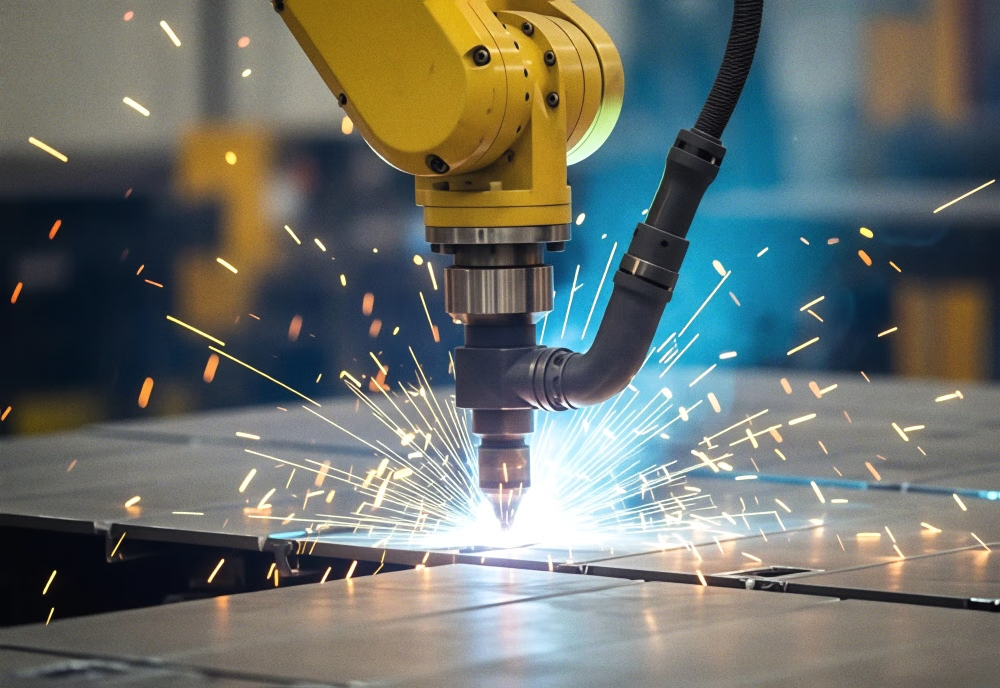
Complex manufacturers need more from an enterprise resource planning system than basic inventory tracking and production orders. They may operate multiple facilities, use several production methods, manage formulas and engineering changes, maintain strict quality standards, or coordinate production with complex financial and supply chain requirements.
Microsoft Dynamics 365 Finance and Supply Chain Management provides a connected ERP platform for managing these demands. Together, the applications are still commonly referred to as Dynamics 365 Finance and Operations, Dynamics 365 F&O, or Dynamics 365 F&SCM.
While many manufacturing ERP systems can support straightforward discrete production, Dynamics 365 F&SCM goes further. It supports discrete, process, lean, and mixed-mode manufacturing, giving organizations the flexibility to manage different production models within one platform.
At a glance
Dynamics 365 Finance and Supply Chain Management connects production, planning, quality, warehousing, maintenance, costing, and finance in one ERP platform. It supports discrete, process, lean, and mixed-mode manufacturing, along with advanced planning, traceability, Copilot, and emerging AI agent capabilities.
Table of contents
- What is Dynamics 365 Finance and Supply Chain Management?
- How Dynamics 365 Finance and Supply Chain Management supports complex manufacturing
- Complex manufacturing models supported by Dynamics 365 Finance & Supply Chain Management
- When should a manufacturer consider Dynamics 365 F&SCM?
- Best practices for implementing Dynamics 365 F&SCM in complex manufacturing
- Work with an experienced Dynamics 365 Finance & Supply Chain Management partner
- Key takeaways
- Frequently asked questions
What is Dynamics 365 Finance and Supply Chain Management?
Dynamics 365 Finance and Dynamics 365 Supply Chain Management are cloud-based ERP applications designed for organizations with advanced operational and financial requirements. Dynamics 365 Finance supports general ledger, accounts payable, accounts receivable, budgeting, cash management, cost accounting, fixed assets, and financial reporting, while Dynamics 365 Supply Chain Management supports product information management, procurement, production planning and execution, inventory, warehousing, transportation, quality management, asset maintenance, manufacturing costing, and supply chain planning.
Together, the applications connect manufacturing activity with financial results. Material consumption, labor, overhead, production variances, and finished inventory can flow directly into costing and financial reporting instead of being reconciled manually across disconnected systems. This connection is particularly valuable for manufacturers operating multiple plants, warehouses, business units, or legal entities, as production teams can respond to shortages and scheduling constraints while finance evaluates the effect on inventory values, operating costs, and margins.
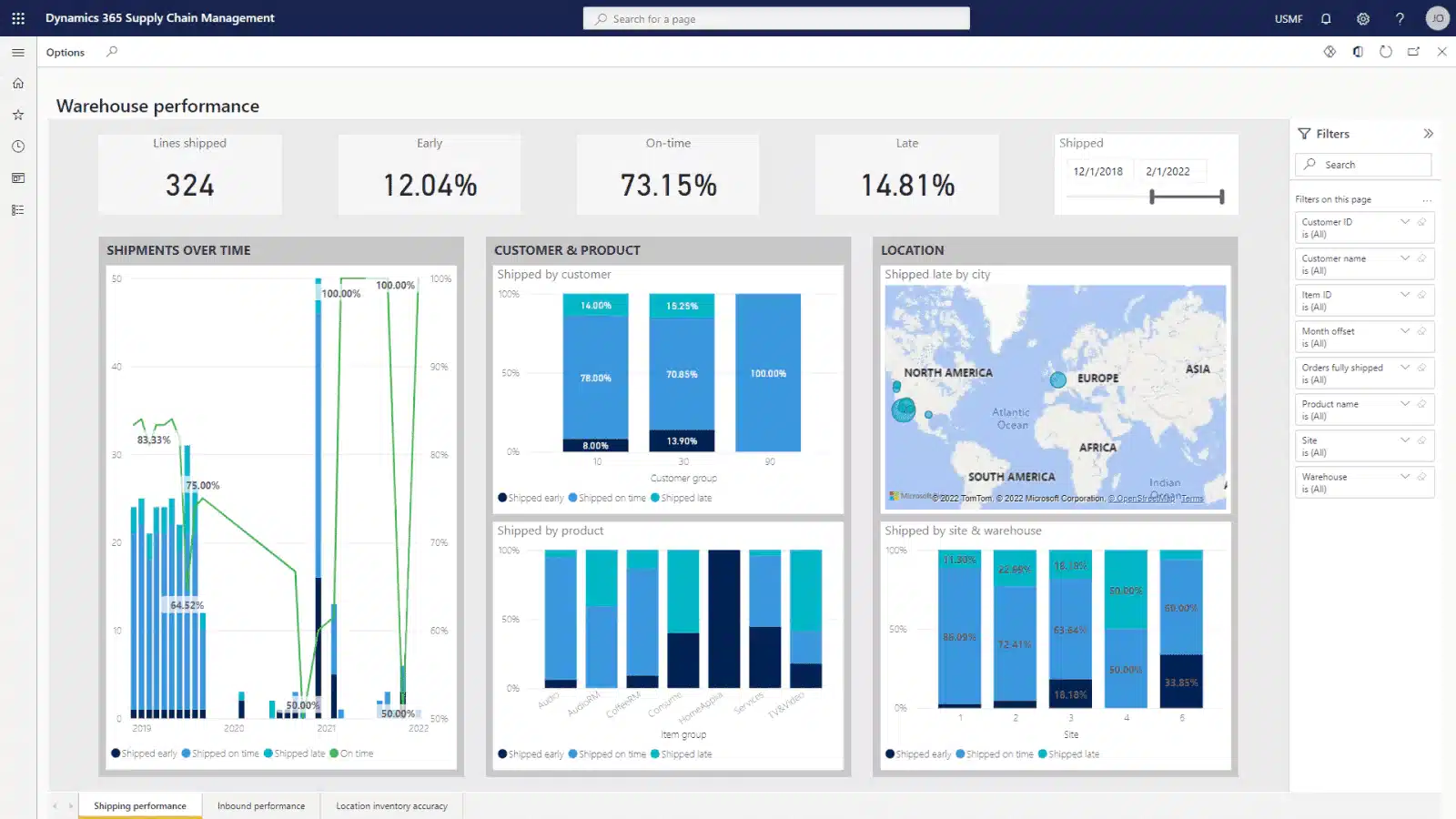
How Dynamics 365 Finance and Supply Chain Management supports complex manufacturing
Dynamics 365 F&SCM includes a broad range of capabilities that can be configured around a manufacturer’s products, production methods, facilities, and supply chain.
Production planning and scheduling
Manufacturers can manage production orders, batch orders, kanbans, bills of materials, formulas, routes, operations, resources, and capacity requirements.
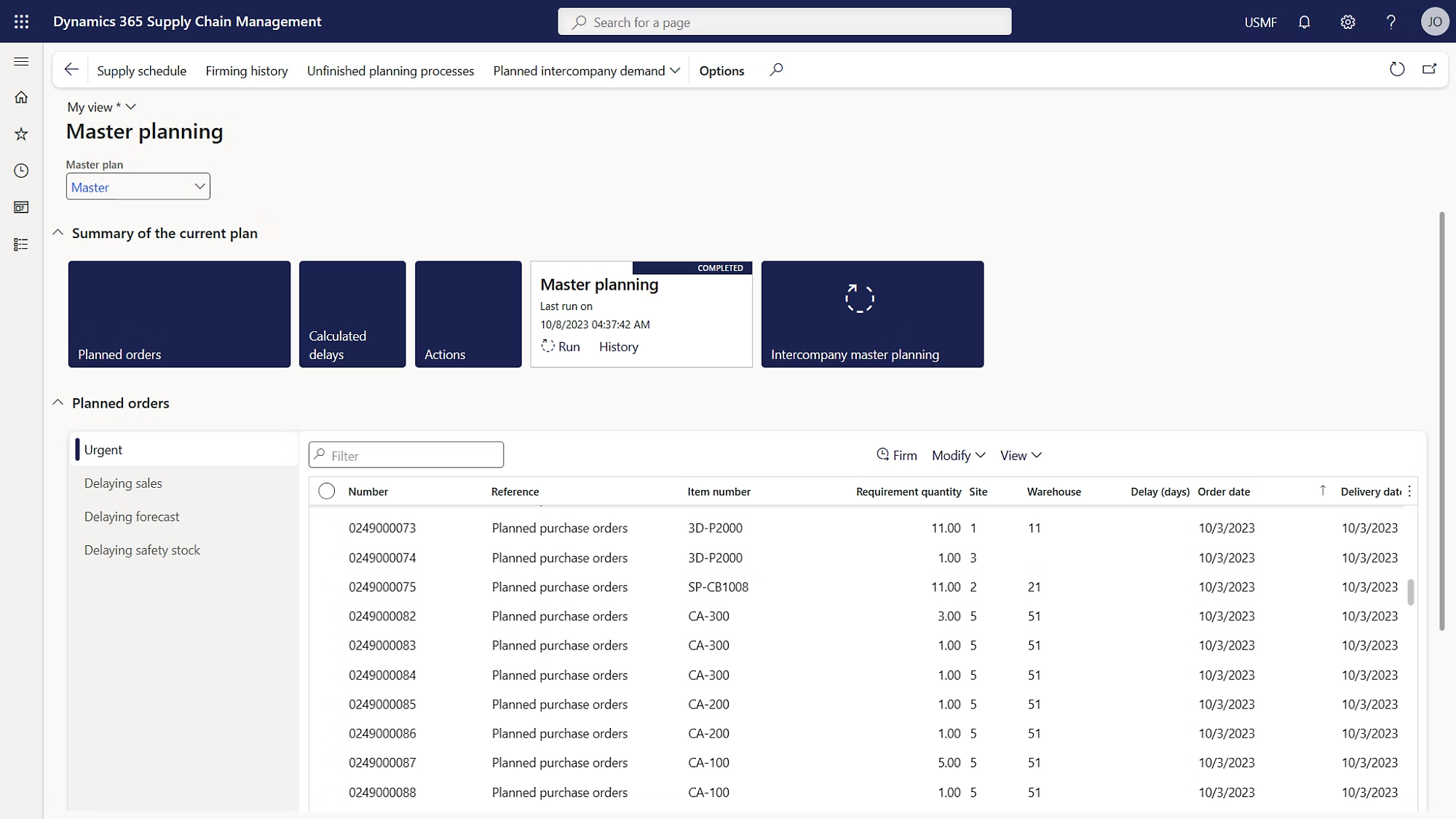
Master planning, delivered through the Planning Optimization service, can generate planned production, purchase, and transfer orders based on demand, available supply, lead times, and planning policies. Planners can identify material shortages and adjust planned orders before releasing production work. Planning Optimization replaces Microsoft’s deprecated built-in master-planning engine and performs planning calculations outside the main Dynamics 365 database.
Production control and shop floor execution
Dynamics 365 F&SCM supports the production lifecycle from estimating and scheduling through release, material consumption, production reporting, and order completion.
Through the production floor execution interface, workers can:
- Review assigned production jobs and required materials
- Start, pause, and complete jobs
- Record labor and machine time
- Report quantities produced and scrap
- Register material consumption
- Record batch and serial information
- View instructions and job progress
These registrations update production, inventory, and costing records. Planners can monitor job progress and delays, while finance can compare expected production costs with actual material, labor, machine, and scrap transactions.
Product information and engineering management
Manufacturers can manage released products, product variants, bills of materials, formulas, routes, and engineering versions.
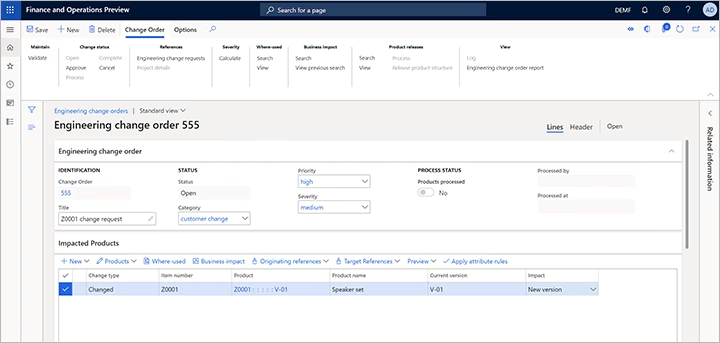
Engineering change management adds structured controls for:
- Engineering products and versions
- Change requests and change orders
- Approval workflows
- Effective dates
- Product readiness
- Impact analysis
- Release policies
For example, an equipment manufacturer can evaluate how a component change affects product structures, inventory, production instructions, and open orders before releasing the revised design. This helps prevent obsolete components or instructions from reaching production.
Inventory and advanced warehouse management
Production processes connect directly with inventory and warehouse operations. Manufacturers can manage:
- Material reservations
- Raw-material replenishment
- Receiving and put-away
- Production picking and staging
- Batch and serial tracking
- Cycle counting
- Warehouse work
- Finished-goods movement
- Inbound and outbound shipments
This helps warehouse teams deliver the required materials to production while maintaining accurate inventory records across plants and storage locations.

Quality management, compliance, and traceability
Quality controls can be incorporated into purchasing, production, and inventory processes through quality orders, tests, sampling plans, nonconformance records, and corrective actions.
Manufacturers can also use batch, lot, and serial tracking to connect raw materials and components with production orders and finished products. This supports quality investigations, recalls, warranty analysis, and regulated manufacturing processes.
The Traceability add-in is designed to track manufacturing activity using the serial and batch numbers of components and finished products. A related Copilot experience can collect and summarize information during a quality investigation, including product status, custody, and deviations associated with affected products.
Note: The Traceability add-in remains in preview and is not yet generally available. Organizations should evaluate preview terms and suitability before using it in production processes.
Manufacturing costing and financial integration
Dynamics 365 F&SCM connects manufacturing activity directly with finance. It supports standard and actual costing, work in process, material and labor consumption, overhead allocation, production variances, and inventory valuation.
Planners can identify shortages before releasing production orders, while finance can see how material prices, labor usage, scrap, downtime, and overhead affect the cost and margin of the finished product. For a deeper look at this connection, read Dynamics 365 for manufacturing: Aligning production performance with financial outcomes.
Asset management and equipment maintenance
Built-in asset management capabilities help manufacturers manage production equipment, machinery, vehicles, and other operational assets.
Maintenance teams can manage:
- Preventive maintenance schedules
- Corrective work orders
- Service requests
- Maintenance workers and resources
- Spare parts
- Downtime history
- Maintenance costs
- Equipment performance
Connecting maintenance with production helps teams schedule service before equipment failures delay work. It also provides a clearer view of the downtime and maintenance costs associated with each asset.

Procurement and supplier management
Manufacturers can connect production demand with purchasing and supplier processes. Purchase agreements, approved vendors, lead times, confirmations, and purchase-order changes can all affect whether materials arrive in time for production.
Copilot can summarize selected purchase-order changes, while the supplier communications features of the Procurement Agent can identify orders that require follow-up, generate draft vendor emails, interpret responses, and flag proposed changes for buyer review.
Microsoft currently classifies these supplier communications features as a production-ready preview rather than generally available functionality. Manufacturers should verify availability, prerequisites, and suitability before including them in operating plans.
Transportation and outbound logistics
Transportation management is not a manufacturing method, but it is an important supporting capability for complex manufacturers. It can help manage:
- Inbound freight for raw materials
- Load building and consolidation
- Carrier selection
- Rate calculation
- Freight costs
- Outbound shipment planning
- Delivery scheduling
Connecting transportation with procurement, warehousing, sales, and finance helps manufacturers understand how freight delays and logistics costs affect material availability, customer commitments, and product margins.
AI, Copilot, and operational insights
Copilot and AI agent capabilities across Dynamics 365 Finance and Supply Chain Management can help users summarize records, review operational information, and automate selected supply chain tasks. These tools are designed to support production planners, quality managers, procurement teams, and financial professionals rather than replace their expertise or decision-making.
Relevant capabilities include:
- AI summaries: Copilot can summarize information on supported product, vendor, order, and warehouse pages.
- Demand-plan analysis: Planners can use Copilot to investigate forecast trends, changes, and outliers.
- Purchase-order change summaries: Copilot can highlight supplier changes that may affect production or downstream orders.
- Warehouse workload insights: AI-generated summaries can help teams review open work and allocate resources.
- Supplier communications: The Procurement Agent can draft vendor follow-ups, interpret responses, and flag proposed purchase-order changes. This capability is not yet generally available.

Understand Dynamics 365 F&SCM pricing and licensing
Licensing Dynamics 365 Finance and Supply Chain Management depends on the applications, user roles, and capabilities your organization needs. Explore subscription options, user types, base and attach licensing, and other cost considerations in our comprehensive guide.
Complex manufacturing models supported by Dynamics 365 Finance & Supply Chain Management
Dynamics 365 Supply Chain Management supports discrete, process, and lean manufacturing. Manufacturers can also combine these approaches within a mixed-mode environment.
Discrete manufacturing
Discrete manufacturing is used to produce identifiable, countable items assembled from individual parts or components. It is common in industries such as industrial equipment, automotive components, electronics, aerospace, machinery, and fabricated products.
A discrete manufacturer typically needs to define what goes into a product, how it is built, which resources perform the work, and how long each operation should take.
For example, a company manufacturing commercial refrigeration systems may assemble compressors, electrical components, panels, and customer-specific options into a finished unit. Each model may have its own bill of materials, routing steps, labor requirements, and configuration choices.
Dynamics 365 F&SCM helps manage this type of production by connecting:
- Bills of materials and product configurations
- Production routes and operations
- Labor, machines, and production resources
- Material availability and reservations
- Production orders and shop-floor activity
- Serial- and batch-controlled components
- Work in process and production costs
Discrete manufacturing is available in many ERP platforms. The more important differentiator for complex manufacturers is that Dynamics 365 can combine discrete production with process and lean methods in the same environment.
Process manufacturing
Process manufacturing is used when products are created through mixing, blending, chemical reactions, or recipe-based production rather than by assembling individual components.
It is common in industries such as:
- Food and beverage
- Chemicals
- Pharmaceuticals
- Cosmetics
- Paints and coatings
- Plastics
- Ingredients and bulk materials
A process manufacturer may need to account for raw materials with different characteristics, variable yields, expiration dates, potency, concentration, and multiple outputs from the same production run.
For example, a food manufacturer may produce a batch of sauce using ingredients measured by weight. Individual ingredient lots may have different expiration dates or quality results, and the completed batch may be divided into several package sizes. The process may also produce waste, secondary products, or yield differences that must be recorded.
Dynamics 365 F&SCM supports these requirements through:
- Formulas and formula versions
- Batch orders
- Co-products and by-products
- Variable yields
- Catch-weight items
- Potency and concentration controls
- Batch attributes
- Shelf-life and expiration management
- Ingredient substitutions
- Batch balancing
- Lot traceability
This is a major part of the complex manufacturing story. Traditional discrete manufacturing software is often built around fixed component quantities and predictable outputs. Process manufacturers need an ERP that can accommodate formulas, variable material characteristics, changing yields, and detailed batch traceability.
Lean and flow manufacturing
Lean manufacturing focuses on improving production flow, reducing waste, and replenishing materials based on actual demand or consumption.
Rather than creating a traditional production order for every activity, lean manufacturers may use kanban signals, production flows, and work cells to coordinate repetitive work and keep materials moving through production.
For example, a manufacturer of industrial pumps may use production orders for final assembly while replenishing commonly used subassemblies through kanban rules. When inventory at a production cell falls below a defined level, a replenishment signal can trigger additional production or material movement.
Lean manufacturing is especially relevant when organizations want to:
- Reduce excess work-in-process inventory
- Shorten production lead times
- Replenish materials based on consumption
- Support repetitive production
- Improve flow between work cells
- Minimize unnecessary handling and waiting
Dynamics 365 F&SCM allows lean production to operate alongside traditional production and batch processes. A manufacturer does not have to redesign every operation around one production method.
Mixed-mode manufacturing
Many complex manufacturers use more than one production model.
A company may use process manufacturing to create a bulk material, discrete production to package or assemble the finished product, and lean replenishment to supply frequently used materials to the production line.
Examples include:
- A chemical manufacturer that produces bulk liquids in batches and packages them into individual containers
- A food manufacturer that uses batch production for recipes and flow-based processes for packaging
- An equipment manufacturer that builds custom machines through discrete production while replenishing common components through kanban
- A coatings manufacturer that produces formulas in batches and assembles finished kits through discrete processes
- A medical device manufacturer that combines controlled assembly with batch-tracked materials and repetitive subassembly production
Dynamics 365 F&SCM can support these methods within the same organization. Different items, facilities, or production stages can follow the manufacturing approach that best reflects how the work is performed.
That is one of the platform’s strongest advantages for complex manufacturers. Instead of forcing every product into the same workflow, Dynamics 365 F&SCM can support the different ways materials are purchased, produced, moved, tested, packaged, and costed across the business.
When should a manufacturer consider Dynamics 365 F&SCM?
Dynamics 365 Finance and Supply Chain Management may be a strong fit for manufacturers that:
- Operate multiple plants, warehouses, or legal entities
- Use process, lean, or mixed-mode manufacturing
- Manage complex bills of materials, production routes, or formulas
- Need advanced planning, warehousing, or transportation management
- Require detailed batch, lot, or serial traceability
- Need tighter integration between manufacturing and finance
- Depend on integrations with MES, PLM, ecommerce, shipping, equipment, or other operational systems
- Manage frequent engineering changes, product versions, approvals, or effective dates
- Operate across multiple currencies, countries, tax jurisdictions, or regulatory environments
The system may provide more functionality than a small manufacturer with straightforward production requirements needs. The selection process should begin with the organization’s production models, operational complexity, reporting needs, and growth plans.
Best practices for implementing Dynamics 365 F&SCM in complex manufacturing
Complex manufacturing implementations involve interconnected processes across production, engineering, quality, warehousing, supply chain, and finance. After guiding manufacturers through many Dynamics 365 F&SCM implementations, we’ve found that an experienced implementation team must evaluate how decisions made in one area affect the rest of the operation rather than designing each department in isolation. The following practices can reduce project risk and help the organization build a more sustainable system:
- Document your manufacturing models. Identify where the organization uses discrete, process, lean, or mixed-mode production.
- Design processes before configuring the system. Avoid recreating inefficient legacy procedures simply because employees are familiar with them.
- Clean and validate manufacturing data. Review items, bills of materials, formulas, routes, resources, suppliers, and inventory before migration.
- Involve cross-functional subject-matter experts. Include production, engineering, quality, finance, procurement, warehousing, and IT in design and testing.
- Prioritize essential integrations. Define how Dynamics 365 F&SCM will connect with MES, PLM, equipment, e-commerce, shipping, and other critical systems.
- Test complete scenarios and exceptions. Follow transactions from planning through financial posting and include scrap, rework, substitutions, downtime, and failed inspections.
- Plan for adoption and continuous improvement. Provide role-based training and continue optimizing planning, reporting, workflows, automation, and Copilot capabilities after go-live.

Explore Dynamics 365 F&SCM for your manufacturing operation
Not sure whether Dynamics 365 Finance and Supply Chain Management can support your production, planning, and financial requirements? Discuss your manufacturing processes, current challenges, and ERP priorities with an experienced consultant.
Work with an experienced Dynamics 365 Finance & Supply Chain Management manufacturing partner
Choosing an ERP is only one part of the decision. Complex manufacturing implementations also require a partner that understands production, supply chain, and financial processes.
As a full-service Microsoft Dynamics 365 partner, Rand Group provides:
- ERP assessments and implementation planning
- Dynamics 365 F&SCM implementation and migration
- Process design and system configuration
- Integrations and custom development
- Training and change management
- Post-go-live optimization and Dynamics 365 support
Rand Group’s consultants work with manufacturing, finance, supply chain, and technology teams to design systems around the organization’s actual operating requirements. Our 90%+ client retention rate reflects our focus on stable teams, responsive service, and long-term relationships.
Hear what our clients say
“Working with Rand Group has been a game-changer for us. We felt fully supported the entire way, and whenever issues came up, the team was right there problem-solving with us.”— Danielle Johnson, Director of Data Systems, A-Z Process Solutions
“We have always felt like a top priority when working with Rand Group’s team and have the utmost confidence in their industry and technical knowledge.”— Christa Curette, VP of Engineering & Technology, Conquest Completion Services, LLC
Key takeaways
- Dynamics 365 F&SCM supports discrete, process, lean, and mixed-mode manufacturing.
- Planning Optimization helps identify material and supply requirements before production begins.
- Quality, traceability, engineering, warehousing, and asset management are built into the platform.
- Manufacturing activity connects directly with costing, inventory valuation, and financial reporting.
- Copilot and AI agents can summarize information and automate selected supply chain tasks.
Frequently asked questions
Can Dynamics 365 F&SCM support both discrete and process manufacturing?
Yes. Dynamics 365 Supply Chain Management supports discrete, process, and lean manufacturing. Organizations can use more than one production method across different products, facilities, or stages of production.
Can Dynamics 365 F&SCM support both formula-based and assembly-based production?
Yes. Dynamics 365 F&SCM can support formula-based production through process manufacturing and assembly-based production through discrete manufacturing. Manufacturers can also combine production methods when different products, facilities, or production stages require different operating models.
Can Dynamics 365 F&SCM support mixed-mode manufacturing?
Yes. Manufacturers can combine production orders, batch orders, kanbans, purchasing, and transfer orders within the same environment. This is valuable for organizations whose products or facilities use different manufacturing models.
Does Dynamics 365 F&SCM include production planning?
Yes. Master planning is delivered through the Planning Optimization service, which can calculate material requirements and generate planned production, purchase, and transfer orders. The required configuration depends on the manufacturer’s planning model and operational complexity.
How does Dynamics 365 Finance connect with manufacturing?
Production transactions can feed inventory valuation, work in process, overhead, cost accounting, production variances, and financial reporting. This helps finance determine how material consumption, labor, scrap, and production performance affect the cost and profitability of finished products.
Is Dynamics 365 F&SCM better than Business Central for complex manufacturing?
It depends on the organization. Business Central can support many small and mid-sized manufacturers, particularly when production requirements are relatively straightforward. Dynamics 365 F&SCM is generally better suited to advanced process, lean, or mixed-mode manufacturing, global operations, and more complex planning, warehousing, and supply chain requirements. For a broader comparison, read What is the difference between D365 F&O and Business Central?
One platform for complex and mixed-mode manufacturing
Complex manufacturing implementations require more than ERP configuration. Decisions about production models, formulas, routes, costing, quality, planning, warehouse operations, engineering changes, and financial posting all affect each other. Rand Group helps manufacturers design Dynamics 365 Finance & Supply Chain Management around how their plants, warehouses, finance teams, and supply chain actually operate.
With an effective implementation strategy and an experienced partner, manufacturers can replace disconnected production and financial processes with a system built around how their plants actually operate. Contact Rand Group to discuss whether Dynamics 365 Finance and Supply Chain Management is the right fit for your manufacturing organization.