Dynamics 365
 Power Platform
 Dynamics
 Cloud & Productivity
What Is the ROI of Microsoft Dynamics 365 Field Service?

When evaluating Microsoft Dynamics 365 Field Service, one of the first questions many organizations ask is simple, what’s the return on investment? Field service operations often represent a significant portion of a company’s cost structure, from technician labor and travel to parts management and customer support. Dynamics 365 Field Service helps turn these costs into opportunities for efficiency and growth. By optimizing scheduling, improving first-time fix rates, and leveraging predictive service insights, companies can measure real financial gains in both productivity and customer satisfaction. In this post, we’ll explore what drives ROI, what results organizations are seeing, and how to calculate the value for your own service operation.
Why ROI matters when considering Dynamics 365 Field Service?
When evaluating any field service management solution, understanding the return on investment is essential. Field service operations often carry high costs, from technician travel and overtime to inventory inefficiencies and customer churn. Without clear visibility into these areas, it’s difficult to quantify how improvements translate into business value. Measuring ROI helps organizations move beyond technology features and focus on outcomes: faster service delivery, higher first-time fix rates, lower operating costs, and stronger customer retention. By quantifying these benefits, decision-makers can ensure that an investment in Microsoft Dynamics 365 Field Service aligns with both financial goals and long-term service transformation strategies.
Proven ROI: what research says about Dynamics 365 Field Service
When making the case for Microsoft Dynamics 365 Field Service, it’s not enough to talk about potential, leaders need data that proves measurable value. Fortunately, several independent studies validate the significant financial and operational impact of a well-implemented field service solution.
A Forrester Consulting Total Economic Impact (TEI) study commissioned by Microsoft found that organizations deploying Dynamics 365 Field Service achieved a 346% ROI over three years, with a payback period of less than six months.
Forrester research also demonstrated that Dynamics 365 Field Service can reduce hours billed for repair and maintenance by up to 60%, cut driving time by 50%, and lower service calls by 20%. All while improving the customer experience. These findings reflect a consistent pattern: organizations that move from reactive, manual service management to an intelligent, data-driven model see measurable improvements in productivity, responsiveness, and profitability.
In short, the ROI of Dynamics 365 Field Service isn’t theoretical, it’s proven. Across industries, companies are realizing faster service delivery, reduced operational costs, and higher customer retention, turning field service from a cost center into a key driver of business value.


Ready to transform your field service operations?
Maximize efficiency, reduce costs, and improve customer satisfaction with a tailored Microsoft Dynamics 365 Field Service implementation. Our experts at Rand Group guide you through every step, from planning and change management to deployment and adoption.
Key drivers of ROI in Microsoft Dynamics 365 Field Service
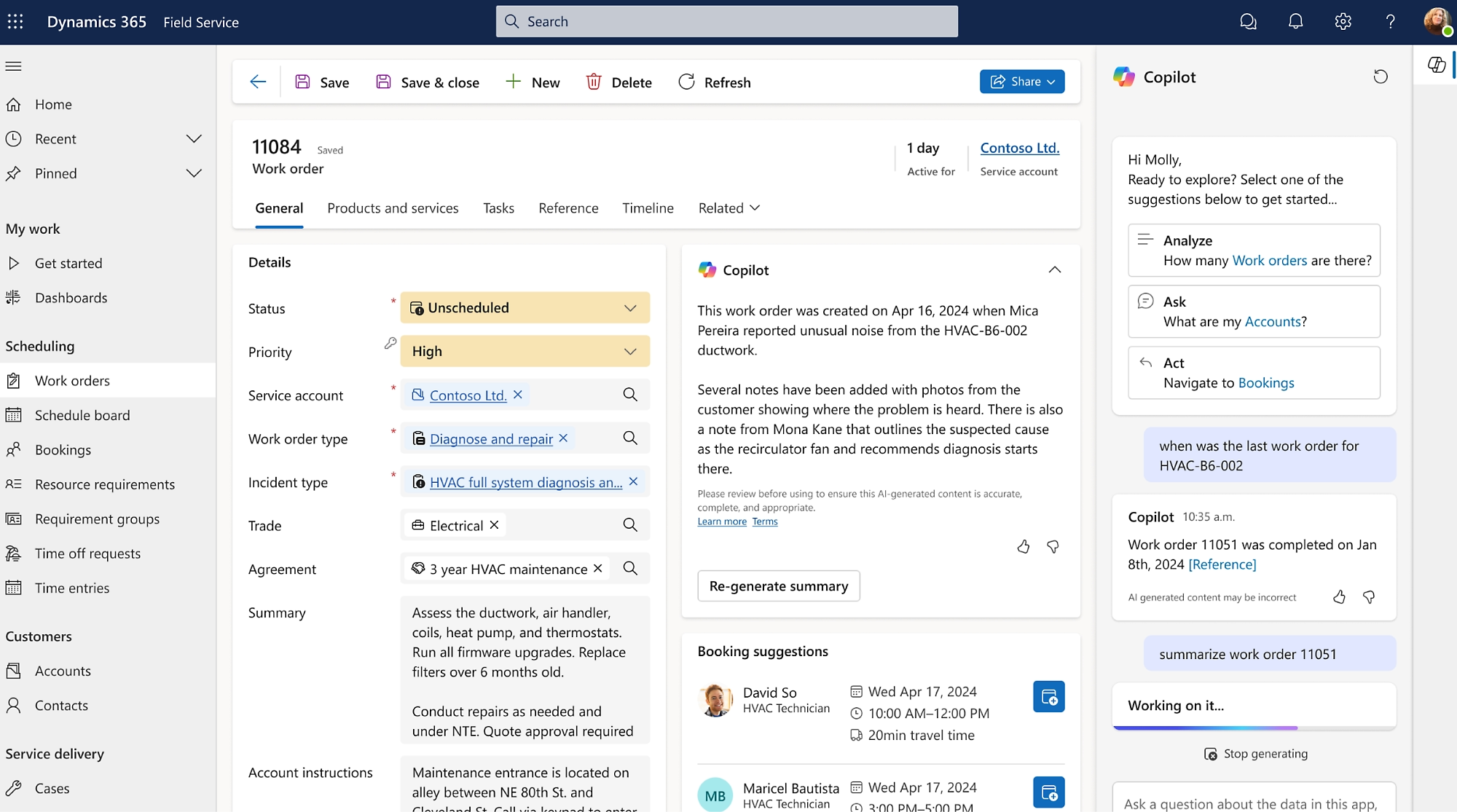
Before you can calculate the true return on investment, it’s important to understand the key levers that drive value in your field service operations. Microsoft Dynamics 365 Field Service impacts multiple areas of service delivery, from technician productivity and scheduling efficiency to customer satisfaction and predictive maintenance. By focusing on these core drivers, organizations can translate operational improvements into measurable financial and strategic benefits. The following ROI levers highlight where Dynamics 365 Field Service delivers the most impact.
- Technician Productivity: Mobile access to work orders, parts, customer history, and better scheduling enables technicians to complete more jobs in less time.
- First-Time Fix Rate: Resolving more jobs on the first visit reduces repeat visits, lowers overtime hours, and improves customer satisfaction.
- Optimized Scheduling & Travel: Modern dispatch and routing ensure the “right technician, right time, right place,” reducing travel time, fuel costs, and idle time.
- Preventive or IoT-Driven Service: Proactively servicing or replacing equipment before failure reduces unplanned downtime and costly emergency dispatches.
- Inventory and Parts Management: Real-time visibility into parts, minimizing stock-outs, and ensuring the technician has the right part all reduce delays.
- Customer Satisfaction and Retention: Happier customers lead to fewer complaints, stronger renewals or service contracts, and increased upsell opportunities.
- Reporting, Analytics & Continuous Improvement: Actionable data allows organizations to refine dispatching, technician utilization, job costing, and identify margin-leak issues.
Common pitfalls in implementing field service and how to avoid them
While the return on investment for Microsoft Dynamics 365 Field Service can be substantial, achieving it requires careful planning and execution. One common pitfall is entering a project without a strong baseline. Without accurate data on current service performance, it’s difficult to measure improvement or demonstrate value.
Another frequent challenge is underestimating the importance of change management and training. Technology alone doesn’t drive ROI, adoption does. Allocating sufficient time and budget for user training, mobile rollout, and ongoing support ensures teams are prepared to embrace new tools and processes. Integration is another critical area often overlooked. Field service operations rarely exist in isolation; they depend on seamless connections with CRM, ERP, parts inventory, IoT systems, and mobile devices. Building a clear integration roadmap upfront prevents gaps that can limit overall value.
Some organizations view Dynamics 365 Field Service as a short-term software implementation rather than a long-term service transformation. The greatest ROI comes when businesses shift from reactive “break-fix” models to proactive, data-driven service strategies. By approaching implementation as a holistic transformation of field operations rather than a simple technology upgrade, organizations can unlock the full financial and operational potential of their investment.
Achieving the full ROI of Microsoft Dynamics 365 Field Service requires the right strategy, the right data foundation, and a partner who understands the operational realities of field service. Rand Group brings a proven methodology that blends technology, process optimization, and change management to ensure organizations realize quantifiable gains, not just theoretical improvements. From establishing accurate baselines and building ROI models, to designing integrated workflows and driving user adoption, our team helps clients turn Dynamics 365 Field Service into a true engine of efficiency, cost reduction, and customer satisfaction.

Case Study:
Complete digital transformation with Dynamics 365 Field Service
See how Conquest transformed their field operations with Dynamics 365 Field Service. From eliminating manual processes to streamlining a nationwide fleet, this case study shows the real impact of modernizing field service management. Read the full story to learn how Rand Group delivered measurable efficiency, visibility, and control.
How Microsoft Dynamics 365 Field Service drives business value for your organization
For companies delivering field service whether equipment maintenance, installation, preventive servicing, or on-site customer support, the competitive landscape has shifted. Success is no longer measured solely by cost efficiency; it now depends on delivering exceptional customer experiences, responding quickly and reliably, and protecting or growing profitability. Microsoft Dynamics 365 Field Service addresses all of these dimensions.
On the cost side, it enables better resource utilization, reduces travel time, and minimizes repeat visits, translating into measurable labor and operational savings. In terms of revenue and margin, improved service quality fosters customer loyalty, increases retention, and encourages upsell or premium-service adoption.
Dynamics 365 Field Service transforms field data into actionable intelligence. Operational insights allow organizations to predict equipment failures, optimize service delivery, and make data-driven decisions that strengthen competitive differentiation. When building your ROI case, it’s important to remember that your investment goes beyond technology, it’s an investment in evolving your service model into a strategic, growth-oriented function that delivers value to both your customers and your bottom line.
Steps to Maximize ROI with Dynamics 365 Field Service
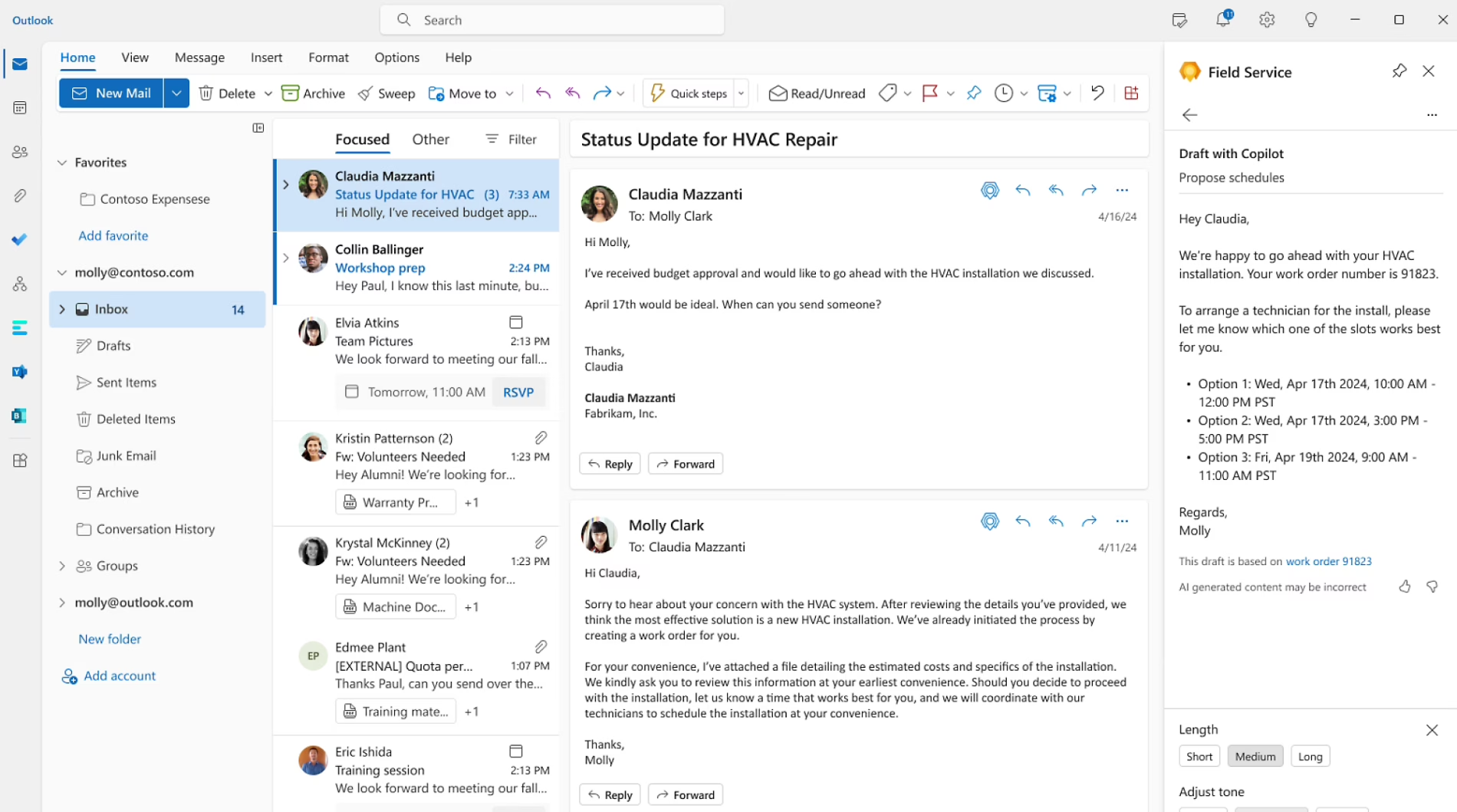
To maximize ROI and drive measurable business value, organizations should take a structured approach:
- Start a baseline audit: Capture current KPIs and cost drivers in your field service organization.
- Build a tailored ROI model: Plug in your baseline metrics, set conservative targets, and identify both risks and potential upside.
- Define your scope and timeline: Focus early on high-impact areas, such as scheduling, dispatch, or mobile technician enablement, where value can be realized quickly.
- Ensure executive alignment: Tie ROI models to business outcomes like customer retention and margin improvement, and secure leadership support.
- Engage partners wisely: Work with partners who understand both the technology and the broader service transformation required, including change management, adoption, and mobile rollout.
By following these steps, your investment becomes more than a software purchase, it becomes a strategic initiative that transforms your field service operations into a measurable, growth-driving function.

White Paper:
The complete guide to Dynamics 365 Field Service licensing and pricing
Dynamics 365 Field Service is a connected field service solution designed to increase organizational efficiency and improve customer satisfaction. Pricing and licensing is based per user or device to make it affordable and scalable for your business. Download this guide to learn how Dynamics 365 Field Service is priced, the types of users, licensing options, the resource schedule optimization add-on, and more.
Next steps
The ROI of Microsoft Dynamics 365 Field Service is compelling: research validates significant returns and rapid paybacks when implemented thoughtfully. But the true value comes from aligning technology with improved processes, change management, and data-driven service operations.
If your organization is ready to elevate its field service model, reducing costs, improving customer outcomes, and turning operations into a growth engine, then the business case is clear. Rand Group brings years of experience, a dedicated Field Service practice, and a results-driven approach to every project. From strategic assessment and solution design to implementation, and user adoption, we ensure clients realize the full value of their investment. Contact us today to explore how Dynamics 365 Field Service can transform your business.

Dynamics 365 pricing guide: Costs, licensing, and implementation explained
Understanding how Dynamics 365 pricing works is key to planning your investment and building a system that fits your business. Dynamics 365 offers flexible, per-user licensing with multiple applications that cover both ERP and CRM functionality. The total cost depends...

Your guide to Microsoft Dynamics 365 CRM pricing
Understanding Dynamics 365 CRM pricing is essential when planning your CRM investment and evaluating the total cost of ownership. The platform offers flexible licensing, multiple CRM applications, and scalable subscription options, which makes it important to...

Manage resources with ease in Microsoft Dynamics 365 Field Service
Manage resources with ease in Microsoft Dynamics 365 Field Service By Kevin DePree on September 23, 2025 Managing resources effectively is critical for organizations that deliver services in the field. Companies depend on a mix of people, crews, and equipment to get...
Subscribe to our Insights