Dynamics 365
 Power Platform
 Dynamics
 Cloud & Productivity
CRM vs marketing automation: what is the difference and why you need both

Organizations today face increasing pressure to manage customer interactions efficiently, deliver personalized communications, and align marketing and sales efforts across multiple channels. Many companies turn to technology to achieve these goals, and two solutions frequently come into consideration are customer relationship management (CRM) systems and marketing automation platforms. While these terms are sometimes used interchangeably, they serve distinct purposes.
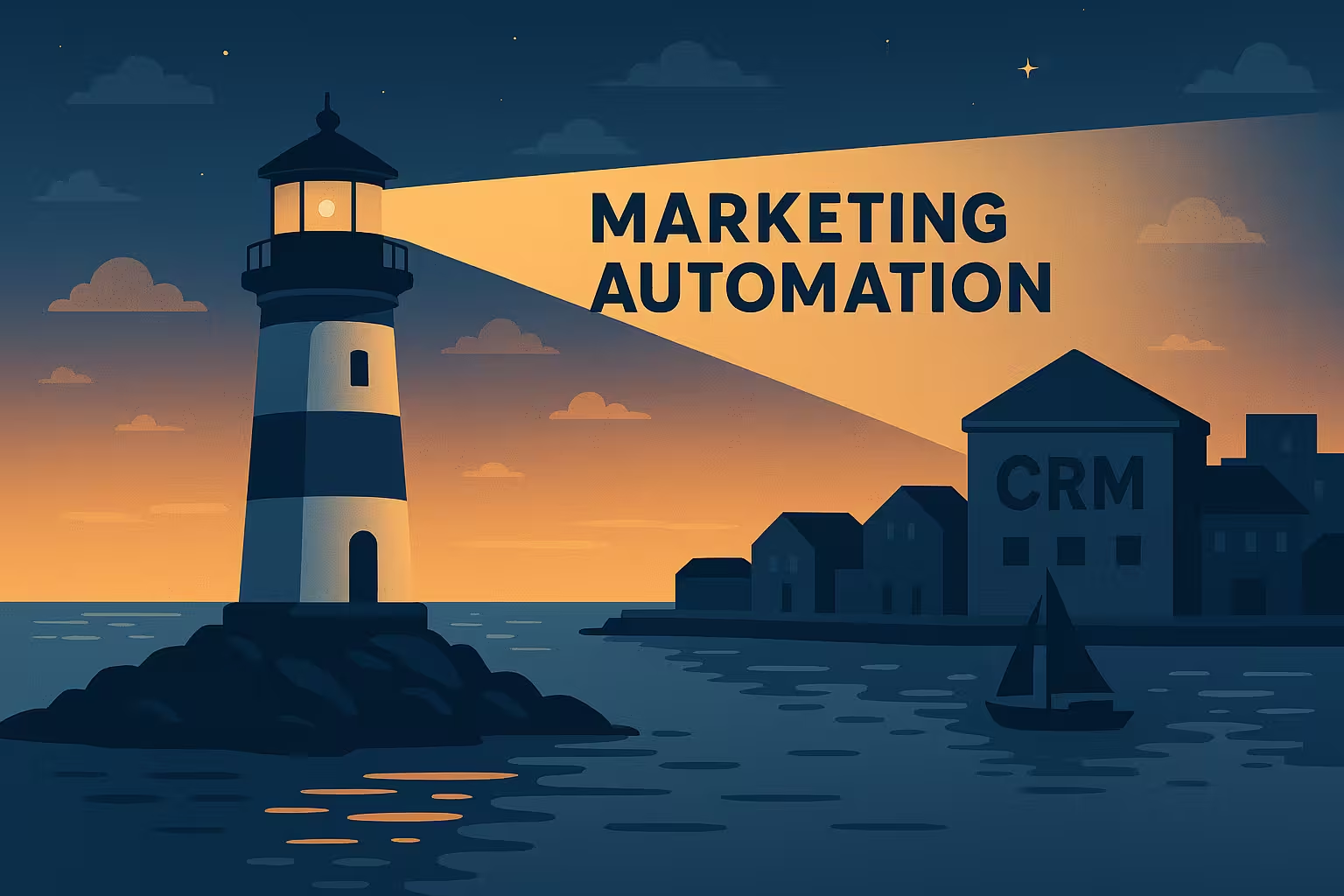
Think of marketing automation as the lighthouse: it shines a guiding light, attracting prospects through targeted campaigns, personalized messaging, and automated workflows. It helps guide interest and engagement toward your business. CRM, on the other hand, is the harbor: it organizes and manages those leads once they arrive, keeping information structured, tracking interactions, and ensuring sales teams can engage effectively at the right time. Together, they create a seamless process from initial interest to conversion, ensuring every opportunity is captured and nurtured.
Understanding the differences between CRM and marketing automation—and how they work together—is critical for organizations seeking to improve efficiency, drive revenue, and provide consistent customer experiences. This article explores the definitions, purposes, and core functions of CRM and marketing automation, explains why organizations benefit from using both, and highlights options for implementation, including real-world examples and common pitfalls to avoid.
What marketing automation is and why it matters
Marketing automation is software that automates repetitive marketing tasks, delivers personalized communications, and tracks engagement across multiple channels. Unlike CRM, which focuses on managing relationships and opportunities, marketing automation is designed to generate interest, nurture leads, and increase the efficiency of marketing operations.
Marketing automation acts as the lighthouse—shining a guiding light on prospects, drawing them toward your business through lead generation, campaign creation and delivery, audience segmentation, workflow automation, and performance measurement. By automating these processes, organizations can deliver timely, relevant messages to prospects and customers while freeing marketing teams to focus on strategy and high-value initiatives.
Marketing automation is primarily used by marketing teams to plan and execute campaigns, content managers to personalize messaging, and campaign analysts to monitor performance and optimize engagement. Core functions include lead scoring to identify high-potential prospects, multi-channel campaign management across email, SMS, social media, and web, customer journey orchestration, audience segmentation, and detailed analytics reporting that links marketing efforts to revenue outcomes. Effective marketing automation ensures consistent communication, increases engagement, and improves the efficiency and effectiveness of marketing operations.
Comparing top marketing automation options
After understanding what marketing automation is and why it matters, the next step is selecting the platform that best fits your organization’s needs. Two of the most popular options are Dynamics 365 Customer Insights and HubSpot, each offering unique capabilities to generate leads, manage campaigns, and track engagement.
Dynamics 365 Customer Insights is ideal for organizations already using Dynamics 365 Sales, as its tight integration ensures a unified view of marketing and sales activity. HubSpot, on the other hand, provides a robust standalone solution that is user-friendly and scalable for smaller teams or organizations seeking an independent platform.
What CRM is and why it matters
CRM is the harbor—safely receiving the leads guided by your marketing lighthouse, organizing them, and providing sales teams with the tools and visibility they need to navigate each relationship effectively. Its primary purpose is to help organizations manage relationships in a structured, systematic way while enabling data-driven decision-making. By capturing and tracking interactions across sales, service, and marketing touchpoints, CRM platforms create a single source of truth, giving teams visibility into opportunities, account history, and customer behavior. This centralized view allows organizations to coordinate activities, respond quickly to customer needs, and maintain consistent, informed engagement across the lifecycle.
CRM platforms are especially valuable for a wide range of users. Sales teams rely on CRM to manage leads, track opportunities, and monitor pipeline progress. Account managers use it to oversee ongoing client relationships, ensuring timely follow-ups and personalized engagement. Service teams benefit from access to comprehensive customer histories, allowing them to resolve issues efficiently and maintain customer satisfaction. Executives gain insights through reporting and analytics, enabling performance tracking, trend identification, and accurate revenue forecasting.
Core functions of CRM include lead and opportunity management, account and contact management, activity tracking, collaboration tools, and reporting and analytics. These capabilities provide teams with accurate, up-to-date information, empowering them to engage prospects effectively, prioritize high-value opportunities, and make strategic decisions based on data rather than intuition. In today’s competitive environment, CRM is not simply a tool for storing contacts—it is a foundation for optimizing relationships, improving operational efficiency, and driving growth across the organization.
Comparing top CRM options
Once an organization understands what CRM is and why it matters, the next step is selecting the right platform. Among the many options available Dynamics 365 Sales and Salesforce are widely used, each offering capabilities to manage customer relationships, track opportunities, and streamline sales processes.
For a deeper dive into how the two most popular CRM options compare, you can read our blog on Salesforce vs Dynamics 365.
Dynamics 365 Sales as a CRM solution
Dynamics 365 Sales is Microsoft’s CRM platform, designed to help organizations manage customer relationships, track opportunities, and streamline the sales process. It centralizes customer and prospect data, giving sales teams full visibility into interactions, activity history, and engagement patterns. Teams can manage leads and opportunities, track account and contact records, log activities across multiple channels, and leverage forecasting and reporting tools to monitor pipeline health and predict revenue outcomes. Integration with Microsoft 365 and the Power Platform further enhances productivity and collaboration.
A key advantage of Dynamics 365 Sales is its seamless integration with marketing automation platforms, such as Dynamics 365 Customer Insights. Leads nurtured through marketing campaigns enter the sales process with complete engagement histories, including interactions with emails, events, and content downloads. This visibility allows sales teams to prioritize outreach, tailor communications to each prospect, and convert high-value leads more efficiently, while reducing manual data entry and duplicate efforts.
Beyond basic CRM functionality, Dynamics 365 Sales offers AI-driven insights, predictive lead scoring, and opportunity analytics to identify the most promising prospects and recommend next steps. When combined with marketing automation, these capabilities provide a unified, data-driven view of the customer lifecycle, aligning sales and marketing teams, improving efficiency, and enabling organizations to drive measurable results across the entire customer journey.


Move forward with a connected customer strategy
Create a unified experience across sales, marketing, and customer data. If you’re exploring how Dynamics 365 Sales and Customer Insights can support your goals, our team can help you find the best path forward.
Why you need both CRM and marketing automation
CRM and marketing automation serve complementary purposes. CRM focuses on managing relationships, tracking opportunities, and maintaining customer records, while marketing automation drives lead generation, engagement, and nurturing at scale. Using both systems together ensures a cohesive strategy, where marketing and sales teams operate from shared data, reducing silos and improving the customer experience.
By combining the guiding light of marketing automation with the safe harbor of CRM, organizations ensure leads are not only attracted but also properly received, nurtured, and converted, creating a seamless journey from first touch to sale. Integrating CRM and marketing automation provides several benefits:
- Seamless lead-to-sales handoff: Leads nurtured in marketing automation are passed to CRM with complete engagement history, allowing sales teams to personalize outreach.
- Consistent customer experiences: Both teams access the same customer data, ensuring communications are relevant and timely.
- End-to-end reporting: Organizations can measure campaign impact and connect marketing activities directly to revenue outcomes.
- Faster sales cycles: Well-nurtured leads enter CRM ready for engagement, reducing time to close.
- Improved operational efficiency: Automation eliminates manual tasks, freeing teams to focus on strategy and customer engagement.
By combining CRM and marketing automation, organizations align teams, streamline processes, and maximize the value of customer data.

All-in-one vs. best-in-breed solutions
When selecting systems for CRM and marketing automation, organizations often face a choice between an all-in-one solution and a best-in-breed integrated solution. An all-in-one solution uses a single platform to manage both CRM and marketing automation. For example, Dynamics 365 can serve as both CRM and marketing automation, providing a unified experience with shared data, reporting, and workflows. This approach simplifies setup, ensures consistent analytics and user experience, and reduces the complexity of managing multiple vendors. However, it may not offer the depth of specialized features available in dedicated marketing automation platforms.
A best-in-breed integrated solution, on the other hand, combines specialized platforms for CRM and marketing automation that are integrated to work together. For instance, an organization might use Dynamics 365 Sales for CRM alongside HubSpot for marketing automation. This approach allows businesses to leverage the strengths of each platform, often providing more advanced functionality and flexibility. The trade-off is that careful integration, configuration, and ongoing management are required to ensure seamless data flow and reporting. Organizations interested in exploring how Dynamics 365 and HubSpot can work together can learn more in our blog on Dynamics 365 and HubSpot integration.
Real-world examples of CRM and marketing automation integration
Organizations across many industries use CRM and marketing automation together to improve engagement, streamline processes, and create connected, data-driven customer experiences.
- B2B Software: Use marketing automation to nurture webinar or event registrants and deliver relevant content, routing the most engaged leads into CRM for timely sales follow-up.
- Manufacturing: Send targeted product updates or service reminders based on purchase history, with engaged leads moving seamlessly into CRM for quoting or account management.
- Service-Based Organizations: Manage event promotions, registration workflows, and post-event communications with marketing automation, while using CRM to prioritize and track follow-up activities.
- Nonprofits: Manage donor journeys, segment outreach, and track engagement with marketing automation, while CRM supports ongoing relationship stewardship.
- Retail and E-Commerce: Deliver personalized offers and re-engagement campaigns with marketing automation, while leveraging CRM for insights into buying behavior and customer lifetime value.
Across these industries, the combination of CRM and marketing automation provides better visibility, more personalized engagement, and a smoother transition from marketing to sales or service. This connected approach helps organizations improve efficiency, enhance customer experiences, and support more predictable growth.
Common pitfalls to avoid when integrating CRM and marketing automation
Even with advanced CRM and marketing automation platforms, organizations can face challenges if systems are not properly implemented, configured, or managed. Many of these challenges stem from misalignment between teams, incomplete data, or insufficient planning, which can limit the effectiveness of technology investments and prevent organizations from realizing the full benefits of integration. Understanding common pitfalls ahead of time helps teams proactively address these risks and maximize the value of their systems.
Some of the most frequent challenges include:
- Poor data hygiene: Duplicate, incomplete, or inconsistent records reduce the effectiveness of both CRM and marketing automation, making it difficult to track leads, measure engagement, or deliver personalized experiences.
- Misaligned lead definitions: Lack of clear criteria for marketing-qualified leads (MQLs) and sales-qualified leads (SQLs) can create friction between marketing and sales teams, slowing lead follow-up and reducing conversion rates.
- Over-reliance on manual processes: Even with automation tools in place, manual workflows can persist if automation is not properly configured, limiting efficiency gains and increasing the potential for human error.
- Fragmented systems: Disconnected platforms without proper integration create silos, reduce visibility across the customer journey, and make it difficult to accurately measure ROI or campaign effectiveness.
- Insufficient measurement: Without end-to-end reporting and analytics, organizations cannot effectively link campaigns to revenue, identify areas for improvement, or optimize marketing and sales strategies.
Successfully addressing these challenges requires a combination of careful planning, governance, and alignment across marketing, sales, and service teams. Organizations should focus on establishing clear lead definitions, maintaining accurate data, implementing automated workflows thoughtfully, and ensuring systems are integrated to provide a single source of truth. By proactively managing these common pitfalls, organizations can fully leverage CRM and marketing automation platforms, improve operational efficiency, and achieve measurable outcomes that drive engagement, conversion, and revenue growth.
Next steps
To achieve measurable results, organizations should integrate CRM and marketing automation within a unified platform. Dynamics 365 Sales manages opportunities and customer relationships, while Dynamics 365 Customer Insights automates lead generation, nurturing, and engagement. Together, these solutions provide a connected, data-driven view of the customer lifecycle, enabling teams to work efficiently, reduce silos, and make informed decisions.
Rand Group helps organizations implement, integrate, and optimize Dynamics 365 solutions. Our team assesses current processes, defines lead scoring and qualification models, builds automated workflows, and provides training to ensure teams adopt the system effectively. By aligning marketing and sales operations, organizations can improve pipeline management, enhance customer engagement, and drive predictable revenue growth.
Contact Rand Group today to explore how Dynamics 365 Sales and Dynamics 365 Customer Insights can work together to streamline processes, improve collaboration, and maximize ROI.



Subscribe to our Insights