Dynamics 365
 Power Platform
 Dynamics
 Cloud & Productivity
Dynamics 365 Sales for manufacturers: Connect opportunities, quotes, and ERP data

Manufacturing sales involve more than managing leads and closing deals. Sales teams must handle complex quotes, long buying cycles, and customer requirements that often depend on pricing, inventory, and production capacity. When sales and ERP systems are disconnected, it becomes harder to respond to customers, track opportunities, and coordinate work across departments.
Dynamics 365 Sales helps manufacturers manage these processes through a connected CRM platform. When integrated with an ERP system, it can also give sales teams access to the operational information they need. In this blog, we explore the benefits, features, and manufacturing use cases of Dynamics 365 Sales, including how it connects sales opportunities, quotes, and ERP data.
At a glance:
Dynamics 365 Sales helps manufacturers manage customer relationships, complex quotes, sales opportunities, and revenue forecasts in one CRM. With Copilot, sales automation, and ERP integration, manufacturers can reduce manual work, improve pipeline visibility, and connect sales with pricing, inventory, and order data. The platform supports long B2B sales cycles, distributor relationships, and better coordination between sales and operations.
What is Dynamics 365 Sales?
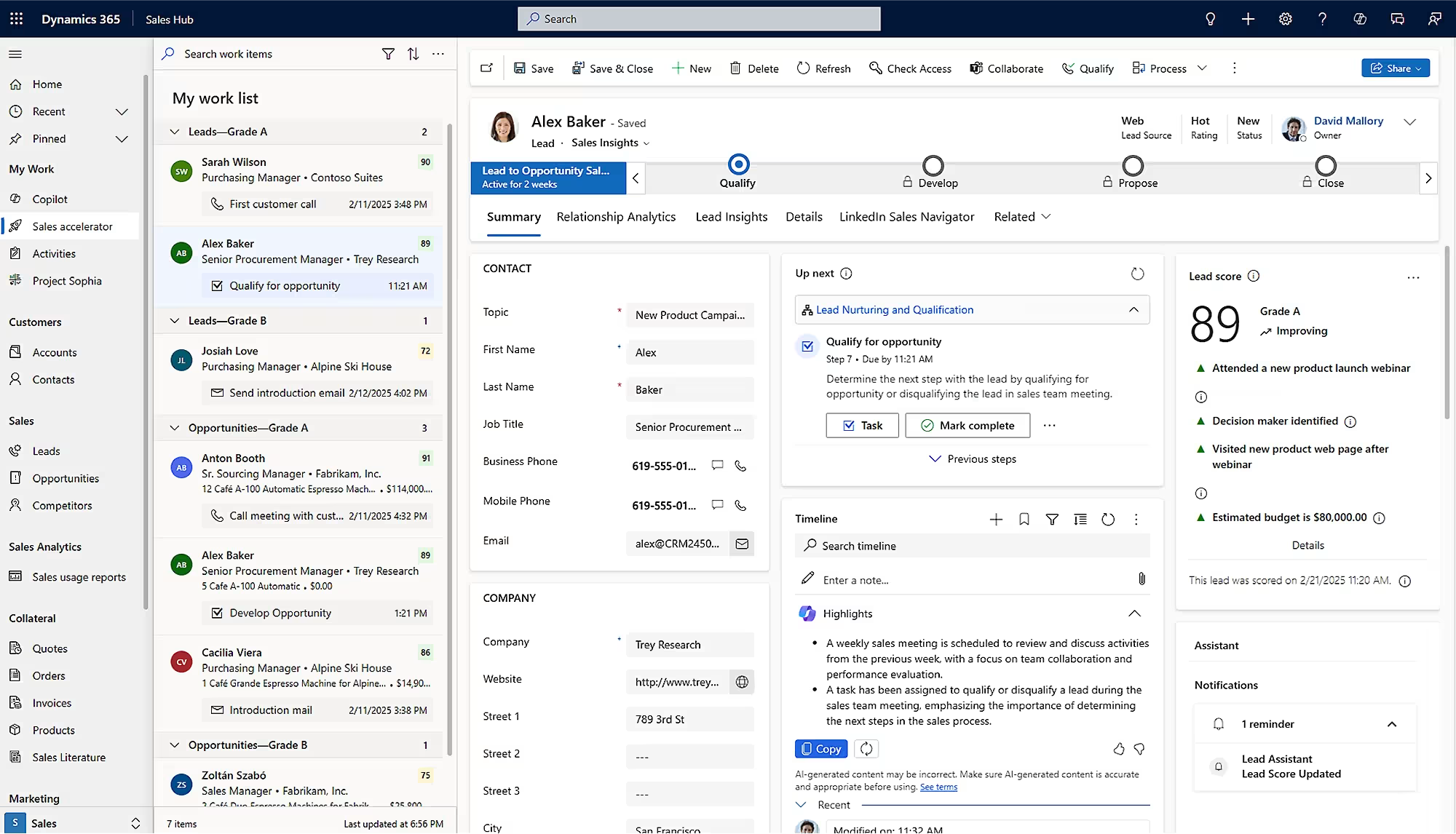
Microsoft Dynamics 365 Sales is a cloud-based customer relationship management (CRM) application that helps businesses manage the entire sales process, from lead generation to closing deals. It brings customer accounts, contacts, sales opportunities, quotes, and activities into one platform. Sales teams can use Dynamics 365 Sales to track opportunities, forecast revenue, automate routine tasks, and monitor performance. The application also includes AI-powered capabilities and integrates with other Microsoft business applications.
For manufacturers, Dynamics 365 Sales helps manage complex customer relationships, quoting requirements, and long B2B sales cycles. Sales representatives can track customer needs, manage opportunities, and coordinate sales activities from initial inquiry through closing. When integrated with an ERP system, Dynamics 365 Sales can also provide access to relevant pricing, inventory, and order information, helping sales teams make more informed decisions.
To learn more about the platform, read our blog on What is Dynamics 365 Sales?
Why manufacturers are using Dynamics 365 Sales
Manufacturers are adopting Dynamics 365 Sales to better manage sales processes that involve complex products, multiple decision-makers, and coordination across departments. Unlike traditional sales, manufacturing opportunities often require technical reviews, custom pricing, and input from engineering or production teams. Long sales cycles and distributor relationships add further complexity. When sales information is spread across spreadsheets, CRM tools, and ERP systems, managing these processes becomes even more difficult.
Common manufacturing sales challenges driving CRM adoption include:
- Disconnected sales and ERP data: Customer records, product pricing, inventory levels, and order history are often stored in separate systems. Sales representatives must switch between applications or contact other departments to get the information they need.
- Complex quoting processes: Manufacturing requests for quotes (RFQs) often involve custom products, technical specifications, volume discounts, and pricing approvals. Manual quoting can delay customer responses and increase the risk of errors.
- Long B2B sales cycles: Manufacturing deals may take months to close and involve procurement teams, engineers, finance leaders, and other decision-makers. Keeping track of each stakeholder, customer requirement, and follow-up can be difficult.
- Limited sales pipeline visibility: Sales managers often lack a clear view of active opportunities, deal progress, and expected revenue. Incomplete or outdated pipeline information also makes it harder to anticipate future demand.
- Complex distributor and customer relationships: Manufacturers may sell directly to customers or through distributors and dealer networks. Managing multiple sales channels, account relationships, and repeat orders can make customer information difficult to organize.
- Poor coordination between departments: Sales teams often depend on engineering, production, and finance to confirm product requirements, delivery dates, and pricing. Delays in sharing information can lead to inaccurate quotes, missed commitments, and slower sales cycles.
Key benefits of Dynamics 365 Sales for manufacturers
Dynamics 365 Sales helps manufacturers improve sales efficiency, make better decisions, and build stronger customer relationships. By centralizing sales information and automating routine activities, the platform gives teams more time to focus on opportunities and customer needs. When integrated with ERP and other business systems, Dynamics 365 Sales also helps manufacturers improve data accuracy, streamline workflows, and align sales activities with operations.
Key benefits of Dynamics 365 Sales for manufacturers include:
- Improved sales pipeline visibility: Give sales representatives and managers a clear view of active opportunities, deal progress, expected revenue, and upcoming activities. This helps teams identify stalled deals, prioritize opportunities, and focus on sales activities that drive results.
- Faster, more accurate quoting: Streamline quote creation with centralized product information, price lists, and consistent pricing processes. ERP integration and automated approval workflows can further reduce manual checks, minimize errors, and speed up customer responses.
- Better collaboration across departments: Give sales, engineering, finance, and operations teams access to consistent customer and opportunity information. This helps departments resolve questions faster, coordinate decisions, and avoid delays throughout the sales process.
- More reliable sales forecasting: Use current opportunity data, estimated deal values, and expected close dates to build more accurate revenue forecasts. Better forecasts help sales leaders set realistic targets and give operations teams greater visibility into potential demand.
- Increased sales team productivity: Reduce time spent on manual data entry, administrative tasks, and repetitive follow-ups. Automation and Copilot assistance help sales representatives work more efficiently and spend more time engaging with customers.
- Stronger customer relationships: Maintain a complete view of customer interactions, account needs, and sales opportunities. This helps sales teams provide more personalized service, strengthen existing relationships, and identify repeat business and cross-selling opportunities.

Connect your manufacturing sales and ERP systems
Ready to improve how your manufacturing business manages sales opportunities, quotes, and customer relationships? Rand Group can help you evaluate Dynamics 365 Sales, identify integration opportunities, and build a solution that fits your business processes.
Core features and capabilities of Dynamics 365 Sales for manufacturers
Dynamics 365 Sales provides CRM, automation, AI, and reporting tools to support every stage of the sales process. Manufacturers can use these capabilities to manage customer information, track opportunities, create quotes, and monitor sales performance. The platform can also be customized to support industry-specific sales requirements and connected with other business applications.
Core Dynamics 365 Sales features and capabilities include:
- Lead and opportunity management: Capture, qualify, and track leads through defined sales stages. Sales representatives can manage product interests, customer requirements, estimated revenue, and follow-up activities within each opportunity. Guided sales processes help teams maintain consistent lead qualification and opportunity management.
- Account and customer relationship management: Store customer accounts, contacts, communication history, and sales activities in one place. Account hierarchies and organization charts help representatives understand purchasing relationships and key decision-makers. Manufacturers can also configure records to manage distributors, dealers, and complex customer structures.
- Product catalogs, pricing, and sales quotes: Manage product catalogs, price lists, discounts, and quotes within the CRM. Sales teams can create quotes from opportunities, adjust pricing and quantities, manage revisions, and convert accepted quotes into sales orders. Complex product configurations and manufacturing-specific pricing may require ERP integration, CPQ software, or customization.
- Sales pipeline forecasting and reporting: Track open opportunities, projected revenue, sales stages, and performance against targets. Sales dashboards and configurable forecasts help managers monitor pipeline health, conversion rates, and expected revenue. Integration with Power BI supports more detailed reporting and analysis.
- Copilot and AI-powered sales insights: Use Copilot to summarize customer accounts, leads, and opportunities, prepare for meetings, and draft sales communications. AI-powered scoring and sales agents can help identify promising leads, highlight opportunities that need attention, and recommend next steps. Available capabilities depend on licensing and configuration.
- Sales automation and team collaboration: Automate routine activities, follow-up reminders, and approval processes to keep sales moving forward. Integration with Outlook and Microsoft Teams helps representatives communicate and collaborate around customer records. Power Automate can extend these workflows with custom notifications, approvals, and actions across connected systems.

How manufacturers use Dynamics 365 Sales
Manufacturers use Dynamics 365 Sales to manage sales processes that involve complex products, multiple stakeholders, and coordination across departments. The platform can be configured to support different manufacturing sales models, from responding to customer requests for quotes (RFQs) to managing distributor accounts and forecasting future demand. Here are five common ways manufacturers use Dynamics 365 Sales in their daily operations.
Managing manufacturing RFQs and complex sales quotes
Manufacturing quotes often require custom pricing, technical specifications, volume discounts, and input from several departments. Dynamics 365 Sales helps manufacturers manage the quoting process from the initial customer inquiry through quote approval. Sales representatives can track requirements, prepare quotes, and manage revisions in one place. For complex products, ERP or configure-price-quote (CPQ) integrations can provide additional pricing and product configuration capabilities.
Manufacturers can use Dynamics 365 Sales to:
- Track customer RFQs: Record customer inquiries as leads or opportunities and keep product requirements, specifications, and related documents organized.
- Create and revise quotes: Build quotes using product catalogs and price lists, apply discounts, and update quantities or pricing as customer needs change.
- Manage quote approvals: Use configured workflows to route quotes for review when pricing exceptions, special discounts, or technical approvals are required.
- Connect quotes to sales orders: Convert accepted quotes into sales orders and transfer order information to a connected ERP system for processing and fulfillment.
Tracking long sales cycles and complex B2B opportunities
Manufacturing sales often involve extended buying cycles, especially for custom products, industrial equipment, and large contracts. A single deal may require approval from procurement teams, engineers, plant managers, and financial decision-makers. Dynamics 365 Sales helps representatives manage these relationships and keep opportunities moving through each stage of the sales process. Teams can maintain a clear record of customer requirements, discussions, and next steps, even when deals take months to close.
Manufacturers can use Dynamics 365 Sales to:
- Manage multiple decision-makers: Track contacts, roles, and relationships across customer organizations to understand who influences purchasing decisions.
- Monitor opportunity progress: Define sales stages, document customer requirements, and track milestones throughout the buying process.
- Coordinate follow-up activities: Schedule meetings, assign tasks, and set reminders to maintain communication during long sales cycles.
- Prepare for customer conversations: Use Copilot to summarize opportunity history, review recent interactions, and identify important information before meetings.
Managing distributor, dealer, and customer relationships
Many manufacturers sell through a combination of direct sales, distributors, and dealer networks. Managing these channels requires visibility into account relationships, sales activity, and customer needs across multiple regions. Dynamics 365 Sales provides a central CRM for organizing these relationships and tracking opportunities across different sales channels. Manufacturers can also connect ERP or distributor data to gain a more complete view of customer purchasing activity.
Manufacturers can use Dynamics 365 Sales to:
- Organize distributor and dealer accounts: Maintain contact information, account hierarchies, assigned territories, and sales activities for each channel partner.
- Manage customer relationships: Track account ownership, customer interactions, and active opportunities to support consistent communication across sales teams.
- Identify repeat sales opportunities: Use connected sales history to understand purchasing patterns, follow up with existing customers, and identify potential cross-selling opportunities.
- Monitor channel performance: Use configured dashboards and reports to review opportunities, sales activity, and performance across distributors, territories, or customer groups.
Improving sales pipeline visibility and forecasting
Accurate sales forecasts help manufacturers plan for future demand, revenue, and business growth. Sales leaders need to understand which opportunities are likely to close, when orders may arrive, and where potential risks exist. Dynamics 365 Sales provides forecasting tools and pipeline dashboards that help teams evaluate future revenue using current opportunity data. These insights can also help operations teams prepare for expected demand while detailed production planning remains in the ERP.
Manufacturers can use Dynamics 365 Sales to:
- Track expected revenue: Monitor opportunity values, estimated close dates, sales stages, and forecast categories to understand potential sales.
- Identify pipeline risks: Review stalled opportunities, changes in deal values, and delayed close dates to find opportunities that need attention.
- Analyze sales trends: Use dashboards and reporting to compare forecasts with actual results and evaluate performance across products, territories, and customer accounts.
- Support production planning: Share expected sales demand with operations teams to help inform capacity planning, purchasing, and resource decisions.
Connecting sales, engineering, and production teams
Manufacturing sales teams often need input from engineering, production, and finance before making commitments to customers. A custom order may require technical approval, a production capacity review, or confirmation of material availability. Dynamics 365 Sales helps teams coordinate these activities by keeping customer requirements and opportunity information accessible. When integrated with ERP and collaboration tools, the CRM can also support faster communication and more informed decisions across departments.
Manufacturers can use Dynamics 365 Sales to:
- Coordinate technical requirements: Document product specifications, customer requests, and technical details so engineering and sales teams can review the same information.
- Streamline internal approvals: Use workflows to route pricing exceptions, custom product requests, or other sales decisions to the appropriate departments.
- Access operational information: Connect with ERP systems to make relevant inventory availability, order status, and pricing data accessible to sales representatives.
- Improve cross-department communication: Use Microsoft Teams, SharePoint, and automated notifications to share updates, track requests, and coordinate customer commitments.
How Dynamics 365 Sales integrates with your manufacturing technology stack
Dynamics 365 Sales can integrate with ERP systems, manufacturing applications, and other business tools to connect sales activities with daily operations. These integrations allow information to flow between systems, reducing manual data entry and giving teams access to more complete business data. Manufacturers can connect Dynamics 365 Sales with both Microsoft and third-party applications using Microsoft Dataverse, Power Platform, APIs, middleware, and other integration methods.
Common integration areas include:
- ERP and financial management systems: Connect customer records, product information, pricing, sales orders, invoices, and financial data between CRM and ERP systems. This helps sales and finance teams maintain consistent information throughout the quote-to-cash process.
- Manufacturing-specific applications: Integrate with configure-price-quote (CPQ) software, product lifecycle management (PLM) systems, and engineering tools to support custom product configurations, technical specifications, and complex quoting requirements.
- Inventory and order management systems: Give sales representatives access to product availability, order status, fulfillment details, and purchasing history. This helps teams respond to customer questions using current operational information.
- Workflow automation and collaboration tools: Connect sales activities with approval processes, notifications, document management, and communication tools. Automated workflows help information move between departments without repeated manual updates.
- Reporting and analytics platforms: Combine CRM, financial, and operational data to monitor sales performance, customer profitability, revenue forecasts, and other business metrics through connected dashboards and reports.
To learn more about integration methods and available options, read our guide on how to connect Microsoft Dynamics 365 Sales with your ERP system.
Scenario 1: Integrating Dynamics 365 Sales with Business Central
Dynamics 365 Sales integrates with Dynamics 365 Business Central through Microsoft Dataverse, connecting CRM activities with financial and operational processes. Manufacturers can synchronize customer and product records, access ERP pricing and inventory information, and transfer sales orders between applications. This allows sales teams to manage customer relationships and opportunities in Dynamics 365 Sales while Business Central handles manufacturing, inventory, fulfillment, and accounting.
For example, a sales representative preparing a quote can check product availability and pricing information from Business Central without switching applications. Once the customer accepts the quote, the sales order can be transferred to Business Central for processing, production, fulfillment, and invoicing through a configured workflow. Relevant order and invoice information can then be made available in Dynamics 365 Sales. To explore this connection further, read our blog on Dynamics 365 Sales and Business Central integration.

Scenario 2: Integrating Dynamics 365 Sales with Dynamics 365 Finance and Operations
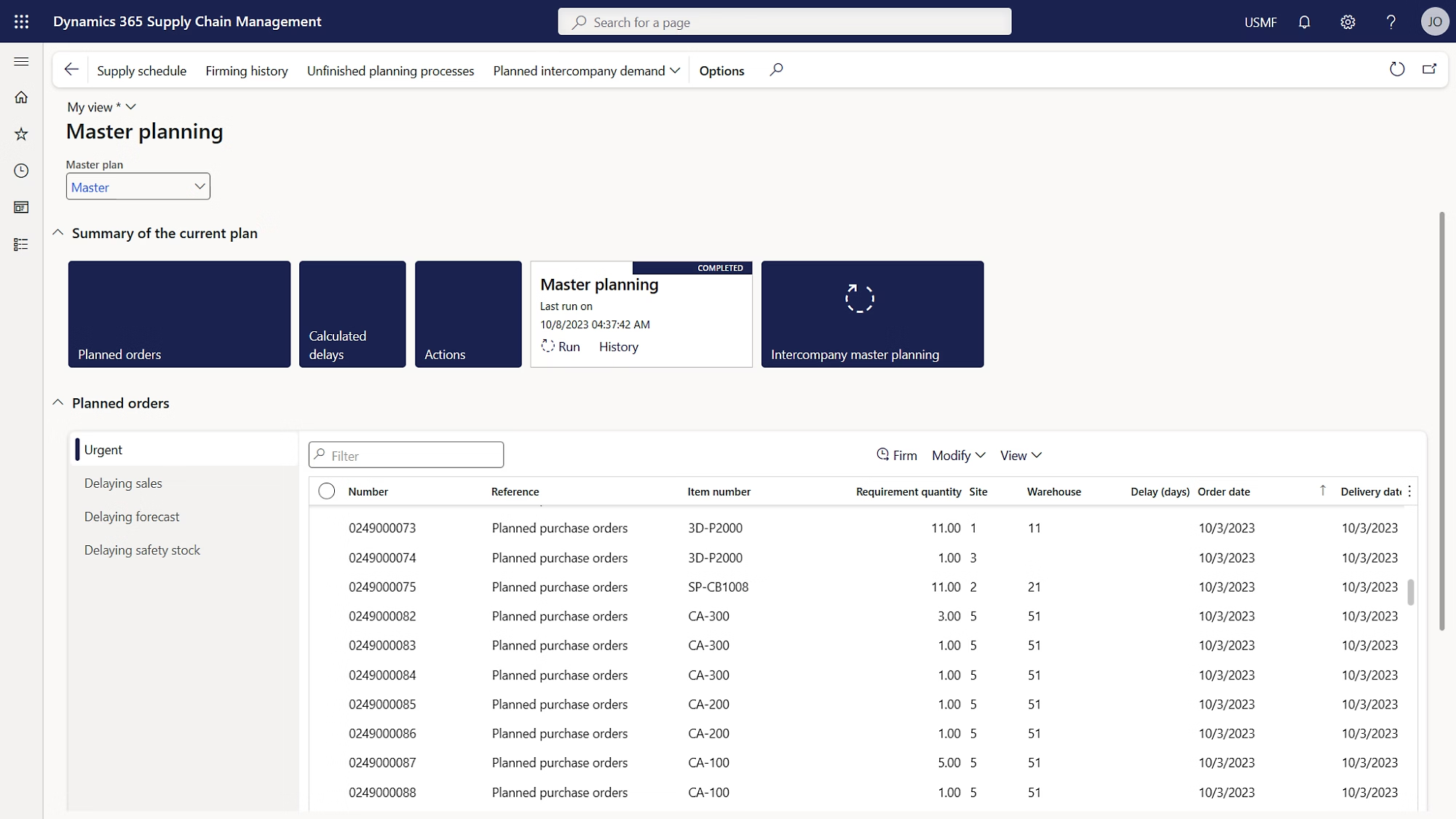
Manufacturers with complex operations can integrate Dynamics 365 Sales with Dynamics 365 Finance and Supply Chain Management using Microsoft’s dual-write framework. Dual-write connects Dataverse with finance and operations applications, allowing selected customer, product, quotation, and sales order records to stay synchronized. This helps sales teams access relevant ERP information while finance and operations teams manage pricing, inventory, production, order fulfillment, and financial transactions.
A manufacturer selling custom equipment, for example, can manage the customer opportunity and quotation in Dynamics 365 Sales while using Supply Chain Management for ERP pricing, order processing, and fulfillment. With the appropriate configuration, quotation changes and order information can flow between the applications, reducing duplicate entry and keeping teams informed as orders progress. This supports a connected quote-to-cash process without moving production or financial management into the CRM. To learn more, read our blog on Dynamics 365 Sales and Dynamics 365 Finance & Operations integration.
Who should use Dynamics 365 Sales in manufacturing?
Dynamics 365 Sales is a good fit for manufacturers that manage complex sales processes, multiple customer relationships, or long buying cycles. It is especially valuable for businesses that need better coordination between sales and operations or want to connect their CRM with an existing ERP system. The platform can support manufacturers of different sizes and production models, with configurable workflows that match how they sell and serve customers.
Manufacturing businesses that can benefit from Dynamics 365 Sales include:
- Discrete manufacturers: Companies that produce parts, components, machinery, or finished goods. Dynamics 365 Sales helps them manage product-based opportunities, customer accounts, and ongoing sales relationships.
- Process manufacturers: Businesses that produce goods using formulas, recipes, or batch-based production, such as chemicals, pharmaceuticals, and industrial materials. The CRM helps manage customer requirements, contract pricing, and sales opportunities while connecting with ERP systems for production and inventory information.
- Food and beverage manufacturers: Companies producing packaged foods, beverages, and other consumable products. Dynamics 365 Sales helps manage retail and distributor relationships, customer-specific pricing, sales forecasts, and repeat orders across multiple sales channels.
- Make-to-order manufacturers: Businesses that produce goods based on specific customer orders. The CRM helps teams track custom requirements, manage quotes, and coordinate customer expectations before production begins.
- Engineer-to-order manufacturers: Organizations that design and manufacture products based on unique customer specifications. Dynamics 365 Sales supports long sales cycles involving technical reviews, engineering input, multiple stakeholders, and quote approvals.
- Industrial equipment and machinery manufacturers: Companies selling high-value equipment that requires detailed product discussions, extended negotiations, and multiple purchasing decisions. The platform helps manage these opportunities and maintain customer relationships throughout the buying process.
- Manufacturers with distributor or dealer networks: Businesses selling through multiple channels, territories, or partner relationships. Dynamics 365 Sales helps organize accounts, track channel opportunities, and manage sales activity across their networks.
- Growing manufacturers with complex B2B sales: Companies that have outgrown spreadsheets or basic CRM tools. Dynamics 365 Sales provides structured opportunity management, sales forecasting, and automation, with the ability to integrate with existing ERP systems as business needs evolve.
Partner with Rand Group for Dynamics 365 Sales in manufacturing
A successful Dynamics 365 Sales implementation requires more than setting up CRM features. Manufacturers need a solution that supports their sales processes, quoting requirements, customer relationships, and connections to ERP systems. Rand Group combines CRM, ERP, integration, and manufacturing expertise to help businesses implement Dynamics 365 Sales around their specific needs. Our team works with manufacturers to improve sales processes, connect business systems, and support long-term growth.
Rand Group has delivered business technology solutions since 2003, completing more than 3,000 successful engagements and maintaining a 90% client retention rate. Our Microsoft-certified consultants, developers, and solution architects bring experience across Dynamics 365, Power Platform, and the broader Microsoft ecosystem. Rand Group was also named the Microsoft Americas Channel Emerging Partner of the Year, recognizing our expertise in delivering Microsoft business solutions.
Our Dynamics 365 Sales services include:
- CRM evaluation and implementation: Assess your requirements, define sales processes, and implement Dynamics 365 Sales to support your manufacturing operations.
- Sales process configuration and customization: Tailor opportunity management, quoting, account structures, and sales workflows to fit your business.
- CRM and ERP integration: Connect Dynamics 365 Sales with Business Central, Finance and Supply Chain Management, third-party ERP systems, and manufacturing applications.
- Data migration and management: Migrate customer records, contacts, opportunities, and other sales data while improving accuracy and consistency.
- Workflow automation and AI enablement: Implement automated workflows, Copilot capabilities, and AI agents to reduce manual tasks and improve sales productivity.
- Reporting and analytics: Build sales dashboards, forecasts, and Power BI reports to improve visibility into pipeline performance and business data.
- Training and ongoing support: Help your team adopt Dynamics 365 Sales and provide continued support, optimization, and guidance as your needs evolve.
Case study: How a glass manufacturer connected sales, manufacturing, and ERP data
A growing glass manufacturer partnered with Rand Group to replace disconnected legacy systems with an integrated Microsoft cloud solution. Rand Group implemented Dynamics 365 Sales and Dynamics 365 Business Central to connect sales, finance, manufacturing, and logistics. The solution centralized pipeline tracking, improved inventory visibility across multiple warehouses, and streamlined production and order management. Additional integrations automated shipping, payments, and commissions, reducing manual work and improving coordination across departments.
To learn more, read the full glass manufacturing case study.
What our clients say
Rand Group has helped organizations achieve measurable improvements through Dynamics 365 Sales implementations. Sapphire Gas Solutions reduced manual data entry by 50%, accelerated sales representative onboarding by 40%, and eliminated more than 200 back-and-forth emails between departments. Patlon Aircraft Industries achieved 98% faster sales reporting and 75% faster pipeline reviews.
“Dynamics 365 Sales is a complete game-changer for us. It’s so much easier to use than our previous CRM, and the integration with Business Central means I always have the most up-to-date data, whether it’s pricing or project margins.”
— Preston McDonald, Sales Director, Sapphire Gas Solutions
“They worked with us every step of the way, walking alongside our team to define and execute the right CRM solution.”
— Patrick Mann, Director of Commercial Sales, Patlon Aircraft Industries Ltd.
Key takeaways
- Dynamics 365 Sales is a cloud-based CRM that helps manufacturers manage leads, opportunities, quotes, customer relationships, and sales forecasts.
- Manufacturers use Dynamics 365 Sales to manage complex RFQs, long B2B sales cycles, distributor relationships, and coordination across departments.
- Key benefits include improved pipeline visibility, faster quoting, more accurate forecasting, increased sales productivity, and stronger customer relationships.
- Copilot, AI-powered insights, and sales automation help manufacturing sales teams reduce manual work, identify opportunities, and make informed decisions.
- Dynamics 365 Sales integrates with Business Central, Dynamics 365 Finance and Supply Chain Management, and other ERP systems to connect sales with pricing, inventory, and order data.
- Rand Group helps manufacturers implement, customize, integrate, and optimize Dynamics 365 Sales to support their sales processes and business requirements.
Frequently asked questions about Dynamics 365 Sales for manufacturers
What is Dynamics 365 Sales, and how do manufacturers use it?
Dynamics 365 Sales is a cloud-based CRM that helps manufacturers manage customer relationships, sales opportunities, quotes, and revenue forecasts. Manufacturers use it to track complex B2B sales cycles, manage distributor relationships, automate sales activities, and connect customer information with ERP data.
Is Dynamics 365 Sales a good CRM for manufacturing companies?
Yes, Dynamics 365 Sales is a good CRM for manufacturers that manage complex sales processes, custom quotes, and long customer buying cycles. It supports discrete, process, make-to-order, and engineer-to-order manufacturers, as well as companies selling through distributors and dealers. Its flexible configuration and ERP integration capabilities allow manufacturers to adapt the CRM to their business needs.
What manufacturing sales challenges can Dynamics 365 Sales help solve?
Dynamics 365 Sales helps manufacturers address disconnected customer data, manual quoting processes, limited pipeline visibility, and poor coordination between departments. It centralizes sales information, automates routine activities, and improves tracking of opportunities and customer relationships. When integrated with ERP systems, it also gives sales teams better access to operational information.
Can Dynamics 365 Sales manage manufacturing RFQs and complex product quotes?
Yes, Dynamics 365 Sales can manage manufacturing requests for quotes (RFQs), product pricing, quote revisions, and approval workflows. Sales representatives can create quotes using product catalogs and price lists, apply discounts, and convert accepted quotes into sales orders. Advanced product configurations and complex manufacturing pricing may require CPQ software, ERP integration, or customization.
How does Dynamics 365 Sales integrate with Business Central and Dynamics 365 Finance & Operations?
Dynamics 365 Sales integrates with Business Central through Microsoft Dataverse and with Dynamics 365 Finance and Supply Chain Management through dual-write. These integrations can connect customer records, product information, pricing, quotations, and sales orders across CRM and ERP systems. The specific data shared depends on the integration configuration and business requirements.
Can manufacturers use Dynamics 365 Sales without replacing their existing ERP system?
Yes, manufacturers can implement Dynamics 365 Sales without replacing their existing ERP system. The CRM manages customer relationships, opportunities, and sales activities, while the ERP continues to handle inventory, production, fulfillment, and financial processes. Dynamics 365 Sales can connect with Microsoft and third-party ERP systems through supported integrations, APIs, and middleware.
How does Dynamics 365 Sales improve sales forecasting and production planning for manufacturers?
Dynamics 365 Sales improves manufacturing sales forecasting by tracking opportunity values, expected close dates, sales stages, and projected revenue. Sales leaders can use this information to evaluate future demand and share forecasts with operations teams. Production planners can then use these insights alongside ERP data to inform capacity, material, and resource planning.
How does Copilot in Dynamics 365 Sales help manufacturing sales teams?
Copilot in Dynamics 365 Sales helps manufacturing sales teams summarize customer records, prepare for meetings, draft communications, and review opportunity information. AI-powered insights and sales agents can also help identify promising leads, highlight sales risks, and recommend next steps. Available AI capabilities depend on the Dynamics 365 Sales license and configuration.
Connect your manufacturing sales and ERP data with Rand Group
Dynamics 365 Sales helps manufacturers build a more connected and efficient sales process. From managing complex opportunities and quotes to improving forecasting and customer relationships, the platform gives sales teams the tools they need to work more effectively. ERP integration extends these benefits by connecting sales activities with the inventory, pricing, and order information needed to support customer commitments.
Rand Group helps manufacturers implement, customize, and integrate Dynamics 365 Sales to fit their business needs. Whether you are replacing an outdated CRM, improving an existing system, or connecting sales with ERP, our team can help you plan and implement the right solution. Contact us to learn how we can help you streamline manufacturing sales, improve visibility, and connect your CRM with the rest of your business.