Dynamics 365
 Power Platform
 Dynamics
 Cloud & Productivity
Top healthcare ERP systems

Healthcare organizations operate complex businesses with unique needs around HIPAA compliance, billing, accounts payable, and operations. Legacy systems often fall short, leading to inefficiencies, fragmented data, and higher compliance risk. Modern healthcare ERP solutions solve these challenges by streamlining operations, managing costs, and supporting decision-making through integration, automation, and centralized data access. ERP systems designed for the healthcare industry provide comprehensive management tools with features like HIPAA compliance, AI-powered accounts payable automation, and modular functionality. This improves efficiency and data access across departments while also enhancing oversight and patient services. Below we highlight four top ERP solutions: Sage Intacct, Microsoft Dynamics 365 Business Central, Dynamics 365 Finance & Operations, and Oracle NetSuite. Each platform offers a range of features for managing financials, supply chains, and regulatory compliance.
What are healthcare ERP systems?
Healthcare ERP (Enterprise Resource Planning) is a centralized platform that integrates financials, human resources, supply chain, and operational data. Its modules streamline healthcare operations by connecting billing, inventory, compliance, and patient management. Unlike standalone systems, ERP systems connect all departments, enabling information flow and more efficient workflows. For healthcare providers, this reduces manual processes, improves reporting accuracy, and provides real-time visibility into costs and performance. By consolidating patient billing, staffing, inventory, compliance, resource management, practice management, and project management, ERP creates a single source of reliable information. Moreover, centralizing patient data and electronic health records reduces silos and ensures medical history is easily accessible. Customer relationship management modules further enhance patient interactions, helping administrators and clinical teams make informed, timely decisions while improving overall operational efficiency. In fact many organizations experience a 75% or greater improvement in overall productivity and efficiency.

White Paper:
How to choose the right healthcare ERP system
Simplify your ERP selection with expert guidance from Rand Group. This quick-start guide outlines 12 key questions to help healthcare leaders identify the best-fit solution.
How does healthcare ERP solve unique challenges?
Healthcare organizations face pressures that are different from most industries. They must balance strict regulatory requirements, patient safety, cost control, and staff —all while improving the patient experience. ERP systems are designed to address these competing priorities by:
- Simplifying compliance reporting: Support regulatory compliance and financial reporting with automated workflows and audit-ready records.
- Providing real-time data: Allocate staff, beds, and resources more effectively, improving operational efficiency and resource management.
- Automating billing and reimbursements: Reduce errors, speed up cash flow, and ensure accurate financial data for efficient operations and financial health.
- Managing medical supplies and equipment: Avoid shortages and overstocking with robust inventory management and medical equipment tracking.
- Reducing administrative overhead: Eliminate duplicate and multiple systems. This streamlines business operations and integrates with other healthcare systems.
By solving these challenges, healthcare ERP enables providers to operate more efficiently, reduce operational costs, and spend more time on quality care.
Sage Intacct
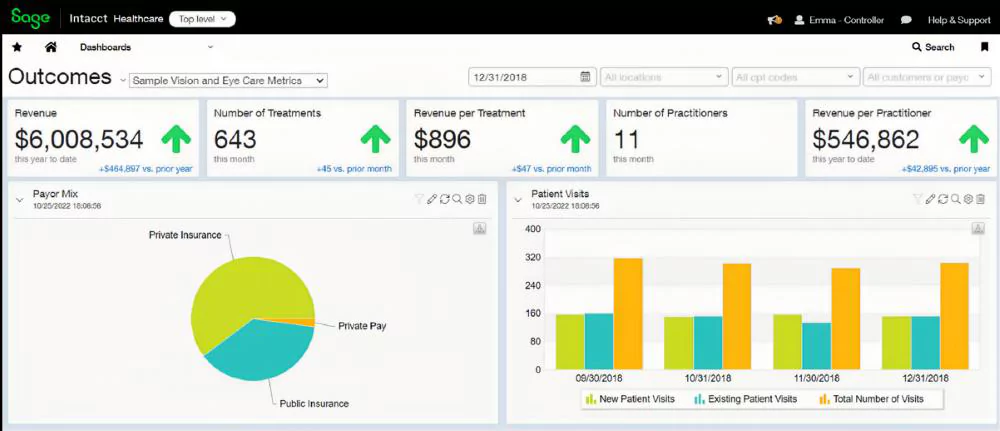
Sage Intacct is a cloud-based financial management solution for small to medium-sized healthcare organizations that need advanced visibility and control. As a top cloud-based healthcare ERP solution, it offers AI-powered automation, streamlined reporting, and built-in tools to support regulatory compliance. By reducing manual effort and improving accuracy, Sage Intacct helps providers make better decisions, control operational costs, and spend more on patient care. Moreover, integration capabilities enable easy connection with other healthcare systems.
Key healthcare capabilities:
- Departmental cost tracking: Track spending at patient and department levels. This helps with budget control and provides insight into financial data for better financial health.
- Multi-entity consolidation: Consolidate results from multiple clinics or sites without using manual spreadsheets, supporting healthcare companies with multiple systems.
- Automated reporting for audits: Simplify compliance with automated workflows that generate audit-ready reports for regulatory compliance and financial reporting.
- Grant and fund accounting: Track grants and donations alongside clinical revenue. This is especially useful for nonprofit healthcare providers and other sector organizations.
- Revenue cycle management: Gain insight into collections, reimbursements, and claims to improve financial stability and operational efficiency.
- Custom dashboards: Provide role-based dashboards for administrators, finance teams, and department heads, supporting business operations and resource management.

Case Study:
Delivering better care through smarter financial management
Central Management faced significant challenges when their existing financial accounting system was acquired by a new platform. Discover how adopting Sage Intacct not only improved financial management but also kickstarted a broader digital transformation.
Why healthcare organizations choose Sage Intacct
Sage Intacct is a great fit for healthcare organizations needing a robust financial solution with advanced reporting and forecasting capabilities. It also integrates easily with existing third-party clinical and operational systems, avoiding disruption during ERP implementation. Healthcare providers choose Sage Intacct for financial accuracy, visibility into patient care costs, departmental performance, and as a critical component of their healthcare technology solutions.
Microsoft Dynamics 365 Business Central
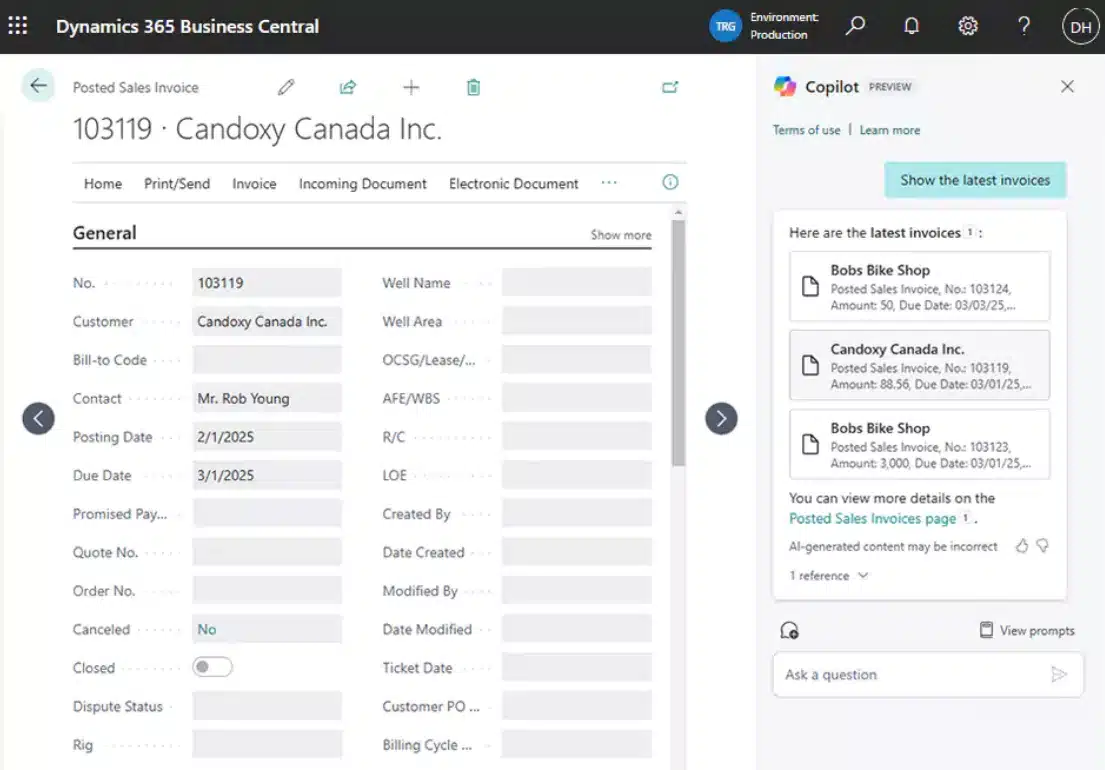
Dynamics 365 Business Central, designed for small to medium-sized organizations, unifies financials, operations, and reporting in one flexible platform. As a cloud-based ERP system for healthcare, it simplifies workflows, automates tasks, and provides real-time visibility. Moreover, with Binary Stream’s Multi-Entity Management (MEM), providers can easily manage multiple facilities in one system, leading to greater efficiency.
- Operational and financial oversight: Track budgets, procurement, staffing, and medical supply inventory in real time, supporting operational efficiency and inventory management.
- Multi-entity management (MEM): Eliminate manual switching between databases and automate intercompany transactions. This allows centralized control across multiple hospitals, clinics, or business units.
- Microsoft ecosystem integration: Connect with Outlook, Teams, Sharepoint, and Power BI for easier adoption and integration with other healthcare systems.
- Custom workflows and automation: Automate credential tracking for clinical staff, resource allocation in hospitals, and medication management.
- Patient billing support: Manage billing complexity, connect with insurance reconciliation systems, and support financial reporting and regulatory compliance.
- Inventory and asset tracking: Monitor equipment use, maintenance schedules, medical equipment, and supply chain levels for better resource management.
- Analytics and insights: Use built-in reporting and Power BI to analyze performance across departments, supporting business operations and financial health.
- Scalable modules: Add functionality as your healthcare organization grows or diversifies services, supporting healthcare facilities, medical practices, and small healthcare organizations.
Why healthcare organizations choose Business Central
Business Central is ideal for healthcare organizations seeking a centralized platform for financial management, supply chain oversight, and practice management. Its tight integration with other Microsoft tools and cloud provider options benefits organizations already using the Microsoft ecosystem. This simplifies workflows, improves operational efficiency, and maintains consistency across clinical and administrative operations.
Microsoft Dynamics 365 Finance & Operations
Dynamics 365 Finance & Operations (F&O) is a comprehensive cloud ERP platform designed for medium to large-sized healthcare organizations, unifying finance, operations, and reporting. In addition, it streamlines administrative and clinical workflows, automates complex tasks, and delivers real-time insights into operational performance. Furthermore, with its robust multi-entity management capabilities, healthcare organizations can efficiently oversee multiple facilities from a single system, thereby improving coordination and resource allocation.
Key healthcare features:
- Financial and operational management: Monitor budgets, procurement, staffing, and medical supply usage across departments in real time to enhance efficiency and control costs.
- Multi-entity oversight: Automate intercompany transactions and centralize reporting for hospitals, clinics, and other units, reducing errors and administrative workload.
- Microsoft ecosystem integration: Connect with Teams, Outlook, SharePoint, and Power BI for streamlined adoption and data-driven insights.
- Custom workflows and automation: Simplify credential tracking, resource allocation, and medication management to support clinical operations.
- Patient billing and compliance: Manage complex billing, insurance reconciliation, and financial reporting while maintaining regulatory compliance.
- Inventory and asset tracking: Track medical equipment, monitor maintenance schedules, and oversee supply chains to ensure operational readiness.
- Advanced analytics: Leverage built-in dashboards and Power BI reporting to identify trends, optimize operations, and improve financial health.
- Scalable modules: Expand functionality as healthcare organizations grow or add new services, supporting hospitals, clinics, and specialized practices.

Why healthcare organizations choose Finance & Operations
Dynamics 365 Finance & Operations is well-suited for healthcare organizations looking for a unified platform to manage financials, operations, and clinical workflows. Its seamless integration with Microsoft 365 applications and cloud services supports organizations already using the Microsoft ecosystem. By centralizing finance, supply chain, and operational processes, it simplifies workflows, enhances efficiency, and ensures consistent performance across both administrative and clinical functions.
Oracle NetSuite
NetSuite provides a single cloud ERP system for small to large-sized healthcare organizations. Its capabilities include financials, operations, and supply chain management. As a leading cloud-based ERP system for healthcare, it offers real-time visibility, automated workflows, and flexible reporting. Its scalability allows organizations to add services, integrate new sites, and respond to industry changes. NetSuite’s integration capabilities and support for ERP implementation make it a top choice for healthcare companies and professionals.
Key healthcare features:
- Advanced costing & billing automation: Patient billing, insurance reconciliation, departmental cost allocations, and financial reporting for regulatory compliance.
- Revenue cycle management: Manage patient revenue cycle from intake to reimbursement, supporting patient management and operational efficiency.
- Comprehensive financial insight and planning: Real-time dashboards for cost control, budget forecasting, and financial data analysis to improve financial health and reduce operational costs.
- Supply chain management: Manage pharmaceutical inventory, surgical equipment, medical devices, and consumables across supply chains, supporting inventory management and medical equipment tracking.
- Multi-currency and global scalability: Supports large hospital networks and international healthcare chains, facilitating healthcare sector growth.
- Compliance tools: HIPAA reporting, audit trails, and regulatory compliance.
- Customizable dashboards: Executive, department head, and financial manager dashboards support business operations and resource management.
- Third-party integrations: Integrate EHR systems, patient portals, and other healthcare applications for seamless system connectivity.

Why healthcare organizations choose NetSuite
NetSuite is an excellent choice for growing healthcare organizations needing a flexible ERP to support multiple sites or international operations. It offers deep functionality in financials, clinical operations, compliance, and practice management. Providers can add services while maintaining control over budgets, reporting, and performance.

Case Study:
Modernizing financial operations with NetSuite and Rand Group
Mann Eye Institute needed a scalable and efficient financial system to support its rapid growth. Discover how they streamlined operations and improved reporting after partnering with Rand Group to transition from Microsoft Dynamics GP to NetSuite.
Healthcare ERP systems comparison chart
Choosing the best ERP solution depends on factors like organization size, deployment preference, and required healthcare-specific features. The chart below summarizes key differences to help you compare the leading platforms at a glance.
How Rand Group supports healthcare organizations
Our technology consultants have over 20 years of experience implementing and supporting ERP systems, including Microsoft, Sage, and NetSuite. With knowledge of healthcare operations, our experts help organizations streamline efficiency by customizing ERP solutions to their clinical, financial, and operational needs.
We have deep expertise in ERP implementation, integration capabilities, and supporting healthcare companies and professionals. Partnering with Rand Group means having a trusted advisor to guide your team through every stage of implementation and support. Whatever ERP system you choose, we’ll help simplify workflows, patient care, and financials.
Implementation services:
- Needs assessment: We assess unique challenges and guide healthcare providers through ERP selection to ensure compliance, reporting, and operational requirements are met.
- Customization and configuration: Our consultants customize ERP solutions to match existing clinical and administrative workflows, integrating with current systems and supporting business operations.
- Training: We provide tailored training for staff and administrators, helping them get maximum value from their ERP investment from day one.
Support services:
- Ongoing support: We maintain and troubleshoot ERP systems to reduce downtime and increase uptime, supporting healthcare facilities and companies.
- System upgrades: Our consultants manage updates and upgrades so your ERP software stays compliant with healthcare regulations and adapts to operational needs.
Choose Rand Group for healthcare ERP
Choosing the right ERP system is key for healthcare organizations that want to improve financial management, simplify compliance, and gain more visibility into patient and operational data. Solutions like Sage Intacct, Dynamics 365 Business Central, Dynamics 365 Finance & Operations and NetSuite offer healthcare-specific features such as advanced reporting, budgeting, cost management, inventory management, and integration capabilities. By working with Rand Group, healthcare providers maximize their ERP investment. Our implementation and support expertise helps organizations simplify efficiency, reduce administrative burdens, and deliver better patient outcomes. Contact us today to see how we can help your healthcare organization.
Subscribe to our Insights
Related Blogs

The ultimate guide to Microsoft Dynamics NAV
Microsoft Dynamics NAV has been a foundational ERP system for mid-market organizations around the world. For many years, it supported core financial and operational processes across industries such as manufacturing, distribution, and professional services. Although...

Enhancing productivity with AI in Microsoft 365
Microsoft 365 is no longer just a suite of productivity tools. It now includes advanced AI capabilities that help users create content, automate tasks, and boost productivity across apps, including Word, Excel, PowerPoint, Outlook, and Microsoft Teams. At the heart of...

Best ERP software for family offices
Managing a family office involves far more complexity than traditional financial operations. From multi-entity accounting and consolidated reporting to investment tracking and multi-generational wealth oversight, family offices must manage diverse assets, entities,...