 Dynamics 365
 Power Platform
 Dynamics
 Cloud & Productivity
Dynamics 365 Business Central for food & beverage
Microsoft Dynamics 365 Business Central helps food & beverage companies manage complex operations with greater control and visibility. From lot and expiry tracking to production planning, inventory management, and regulatory compliance, Business Central supports the full supply chain. It brings finance, operations, and distribution into a single system, helping food & beverage companies reduce waste, improve margins, and respond faster to demand. With decades of experience, Rand Group helps food & beverage companies configure Business Central to fit industry-specific workflows and growth goals.

Unified ERP for efficient food & beverage operations
The food & beverage industry requires precise inventory control, consistent product quality, and strict adherence to safety and regulatory standards. Challenges include managing perishable goods, complex supply chains, and fluctuating demand while maintaining efficiency and profitability. Microsoft Dynamics 365 Business Central provides a unified ERP platform connecting finance, inventory, production, and sales. It centralizes data, delivers actionable insights, and breaks down silos across departments for faster, informed decision-making.
Rand Group helps food & beverage businesses implement Business Central tailored to their unique processes and operational needs. This empowers teams to increase visibility, improve efficiency, and manage costs effectively across all departments. With real-time insights into inventory, production, and financials, organizations can act proactively, optimize resources, and maintain compliance. Business Central supports operational excellence while enabling scalable growth for food & beverage companies of all sizes.

Complete insight into inventory, sales, and production
Business Central connects finance, inventory, production, and sales in a single platform, removing data silos. Teams gain a centralized view to make faster, data-driven decisions, track departmental performance, and identify areas for process improvement efficiently.

Streamline workflows for faster order fulfillment
By automating workflows and streamlining order-to-cash processes, Business Central accelerates operational cycles. Teams spend less time on manual tasks, reduce errors, and respond to demand fluctuations more quickly, improving service levels and productivity.

Reduce waste and maximize efficiency
Predictive analytics and real-time inventory tracking help optimize ingredient usage and production processes. Gain insight into stock levels, purchasing, and production costs, supporting more effective resource allocation and minimizing unnecessary expenses.
Business Central for food & beverage capabilities
Food and beverage businesses must manage perishable inventory, strict traceability, complex pricing, seasonal demand, and tight margins—often across multiple facilities and distribution channels. Business Central brings core financials, inventory management, distribution, quality and compliance, and manufacturing into a single system to help food and beverage teams maintain control, meet regulatory requirements, and scale with confidence. The following capabilities highlight how Business Central supports end-to-end food and beverage operations.
Core financials
General ledger & financial control
Business Central provides a centralized general ledger with real-time visibility into financial performance across food and beverage operations. Unlimited dimensions allow finance teams to analyze profitability by product line, facility, brand, or channel without relying on spreadsheets. This supports faster closes and more informed decision-making.
Accounts payable & vendor management
Automated accounts payable workflows help food and beverage companies manage supplier invoices, approvals, and payments efficiently. Vendor records store pricing, lead times, and terms, improving purchasing accuracy and cash flow control. Approval workflows reduce errors and support internal controls.
Accounts receivable & cash management
Accounts receivable capabilities support invoicing, collections, and customer payment tracking in a single system. Cash flow forecasting tools use open transactions and historical data to predict liquidity, helping food and beverage businesses manage seasonality and demand fluctuations more effectively.
Multi-entity & multi-currency support
Business Central supports multiple companies, locations, and currencies within one environment. This is especially valuable for food and beverage organizations operating across regions or managing separate legal entities. Intercompany postings and consolidations streamline financial reporting.
Financial reporting & analytics
Built-in financial reports and Power BI dashboards provide insight into margins, costs, and performance trends. Finance teams can analyze data directly in Business Central or export to Excel for deeper analysis. This ensures leadership has accurate, timely financial intelligence.

Inventory management
Lot, serial, and expiry tracking
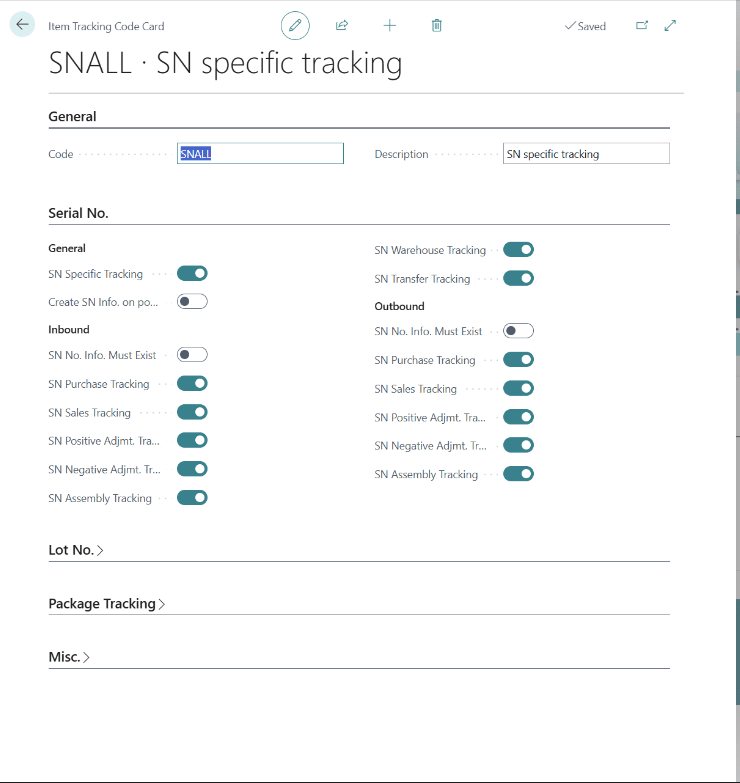
Business Central supports detailed item tracking using lot and serial numbers, including expiration dates. Food and beverage companies can prevent the shipment or use of expired products and quickly trace inventory for recalls or audits. This strengthens compliance and product safety.
FIFO and inventory costing
Multiple costing methods—including FIFO—support accurate valuation of perishable inventory. Expected and actual costs are tracked through purchasing, production, and sales, improving margin visibility. This helps food and beverage businesses control costs and reduce waste.
Multi-location inventory visibility
Inventory can be managed across multiple warehouses, production plants, and distribution centers. Each location maintains its own stock levels, dimensions, and replenishment rules. This provides real-time visibility into where inventory is stored and how it is moving.
Units of measure & item variants
Business Central supports multiple units of measure for the same item, such as cases, pallets, or individual units. Item variants allow teams to manage product differences like size, packaging, or formulation without duplicating records. This is critical for complex food and beverage catalogs.
Inventory planning & forecasting
Demand forecasting and planning tools help anticipate future inventory needs based on sales history and trends. Planning worksheets generate purchase, transfer, or production suggestions to maintain optimal stock levels. This reduces stockouts and excess inventory.
Pricing & margin control
Pricing rules & discount governance
Business Central supports structured pricing rules, discounts, and date-based price agreements that can be evaluated across customers, items, and time periods. This allows food and beverage teams to govern pricing strategies consistently and assess their impact on revenue and profitability.
Supplier cost visibility for pricing decisions
Vendor pricing, discounts, and cost agreements provide visibility into raw material cost changes. Food and beverage teams can use this information to evaluate pricing adjustments, sourcing alternatives, and margin exposure without relying on manual analysis.
Landed cost impact on product pricing
Freight, handling, and other landed costs can be incorporated into item costs using item charges. This helps food and beverage companies understand the full cost of goods when reviewing pricing strategies, especially for temperature-controlled or cross-border shipments.
Profitability analysis by product and customer
Cost and revenue data flow into Business Central’s reporting and analysis tools, enabling teams to review profitability by item, batch, customer, or channel. This helps identify underperforming products, customers, or pricing structures that may require adjustment.
Budgeting, standard costs & variance insight
Budgets, standard costs, and variance reporting provide a benchmark for evaluating pricing and cost performance over time. Food and beverage teams can compare expected versus actual results to support proactive margin and pricing decisions.

Distribution
Sales order & pricing management
Business Central supports quotes, blanket orders, sales orders, and invoicing with flexible pricing and discount structures. Food and beverage distributors can manage customer-specific pricing, volume discounts, and promotions in one system. This improves order accuracy and customer satisfaction.
Purchasing & supplier coordination
Purchasing workflows support purchase orders, receipts, and invoicing tied directly to inventory and demand. Vendor catalogs, lead times, and pricing agreements improve procurement planning. This helps food and beverage companies maintain reliable supply chains.
Warehouse & fulfillment operations
Warehouse functionality supports pick, pack, and put-away processes with configurable complexity by location. Features like bin management, lot picking, and FEFO (first-expired, first-out) improve fulfillment accuracy. This is especially important for perishable goods.
Order promising & availability
Order promising tools provide accurate delivery dates based on available inventory and inbound supply. If items are unavailable, Business Central calculates when they can be replenished. This helps distributors set realistic expectations with customers.
Shipping & landed cost allocation
Shipping agents, freight charges, and item charges can be allocated directly to inventory costs. This provides accurate landed cost calculations and margin visibility. Food and beverage companies gain better control over transportation and logistics expenses.

Quality & compliance
Traceability & recall readiness
End-to-end traceability allows teams to track ingredients and finished goods through purchasing, production, and sales. In the event of a recall, affected lots can be identified quickly. This supports regulatory compliance and brand protection.
Regulatory & tax compliance
Business Central supports sales tax, VAT, excise taxes, and country-specific localizations. Food and beverage companies can comply with regional regulations while maintaining consistent processes. Built-in controls reduce audit risk.
Audit trails & data security
Change logs, permissions, and audit trails provide visibility into data changes across the system. Sensitive data can be classified and protected using Microsoft security standards. This supports internal governance and external audits.
Sustainability & reporting support
Sustainability tracking capabilities allow companies to record emissions, waste, and environmental metrics. Food and beverage businesses can prepare ESG and compliance reports using operational and financial data. This supports growing regulatory and consumer expectations.
Standardized workflows & approvals
Approval workflows enforce consistent processes for purchasing, pricing, and financial transactions. This reduces manual errors and ensures policy adherence across teams. Consistency is especially important in regulated food and beverage environments.

Manufacturing
Production orders & batch tracking
Business Central supports production orders with manual or automated posting of material consumption and output. Food and beverage manufacturers can track production by batch and lot to ensure traceability and quality. This provides accurate WIP and inventory balances.
Bills of materials & version control
Bills of materials define ingredients, components, and quantities required for finished goods. Version management allows teams to track changes over time and apply the correct formulation based on effective dates. This supports consistency and regulatory requirements.
Formula & recipe management
With Business Central and ISV solutions such as YAVEON, process manufacturing is supported through advanced formula and recipe management. Instead of traditional BOMs, formulas define ingredient proportions by percentages, weights, or ratios. This enables flexible scaling, variable inputs, and consistent product quality across batches.
Capacity planning & scheduling
Routings and capacity planning tools help schedule production resources and manage workloads. Manufacturers can account for machine availability, labor, and lead times. This improves on-time production and reduces bottlenecks.
Manufacturing costing & yield tracking
Detailed manufacturing costing tracks material, labor, overhead, and scrap. Food and beverage manufacturers gain insight into true production costs and yields by product or batch. This supports margin analysis and continuous improvement.

Why F&B firms move to Business Central
%
Reduction in operational costs
%
Reduction in administrative costs
%
Improvement in schedule compliance


Business Central licensing and pricing for food and beverage distributors
Explore Business Central licensing, implementation, and app bundle options designed to help food and beverage distributors improve financial control, inventory visibility, order management, and supply chain efficiency.
Business Central
licenses
Starting at
$80
$108.50
/user/month, paid yearly
The Business Central Essentials license provides the core ERP functionality food and beverage companies need to manage finance, sales, purchasing, inventory, warehousing, and supply chain operations. It is a strong fit for distributors and businesses that need greater visibility and control across day-to-day operations without advanced manufacturing capabilities.
Distribution
implementation plan
Starting at
$35,000
$47,000
/8 weeks
This Rapid Activation implementation plan is designed for food & beverage distributors and processors that need reliable finance, inventory, and order management in Business Central. It includes core financials, FIFO inventory, basic warehousing, sales and purchasing workflows, data migration, and remote training.
Food & beverage operations
bundle
Starting at
$350
$485
/month
In addition to Business Central, Rand Group offers specialized app bundles for food and beverage companies. The Food & Beverage Operations bundle helps distributors improve inventory, supply chain, and cost visibility.
Business Central licensing and pricing for food and beverage manufacturers
Explore Business Central licensing, implementation, and app bundle options designed to help food and beverage manufacturers manage production, inventory, financials, and operational processes in one connected system.
Business Central
licenses
Starting at
$110
$149.20
/user/month, paid yearly
The Business Central Premium license includes everything in Essentials, plus manufacturing and service management functionality. For food and beverage manufacturers, Premium supports production planning, bills of materials, capacity management, and shop floor processes, helping teams manage production more efficiently within Business Central.
Manufacturing
implementation plan
Starting at
$80,000
$105,000
/16 weeks
This Rapid Activation implementation plan is built for food & beverage manufacturers that require production tracking in Business Central. It includes everything in the Distribution plan, plus bills of materials, routings, production orders, manufacturing data migration, and focused training.
Food & beverage
manufacturing bundle
Starting at
$500
$695
/month
Rand Group offers the Food and Beverage Manufacturing Bundle to help food and beverage manufacturers extend Business Central with apps that support production planning, inventory control, operational visibility, and day-to-day efficiency.
What do the Business Central food & beverage Rapid Activation plans include?
Rand Group’s Rapid Activation plans provide a fixed-fee and fixed-timeline approach to implementing Dynamics 365 Business Central for food & beverage companies. Both plans include core financials and distribution capabilities to support finance, inventory, and order management. Companies that require production functionality can select the Manufacturing plan, which adds manufacturing capabilities designed for food & beverage operations.
Core Financials
General Ledger
Supports a single company setup within Business Central, providing a centralized view of financial transactions, balances, and period activity for food and beverage operations.
Accounts Payable
Includes basic accounts payable functionality using checks to manage vendor invoices and payments. Electronic payment processing is not included in this plan.
Accounts Receivable
Supports standard accounts receivable entry and tracking, allowing teams to manage customer invoices, payments, and balances.
Banking
Includes basic banking functionality with manual bank reconciliation to support accurate cash management and financial control.
Multi-Currency
Enables transactions in multiple currencies within Business Central, with exchange rates maintained directly in the system.
Financial Reporting
Includes standard, out-of-the-box financial reports provided by Business Central to support core financial visibility and period close without customization.
Distribution
Inventory and Non-Stock Items
Supports inventory and non-stock items using FIFO costing. Lot tracking and serialization are included when applicable, supporting traceability and inventory control for food and beverage products.
Sales Quotes, Orders, and Invoices
Enables standard sales processing within Business Central. Teams can create quotes, convert them to sales orders, and generate invoices to support customer order management.
Purchase Orders and Receiving
Supports purchase order creation and goods receiving within Business Central. This helps manage supplier purchases, inbound inventory, and receipt processing.
Warehousing
Includes basic warehouse functionality with pick, pack, and putaway processes. These capabilities support more structured handling of food and beverage inventory without advanced warehouse management.
Manufacturing
Production orders
Supports production orders with manual or automated backflushing to track ingredient consumption and finished goods output within Business Central.
Bills of materials (BOMs)
Includes setup and use of bills of materials to define ingredients, quantities, and component structure for food and beverage products.
Routings
Supports routings to define production steps and operations, helping manage production flow and basic resource usage during processing and packaging.
Other
Data migration
Includes migration of data required for the selected Rapid Activation plan. This covers core financial data such as customers, vendors, open accounts receivable and payable, one year of general ledger history, and the chart of accounts, along with distribution and manufacturing data when those capabilities are included.
Business Central Insights Power BI reports
Includes access to Business Central Insights Power BI reports, providing visual dashboards for financial and operational performance relevant to food and beverage businesses.
Online and remote training
Includes live, remote training delivered by Rand Group consultants. Training focuses on the workflows included in the selected plan, supporting day-to-day use across finance, distribution, and manufacturing when applicable.

Have more complex Business Central implementation requirements?
While Rapid Activation is a strong starting point for many food and beverage companies, it may not address every operational, compliance, or supply chain requirement. As food & beverage companies grow in complexity, such as supporting multiple facilities, advanced traceability, or specialized production workflows, Rand Group offers additional Business Central implementation options to support long-term scalability. Our team works with you to determine the right approach based on your current operations, regulatory needs, and growth goals.
- Full digital transformation implementation: A comprehensive, end-to-end approach that redesigns business processes, systems, and reporting to fully align Business Central with your food & beverage operations.
- Hybrid Business Central implementation: A flexible option that combines Rapid Activation with tailored configuration, bridging the gap between standardized plans and a full digital transformation.
Custom apps for Dynamics 365 Business Central food & beverage
We design and build applications that extend the value of Dynamics 365 Business Central for food & beverage beyond standard capabilities. These solutions address common food and beverage requirements such as traceability, landed cost accuracy, EDI, and complex inventory management, helping teams automate processes and get more value from Business Central.






Frequently asked questions (FAQs)
What is Microsoft Dynamics 365 Business Central for food and beverage?
Microsoft Dynamics 365 Business Central is a cloud-based ERP designed to manage finance, inventory, sales, and operations in a single system. For food and beverage companies, it supports traceability, inventory control, and real-time visibility across the supply chain. This helps teams manage day-to-day operations while maintaining accuracy and compliance.
Do food and beverage companies need Business Central Essentials or Premium?
Business Central Essentials is suitable for food and beverage companies that do not require manufacturing functionality. Food and beverage manufacturers, or businesses that need production tracking, must license Business Central Premium, which includes manufacturing capabilities in addition to core financial features.
What is the difference between the Distribution and Manufacturing implementation plans?
The Distribution Rapid Activation plan includes core financials, inventory, sales, purchasing, and basic warehousing for food and beverage distributors and processors. The Manufacturing plan includes everything in the Distribution plan, plus production orders, bills of materials, routings, and manufacturing data migration for food and beverage manufacturers.
Can Business Central manage multiple warehouses and locations for food and beverage companies?
Yes. Business Central supports multiple warehouses and locations, allowing food and beverage businesses to track inventory by site, manage transfers, and fulfill orders efficiently. Location-based inventory visibility helps reduce stockouts and improve order accuracy.
How does Business Central help food and beverage companies reduce waste and manage inventory?
Business Central supports lot tracking, FIFO costing, and real-time inventory visibility, which helps food and beverage companies manage expiration-sensitive products. These capabilities improve inventory accuracy, reduce spoilage, and support better purchasing and replenishment decisions.
Does Business Central integrate with Microsoft tools used by food and beverage teams?
Yes. Business Central integrates with Microsoft 365, Power BI, and Teams, allowing food and beverage teams to collaborate, automate workflows, and analyze financial and operational data using familiar tools.
Why partner with Rand Group?
Recognized Microsoft partner
Rand Group has earned a strong reputation in the Microsoft ecosystem, highlighted by the 2025 Microsoft Americas Channel Emerging Partner award. This distinction reflects our proven ability to deliver measurable results with Dynamics 365 Business Central.
Long-term client support
Our relationship doesn’t end at go-live. We provide ongoing guidance, system optimization, and strategic support as your business evolves. Our 90% client retention rate demonstrates the confidence companies place in our long-term partnership.
Streamlined implementations
We follow a structured, repeatable implementation process designed for efficiency and reliability. By leveraging defined scopes and proven frameworks, we minimize risk, reduce complexity, and help clients achieve faster, predictable deployments.
Hands-on industry expertise
With decades of experience supporting food and beverage organizations, Rand Group understands the challenges of compliance, shelf-life management, and supply chain complexity. We apply Business Central in a practical way to support finance, distribution, and manufacturing operations.